warship
15 vessels
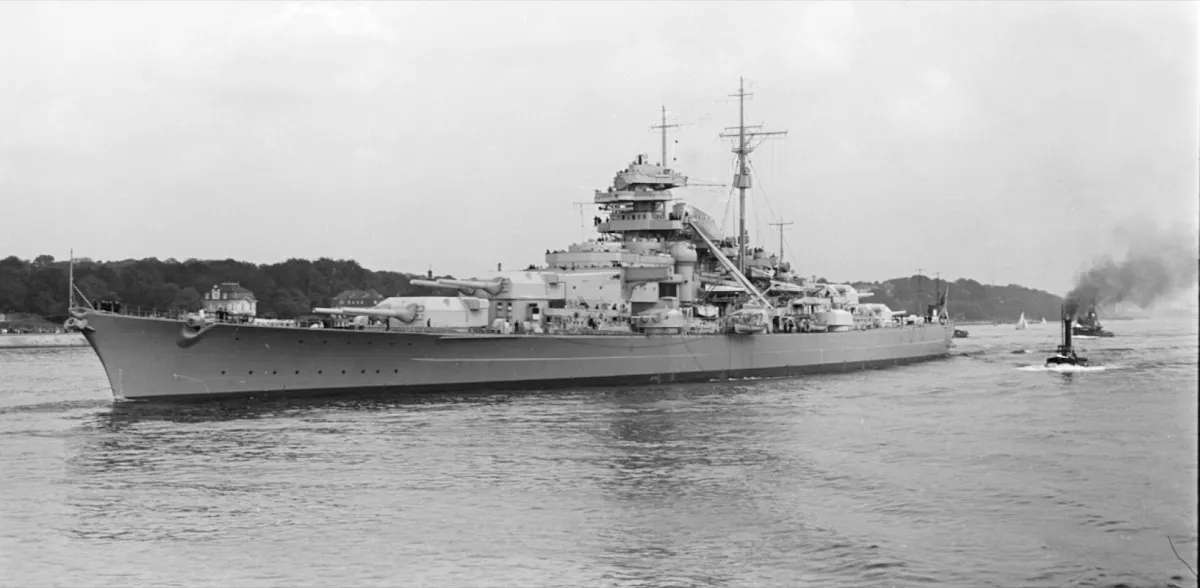
Bismarck
Bismarck's operational career lasted eight days. In that time, she became the most famous warship of the twentieth century. On May 24, 1941, she engaged HMS Hood and HMS Prince of Wales in the Denmark Strait. A shell from Bismarck penetrated Hood's magazine. The explosion broke Hood in half. She sank in three minutes. Of 1,418 crew, three survived. Hood was the pride of the Royal Navy. Churchill's order was immediate and absolute: sink the Bismarck. The Royal Navy sent everything. Battleships, carriers, cruisers, destroyers. Swordfish torpedo bombers — fabric-covered biplanes that looked like they belonged in the previous war — scored the hit that jammed Bismarck's rudder. She could only steam in circles. The next morning, King George V and Rodney pounded her for ninety minutes. Bismarck's crew scuttled her. Of 2,065 men, 114 survived.
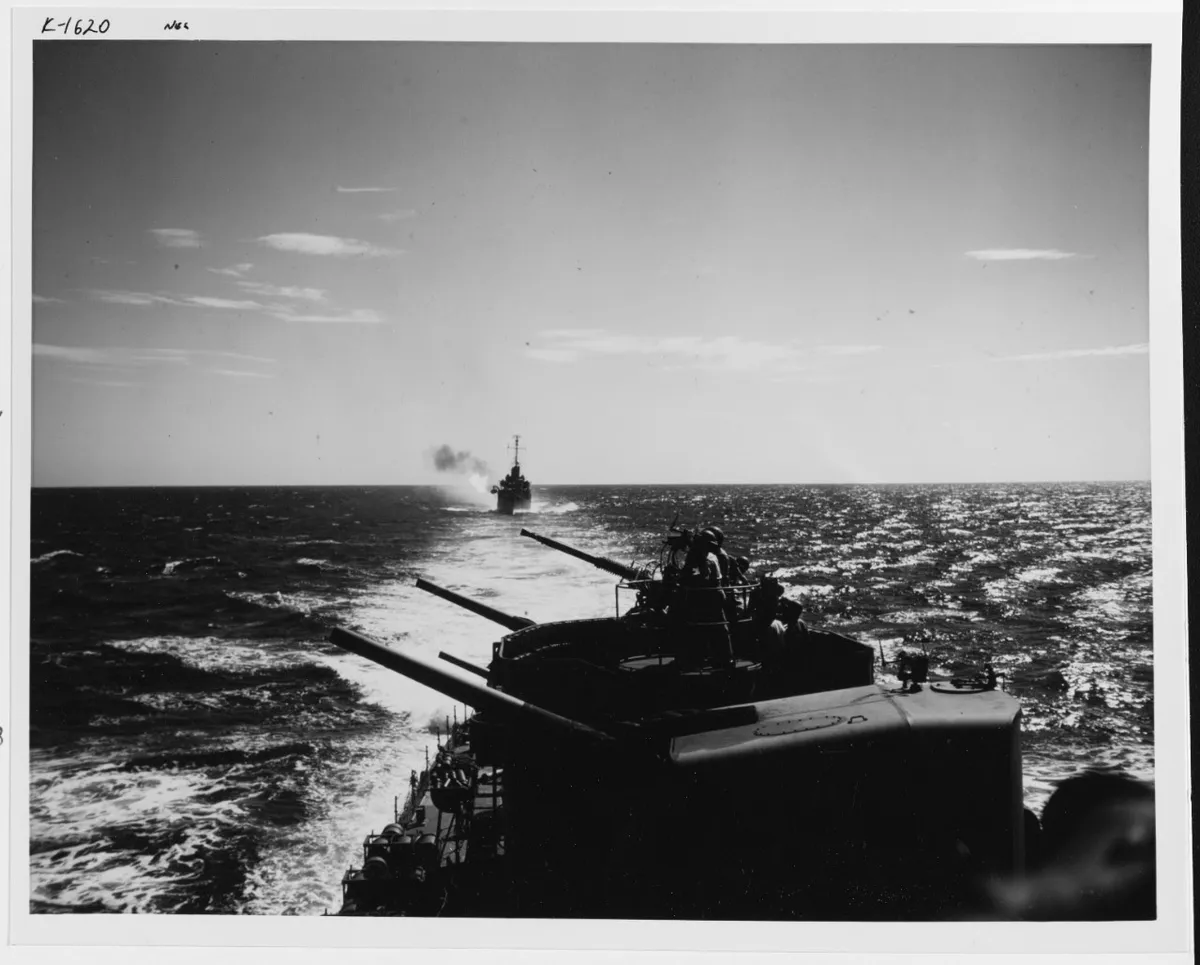
Fletcher-class Destroyer
The Fletcher class was the destroyer that won the Pacific. 175 built, more than any other destroyer class in history, and they did everything. Convoy escort in the Atlantic. Shore bombardment at Normandy. Surface actions in the Solomons. Radar picket duty at Okinawa, where they were positioned as sacrificial early-warning stations against kamikaze attacks. Nineteen Fletchers were lost during the war. They weren't glamorous. They were the ships that showed up everywhere, did the ugly work, and took casualties doing it.
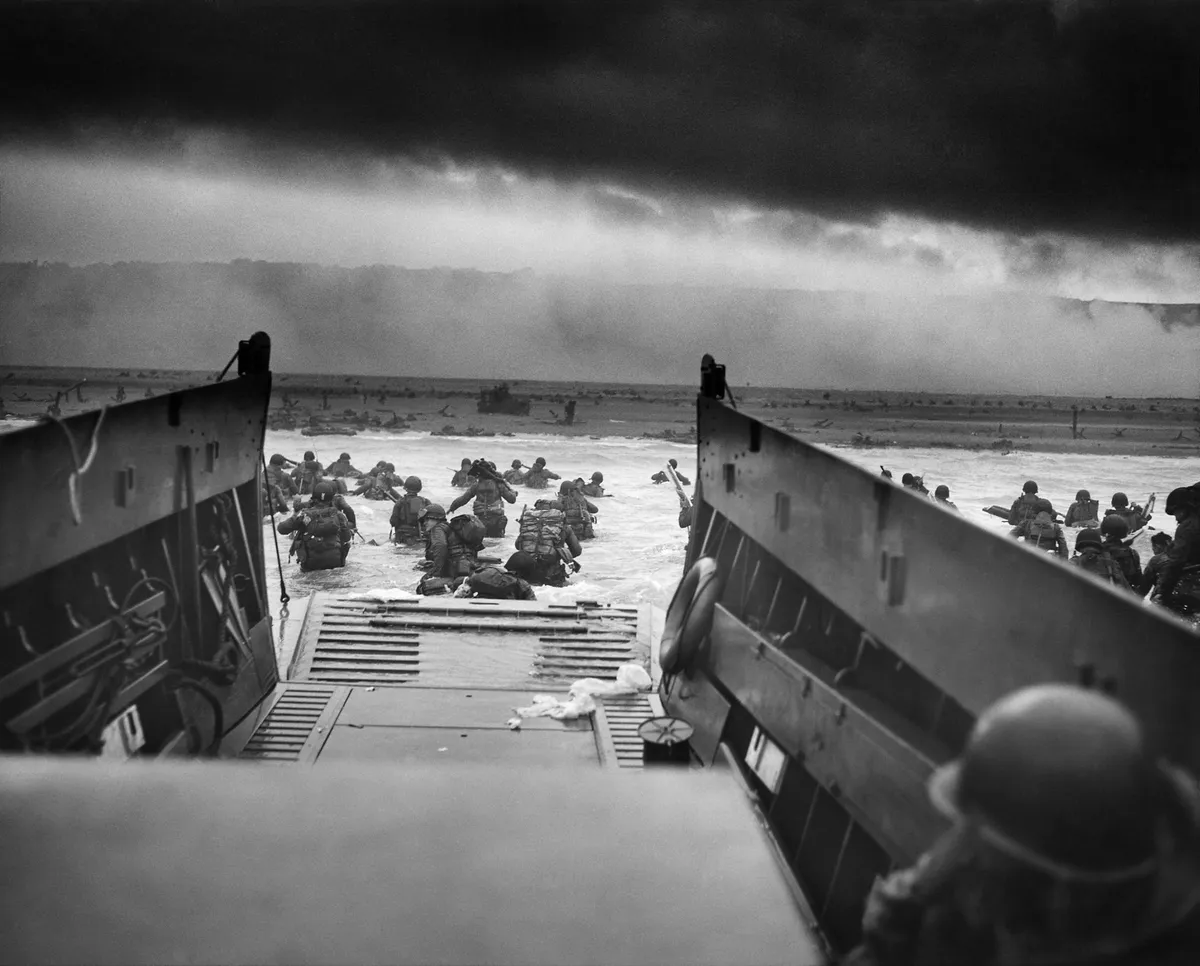
Higgins Boat (LCVP)
Eisenhower said Andrew Higgins was 'the man who won the war for us.' The LCVP — Landing Craft, Vehicle, Personnel — was the boat that put soldiers on the beach. At Normandy, Iwo Jima, Okinawa, North Africa, Sicily. The bow ramp was Higgins' innovation, borrowed from boats he'd seen in the Louisiana bayou. When that ramp dropped, you were looking at the beach, and the beach was looking at you. 23,398 were built. Without them, no amphibious invasion was possible.
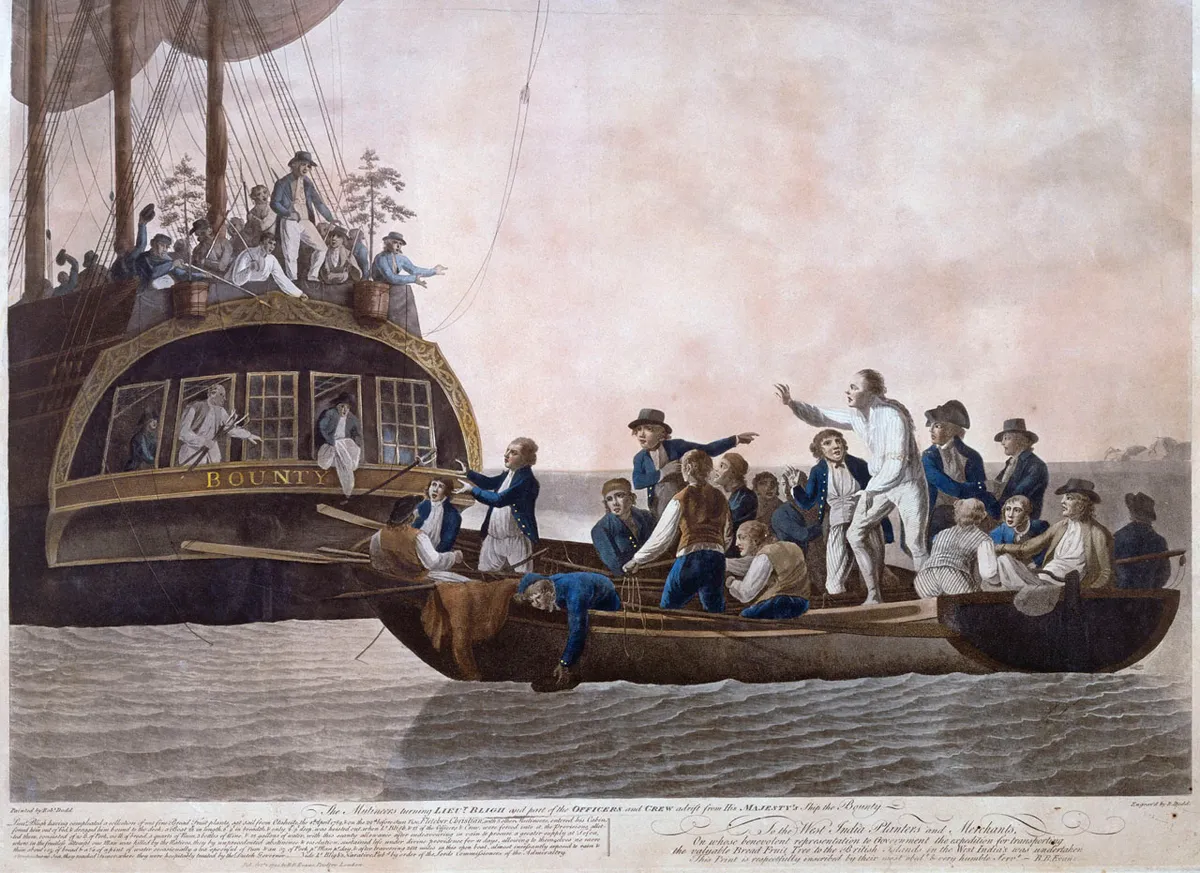
HMS Bounty
The Bounty's story isn't really about a ship. It's about what happens when you put 46 men on a 91-foot vessel, send them to paradise, and then ask them to leave. The mission was simple enough: sail to Tahiti, collect breadfruit plants, deliver them to the Caribbean as cheap food for enslaved workers. The plants mattered more than the crew. Captain Bligh had the great cabin converted into a greenhouse, and the men slept where they could. The mutiny on April 28, 1789 was fast and ugly. Fletcher Christian and roughly half the crew seized the ship at dawn. Bligh and 18 loyal men were put into a 23-foot open launch with minimal provisions. What happened next is one of the most extraordinary feats of seamanship in recorded history. Bligh navigated that overloaded boat 3,618 nautical miles across open ocean to Timor, using a pocket watch and memory for charts. He lost only one man, killed by hostile islanders at Tofua. The voyage took 47 days. The mutineers didn't fare as well. Christian took the Bounty to Pitcairn Island with eight other mutineers, six Polynesian men, and twelve Polynesian women. They burned the ship in Bounty Bay to avoid detection. Within four years, most of the men were dead. Murder, alcohol distilled from a local root, jealousy over the women. By 1800, only one mutineer was still alive: John Adams, surrounded by the women and children of dead men. The Bounty has been romanticized into a story about tyranny versus freedom. The reality is messier. Bligh was demanding but not unusually cruel by Royal Navy standards. Christian may have been suffering a breakdown. The Tahitian stopover lasted five months, and many crew members formed relationships with local women. Leaving paradise for a return voyage under strict naval discipline was more than some of them could bear. The ship itself was unremarkable. A small, converted merchant vessel that served the Navy for barely three years before being torched in a South Pacific bay. But the story it generated has been retold in novels, films, and naval histories for over two centuries. Every version says more about the era that produced it than about what actually happened on that ship.
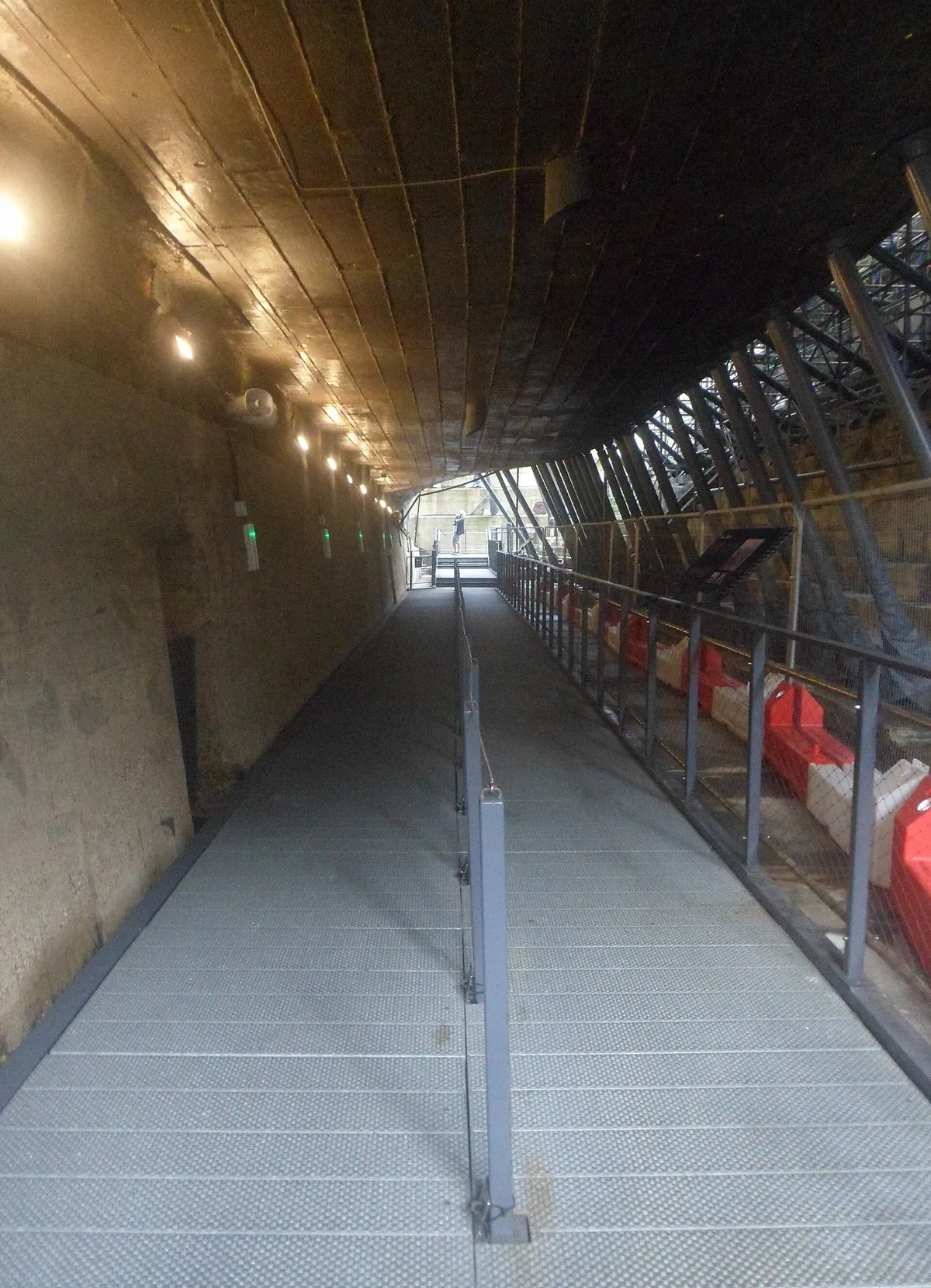
HMS Victory
HMS Victory is the ship where Horatio Nelson died. She's also the oldest commissioned warship in the world, still on the books of the Royal Navy after 260 years. But Nelson's death is the thing. It's always been the thing. At Trafalgar on October 21, 1805, Nelson led the British fleet in two columns directly at the combined French and Spanish line. This was deliberate insanity. Sailing straight at an enemy line meant the lead ships would take raking fire for 40 minutes before they could fire back. Victory was the lead ship of the windward column. She absorbed broadside after broadside before crashing through the enemy line between Bucentaure and Redoutable. Nelson stood on Victory's quarterdeck in full dress uniform with his medals and decorations clearly visible. His officers begged him to change or cover the insignia. He refused. At 1:15 p.m., a musket ball fired from the fighting top of Redoutable hit Nelson in the left shoulder, passed through his lung, and lodged in his spine. He was carried below to the orlop deck where the surgeon, William Beatty, told him there was nothing to be done. Nelson died at 4:30 p.m. His last confirmed words were "Thank God I have done my duty." Britain won Trafalgar. The combined fleet lost 22 ships. The Royal Navy lost none. Nelson's tactical genius and personal courage broke Napoleon's naval power permanently. Britain would rule the seas for the next century. The cost was one admiral, beloved by his sailors and his nation, bleeding out on the planking of his own ship while the guns roared overhead. Victory herself took 12 years to build. Six thousand trees, mostly English oak, went into her construction. She was launched in 1765, didn't commission until 1778, and served in the American Revolutionary War, the French Revolutionary Wars, and the Napoleonic Wars before Trafalgar. She's been in dry dock at Portsmouth since 1922.
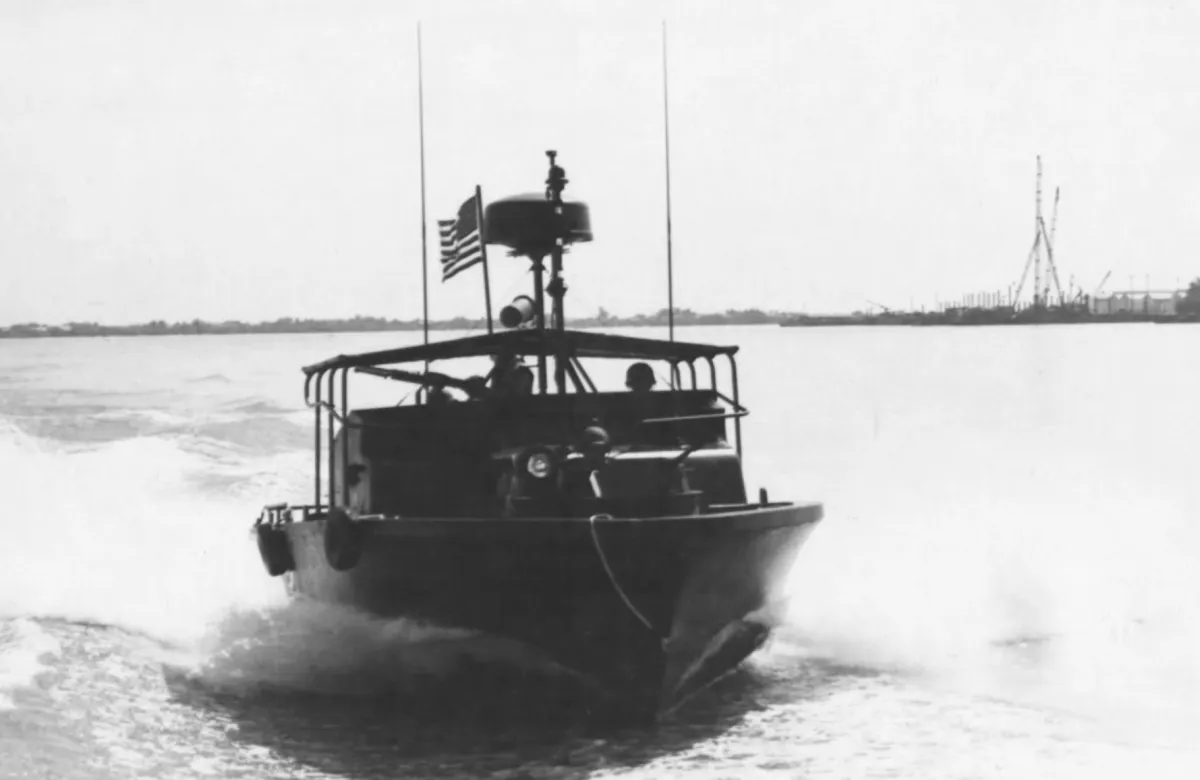
PBR Mark II (Patrol Boat, River)
The PBR Mark II was the Navy's answer to a problem nobody wanted: how do you project naval power up a river in the jungle? The Mekong Delta was a labyrinth of narrow waterways, mangrove swamps, and villages that could be friendly at dawn and hostile by noon. The Navy needed something fast, shallow-draft, and tough enough to absorb ambush fire and keep running. Hundreds of PBRs operated in Vietnam between 1966 and 1975 as part of Operation Game Warden and the Mobile Riverine Force. Four-man crews ran patrols that were part law enforcement, part combat mission. They stopped and searched sampans, interdicted supply routes, and drew fire from both banks of rivers too narrow to turn around in. Then Francis Ford Coppola put a PBR crew at the center of Apocalypse Now, and the boat became the most recognizable small military vessel in film history. The journey upriver to find Colonel Kurtz is a journey into madness, and the PBR is the last piece of institutional sanity the crew has. When the boat stops, civilization stops. The real PBR deserves its reputation independently of Hollywood. It was a fiberglass hull in a war zone, crewed by young men doing the most dangerous small-boat duty in Navy history.
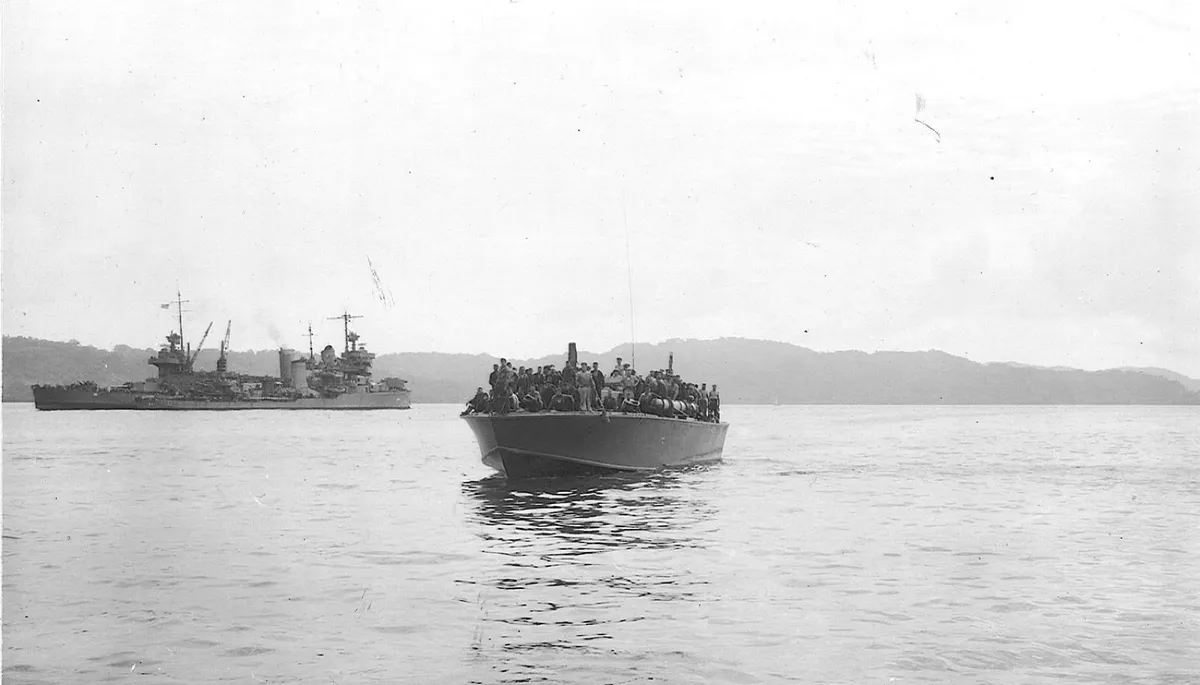
PT-109
PT-109 is the most famous small vessel in American military history because a future president survived its sinking. On August 2, 1943, the Japanese destroyer Amagiri cut PT-109 in half in the Blackett Strait. Lt. John F. Kennedy towed a badly burned crew member by clenching the strap of his life jacket in his teeth and swimming for four hours. The crew survived six days on a deserted island. PT boats were fast, fragile, and expendable. Their crews knew it.
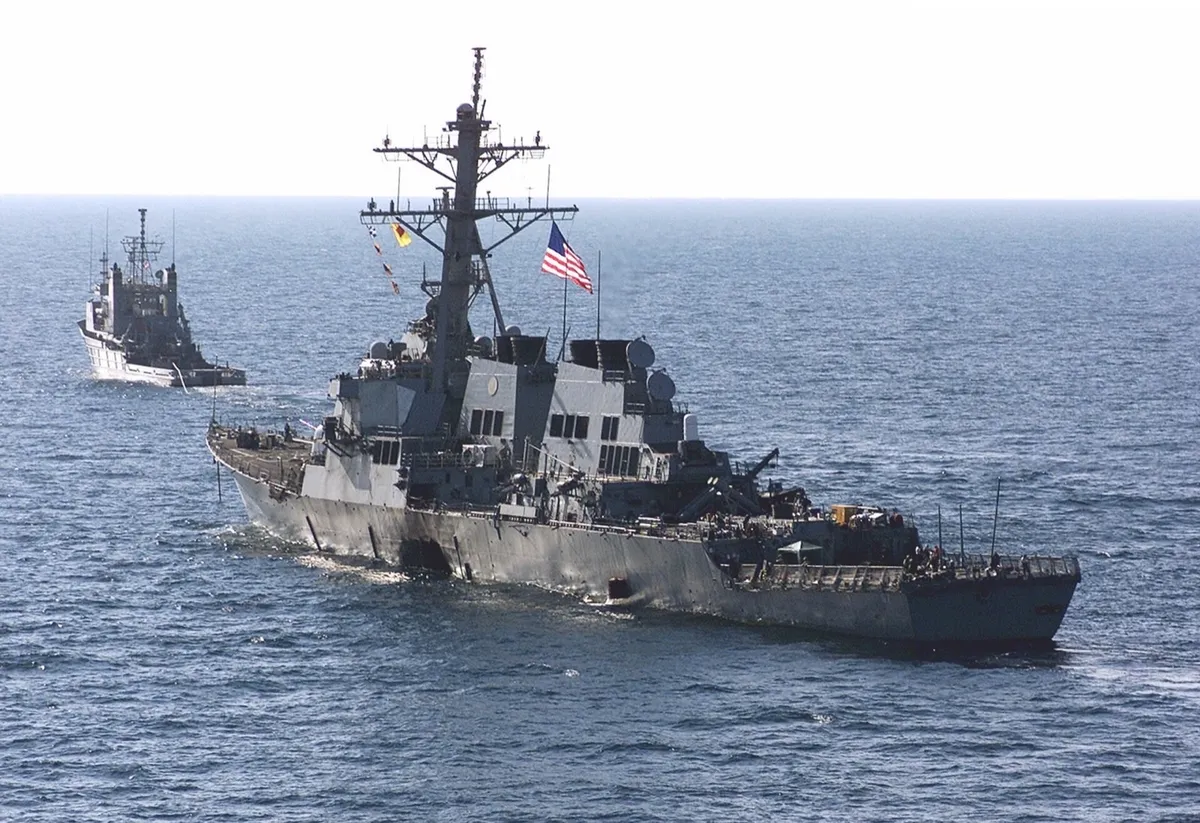
USS Cole
On October 12, 2000, the USS Cole pulled into Aden, Yemen, for a routine refueling stop. A small fiberglass boat piloted by two al-Qaeda operatives pulled alongside and detonated roughly 400 to 700 pounds of shaped explosives against the port side of the hull. The blast tore a hole 40 feet wide and 60 feet high in the destroyer's side. Seventeen sailors were killed. Thirty-seven were injured. Most of the dead were in the galley, eating lunch. The crew's response was extraordinary. The ship was flooding, without power, listing, and on fire. Sailors formed bucket brigades, shored up bulkheads with mattresses and wooden shores, and kept the Cole from sinking through three days of round-the-clock damage control. They saved the ship with training, grit, and improvisation. The Navy later said the crew's performance was one of the finest displays of damage control in the service's history. The Cole bombing was a direct precursor to September 11, 2001. Al-Qaeda planned and executed both. The mastermind of the Cole attack, Abd al-Rahim al-Nashiri, was later captured and held at Guantanamo Bay. Osama bin Laden referenced the Cole attack in recruitment videos. The attack demonstrated that a billion-dollar warship with the most advanced combat system in the world could be crippled by two men in a fishing boat with homemade explosives. It was asymmetric warfare made real. The Navy transported Cole home on the heavy-lift ship MV Blue Marlin, a surreal image of a destroyer riding piggyback across the Atlantic. Ingalls Shipbuilding in Pascagoula repaired her over 14 months. She returned to the fleet in 2002 and has deployed multiple times since. The 17 sailors who died are memorialized on the ship and at Arlington National Cemetery. The Cole changed how the Navy thinks about force protection. Port visits in hostile regions now involve layered security, armed watch teams, and barriers. The days of a warship sitting unprotected in a foreign harbor are over. Seventeen people died for that lesson.
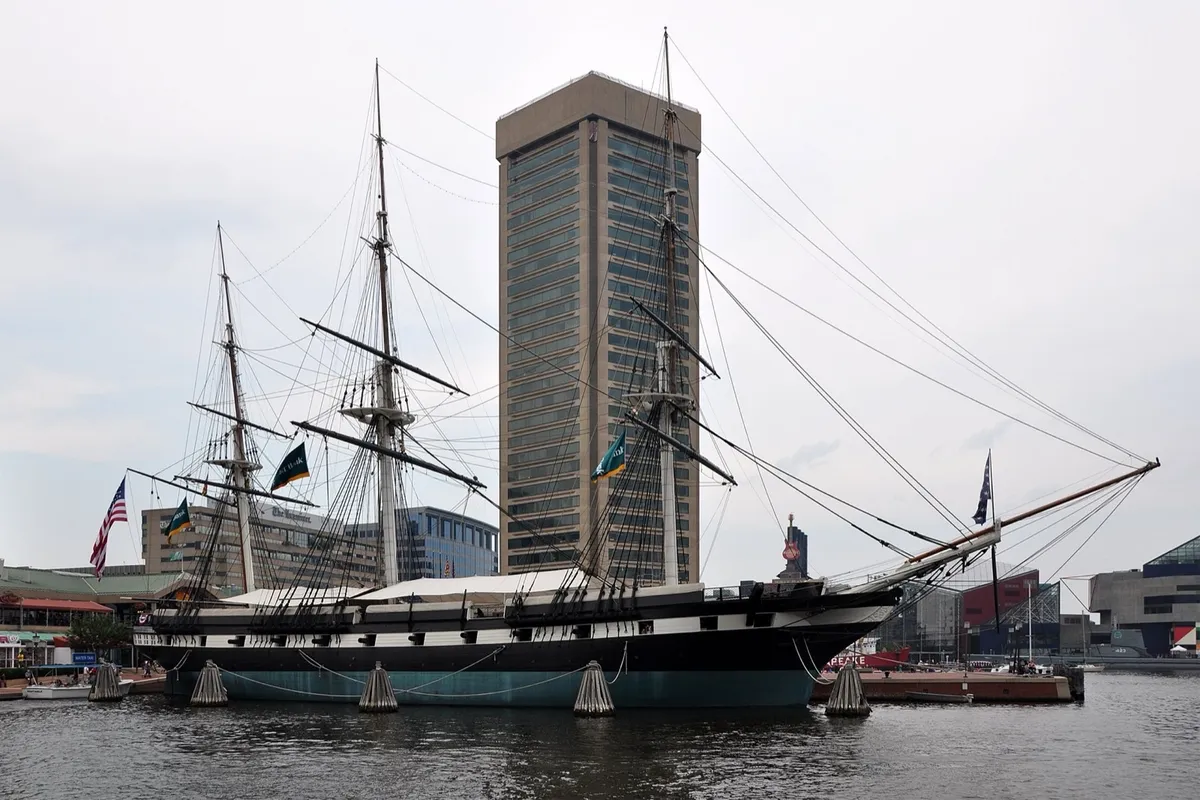
USS Constellation
The USS Constellation in Baltimore Harbor is a beautiful ship with an identity crisis. For decades, the Navy and the city of Baltimore claimed she was the original 1797 frigate, one of the first six frigates authorized by Congress, the first U.S. Navy warship to put to sea, sister to the USS Constitution. That story is almost certainly wrong. The scholarly consensus, led by naval historian Dana Wegner's 1991 study, is that the ship in Baltimore is the 1854 sloop-of-war. A different vessel. The original 1797 frigate was broken up at the Gosport Navy Yard in Norfolk, and the 1854 ship was built using some of the old timbers but on a completely different design. She's a sloop-of-war, not a frigate. Different hull shape, different gun arrangement, different dimensions. The Navy muddied the waters by giving her the same name and claiming continuity for budget reasons. It was cheaper to "rebuild" an existing ship than to fund a new one from Congress. This matters because the truth is more interesting than the myth. The 1854 Constellation served in the Africa Squadron, intercepting slave ships during the illegal transatlantic slave trade. In 1858, she captured the slaver Cora with 705 enslaved Africans aboard. In 1860, she captured three more ships. These were real operations with real consequences. The people freed from those ships were taken to Liberia. Whether that constituted rescue is its own complicated question. She served as a training ship at the Naval Academy during the Civil War, then spent decades in various roles before being brought to Baltimore in 1955 as a museum ship. The restoration work assumed she was the 1797 vessel and added frigate-style gun ports that the 1854 sloop never had. So the ship you see today is a 19th-century sloop wearing an 18th-century frigate costume. Baltimore has largely stopped making the 1797 claim, though the debate still generates heat. The ship is worth visiting on her own merits. She's the last surviving Civil War-era naval vessel and one of the oldest ships in the Navy's inventory, even without the frigate pedigree.
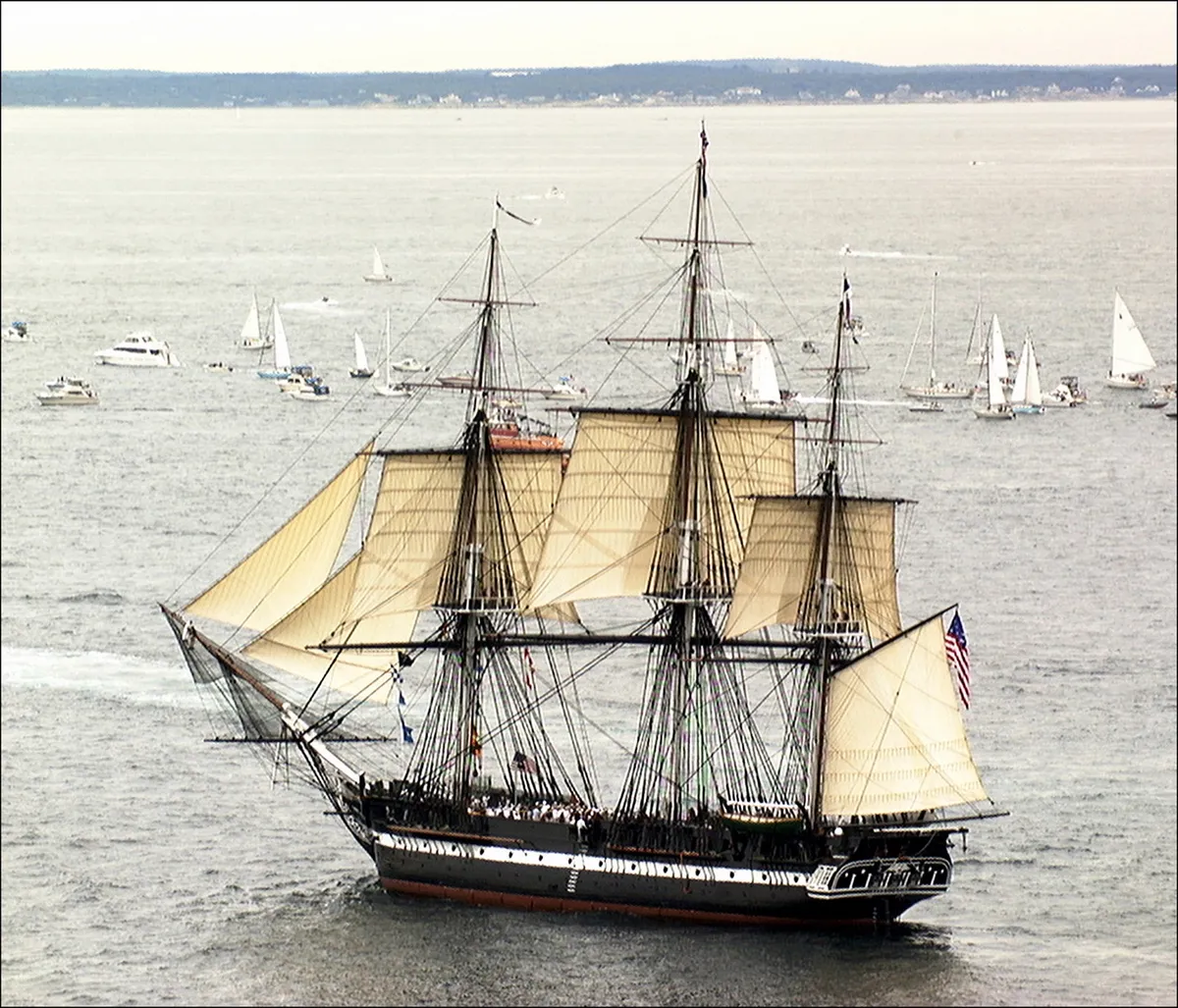
USS Constitution
USS Constitution is the oldest commissioned warship still afloat. She was launched in 1797 and is still in the U.S. Navy. Not as a museum — as an active-duty warship with a crew of U.S. Navy sailors. During the War of 1812, she defeated five British warships in single combat. In the battle against HMS Guerriere, British sailors watched their cannonballs bounce off Constitution's hull and shouted 'Huzzah, her sides are made of iron!' The nickname stuck. The hull was built with live oak — a Southern wood so dense it sinks in water and resists cannonball penetration better than any other timber. Constitution was saved from the scrapyard multiple times: once by Oliver Wendell Holmes' poem in 1830, once by a nationwide penny drive in 1905, and once by a $12 million restoration in the 1990s.
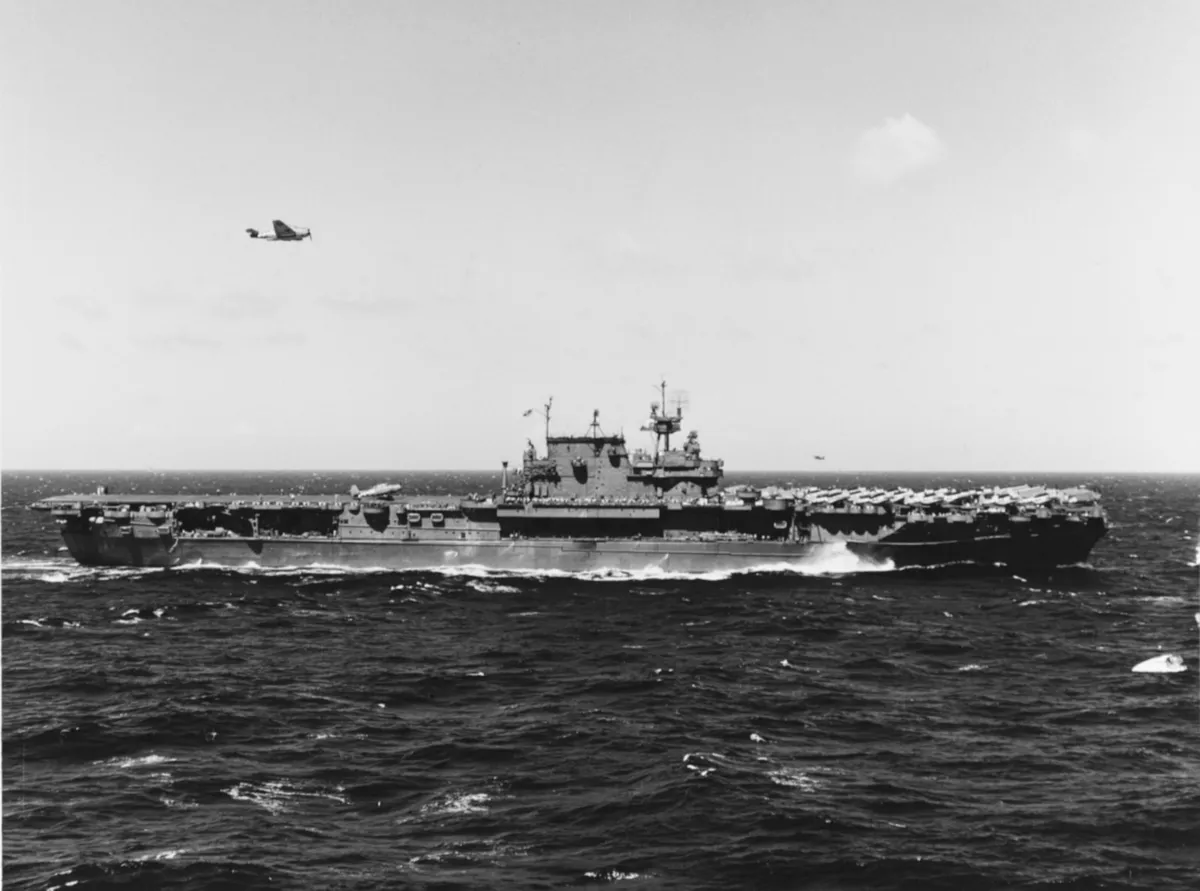
USS Enterprise (CV-6)
USS Enterprise earned 20 battle stars, more than any other US warship in World War II. She fought at Midway, the Eastern Solomons, the Santa Cruz Islands, Guadalcanal, the Philippine Sea, Leyte Gulf, Iwo Jima, and Okinawa. She was in the fight from two weeks after Pearl Harbor to the Japanese surrender. The Japanese reported sinking her three times. She kept coming back. Enterprise was the ship that proved the aircraft carrier had replaced the battleship as the dominant weapon in naval warfare. Her air groups sank more enemy tonnage than any other carrier's. And when the war ended, she was sold for scrap. No museum. No memorial. The most decorated warship in American history was cut apart for razor blades and rebar. It remains one of the great preservation failures in naval history.
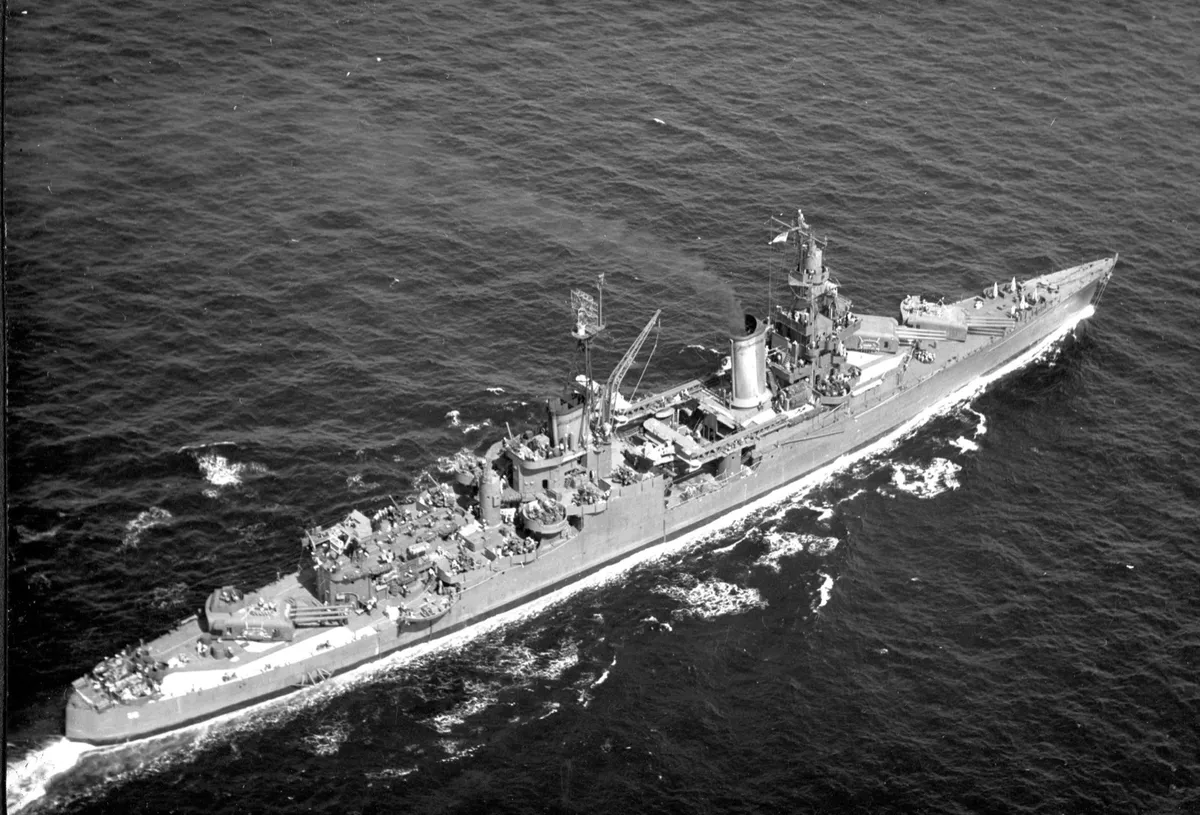
USS Indianapolis
USS Indianapolis delivered the components of the atomic bomb that would destroy Hiroshima. On the return trip, without escort, a Japanese submarine sank her with two torpedoes. Of 1,196 crew, roughly 900 made it into the water. They floated for four and a half days before rescue. Sharks, dehydration, salt water poisoning, and exposure killed approximately 580 men. Only 316 survived. It remains the worst shark attack in recorded history and the single largest loss of life from a single ship in U.S. Navy history. Captain McVay was court-martialed — the only U.S. Navy captain court-martialed for losing a ship to enemy action during WWII. He killed himself in 1968.
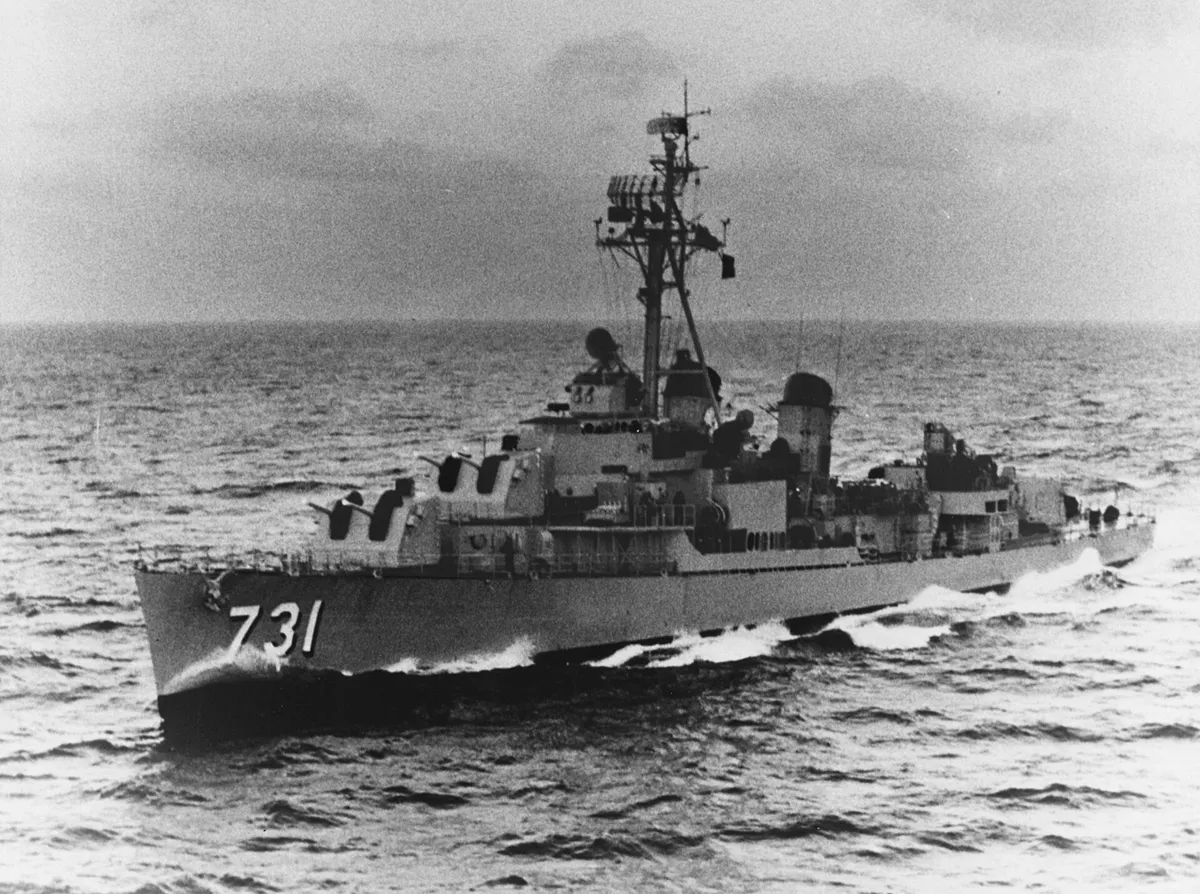
USS Maddox
The USS Maddox is probably responsible for more American deaths than any other destroyer in history, and she never fired a shot that caused them. On August 2, 1964, three North Vietnamese torpedo boats attacked Maddox in the Gulf of Tonkin. That part actually happened. Maddox returned fire, took one bullet hole in her superstructure, and the torpedo boats got chewed up by aircraft from the carrier Ticonderoga. A minor skirmish by any standard. Two days later, on August 4, Maddox and the destroyer Turner Joy reported a second attack. Radar contacts. Sonar contacts. Both ships fired into the darkness for hours. The problem is that the second attack almost certainly never happened. The radar and sonar returns were ghosts caused by weather, sea conditions, and jumpy operators. Captain Herrick of the Maddox sent a message within hours expressing doubt about the whole thing. It didn't matter. President Johnson went to Congress with both incidents and got the Gulf of Tonkin Resolution, which gave him authority to escalate military operations in Vietnam without a formal declaration of war. Congress voted 416-0 in the House and 88-2 in the Senate. The two senators who voted no were Wayne Morse and Ernest Gruening, and they were right. 58,220 Americans died in Vietnam. Somewhere north of two million Vietnamese died. The war tore the country apart for a decade. And it was launched on the back of an attack that a destroyer captain doubted before the gun barrels cooled. Robert McNamara admitted decades later that the August 4 attack didn't happen. The NSA declassified documents in 2005 confirming that intelligence had been deliberately skewed to support the narrative. The Maddox herself had an unremarkable career otherwise. She served in three wars, did her job, and was scrapped in 1972. The ship is gone. What she started isn't.
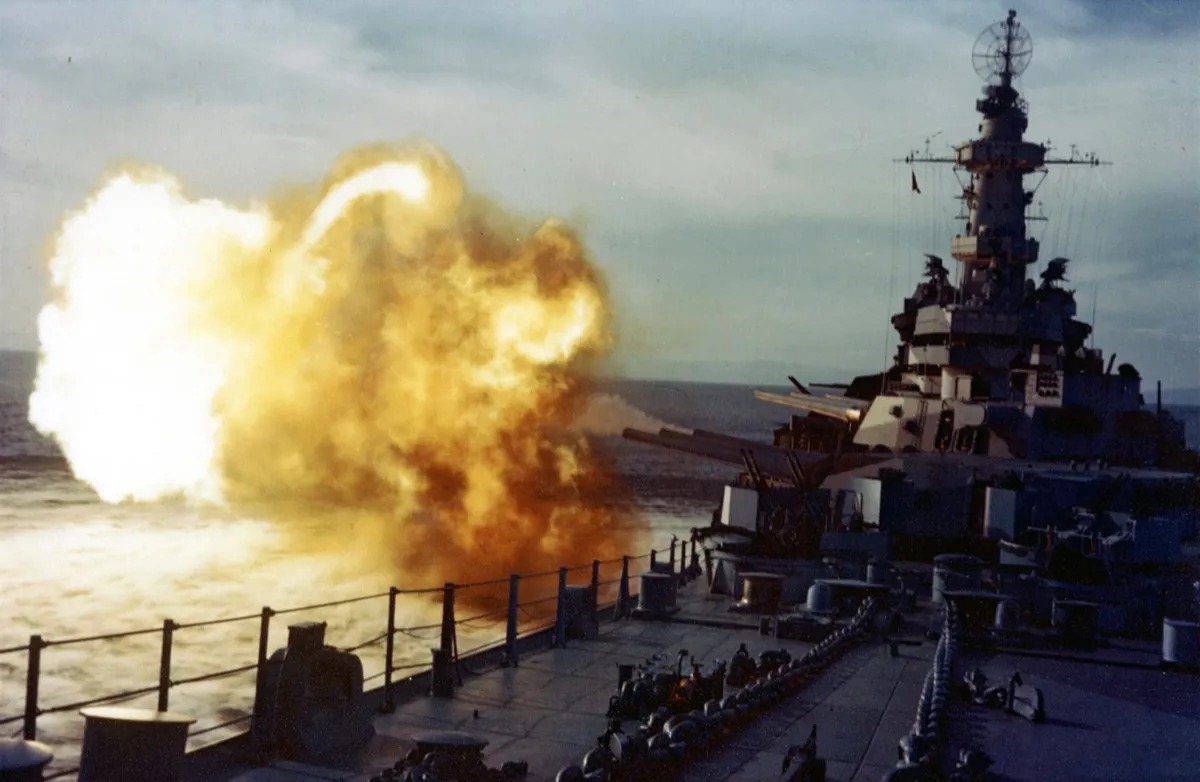
USS Missouri
USS Missouri is where World War II ended. On September 2, 1945, the Japanese delegation came aboard and signed the instrument of surrender on her deck in Tokyo Bay. That single event made Missouri the most historically significant warship of the 20th century, but it shouldn't overshadow what she actually was: an Iowa-class battleship, the most powerful surface warship class ever built by the United States. She served in Korea, shelling coastal positions, and was recommissioned in the 1980s as part of Reagan's 600-ship Navy, refitted with Tomahawk cruise missiles and Harpoon anti-ship missiles. She fired Tomahawks and her 16-inch guns in Desert Storm in 1991. She is the last American battleship to have fired her guns in combat.
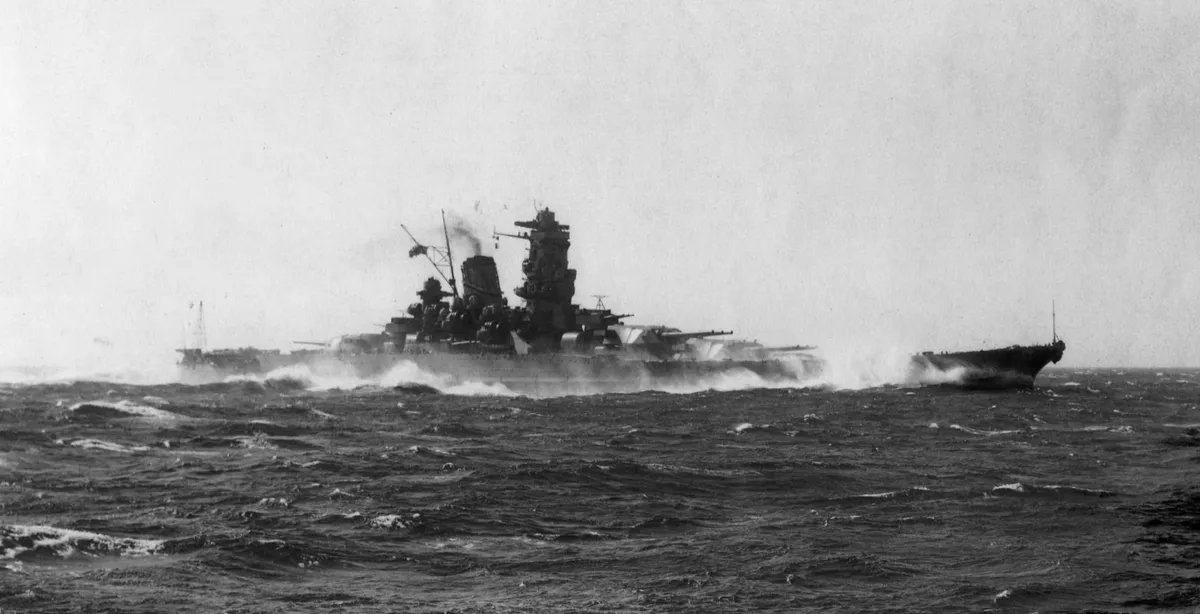
Yamato
Yamato was the largest, heaviest, most powerfully armed battleship ever built. Her 18.1-inch guns could throw 3,200-pound shells 26 miles. She displaced more than any warship before or since. The Japanese kept her existence secret — workers at Kure Naval Arsenal were forbidden from discussing what they were building. Yamato represented the pinnacle of battleship design, and she was obsolete before her paint dried. By 1945, carrier aviation had made the battleship a relic. Japan's navy was shattered. Yamato was sent on Operation Ten-Go — a one-way mission to beach herself at Okinawa and fight as a fixed battery until destroyed. She never got close. On April 7, 1945, 386 American aircraft swarmed her. She took 10 torpedo hits and 7 bomb hits before her forward magazines exploded. She capsized and sank, taking 3,055 of her 3,332 crew.