ironclad
2 vessels
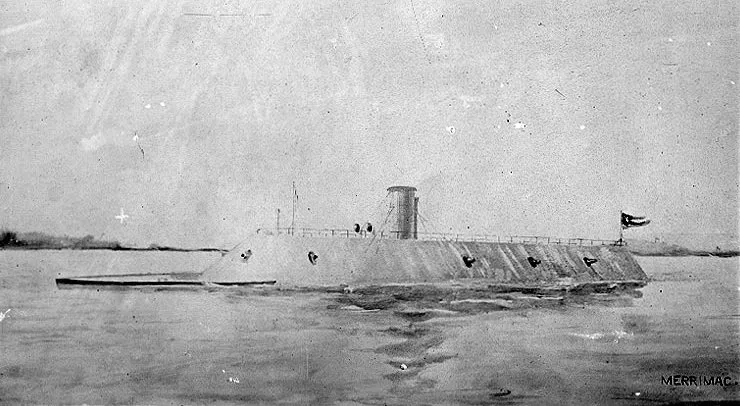
CSS Virginia
The CSS Virginia was born from desperation and scrap metal. When Union forces abandoned the Norfolk Navy Yard in April 1861, they burned the steam frigate USS Merrimack to the waterline and sank her. The Confederacy raised the hull, found the engines salvageable (barely), and built an armored casemate on top. Four inches of iron plate bolted over 24 inches of oak and pine, sloped at 36 degrees to deflect shot. She looked like a barn roof floating on a raft. She was the most dangerous warship in the Western Hemisphere. On March 8, 1862, Virginia steamed into Hampton Roads and attacked the Union blockading squadron. She rammed and sank the USS Cumberland, a 24-gun sloop that went down with 121 of her crew still fighting. Her guns couldn't hurt Virginia. The frigate USS Congress surrendered after Virginia's shells set her ablaze. Another 120 men died. The wooden warships USS Minnesota, USS Roanoke, and USS St. Lawrence all ran aground trying to escape. If Virginia had returned the next morning unopposed, she could have broken the Union blockade. But Monitor was waiting. The four-hour engagement the next day proved that the age of wooden warships was finished. Virginia landed dozens of hits on Monitor without breaking through. Monitor's Dahlgrens cracked Virginia's armor in places but couldn't penetrate. Virginia tried to ram but Monitor was too nimble. It was the first battle between ironclad warships, and it ended with both sides claiming victory and neither ship sunk. Virginia fought in the area for two more months but never left the Roads. Her 21-foot draft meant she could only navigate deep channels, and her engines, already condemned before the war started, could barely push her at walking speed. When Union forces advanced on Norfolk in May 1862, the crew tried to lighten her enough to escape upriver. They couldn't. On May 11, her crew set her afire and she exploded when the flames reached the magazine. Nothing of the ship survived.
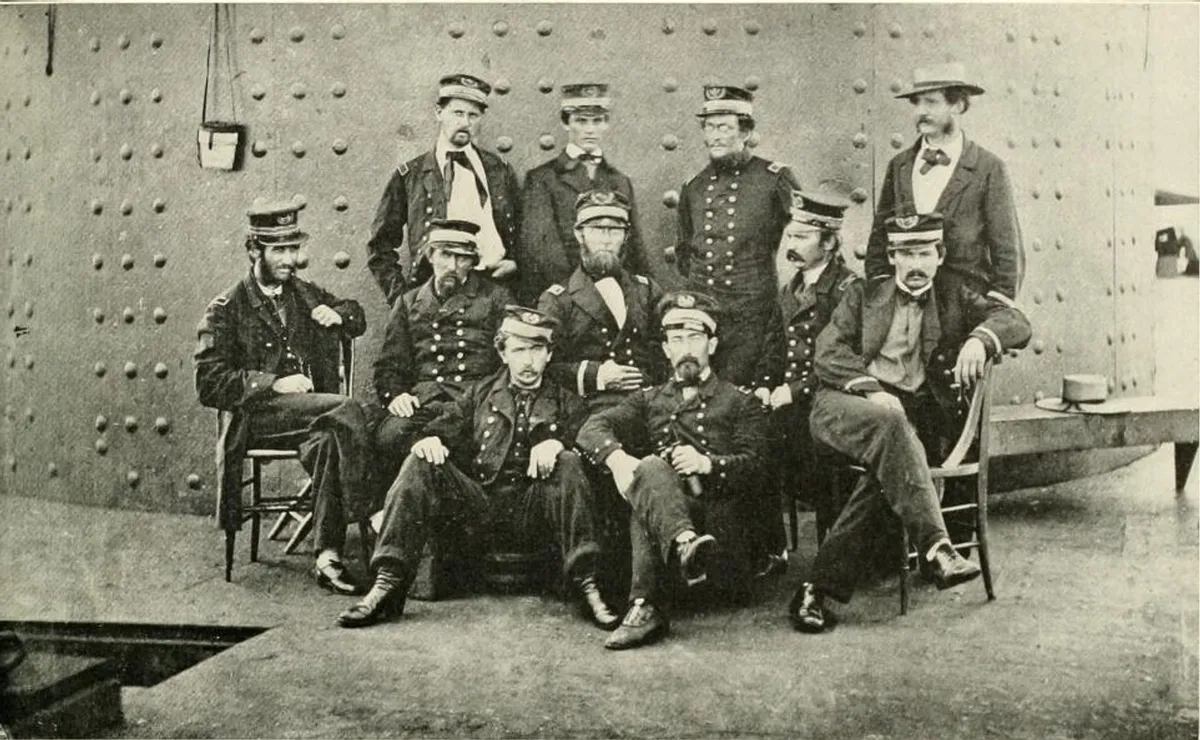
USS Monitor
John Ericsson designed the Monitor in about 100 days and Continental Iron Works in Brooklyn built her in roughly the same. She looked like nothing anyone had ever seen. A flat iron raft with a revolving turret on top, sitting so low in the water she was nearly submerged. Navy men called her "a tin can on a shingle" and "Ericsson's folly." She was the future of naval warfare. On March 8, 1862, the CSS Virginia steamed into Hampton Roads and destroyed two wooden Union warships, killing over 240 men. The USS Cumberland went down fighting. The Congress burned. The rest of the Union fleet was helpless. If Virginia came back the next morning, she'd destroy the grounded USS Minnesota and potentially break the Union blockade of the entire Confederacy. Monitor arrived that night, towed from New York, barely making it through rough seas that nearly sank her. The next morning, March 9, the two ironclads fought for about four hours at close range. Neither could penetrate the other's armor. Virginia's shots bounced off Monitor's turret. Monitor's 11-inch Dahlgrens dented but didn't break Virginia's casemate. It ended in a tactical draw. But the strategic impact was total. Every wooden navy in the world was obsolete. Britain and France, both building wooden ships of the line, stopped and pivoted to ironclad construction. The engagement at Hampton Roads didn't just change the Civil War. It changed every navy on earth in a single morning. Monitor herself lasted less than a year. She sank in a storm off Cape Hatteras on New Year's Eve 1862. Sixteen of her crew went down with her. The ship that made every other warship obsolete couldn't survive moderate seas. Ericsson's flat-deck design, revolutionary in combat, was fatally unsuited to open ocean.