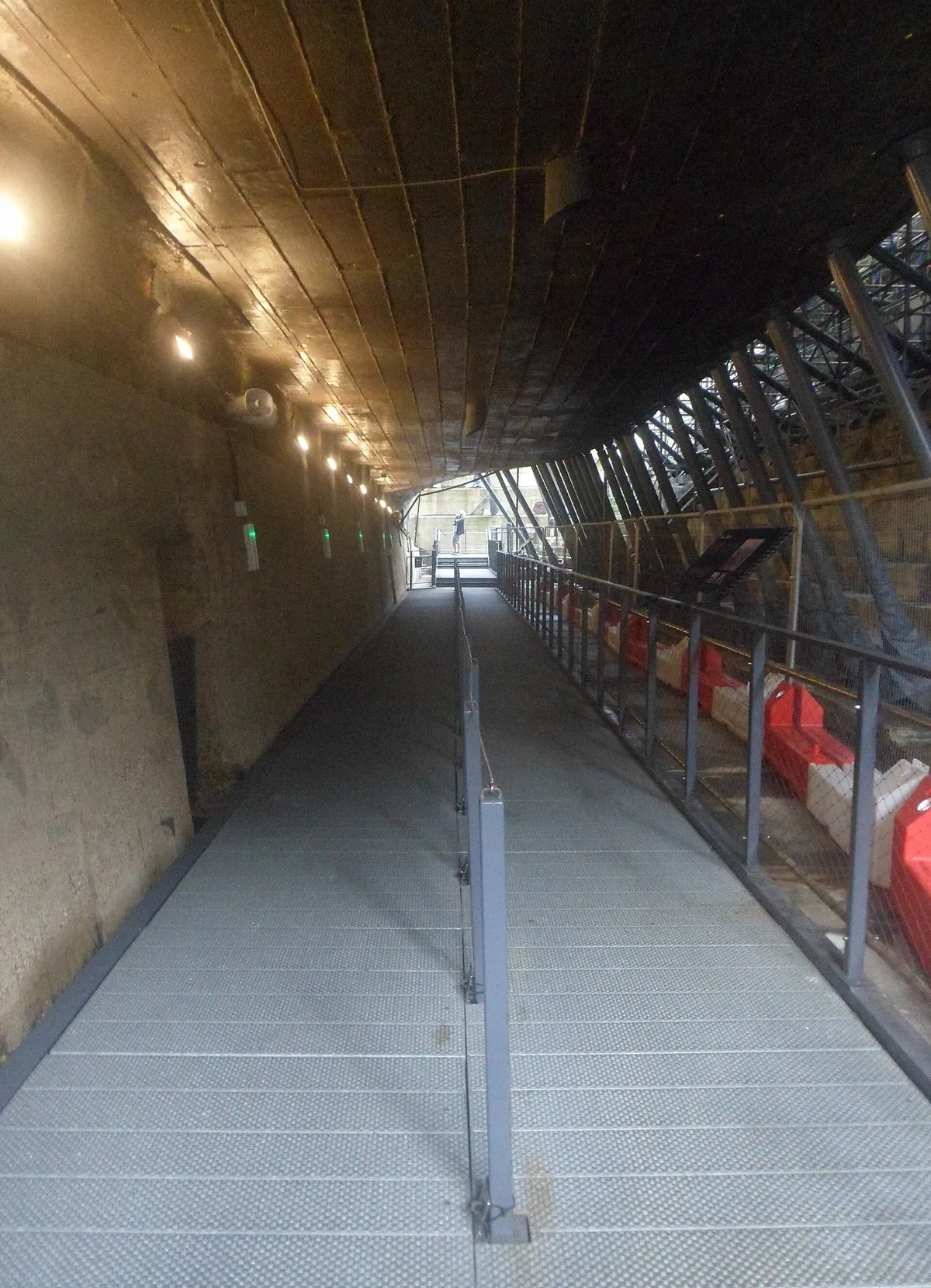
HMS Victory
First-rate ship of the line, 104 guns
Why it matters
HMS Victory is the ship where Horatio Nelson died. She's also the oldest commissioned warship in the world, still on the books of the Royal Navy after 260 years. But Nelson's death is the thing. It's always been the thing.
At Trafalgar on October 21, 1805, Nelson led the British fleet in two columns directly at the combined French and Spanish line. This was deliberate insanity. Sailing straight at an enemy line meant the lead ships would take raking fire for 40 minutes before they could fire back. Victory was the lead ship of the windward column. She absorbed broadside after broadside before crashing through the enemy line between Bucentaure and Redoutable.
Nelson stood on Victory's quarterdeck in full dress uniform with his medals and decorations clearly visible. His officers begged him to change or cover the insignia. He refused. At 1:15 p.m., a musket ball fired from the fighting top of Redoutable hit Nelson in the left shoulder, passed through his lung, and lodged in his spine. He was carried below to the orlop deck where the surgeon, William Beatty, told him there was nothing to be done. Nelson died at 4:30 p.m. His last confirmed words were "Thank God I have done my duty."
Britain won Trafalgar. The combined fleet lost 22 ships. The Royal Navy lost none. Nelson's tactical genius and personal courage broke Napoleon's naval power permanently. Britain would rule the seas for the next century. The cost was one admiral, beloved by his sailors and his nation, bleeding out on the planking of his own ship while the guns roared overhead.
Victory herself took 12 years to build. Six thousand trees, mostly English oak, went into her construction. She was launched in 1765, didn't commission until 1778, and served in the American Revolutionary War, the French Revolutionary Wars, and the Napoleonic Wars before Trafalgar. She's been in dry dock at Portsmouth since 1922.
What it was like
Eight hundred and twenty-one men lived and fought on Victory. The gun decks were the defining experience. Three decks of cannons, stacked vertically, with about five and a half feet of headroom on each. The lower gun deck, carrying the heaviest 32-pounders, was below the waterline. In battle, the gun ports were open and the ocean was right there. If the ship heeled in a turn, water poured in.
At Trafalgar, Victory was in close action for over four hours. The noise was beyond description. Each 32-pounder cannon fired with a concussion that stunned everyone nearby. Multiply that by 30 guns on one deck, firing simultaneously, in an enclosed wooden space. Men bled from their ears. They communicated by gesture and lip-reading. The smoke was so dense that gun crews couldn't see the length of their own deck. They loaded, ran out, and fired by muscle memory.
Splinters were the primary killer. A cannonball hitting Victory's oak hull produced a spray of jagged wood fragments traveling at the speed of shrapnel. Some splinters were two feet long. The cockpit on the orlop deck, below the waterline, was where the surgeon worked. William Beatty operated by candlelight, amputating limbs with a saw and cauterizing stumps with hot pitch. There was no anesthesia. The wounded lay on the deck around him, some screaming, some silent. Nelson died among them.
The crew
Surgeon (William Beatty)
Beatty operated in the cockpit on the orlop deck, the lowest inhabited deck, below the waterline and theoretically protected from enemy fire. His workspace was about 6 feet by 12 feet. His instruments were saws, knives, and forceps. His anesthesia was rum and a leather strap to bite on. During Trafalgar, he treated dozens of wounded. When Nelson was brought down, Beatty examined the wound and knew immediately it was fatal. He published an account of Nelson's death in 1807 that remains one of the most detailed medical reports of the era.
Powder Monkey
Powder monkeys were boys, some as young as 10, who carried gunpowder cartridges from the magazine deep in the ship to the gun crews above. They ran through the decks in the middle of battle, carrying flannel cartridges of loose powder that would ignite if a spark touched them. The route from magazine to gun deck was designed with sharp turns and wet screens to prevent flash fires from reaching the magazine. A direct hit on the magazine would destroy the ship. The boys knew this. They ran anyway.
Marine (Royal Marines detachment)
Victory carried a detachment of Royal Marines who served as sharpshooters, boarding parties, and shipboard security. At Trafalgar, Marines were stationed in the fighting tops (platforms high on the masts) and on the upper decks. It was a French Marine in the fighting top of Redoutable who shot Nelson. Victory's own Marines were firing back. The exchange of musket fire between ships locked alongside each other at point-blank range was intimate, personal violence in a way that cannon fire was not. You could see the face of the man you killed.
Patina notes
Victory has been in dry dock at Portsmouth since 1922. She is the oldest surviving warship from the age of sail and one of the most heavily restored vessels in existence.
Major restorations occurred in the 1920s, 1950s, and most recently a multi-decade program that began in the 2000s. The lower hull has been substantially rebuilt.
The upper works, masts, and rigging are maintained to appear as she did at Trafalgar. Original fabric remains in the structure, but like Constitution, the percentage decreases with each restoration cycle. The dry dock environment protects her from the marine organisms that would destroy a wooden hull in open water, but also creates its own problems with drying, cracking, and the shifting of timbers under their own weight without the support of water.
Preservation reality
Victory is maintained by the National Museum of the Royal Navy at the Portsmouth Historic Dockyard. She is open for tours year-round and is one of the most visited historic ships in the world.
The experience is remarkably effective. You walk the gun decks where the crew fought. You stand on the quarterdeck where Nelson fell. You descend to the orlop deck where he died.
A brass plaque marks the spot. The current restoration, which began in 2011, is the most comprehensive in the ship's history and has addressed structural concerns about the hull's ability to support its own weight in dry dock.
The project has cost tens of millions of pounds. Victory is not just a museum ship. She is the flagship of the First Sea Lord, still in commission, and every Royal Navy officer visits her as part of their training.
Where to see one
- • Portsmouth Historic Dockyard, Portsmouth, England (permanent dry dock display)
- • National Museum of the Royal Navy, Portsmouth
Preservation organizations
- • National Museum of the Royal Navy
- • HMS Victory Preservation Trust
- • Royal Navy
Sources
- National Museum of the Royal Navy - HMS Victory (2026-03-05)
- William Beatty, Authentic Narrative of the Death of Lord Nelson (1807) (2026-03-05)
- Naval History and Heritage Command (2026-03-05)
Related vessels
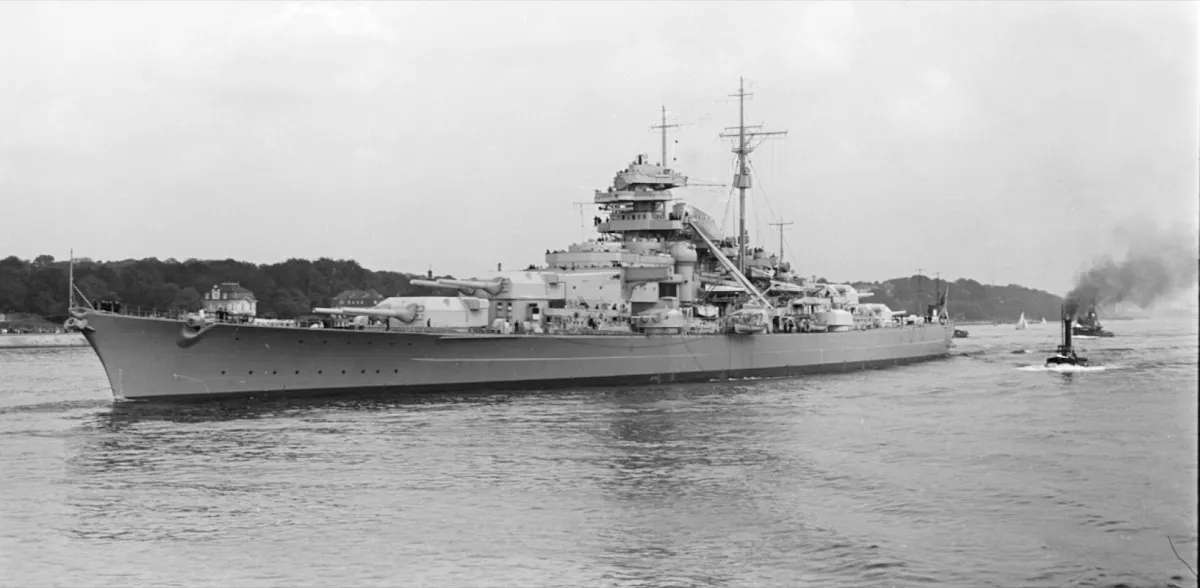
Bismarck
Bismarck's operational career lasted eight days. In that time, she became the most famous warship of the twentieth century. On May 24, 1941, she engaged HMS Hood and HMS Prince of Wales in the Denmark Strait. A shell from Bismarck penetrated Hood's magazine. The explosion broke Hood in half. She sank in three minutes. Of 1,418 crew, three survived. Hood was the pride of the Royal Navy. Churchill's order was immediate and absolute: sink the Bismarck. The Royal Navy sent everything. Battleships, carriers, cruisers, destroyers. Swordfish torpedo bombers — fabric-covered biplanes that looked like they belonged in the previous war — scored the hit that jammed Bismarck's rudder. She could only steam in circles. The next morning, King George V and Rodney pounded her for ninety minutes. Bismarck's crew scuttled her. Of 2,065 men, 114 survived.
Black Pearl
Before 2003, the pirate movie was a dead genre. After Pirates of the Caribbean, every kid in America wanted a ship with black sails. The Black Pearl did for pirate vessels what the Millennium Falcon did for spaceships. It made the vehicle a character. The ship represents freedom in its purest cinematic form. Jack Sparrow doesn't want gold or power. He wants his ship back. That's it. The entire first film is a man trying to reclaim the one thing that makes him who he is. The Black Pearl isn't transportation. It's identity. Johnny Depp's performance gets the credit, and it should. But the ship sells the fantasy. The black sails against a Caribbean sunset. The ragged rigging. The impossible speed. You believe this ship is alive because the movie treats it like one. The prop was built on a steel barge called the Sunset, dressed with a full wooden superstructure. Additional ships were constructed for later films, and digital effects expanded the Pearl's capabilities well beyond anything that floats.
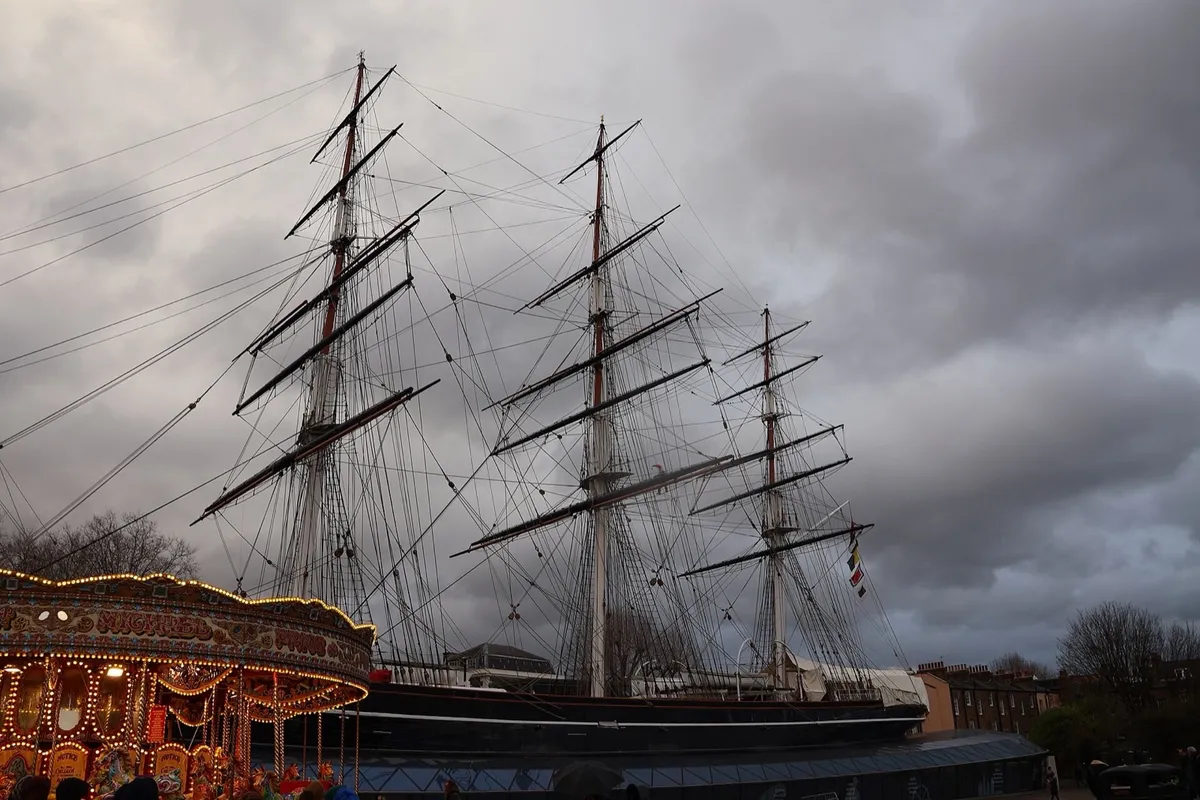
Cutty Sark
The Cutty Sark was born obsolete. She launched in 1869, the same year the Suez Canal opened and killed the tea clipper trade in a single stroke. Steam ships could use the canal. Sailing ships couldn't. The entire economic logic that justified building a vessel optimized for speed from China to London evaporated before she'd completed her first season. That's either terrible timing or a fitting monument to an era that was already dead. She raced in the tea trade anyway for a few seasons, most famously against the clipper Thermopylae in 1872. Cutty Sark was winning when she lost her rudder in a gale and had to jury-rig a replacement from spare spars. She still finished the voyage, arriving in London only a week behind Thermopylae. That tells you everything about the ship and the men who sailed her. Her second life was in the Australian wool trade, and this is where she finally proved herself. Under Captain Richard Woodget (1885-1895), she became the fastest wool clipper afloat, consistently making the passage from Sydney to London in under 80 days. She'd load over 5,000 bales of wool, drive south into the roaring forties, and run her easting down at speeds that left every other sailing vessel behind. Woodget was the captain she deserved. The name comes from Robert Burns's 1791 poem "Tam o' Shanter." Tam, drunk and riding home, watches witches dance and shouts in admiration at a young witch wearing a cutty sark, a short nightgown. She chases him. He barely escapes. The ship's figurehead is the witch Nannie, reaching forward with arm outstretched. It's a perfect name for a ship that was always chasing something just out of reach. After the wool trade declined, she was sold to a Portuguese company, renamed Ferreira, and spent decades hauling cargo in the South Atlantic. A retired sea captain named Wilfred Dowman found her in a Portuguese port in 1922, recognized what she was, bought her, and brought her home to England. Without Dowman, she would have been broken up. She is the only clipper ship that survives.