exploration
6 vessels
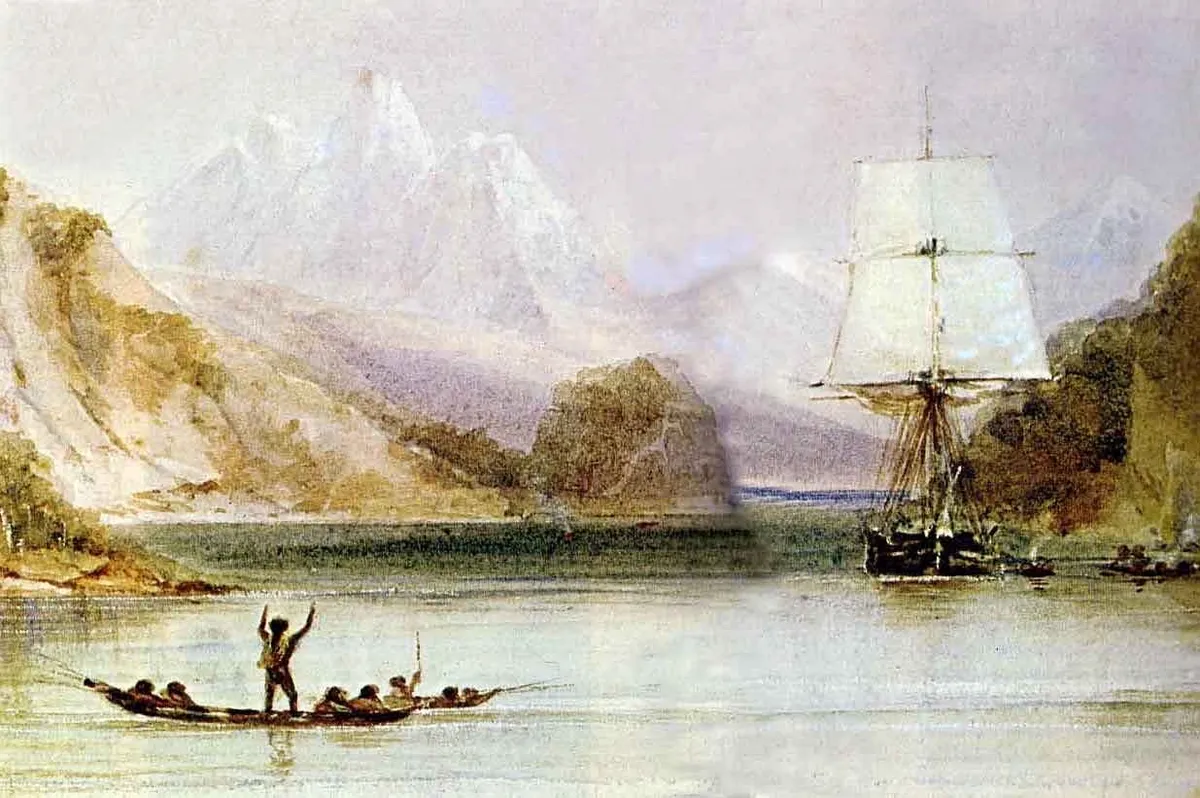
HMS Beagle
HMS Beagle was a perfectly ordinary warship that happened to carry the right person to the right places at the right time. She was one of over 100 Cherokee-class brig-sloops built by the Royal Navy. Nothing special about the hull, the rig, or the design. What made her extraordinary was that in 1831, a 22-year-old theology graduate named Charles Darwin talked his way aboard as the captain's gentleman companion and unpaid naturalist, and what he saw during the next five years rewrote the story of life on earth. The Beagle made three voyages. The first (1826-1830) was a survey mission to South America under Captain Pringle Stokes, who shot himself in the head in a fit of despair at the conditions in Tierra del Fuego. Robert FitzRoy took command and brought the ship home. The second voyage (1831-1836) is the famous one. FitzRoy wanted a gentleman companion to keep him company and keep him sane. He'd seen what isolation did to Stokes and knew he carried the same risk. Darwin got the job partly because FitzRoy liked the shape of his nose. Phrenology was taken seriously in 1831. Darwin spent five years collecting specimens, making observations, and being violently seasick. He was miserable at sea and ecstatic on land. The Galápagos Islands got most of the credit, but it was the full range of observations across South America, the Pacific, and beyond that built the case for evolution by natural selection. On the Origin of Species wouldn't be published until 1859, twenty-three years after the voyage ended. The ideas needed that long to mature, and Darwin needed that long to gather his nerve. FitzRoy's story is the darker thread. He was a brilliant navigator and a deeply religious man who came to believe that Darwin's work contradicted Scripture. He spent years trying to reconcile what the voyage had revealed with his faith. He couldn't. He became Chief of the new Meteorological Department, invented weather forecasting, was mocked by the press for inaccurate predictions, and cut his throat with a razor in 1865. The man who made Darwin's voyage possible was destroyed in part by what that voyage produced. The Beagle herself was retired from naval service in 1845 and transferred to the Coastguard. She was moored in the Essex marshes as Watch Vessel 7, had her masts removed, and was used as a floating customs station to catch smugglers. By 1870, she was sold for scrap. The ship that changed biology was buried in river mud.
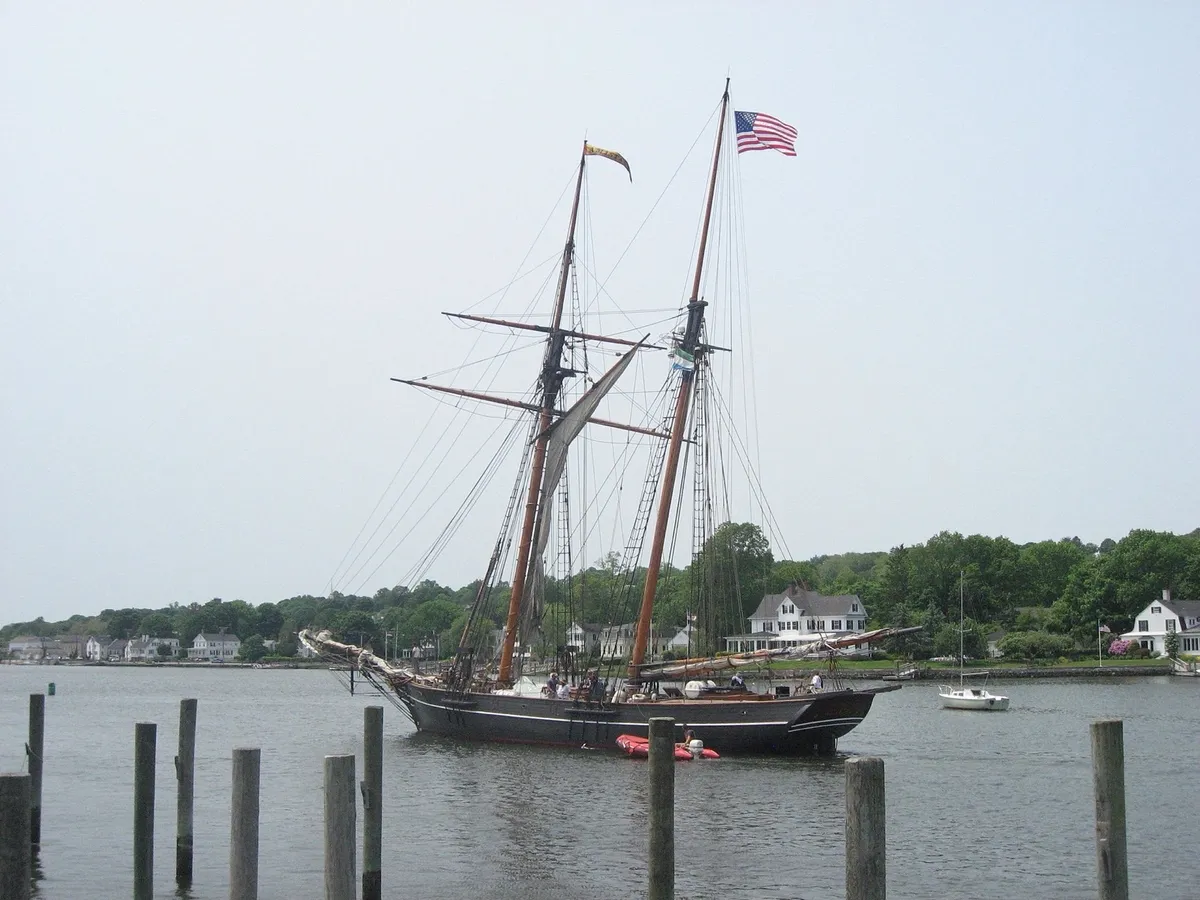
La Amistad
The Amistad was a small, unremarkable Spanish schooner that moved cargo between Cuban ports. In June 1839, she was carrying 53 Africans who had been kidnapped from Sierra Leone, shipped across the Atlantic on the slave ship Tecora, and sold at auction in Havana. They were being transported to a sugar plantation in Puerto Principe when Sengbe Pieh, known to the courts as Joseph Cinque, led a revolt. The captives broke free of their chains using a nail and a file. They killed the captain and the cook. They spared two crew members, Jose Ruiz and Pedro Montes, and ordered them to sail back to Africa. Ruiz and Montes complied during the day but reversed course at night, sailing northwest instead of east. For two months the Amistad zigzagged up the American coast while the Africans slowly starved. The US Navy brig Washington intercepted the Amistad off Long Island in August 1839. What followed was a legal battle that went all the way to the Supreme Court. The Spanish government demanded the return of their "property." President Van Buren wanted to comply. Abolitionists funded the defense. Former president John Quincy Adams, 73 years old and half-retired, argued the case before the Supreme Court in a performance that lasted eight hours over two days. The Court ruled that the Africans had been illegally kidnapped and had the right to use force to secure their freedom. They were not property. They were free people. Thirty-five survivors eventually returned to Sierra Leone in 1842, funded by abolitionist donations. The case didn't end slavery. It didn't even slow it down much. But it established in American law that enslaved people were human beings with legal rights, and it gave the abolitionist movement a victory they could point to for the next twenty years. The ship's name means "friendship" in Spanish. The irony writes itself.
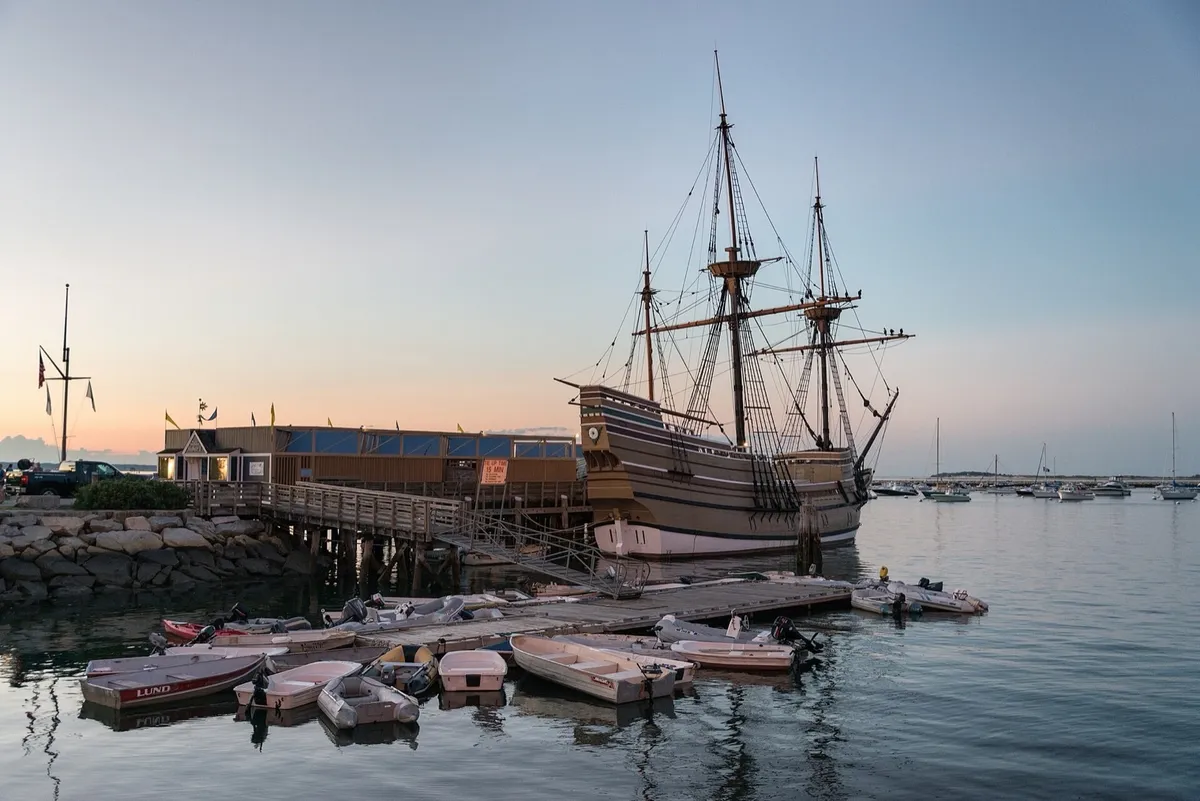
Mayflower
Mayflower carried 102 passengers and about 30 crew from Plymouth, England to Cape Cod in the autumn of 1620. The crossing took 66 days. They were aiming for Virginia. They hit Massachusetts instead. That navigational miss changed the political trajectory of North America. The ship was a cargo hauler, not a passenger vessel. She'd spent years carrying wine between England and France. For the Atlantic crossing, the 'tween decks cargo hold was converted into living space by building crude wooden partitions. The ceiling height was about five feet. Into this space they packed 102 people, their belongings, livestock, tools, food stores, and their ambitions for a new world. Two people died during the crossing. One baby was born. The passengers arrived exhausted, malnourished, and sick. They anchored off Provincetown, explored for a month, then settled at Plymouth. That first winter killed half of them. The ship sat in Plymouth harbor through the winter because the crew was too sick to sail home. Mayflower matters not because the voyage was heroic. It wasn't. It was a desperate, poorly planned, badly timed expedition by people who had burned every bridge behind them. They left too late in the season, on a ship that leaked, with inadequate supplies, and landed in the wrong place. What makes it significant is that the survivors stayed. The Mayflower Compact, signed aboard before anyone went ashore, was a self-governing agreement that became a foundational document for American democracy. It was born of practical necessity, not idealism. They needed rules because they'd landed outside the jurisdiction of their charter.
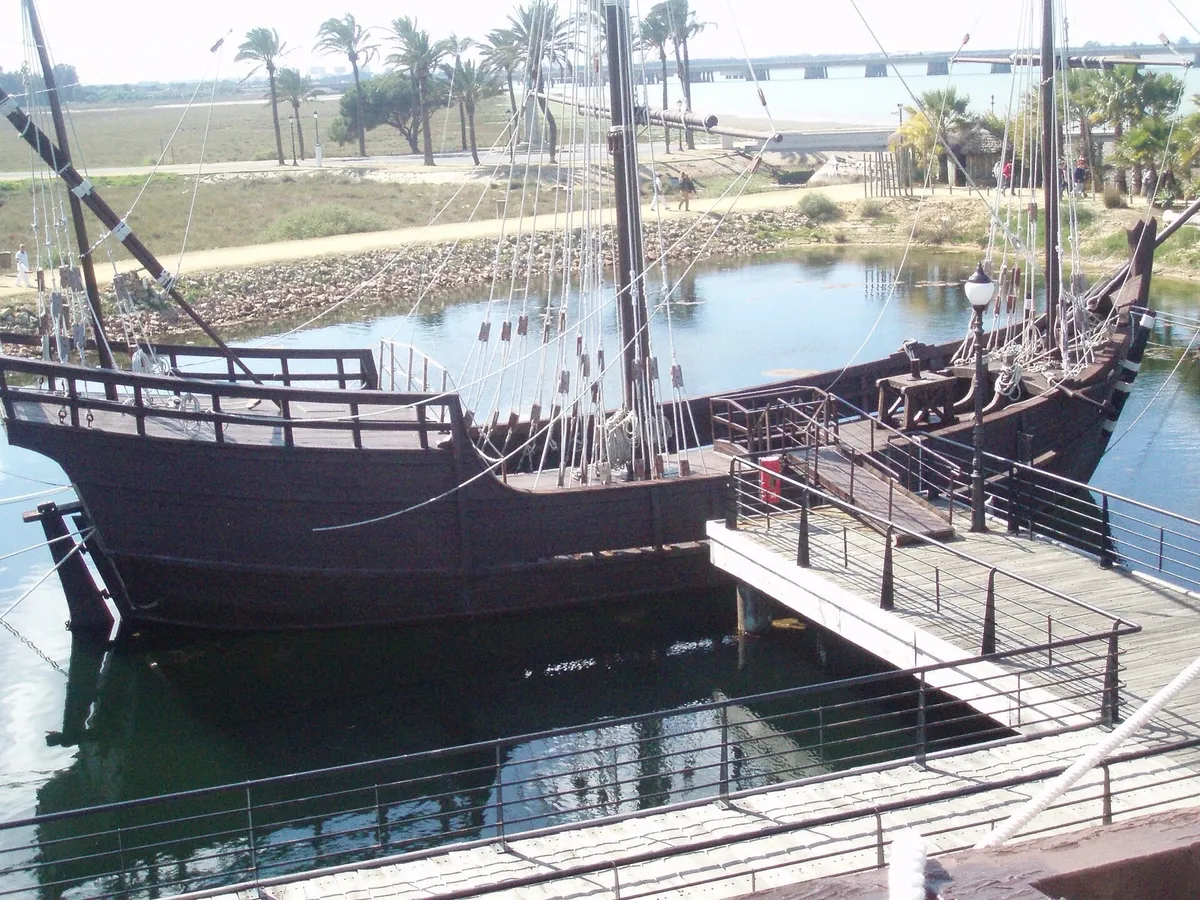
Niña
Niña was the workhorse of Columbus's expeditions and the ship he actually trusted with his life. Her real name was Santa Clara. 'Niña' was a nickname, probably after her owner Juan Niño. Columbus sailed her on the first and second voyages and she made at least five Atlantic crossings total, more than any other vessel of the 15th century. When Santa María ran aground on Christmas Day 1492, Columbus transferred to Niña for the return voyage. She carried him home. During the crossing back, they hit a storm so severe that Columbus wrote out an account of his discoveries on parchment, sealed it in a wax-coated barrel, and threw it overboard in case the ship went down. The ship didn't go down. Niña was that kind of vessel. She was a caravel, a Portuguese-developed design that was the technological marvel of the age. Small, shallow-drafted, and maneuverable, caravels could sail closer to the wind than any square-rigged ship. Columbus had her re-rigged from lateen to square sails in the Canary Islands before the Atlantic crossing, giving her the best of both worlds: square sails for running before the trade winds, with the option to go back to lateen for coastal work. Niña survived at least two Caribbean hurricanes after the first voyage. She was still sailing in 1501, possibly later. For a 50-foot wooden vessel built in the 1480s to still be operational after 15 years of hard Atlantic service is extraordinary. Most ships of her size and era lasted 10 years.
Pinta
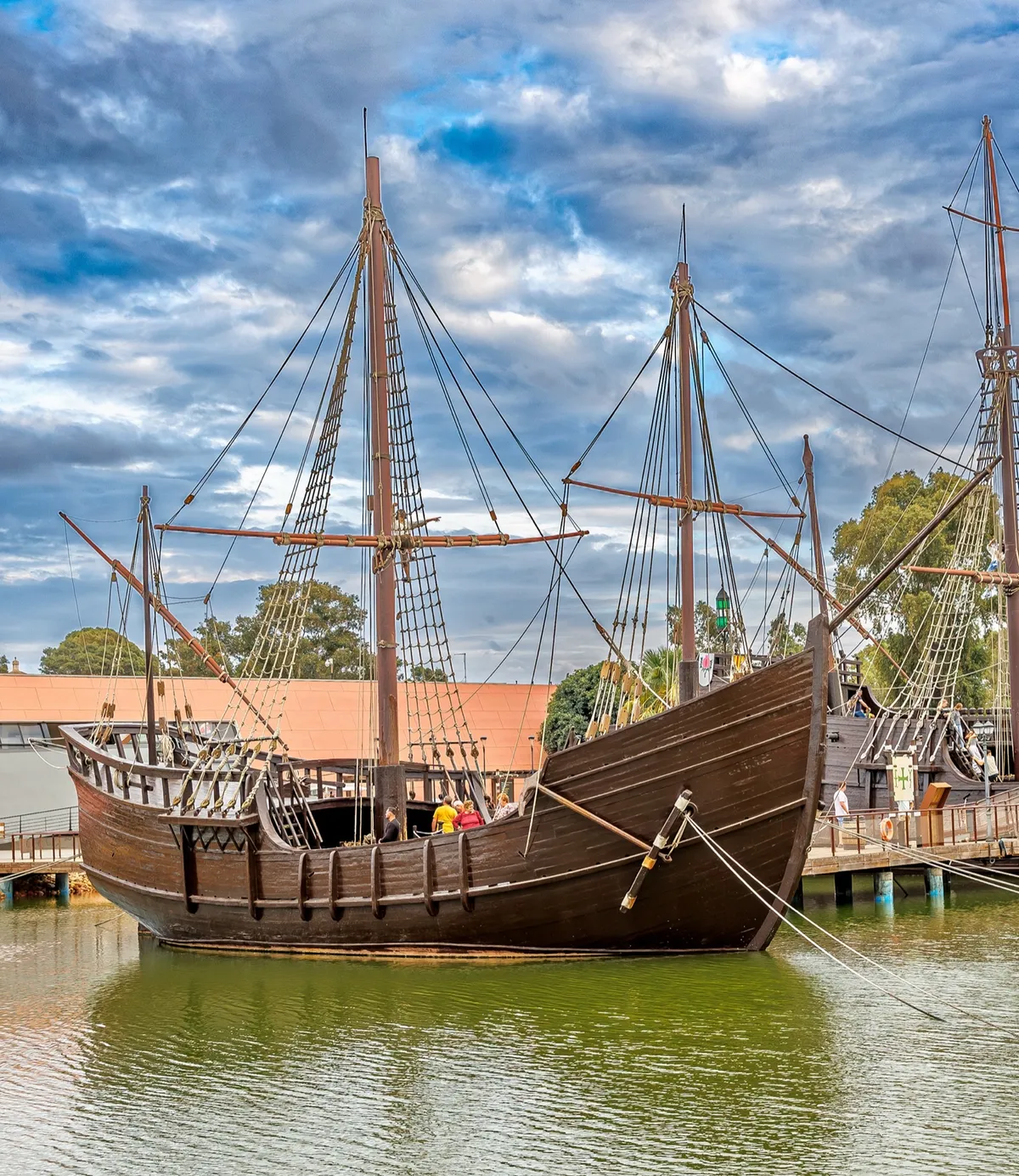
Pinta was the first European ship to sight the Americas. At 2 a.m. on October 12, 1492, her lookout Rodrigo de Triana spotted a white cliff in the moonlight and fired a lombard to signal the fleet. Thirty-three days of open ocean sailing were over. Land. Columbus later claimed he'd seen a light the evening before, which conveniently entitled him to the lifetime pension the Spanish crown had promised to the first man to sight land. Rodrigo de Triana never received a cent. He reportedly converted to Islam and moved to North Africa. The first man to see the New World died in obscurity, cheated by his own admiral. Pinta's captain was Martín Alonso Pinzón, the most experienced sailor on the expedition and a man who did not enjoy taking orders from Columbus. Pinzón went rogue at least twice. In late November 1492, he sailed Pinta away from the fleet without permission, heading for a large island (probably Great Inagua) where he'd heard there was gold. He was gone for six weeks. Columbus was furious. Pinzón rejoined the fleet in January, offered a weak excuse, and the two men barely spoke for the remainder of the voyage. On the return crossing, another storm separated the ships. Pinta reached Bayona, Spain before Niña reached Lisbon. Pinzón sent a message to Ferdinand and Isabella requesting an audience to report the discoveries himself. The monarchs refused and told him to wait for Columbus. Pinzón was already sick. He died within weeks of reaching Spain, probably from syphilis contracted in the Caribbean. The Pinzón family spent the next 20 years in court, suing the Columbus estate for credit and compensation.
Santa María
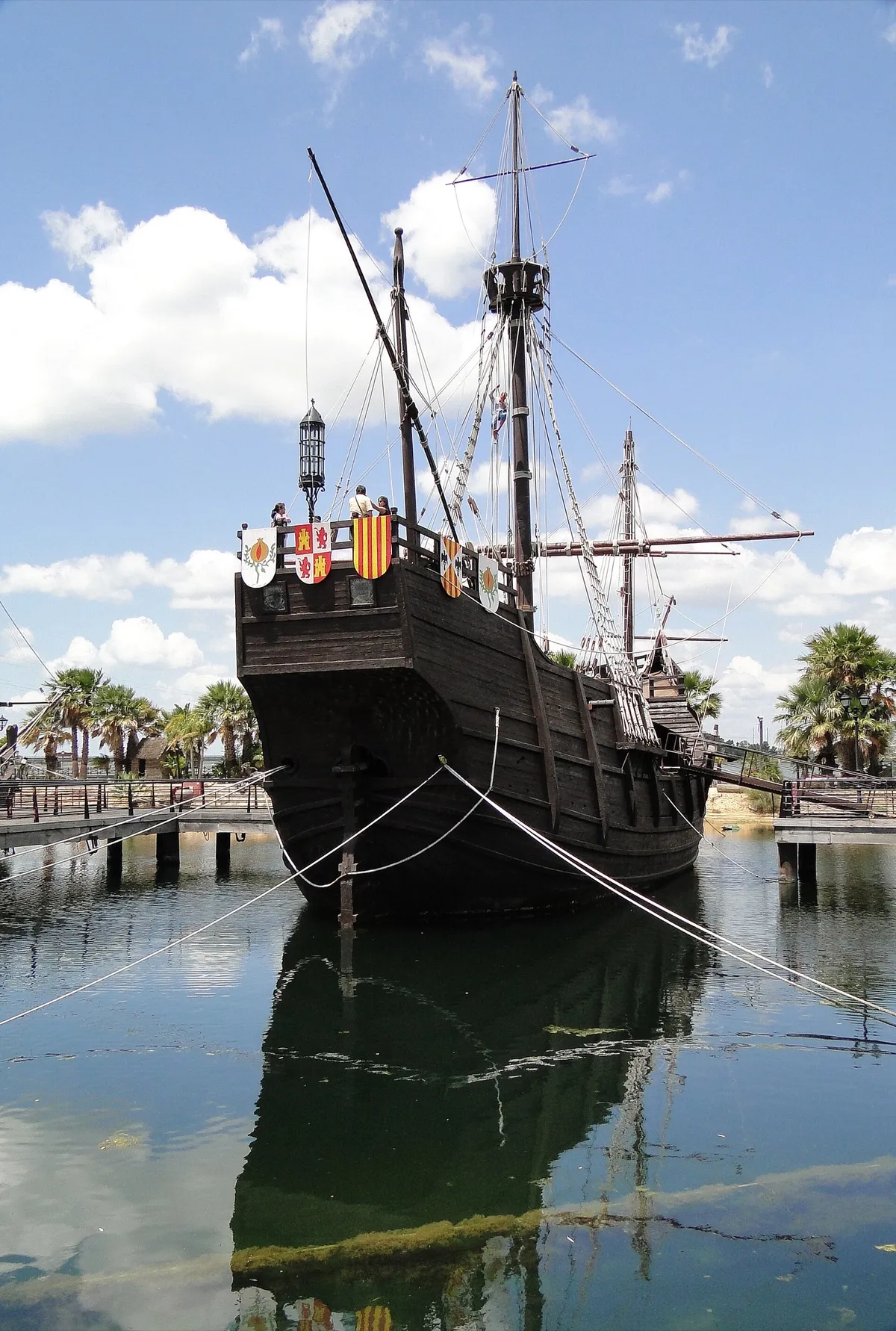
Santa María was the flagship of the most consequential naval expedition in history. Columbus sailed her across the Atlantic in 1492 and she never came back. She ran aground on a coral reef off the north coast of Hispaniola on Christmas Day while a cabin boy was at the tiller. Columbus was asleep. The captain was asleep. The watch officer had handed the helm to a kid, which Columbus had expressly forbidden. The ship couldn't be freed. Columbus ordered her stripped. The crew salvaged timber, nails, fittings, and stores, and built a fortified settlement on shore called La Navidad. Thirty-nine men volunteered to stay. When Columbus returned on his second voyage in November 1493, the settlement was burned to the ground and every man was dead. The Taíno had killed them, reportedly in retaliation for the Spaniards' violence and abduction of women. Columbus despised the Santa María. He considered her too slow, too heavy, and too deep-drafted for coastal exploration. She was a nao, a cargo vessel built to haul goods in bulk, not to thread through uncharted shoals. Columbus called her "la capitana" when being formal and complained about her in his log constantly. His real love was the Niña. The loss of Santa María on a reef validated every objection he'd ever raised about her. The ship's historical importance is enormous and brutal. She carried the first sustained European contact with the Americas. Everything that followed, the colonization, the slave trade, the decimation of indigenous populations, the creation of the modern Atlantic world, traces a line back to this sluggish, unloved cargo ship and the 40 men who sailed her into the unknown.