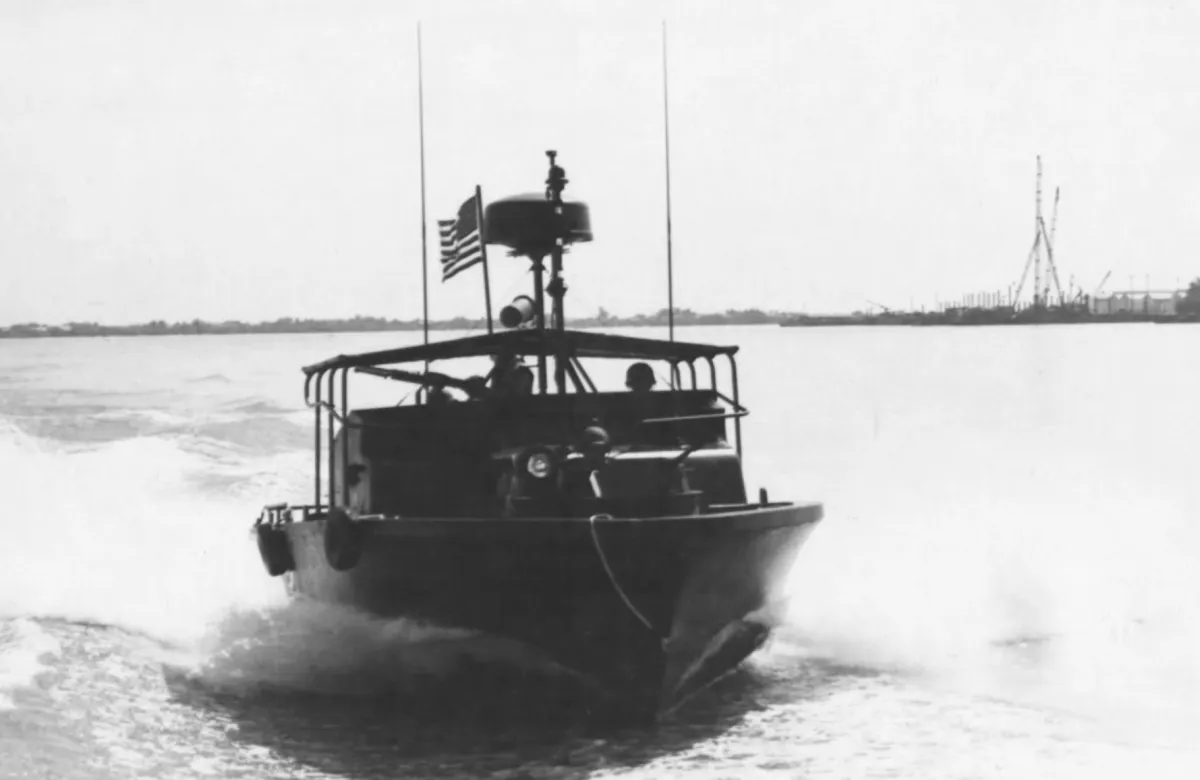
PBR Mark II (Patrol Boat, River)
Why it matters
The PBR Mark II was the Navy's answer to a problem nobody wanted: how do you project naval power up a river in the jungle? The Mekong Delta was a labyrinth of narrow waterways, mangrove swamps, and villages that could be friendly at dawn and hostile by noon. The Navy needed something fast, shallow-draft, and tough enough to absorb ambush fire and keep running.
Hundreds of PBRs operated in Vietnam between 1966 and 1975 as part of Operation Game Warden and the Mobile Riverine Force. Four-man crews ran patrols that were part law enforcement, part combat mission. They stopped and searched sampans, interdicted supply routes, and drew fire from both banks of rivers too narrow to turn around in.
Then Francis Ford Coppola put a PBR crew at the center of Apocalypse Now, and the boat became the most recognizable small military vessel in film history. The journey upriver to find Colonel Kurtz is a journey into madness, and the PBR is the last piece of institutional sanity the crew has. When the boat stops, civilization stops.
The real PBR deserves its reputation independently of Hollywood. It was a fiberglass hull in a war zone, crewed by young men doing the most dangerous small-boat duty in Navy history.
What it was like
PBR duty in Vietnam was volunteer-only, and for good reason. A four-man crew on an open boat, running 18-hour river patrols through territory where the treeline on both banks could open up with automatic weapons at any time.
The boat captain was usually a first-class petty officer in his early twenties. He made tactical decisions that a destroyer captain would delegate to a staff. The engineman kept the twin diesels and water jets running in tropical heat with river debris constantly threatening to foul the intakes. The gunner's mate manned the twin .50 cal mount forward. The seaman handled the M60s and everything else.
Sleep was rare and never restful. The noise of the engines at patrol speed made conversation impossible. You communicated with hand signals and experience. The water jets made the PBR fast and maneuverable, but they also made it loud. Everyone on the river knew you were coming.
Ambushes happened from close range. The rivers were narrow enough that rocket-propelled grenades could reach from bank to boat in seconds. The fiberglass hull stopped nothing. Ceramic armor plates were added to later models, but they covered the most critical areas, not the crew.
PBR casualties were high. The crews who survived developed the kind of bond that only comes from trusting three other people with your life every day in a boat the size of a living room.
The crew
Boat Captain
Usually a Boatswain's Mate First Class or a Quartermaster. Responsible for navigation, tactical decisions, and keeping three other men alive on a river where the rules changed every kilometer. The boat captain drove from a standing position behind a flat windshield that stopped bugs but not bullets. He was typically the oldest man aboard, which in Vietnam meant maybe 23.
Engineman
Kept the twin GM diesels and Jacuzzi water jet drives running in conditions they were never designed for. River debris, tropical heat, combat damage. The water jets gave the PBR its signature maneuverability but they ingested everything the river offered, including fishing nets, vegetation, and occasionally ammunition. The engineman's workspace was the engine compartment amidships, which doubled as the loudest, hottest spot on the boat.
Gunner's Mate
Manned the twin .50 caliber machine gun mount on the forward deck. This was the PBR's primary offensive weapon and the position with the least cover. During an ambush, the gunner's mate was the first to return fire and the most exposed crew member on the boat. The mount could traverse 360 degrees, which mattered when you were taking fire from both banks simultaneously.
Seaman
The most junior crew member handled the after guns (M60 machine guns and grenade launcher), radio communications, and anything else that needed doing. On a four-man boat, there are no bystanders. The seaman learned every other position because casualties were common and the boat still needed to get home.
Patina notes
Fiberglass doesn't rust, but it ages. The surviving PBRs show decades of UV degradation, stress cracks, and repairs. The gelcoat yellows and chalks. The hardware corrodes. The water jet intakes wear from decades of river debris.
The boats that saw combat carry patches and repairs that tell their own stories. Fiberglass patch over a bullet hole doesn't look like original construction. You can read a PBR's service history in its hull the way you read a boxer's career in his face.
The military-grade hardware — gun mounts, armor plates, radar housings — ages differently than the fiberglass. Steel rusts. Aluminum pits. The contrast between corroding metal and yellowing fiberglass gives surviving PBRs a distinctive look that's neither beautiful nor ugly. It's just honest.
Preservation reality
Surviving PBRs are rare. Most were transferred to the South Vietnamese Navy in the early 1970s and lost when Saigon fell in 1975. The boats that remained in US inventory were largely scrapped.
A handful survive in museums and private collections. The National Navy UDT-SEAL Museum in Fort Pierce, Florida, has a restored PBR. The USS Midway Museum in San Diego displays one. The Vietnam Veterans Memorial Museum in various locations have examples.
Private collectors have restored a few to running condition. These occasionally appear at boat shows and veteran events. The PBR's fiberglass construction means the surviving examples are structurally sound even after decades, though the mechanical systems require complete overhaul.
The boat used in Apocalypse Now was a real PBR borrowed from the Philippine Navy during filming. Its current whereabouts are uncertain.
Where to see one
- • National Navy UDT-SEAL Museum, Fort Pierce, FL
- • USS Midway Museum, San Diego, CA
- • National Museum of the United States Navy, Washington, DC
Related vessels
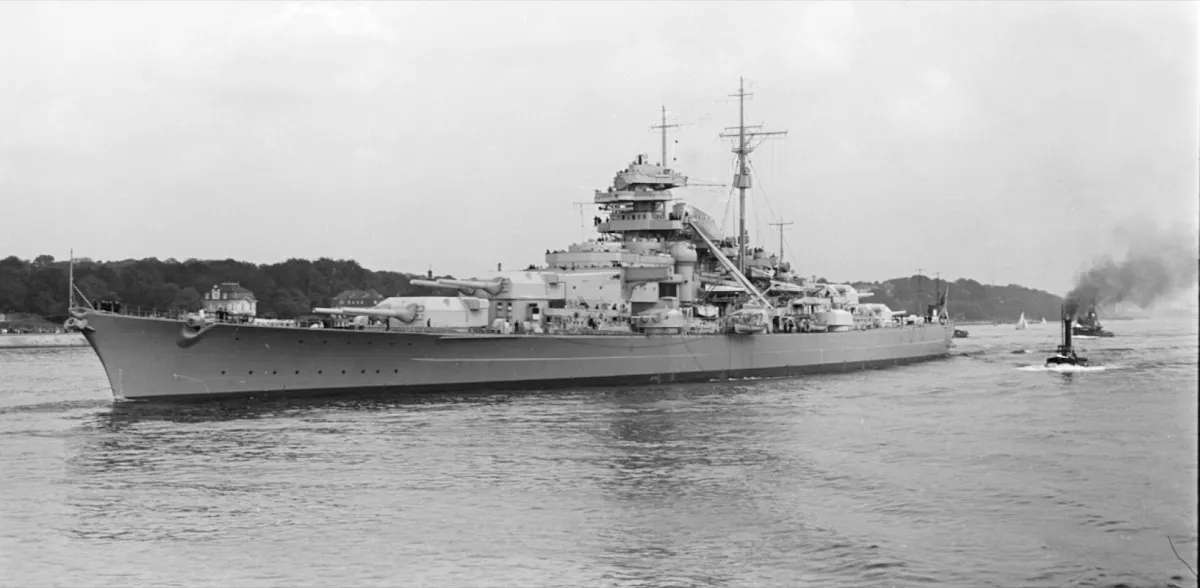
Bismarck
Bismarck's operational career lasted eight days. In that time, she became the most famous warship of the twentieth century. On May 24, 1941, she engaged HMS Hood and HMS Prince of Wales in the Denmark Strait. A shell from Bismarck penetrated Hood's magazine. The explosion broke Hood in half. She sank in three minutes. Of 1,418 crew, three survived. Hood was the pride of the Royal Navy. Churchill's order was immediate and absolute: sink the Bismarck. The Royal Navy sent everything. Battleships, carriers, cruisers, destroyers. Swordfish torpedo bombers — fabric-covered biplanes that looked like they belonged in the previous war — scored the hit that jammed Bismarck's rudder. She could only steam in circles. The next morning, King George V and Rodney pounded her for ninety minutes. Bismarck's crew scuttled her. Of 2,065 men, 114 survived.
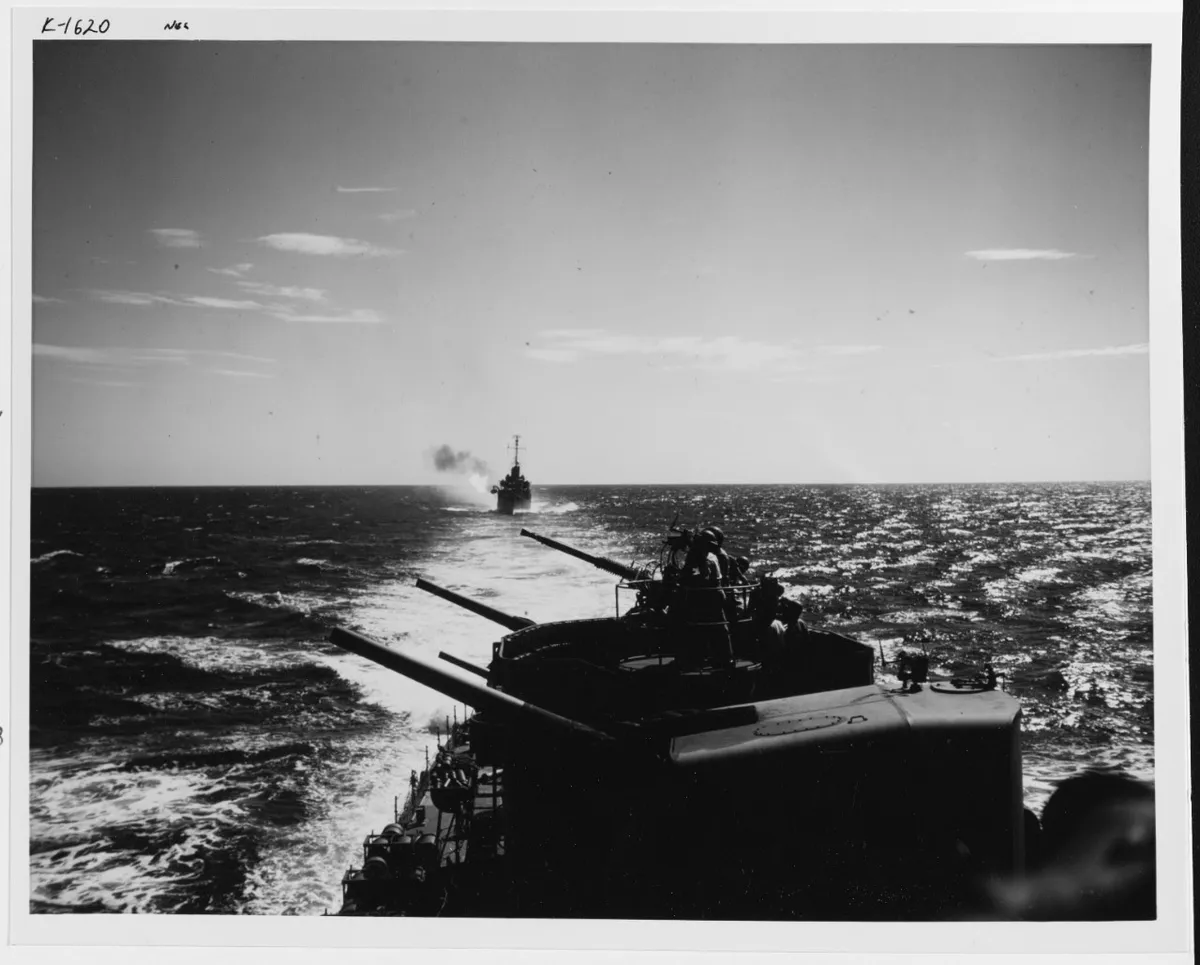
Fletcher-class Destroyer
The Fletcher class was the destroyer that won the Pacific. 175 built, more than any other destroyer class in history, and they did everything. Convoy escort in the Atlantic. Shore bombardment at Normandy. Surface actions in the Solomons. Radar picket duty at Okinawa, where they were positioned as sacrificial early-warning stations against kamikaze attacks. Nineteen Fletchers were lost during the war. They weren't glamorous. They were the ships that showed up everywhere, did the ugly work, and took casualties doing it.
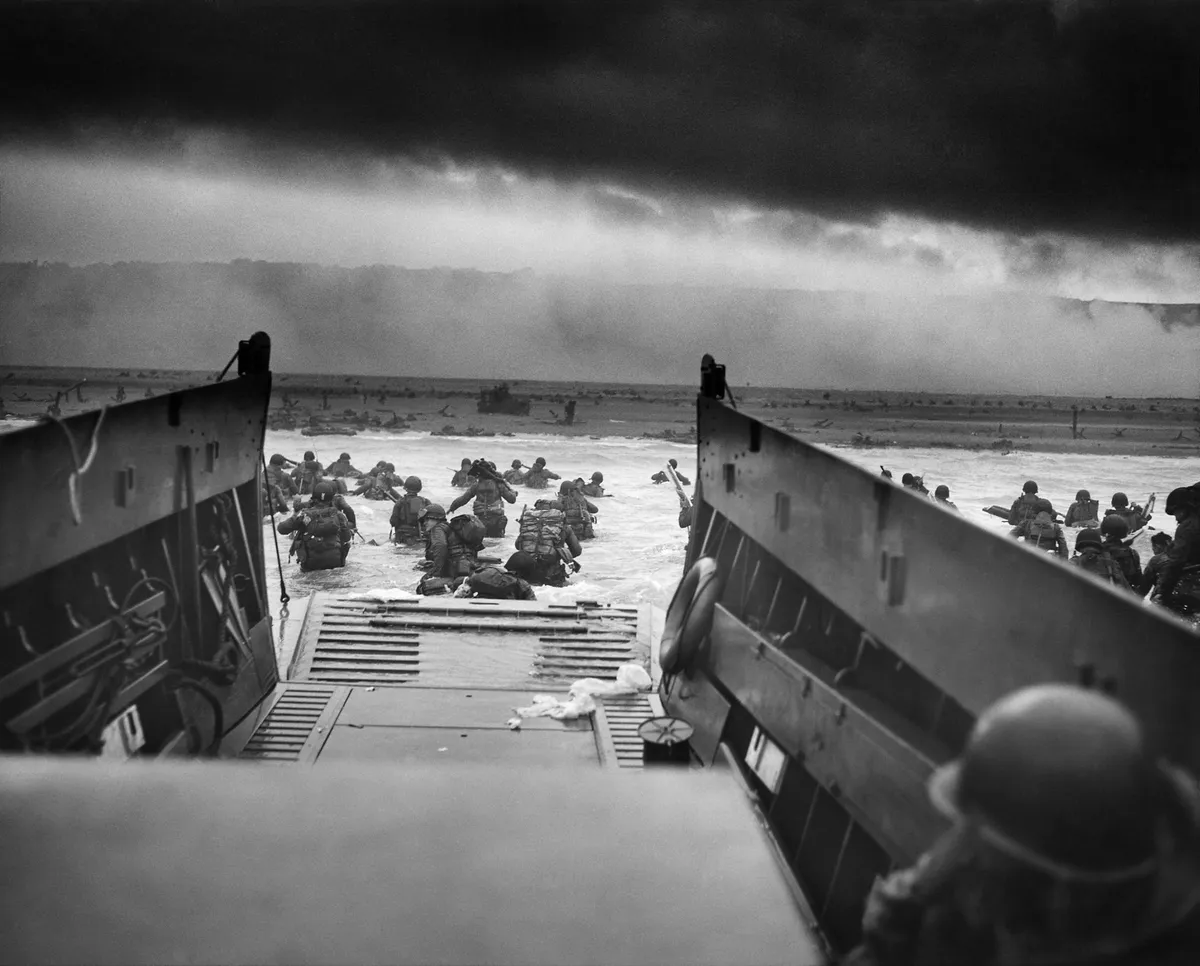
Higgins Boat (LCVP)
Eisenhower said Andrew Higgins was 'the man who won the war for us.' The LCVP — Landing Craft, Vehicle, Personnel — was the boat that put soldiers on the beach. At Normandy, Iwo Jima, Okinawa, North Africa, Sicily. The bow ramp was Higgins' innovation, borrowed from boats he'd seen in the Louisiana bayou. When that ramp dropped, you were looking at the beach, and the beach was looking at you. 23,398 were built. Without them, no amphibious invasion was possible.