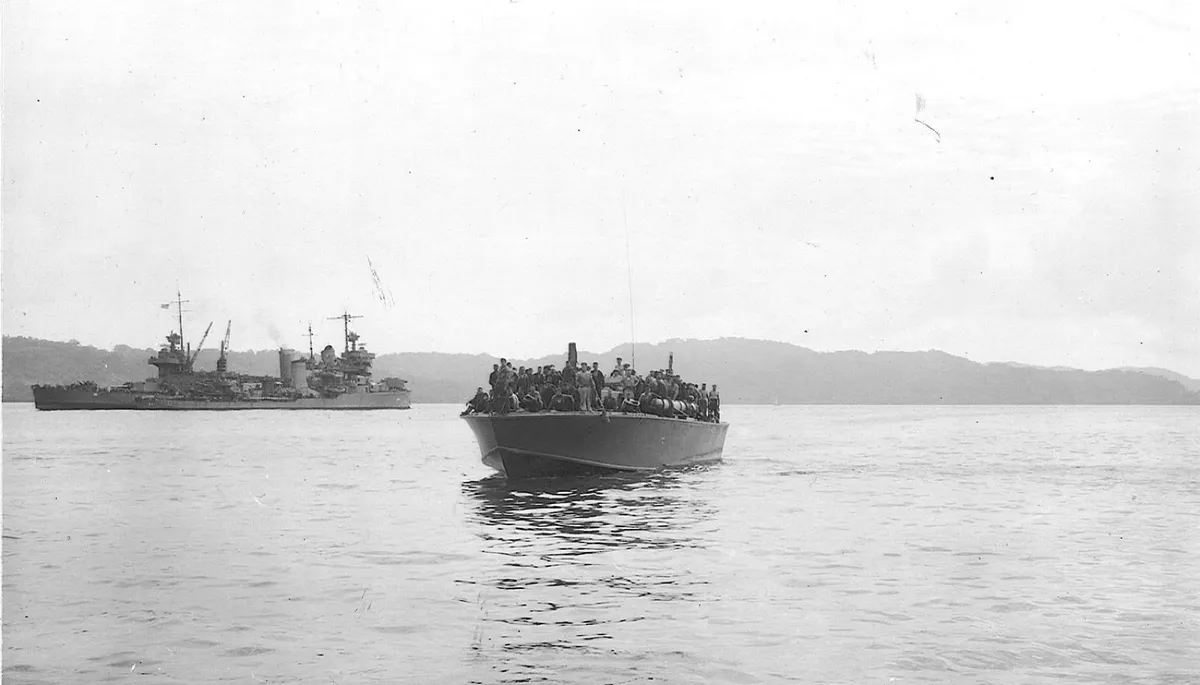
PT-109
PT-109
Why it matters
PT-109 is the most famous small vessel in American military history because a future president survived its sinking. On August 2, 1943, the Japanese destroyer Amagiri cut PT-109 in half in the Blackett Strait.
Lt. John F. Kennedy towed a badly burned crew member by clenching the strap of his life jacket in his teeth and swimming for four hours. The crew survived six days on a deserted island. PT boats were fast, fragile, and expendable. Their crews knew it.
What it was like
You're on an 80-foot mahogany speedboat attacking steel destroyers in the dark. The boat is held together with plywood and glue. The torpedoes weigh more than the boat's crew combined.
At 40 knots on flat water the ride is rough; in any sea state at all it's punishing, physically battering. PT boat crews operated at night, running without lights in waters shared with both enemy and friendly ships.
Navigation was by compass and guesswork. Attacks were point-blank — close enough to see the rivets on a destroyer's hull before launching torpedoes and running for it.
The casualty rate was high. Boats simply disintegrated when hit by anything heavier than small arms. Survivors ended up in the water, in the dark, in shark-infested straits, hoping someone would come looking.
The crew
Skipper
A lieutenant, usually 22-25 years old, commanding a boat with a crew of twelve in night attacks against warships ten times their size. The skipper made the call on when to attack, when to run, and whether to attempt rescue of crews from other PT boats. JFK was 26 when he took command of PT-109. Most PT boat skippers had less than six months of naval experience.
Torpedoman
Responsible for the four Mark 8 torpedoes — the entire reason the boat existed. Each torpedo weighed 3,000 pounds and had to be launched at precisely the right moment, at the right range, aimed by the skipper's judgment since fire control was nonexistent. If a torpedo malfunctioned — and they frequently did — it could circle back and hit your own boat.
Motor Machinist
Kept three Packard engines running at full power during combat while enclosed in an engine room that was hot, loud, and the first space to flood if the hull was breached. The engines were aviation powerplants adapted for marine use, temperamental and demanding. Engine failure during an attack run meant you were a sitting target.
Patina notes
No PT boats survive in original condition. Mahogany plywood was never meant to last — these were built to be disposable. The few surviving examples are extensively restored, with original hardware and fittings being the most authentic elements. The wood itself has been replaced multiple times.
Preservation reality
Only four PT boats survive worldwide, and most are partial restorations. PT-658 in Portland, Oregon is the only fully restored and operational PT boat in the world. PT boat veterans formed tight-knit associations that drove preservation efforts, but time is running out — the youngest WWII PT boat veterans are now in their late nineties.
Where to see one
- • PT-658 Heritage Museum, Portland, Oregon
- • National WWII Museum, New Orleans
- • Battleship Cove, Fall River, Massachusetts
Preservation organizations
- • PT Boats Inc.
- • Save the PT Boat Inc.
Sources
- Naval History and Heritage Command (2026-03-05)
Related vessels
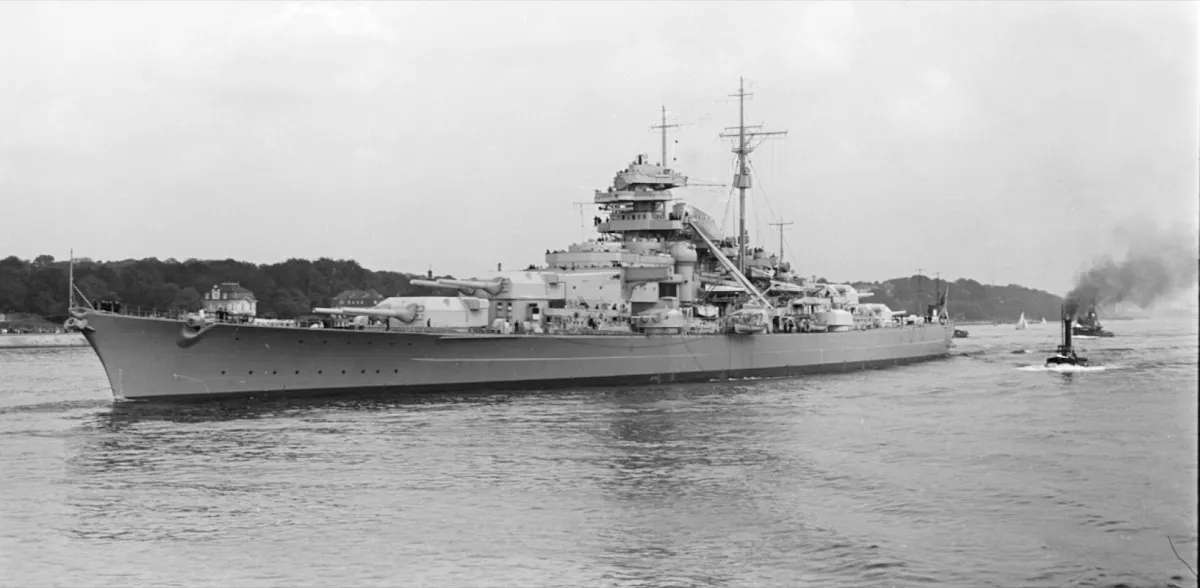
Bismarck
Bismarck's operational career lasted eight days. In that time, she became the most famous warship of the twentieth century. On May 24, 1941, she engaged HMS Hood and HMS Prince of Wales in the Denmark Strait. A shell from Bismarck penetrated Hood's magazine. The explosion broke Hood in half. She sank in three minutes. Of 1,418 crew, three survived. Hood was the pride of the Royal Navy. Churchill's order was immediate and absolute: sink the Bismarck. The Royal Navy sent everything. Battleships, carriers, cruisers, destroyers. Swordfish torpedo bombers — fabric-covered biplanes that looked like they belonged in the previous war — scored the hit that jammed Bismarck's rudder. She could only steam in circles. The next morning, King George V and Rodney pounded her for ninety minutes. Bismarck's crew scuttled her. Of 2,065 men, 114 survived.
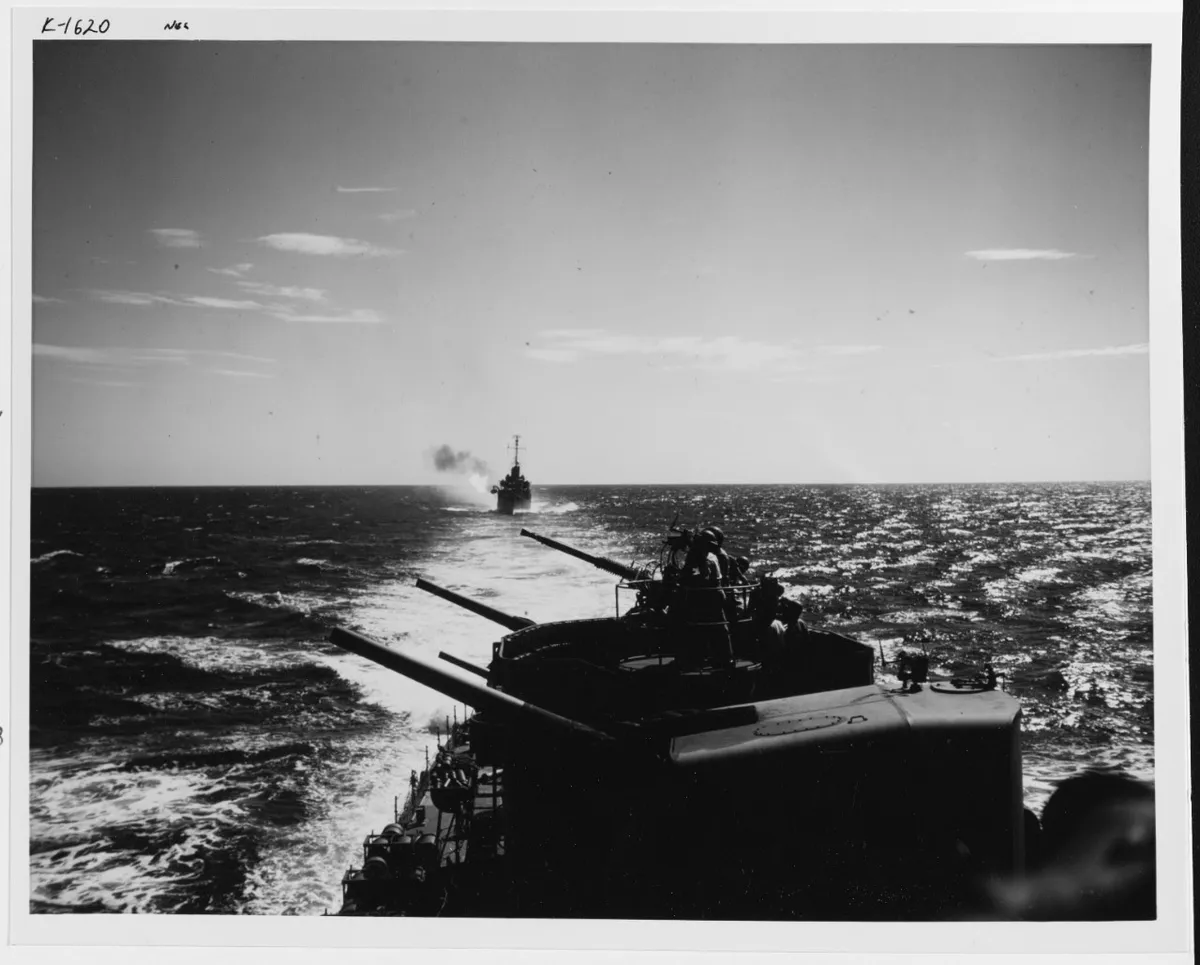
Fletcher-class Destroyer
The Fletcher class was the destroyer that won the Pacific. 175 built, more than any other destroyer class in history, and they did everything. Convoy escort in the Atlantic. Shore bombardment at Normandy. Surface actions in the Solomons. Radar picket duty at Okinawa, where they were positioned as sacrificial early-warning stations against kamikaze attacks. Nineteen Fletchers were lost during the war. They weren't glamorous. They were the ships that showed up everywhere, did the ugly work, and took casualties doing it.
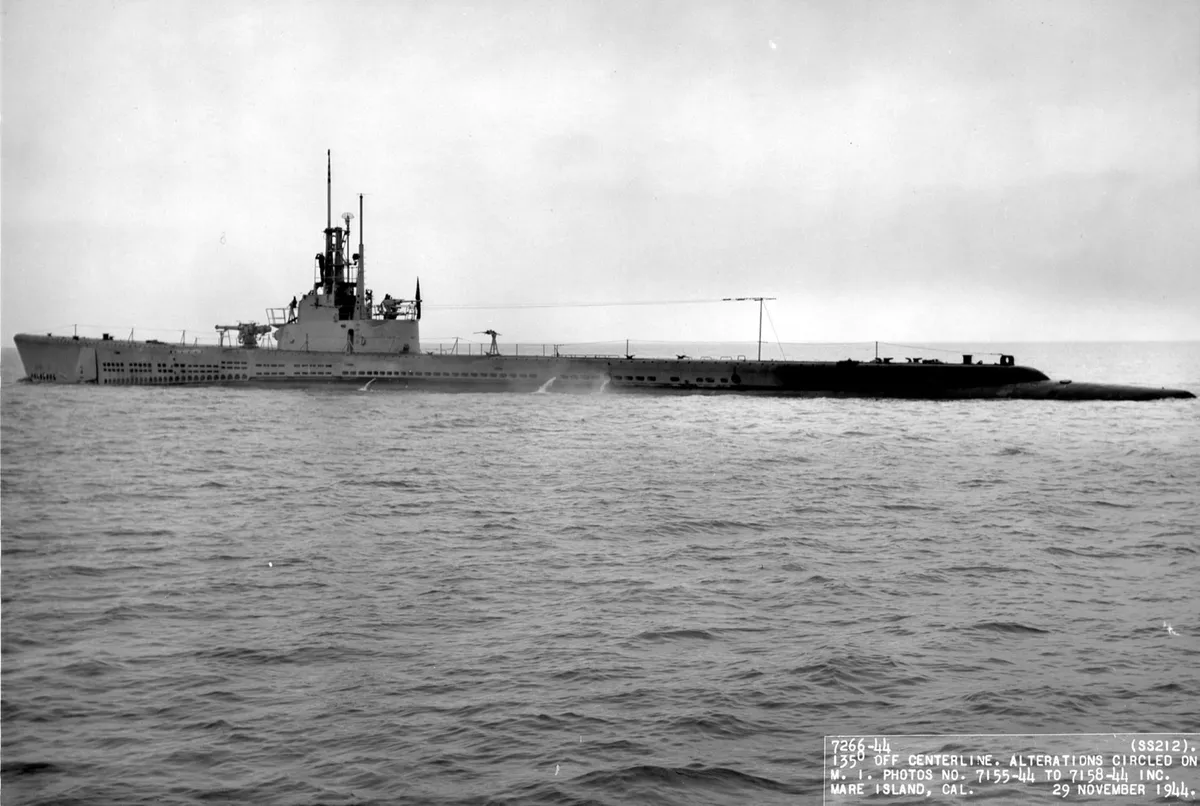
Gato-class Submarine
The Gato class fought the submarine war that strangled Japan. American submarines comprised less than 2% of the Navy's personnel and sank over 55% of Japan's merchant tonnage. The cost was staggering. 52 US submarines were lost during the war. 3,505 submariners killed. That's a 22% casualty rate, the highest of any branch of the US military in any war. One in five men who went on patrol in a fleet submarine did not come home. The Gato class bore the brunt of this campaign, running long patrols from Pearl Harbor and Australia into Japanese-controlled waters, operating alone, with no rescue if things went wrong.