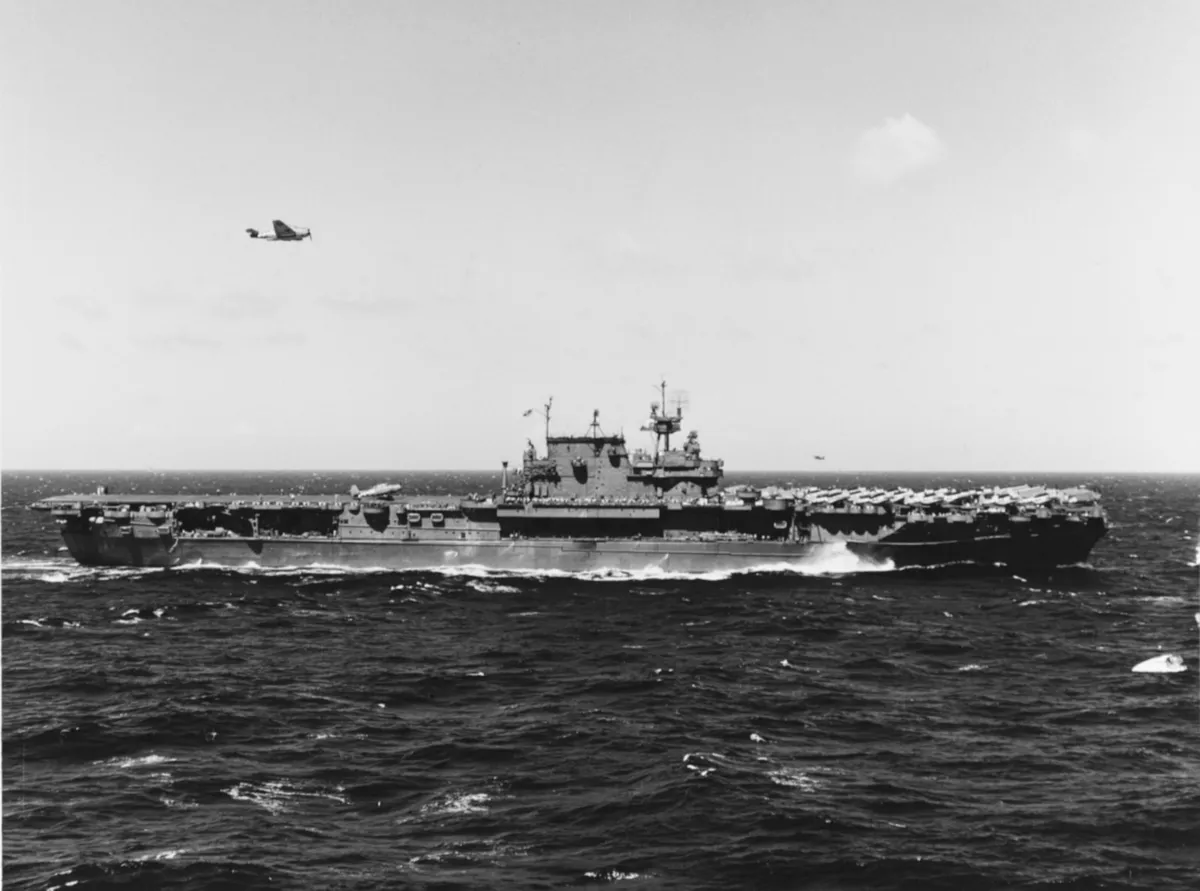
USS Enterprise (CV-6)
CV-6
Why it matters
USS Enterprise earned 20 battle stars, more than any other US warship in World War II. She fought at Midway, the Eastern Solomons, the Santa Cruz Islands, Guadalcanal, the Philippine Sea, Leyte Gulf, Iwo Jima, and Okinawa.
She was in the fight from two weeks after Pearl Harbor to the Japanese surrender. The Japanese reported sinking her three times. She kept coming back. Enterprise was the ship that proved the aircraft carrier had replaced the battleship as the dominant weapon in naval warfare.
Her air groups sank more enemy tonnage than any other carrier's. And when the war ended, she was sold for scrap. No museum. No memorial. The most decorated warship in American history was cut apart for razor blades and rebar. It remains one of the great preservation failures in naval history.
What it was like
The flight deck of an aircraft carrier is the most dangerous workplace ever created. On Enterprise, it was 827 feet of open steel deck with aircraft taking off and landing in rapid sequence.
In WWII, there were no angled decks, no modern arresting systems, no optical landing aids. Pilots came in over the stern, caught a wire, and stopped. If they missed the wires, a crash barrier was the last thing between them and the aircraft and crew parked forward.
If they missed that, they plowed into parked planes loaded with fuel and ordnance. The flight deck crew worked in this environment constantly, ducking under spinning propellers, dodging aircraft taxiing in tight spaces, handling live ordnance with bare hands.
One misstep, five seconds of inattention, and you were killed by a propeller or blown over the side by prop wash. The men who worked the flight deck were nineteen, twenty years old.
Below the flight deck, the hangar deck was nearly as dangerous. Aircraft were fueled, armed, and repaired in an enclosed space. Aviation gasoline vapor accumulated.
A single spark could, and did, cause catastrophic fires. Enterprise was hit by Japanese bombs at the Eastern Solomons in August 1942. The bombs penetrated the flight deck and detonated below, killing dozens and blowing holes through multiple decks.
Damage control teams fought fires while ordnance cooked off around them. The ship was repaired and back in action in weeks. At Okinawa in 1945, Enterprise was hit by two kamikazes within minutes.
The first struck the flight deck forward. The second hit the forward elevator, blowing it 400 feet into the air. The explosion killed 14 men and wounded 34.
The ship was so badly damaged she was sent home for repairs and never returned to combat. Enterprise's crew lived inside a target. Japanese strategy specifically aimed to sink American carriers, and Enterprise was the most prominent one afloat. Her crew went to general quarters knowing they were the priority target, and they fought through it for three years.
The crew
Flight Deck Crew (Plane Handlers)
The men in colored jerseys who moved aircraft around the flight deck by hand and by tractor. No powered equipment in WWII; they pushed aircraft weighing several tons into position using muscle and steel bars. They worked between spinning propellers, next to armed weapons, on a deck slick with oil and hydraulic fluid, in weather that ranged from tropical heat to typhoon winds. A plane handler's job was to spot the deck, arranging aircraft for launch and recovery in a sequence that maximized the number of planes in the air. Get it wrong and you created a traffic jam that delayed the entire strike. The flight deck boss, the Air Boss, ran this operation from a platform on the island, screaming instructions over the wind and engine noise.
Ordnanceman
Armed the aircraft with bombs, torpedoes, and machine gun ammunition. This meant handling live ordnance on a moving deck, attaching 500-pound and 1,000-pound bombs to aircraft hardpoints by hand, and loading belted ammunition into wing guns. On the hangar deck, ordnancemen built up bombs from components, fusing them, and moving them to the flight deck on elevators. The hangar deck was an enclosed space full of aviation gasoline and explosives. A bomb dropped during handling could detonate. During combat, when the ship was maneuvering at high speed and taking fire, the ordnancemen kept loading because the air group couldn't fly without weapons.
Damage Control
Enterprise's damage control teams are the reason she survived the war. The ship took bomb hits at the Eastern Solomons, Santa Cruz, and the Philippine Sea. She took kamikaze hits at Okinawa. Every time, the damage control teams contained the fires, shored the bulkheads, patched the flight deck, and got the ship operational. At the Eastern Solomons, a bomb penetrated to the third deck and detonated in a compartment full of men. The damage control party entered that compartment, put out the fires, removed the dead, and began repairs while the battle continued above them. Their work was physical, dangerous, and performed in conditions that would be considered unsurvivable in any other context: smoke-filled compartments, ruptured steam lines, flooded spaces, and live ordnance that might cook off at any moment.
Patina notes
There is no patina to note. Enterprise was scrapped in 1958. The most decorated warship in US Navy history was broken apart at Federal Shipbuilding and Drydock Company in Kearny, New Jersey.
Some artifacts survive: the ship's bell, nameplate, and miscellaneous fittings were preserved by veterans and collectors. Her anchor is on display at the Naval Academy in Annapolis. But the ship herself is gone. Razor blades and rebar.
Preservation reality
Enterprise's scrapping is the cautionary tale of naval preservation. Multiple efforts to save her as a museum ship failed due to insufficient funding. The Enterprise Association, formed by her veterans, tried for years but could not raise the necessary money.
By the time institutional interest materialized, the ship had already been partially dismantled. Today, the USS Enterprise (CV-6) Association maintains the ship's memory through reunions, archives, and a collection of artifacts.
A model of Enterprise is on display at the National Naval Aviation Museum in Pensacola. The lesson is bitter and direct: if you wait too long, the ship is gone and no amount of money or regret brings it back.
Where to see one
- • Ship's bell and artifacts at the Naval Academy Museum, Annapolis
- • National Naval Aviation Museum, Pensacola, Florida
- • USS Enterprise (CV-6) model at Hampton Roads Naval Museum, Norfolk
Preservation organizations
- • USS Enterprise (CV-6) Association
- • Naval History and Heritage Command
Sources
- Naval History and Heritage Command (2026-03-05)
Related vessels
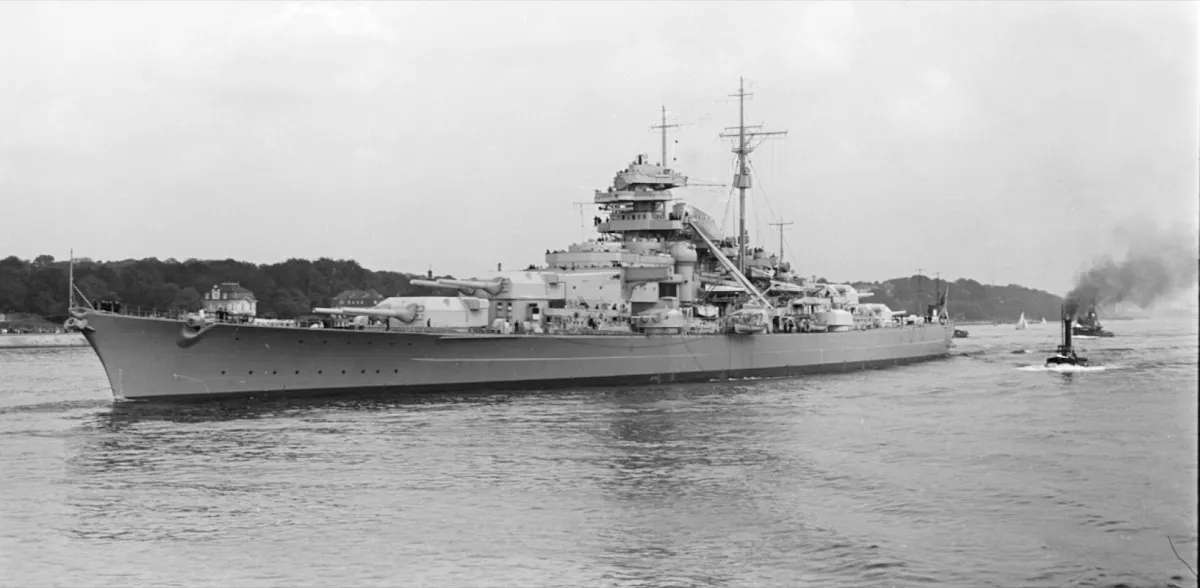
Bismarck
Bismarck's operational career lasted eight days. In that time, she became the most famous warship of the twentieth century. On May 24, 1941, she engaged HMS Hood and HMS Prince of Wales in the Denmark Strait. A shell from Bismarck penetrated Hood's magazine. The explosion broke Hood in half. She sank in three minutes. Of 1,418 crew, three survived. Hood was the pride of the Royal Navy. Churchill's order was immediate and absolute: sink the Bismarck. The Royal Navy sent everything. Battleships, carriers, cruisers, destroyers. Swordfish torpedo bombers — fabric-covered biplanes that looked like they belonged in the previous war — scored the hit that jammed Bismarck's rudder. She could only steam in circles. The next morning, King George V and Rodney pounded her for ninety minutes. Bismarck's crew scuttled her. Of 2,065 men, 114 survived.
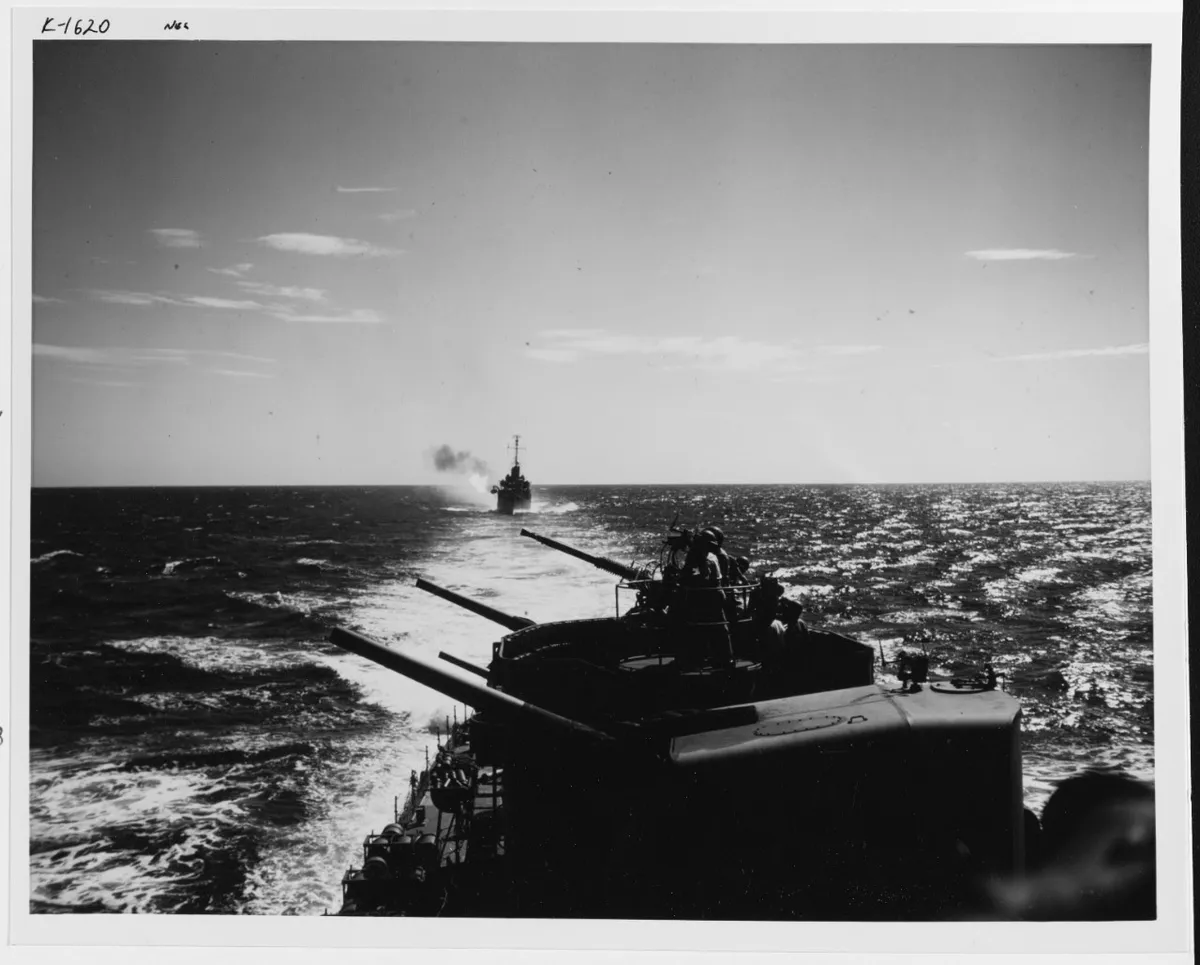
Fletcher-class Destroyer
The Fletcher class was the destroyer that won the Pacific. 175 built, more than any other destroyer class in history, and they did everything. Convoy escort in the Atlantic. Shore bombardment at Normandy. Surface actions in the Solomons. Radar picket duty at Okinawa, where they were positioned as sacrificial early-warning stations against kamikaze attacks. Nineteen Fletchers were lost during the war. They weren't glamorous. They were the ships that showed up everywhere, did the ugly work, and took casualties doing it.
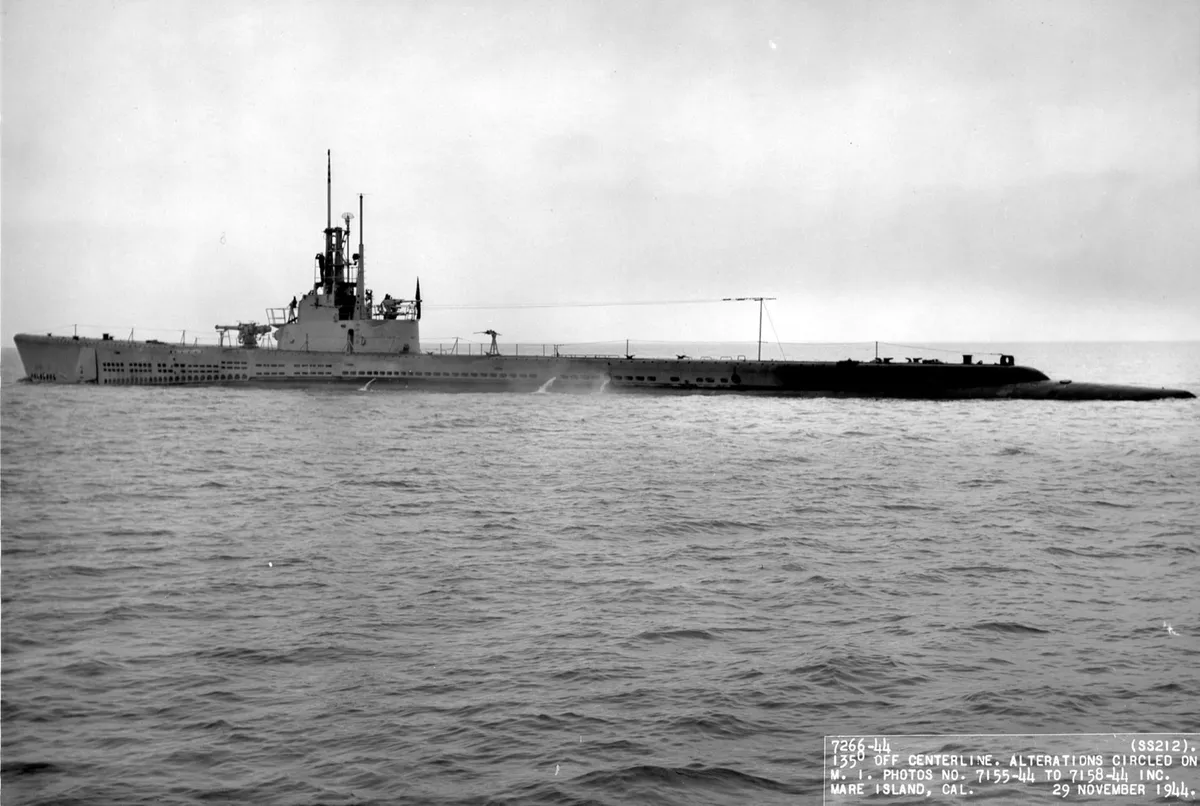
Gato-class Submarine
The Gato class fought the submarine war that strangled Japan. American submarines comprised less than 2% of the Navy's personnel and sank over 55% of Japan's merchant tonnage. The cost was staggering. 52 US submarines were lost during the war. 3,505 submariners killed. That's a 22% casualty rate, the highest of any branch of the US military in any war. One in five men who went on patrol in a fleet submarine did not come home. The Gato class bore the brunt of this campaign, running long patrols from Pearl Harbor and Australia into Japanese-controlled waters, operating alone, with no rescue if things went wrong.