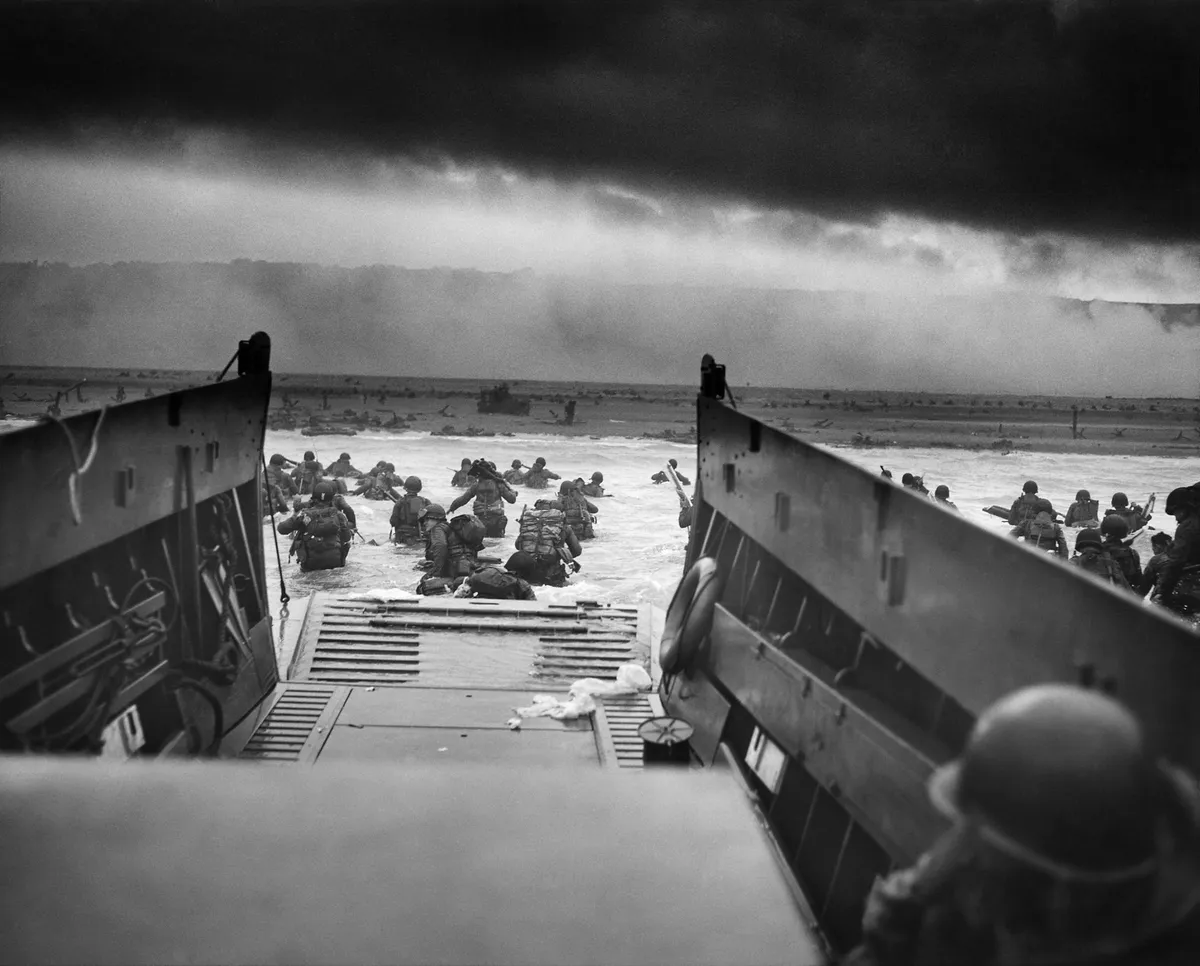
Higgins Boat (LCVP)
LCVP
Why it matters
Eisenhower said Andrew Higgins was 'the man who won the war for us.' The LCVP — Landing Craft, Vehicle, Personnel — was the boat that put soldiers on the beach.
At Normandy, Iwo Jima, Okinawa, North Africa, Sicily. The bow ramp was Higgins' innovation, borrowed from boats he'd seen in the Louisiana bayou. When that ramp dropped, you were looking at the beach, and the beach was looking at you. 23,398 were built. Without them, no amphibious invasion was possible.
What it was like
Three men operated each Higgins boat. The coxswain steered from a small armored cockpit at the stern. The engineer kept the diesel running. The bowman operated the ramp.
But the real experience belonged to the 36 men packed shoulder-to-shoulder in the well deck, seasick from the flat-bottomed ride, soaked by spray, waiting for the ramp to drop.
On the approach to the beach, the men stood waist-deep in the boat with no cover. Machine gun rounds that missed their heads punched through the wooden sides.
When the ramp dropped on Omaha Beach, the first men out were killed before their boots hit the sand. The coxswain had to hold position long enough for everyone to get off, then retract from the beach under fire, return to the transport ship, load another 36 men, and do it again. Some coxswains made twenty trips.
The crew
Coxswain
A Coast Guardsman or Navy sailor, usually 18-22 years old, navigating a 36-foot plywood boat through surf, obstacles, and machine gun fire to put troops on a beach. The coxswain made the calls: when to lower the ramp, when to retract, when to abort. They watched men die as the ramp dropped. Then they backed off the beach, went back to the ship, and loaded more men. The emotional toll was rarely discussed. The coxswain was the last person the assault troops saw before the beach.
Infantry (Cargo)
Not crew — cargo. Thirty-six men standing in the open well of a flat-bottomed boat in heavy seas, vomiting from seasickness, weighed down by 60-80 pounds of equipment, watching the beach get closer. When the ramp dropped, the first men off were the most exposed. At Omaha Beach, entire boatloads were killed before anyone reached the waterline. Those who survived the ramp remembered the sound it made when it hit the water.
Patina notes
Higgins boats were built to be expendable. Plywood and steel construction, designed for days of service, not decades. The few survivors show extreme wear — salt damage, hull rot, and the evidence of hard beachings. Original boats are almost impossible to find intact.
Preservation reality
Remarkably few survive considering 23,398 were built. The National WWII Museum in New Orleans (Andrew Higgins' home city) has the best collection. Several restored examples exist as static displays. Finding an original in restorable condition is nearly impossible — they were literally used up.
Where to see one
- • National WWII Museum, New Orleans
- • Normandy American Cemetery (replica)
- • Various military museums
Preservation organizations
- • National WWII Museum
Sources
- National WWII Museum - Higgins Boats (2026-03-05)
Related vessels
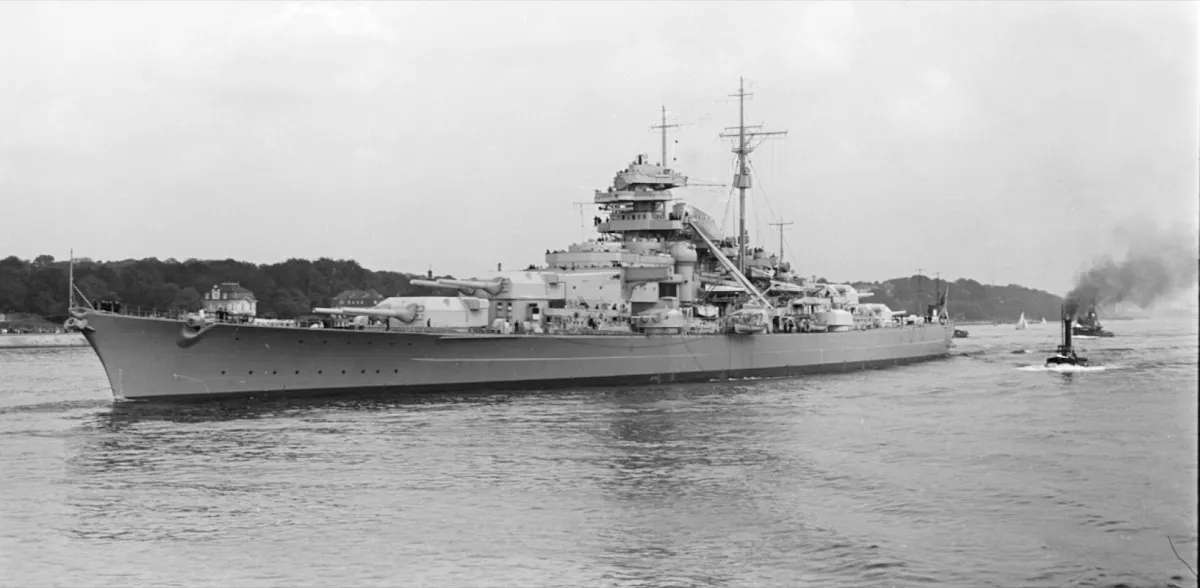
Bismarck
Bismarck's operational career lasted eight days. In that time, she became the most famous warship of the twentieth century. On May 24, 1941, she engaged HMS Hood and HMS Prince of Wales in the Denmark Strait. A shell from Bismarck penetrated Hood's magazine. The explosion broke Hood in half. She sank in three minutes. Of 1,418 crew, three survived. Hood was the pride of the Royal Navy. Churchill's order was immediate and absolute: sink the Bismarck. The Royal Navy sent everything. Battleships, carriers, cruisers, destroyers. Swordfish torpedo bombers — fabric-covered biplanes that looked like they belonged in the previous war — scored the hit that jammed Bismarck's rudder. She could only steam in circles. The next morning, King George V and Rodney pounded her for ninety minutes. Bismarck's crew scuttled her. Of 2,065 men, 114 survived.
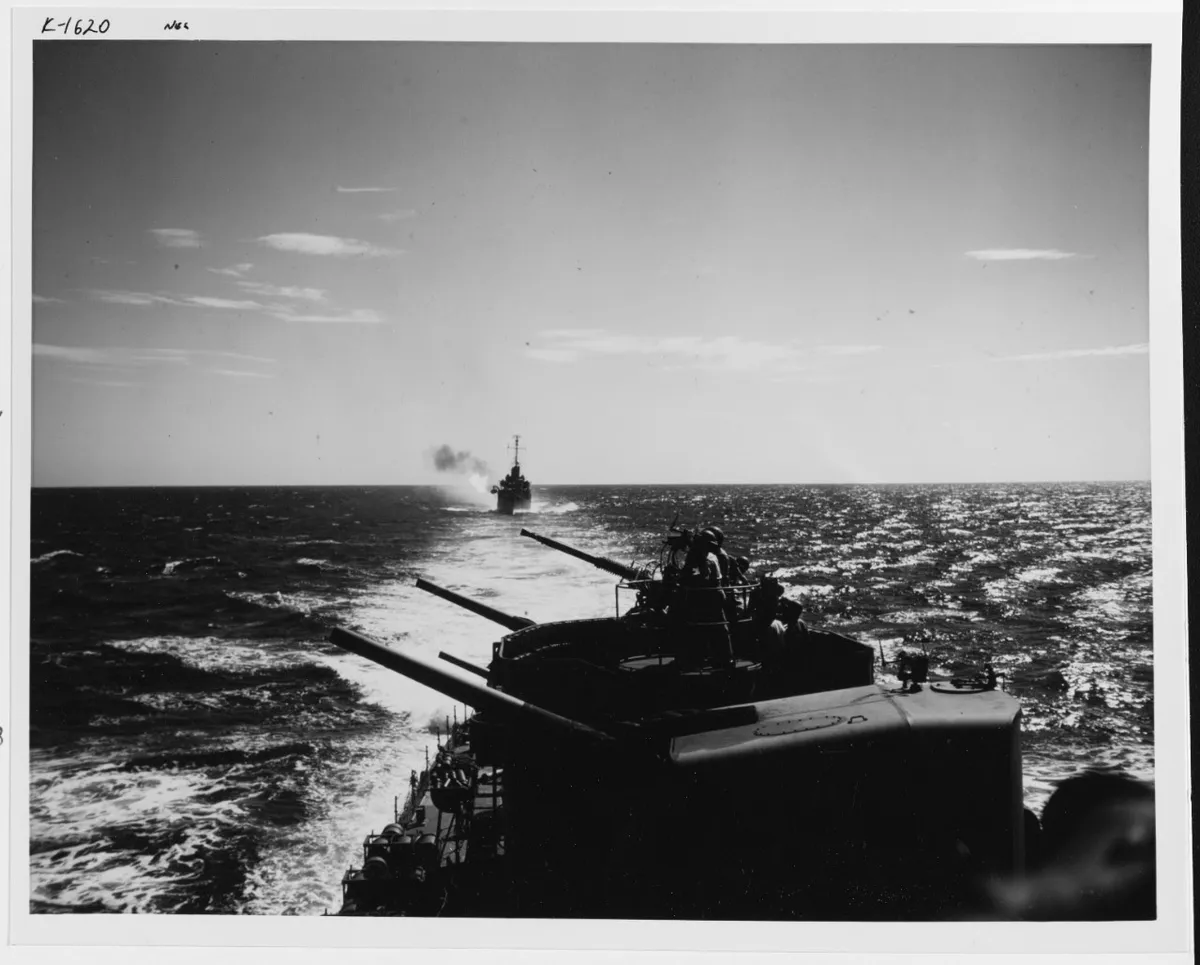
Fletcher-class Destroyer
The Fletcher class was the destroyer that won the Pacific. 175 built, more than any other destroyer class in history, and they did everything. Convoy escort in the Atlantic. Shore bombardment at Normandy. Surface actions in the Solomons. Radar picket duty at Okinawa, where they were positioned as sacrificial early-warning stations against kamikaze attacks. Nineteen Fletchers were lost during the war. They weren't glamorous. They were the ships that showed up everywhere, did the ugly work, and took casualties doing it.
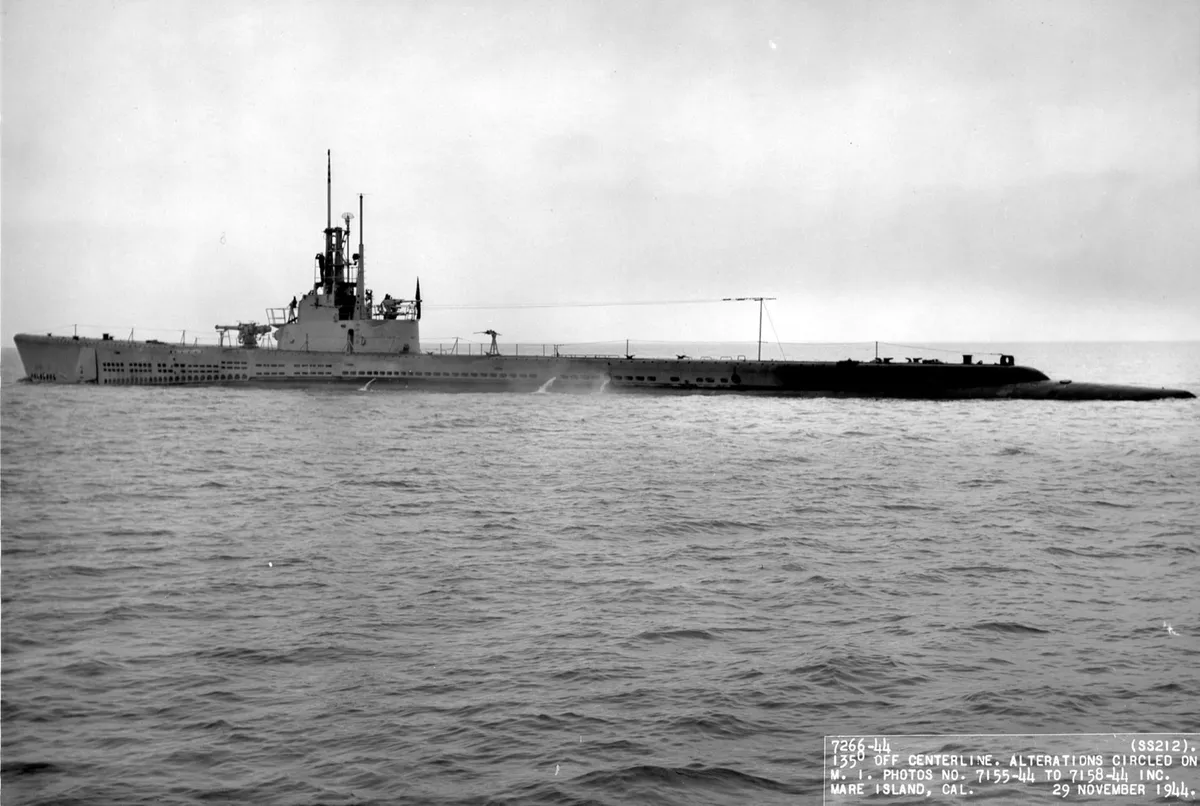
Gato-class Submarine
The Gato class fought the submarine war that strangled Japan. American submarines comprised less than 2% of the Navy's personnel and sank over 55% of Japan's merchant tonnage. The cost was staggering. 52 US submarines were lost during the war. 3,505 submariners killed. That's a 22% casualty rate, the highest of any branch of the US military in any war. One in five men who went on patrol in a fleet submarine did not come home. The Gato class bore the brunt of this campaign, running long patrols from Pearl Harbor and Australia into Japanese-controlled waters, operating alone, with no rescue if things went wrong.