personal watercraft
3 vessels
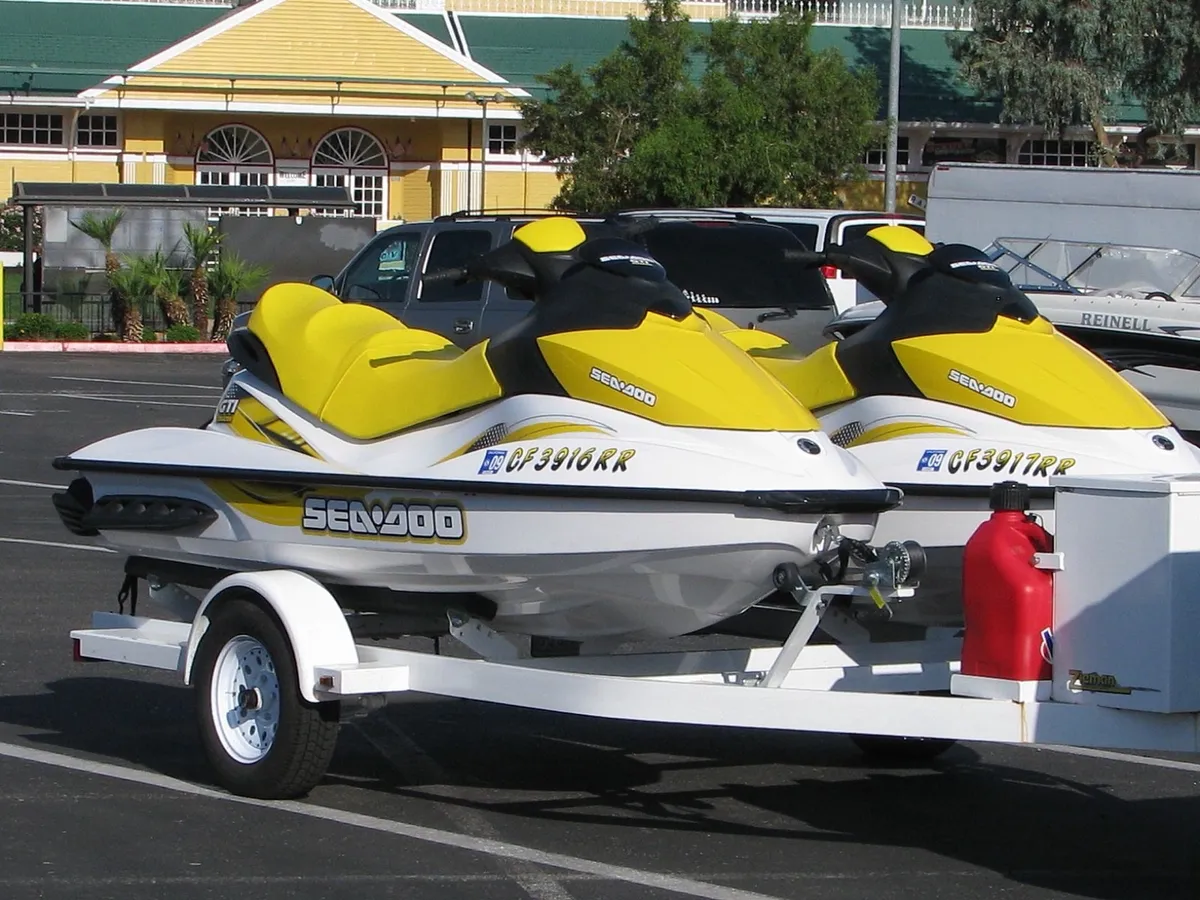
Bombardier Sea-Doo
Sea-Doo has the weirdest origin story in powersports. Bombardier, a Canadian aerospace and train company, decided in 1968 that personal watercraft were the future. They built the Sea-Doo, it flopped, and they shelved it for twenty years. In 1988 they relaunched with modern engineering and a Rotax engine, and within five years they were outselling Kawasaki. A company that builds subway cars and business jets makes one of the most popular toys on the water. That's a sentence nobody predicted. If the WaveRunner is the Accord, the Sea-Doo is the WRX. Bombardier's approach has always been engineering-first. They were first with on-water braking (the iBR system, which uses a reverse gate to slow down). First with a viable fishing PWC. First with closed-loop cooling to keep saltwater out of the engine. They treat PWC like a technology platform rather than a toy, and it shows. The FISH PRO is the most absurd and brilliant product in the PWC market. It's a $20,000 personal watercraft with a Garmin fish finder, a 13.5-gallon cooler, rod holders, and a trolling mode. The idea that someone would go offshore fishing on something the size of a motorcycle seemed insane. Then people started actually catching fish on them, and now there's a whole subculture of PWC anglers. Sea-Doo's Achilles heel has historically been reliability. The Rotax engines are powerful but the electrical systems and supercharger seals on the high-performance models have earned a reputation for expensive repairs. Yamaha owners love pointing this out. Sea-Doo owners don't hear them because they're too far ahead.
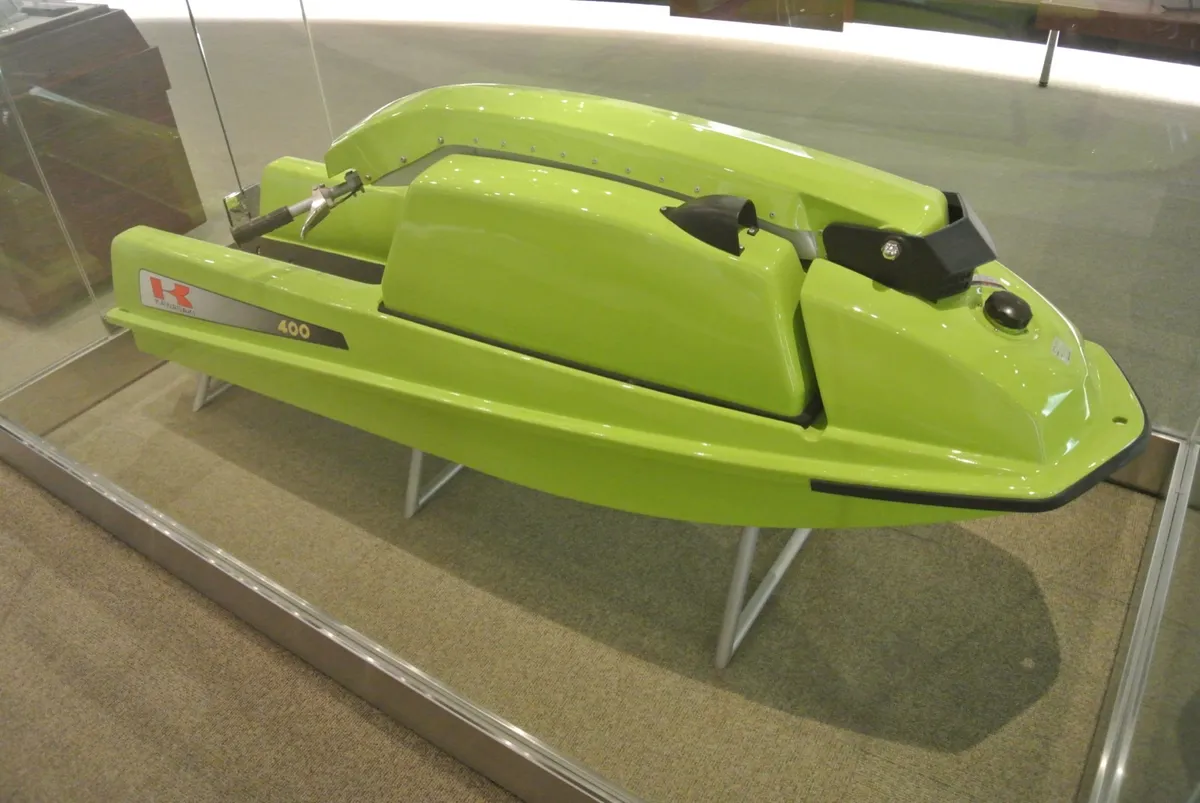
Kawasaki Jet Ski (JS400)
The Jet Ski didn't exist before 1973, and by 1990 every lake in America had one screaming across it. Kawasaki's JS400 was the first commercially successful personal watercraft — a stand-up vessel powered by a motorcycle engine driving a jet pump. The concept came from Clayton Jacobson II, an Australian banker who wanted a powered surfboard. Kawasaki licensed his design and created a product category that generated billions in revenue, ruined the tranquility of every lake and beach, spawned an entire subculture of freestyle riding, and became the go-to villain for everyone who thinks water should be quiet. 'Jet Ski' became the generic name for all personal watercraft the way 'Xerox' became the word for copying. Kawasaki trademarked it and everyone ignored the trademark.
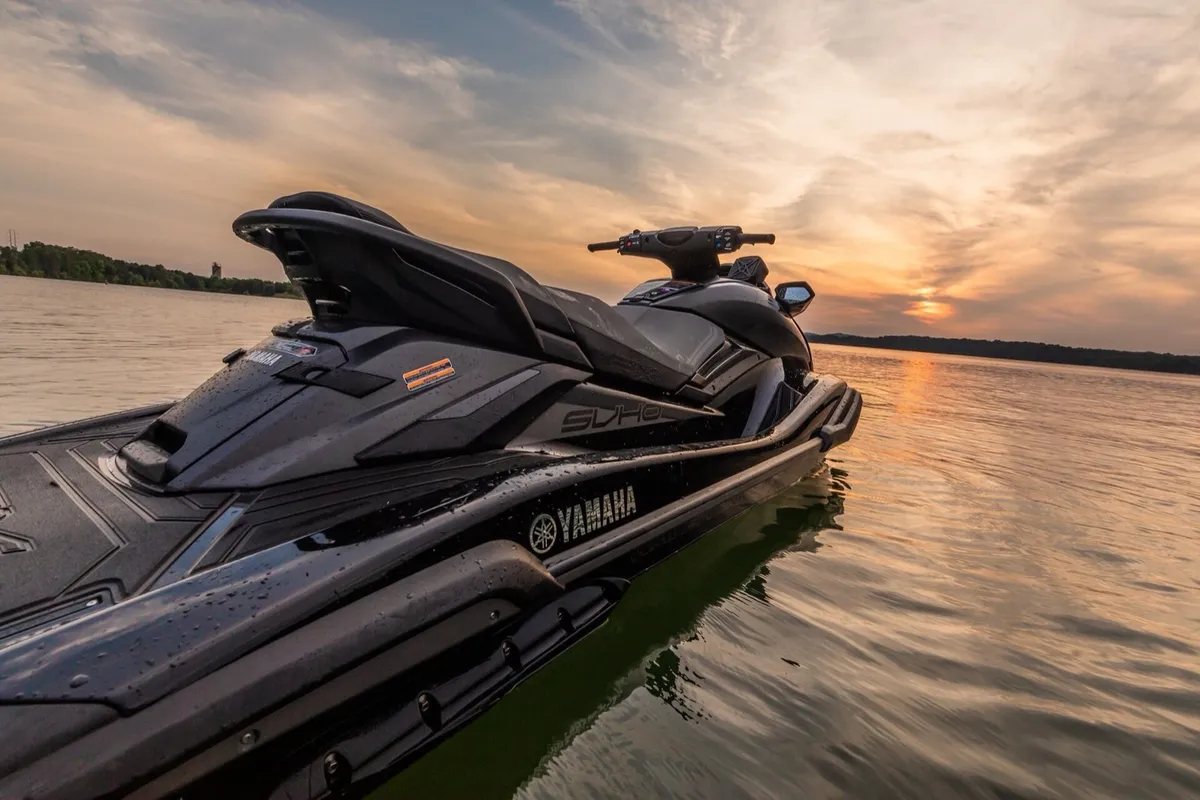
Yamaha WaveRunner
The Jet Ski invented personal watercraft. The WaveRunner made it something normal people would actually buy. When Yamaha launched the WaveRunner 500 in 1986, it was the first PWC designed to be ridden sitting down. Kawasaki's Jet Ski was a stand-up craft that required athletic ability and a tolerance for swimming. Yamaha looked at that and said: what if you could just sit on it like a snowmobile? That single decision turned PWC from a niche sport into a mass-market product. The WaveRunner is the Honda Accord of the water. Reliable, sensible, depreciates predictably. Yamaha doesn't chase headlines the way Sea-Doo does with fish-finding models and 300-horsepower rockets. They build solid machines that start every time and last for years of rental-fleet abuse. That's not exciting. It's also why rental operations at every beach resort in the world are running 90% Yamahas. Yamaha brought over its motorcycle engineering culture, which means the engines are overbuilt and the fit-and-finish is excellent. The four-stroke transition in the early 2000s was cleaner than anyone expected. While Kawasaki and Sea-Doo scrambled, Yamaha had reliable four-strokes ready to go because they'd been building four-stroke motorcycle engines for decades. The WaveRunner doesn't get the cultural credit it deserves. Kawasaki owns the name recognition (everyone calls every PWC a "Jet Ski"). Sea-Doo gets the press for being the performance option. Yamaha just quietly sells more units than both of them in most years.