cargo transport
7 vessels
Carroll A. Deering
On January 31, 1921, the Carroll A. Deering ran aground on Diamond Shoals off Cape Hatteras, North Carolina, with all sails set. The Coast Guard reached her four days later. The lifeboats were gone. The crew's personal belongings were gone. But dinner was being prepared in the galley, the tables were set, and the ship's cats were still aboard. Eleven men had vanished from a brand-new, well-found schooner in one of the most heavily trafficked shipping lanes on the East Coast. No bodies were ever recovered. No lifeboat was ever found. The investigation pulled in five government agencies, and the deeper they dug, the stranger it got. The ship's logs were missing. The steering gear had been deliberately smashed. Navigation equipment was gone. Two anchors had been dropped, with their chains hanging over the bow in a way that suggested the ship had been anchored and then cut loose. Someone had wrecked the ship's ability to navigate and steer, then left. On January 29, two days before the grounding, a lightship keeper at Cape Lookout reported that a crewman on the Deering had hailed him through a megaphone, saying the ship had lost her anchors. The man on the megaphone was not an officer. That detail haunted investigators. Theories ranged from mutiny to rum-running pirates to Soviet agents. The Deering's first mate, Charles McLellan, had openly clashed with the original captain (who fell ill and was replaced before the final voyage). The replacement captain, W.B. Wormell, was 66 years old and may not have had full control of his crew. At least nine other vessels disappeared in the same area around the same time, leading some to call it an early "Bermuda Triangle" cluster. The FBI, the State Department, and the Department of Commerce all investigated. None of them solved it. The case files were sealed, then lost, then partially recovered decades later. Herbert Hoover, then Secretary of Commerce, personally oversaw the investigation and came away frustrated. Whatever happened aboard the Carroll A. Deering, eleven men took the answer with them.
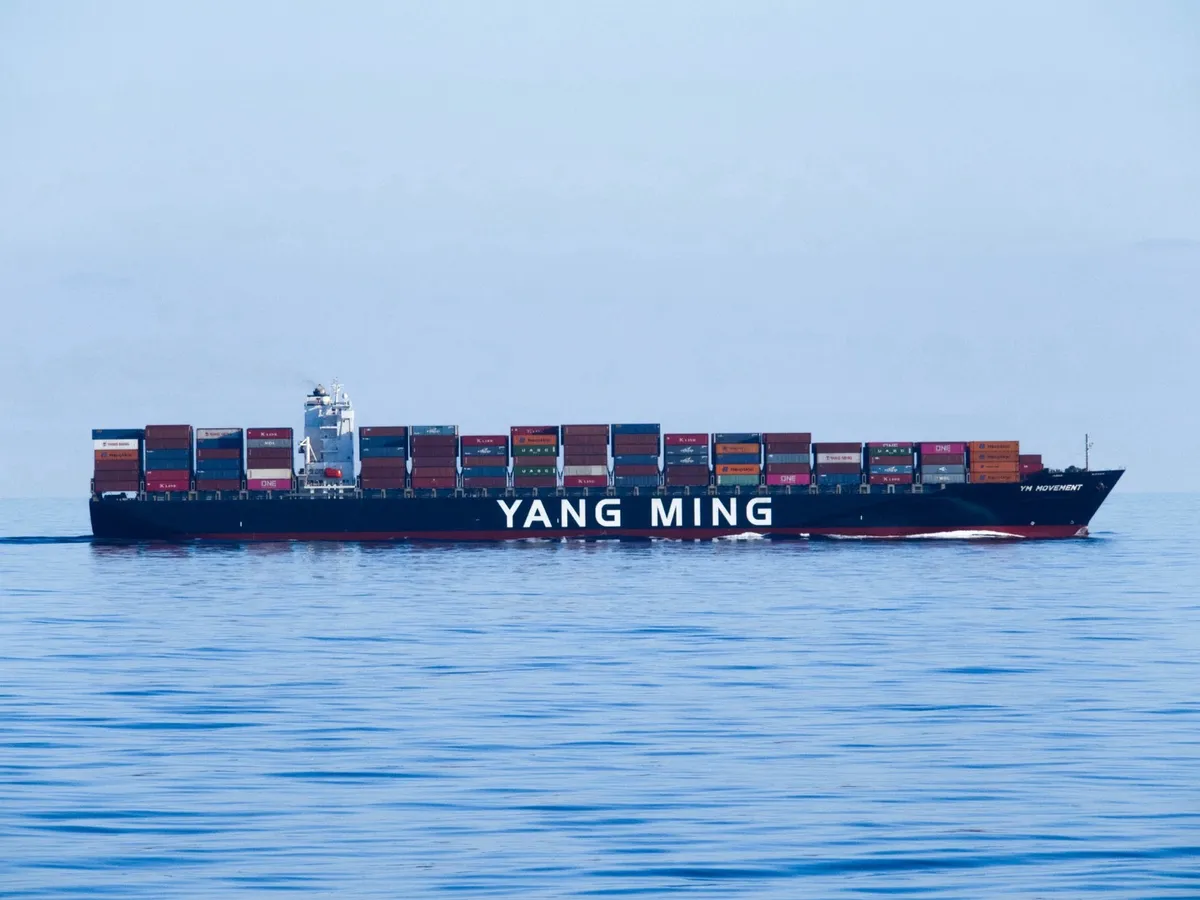
Container Ship
The container ship is the most consequential vessel of the modern era. Ninety percent of everything you own arrived on one. Before Malcom McLean standardized the shipping container in 1956, loading a cargo ship took weeks of manual labor. After containerization, the same job took hours. The economics cascaded: shipping costs dropped 95 percent, global trade exploded, and manufacturing moved to wherever labor was cheapest because transportation was essentially free. The modern container ship carries 24,000 containers on a hull longer than four football fields, operated by a crew of twenty. The disparity between the scale of the machine and the number of people running it is almost absurd.
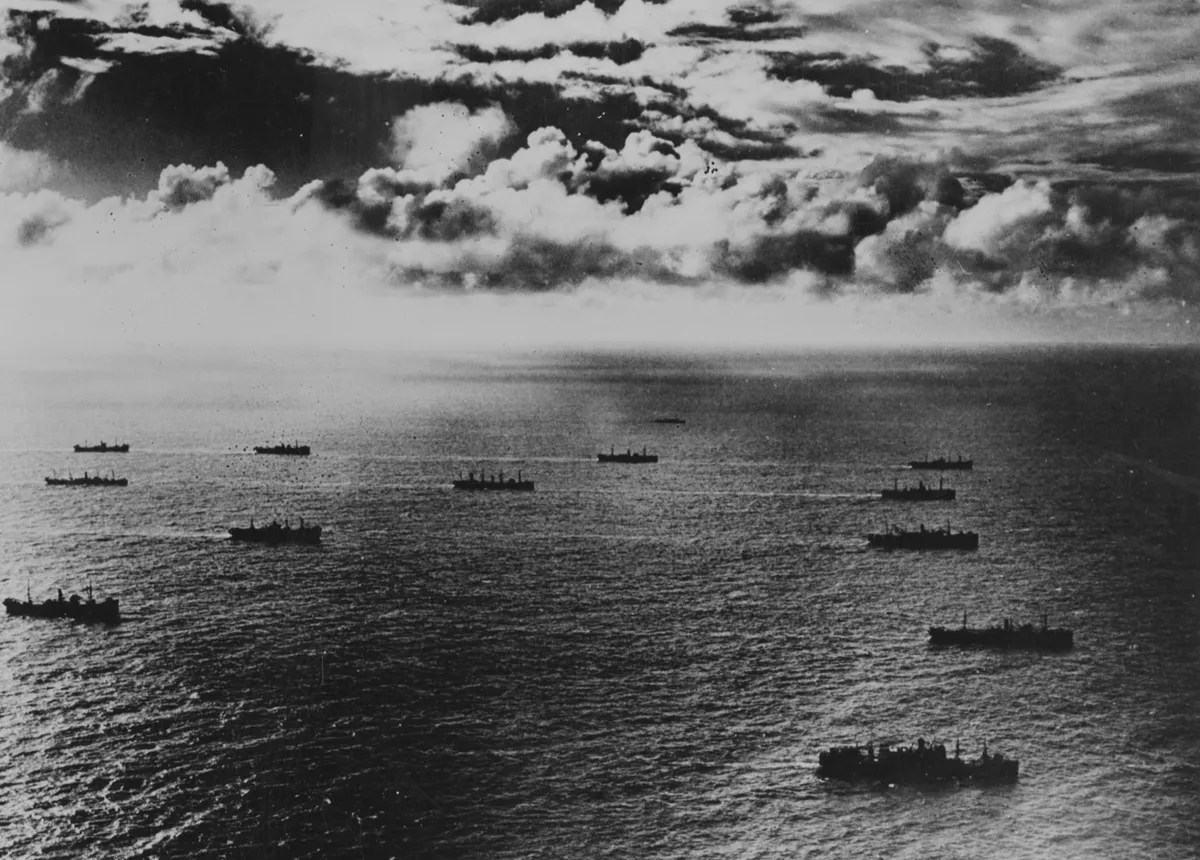
Liberty Ship (EC2-S-C1)
The Liberty Ship was the disposable lighter of maritime warfare. President Roosevelt called them 'ugly ducklings.' They were designed to be built fast, loaded fast, and sunk fast — with the expectation that America could build them faster than U-boats could sink them. That bet paid off. 2,710 Liberty Ships were built in four years. Kaiser's Richmond shipyard assembled SS Robert E. Peary in 4 days, 15 hours, and 29 minutes as a publicity stunt. The ships won the war of logistics. The merchant mariners who sailed them had the highest casualty rate of any U.S. service.
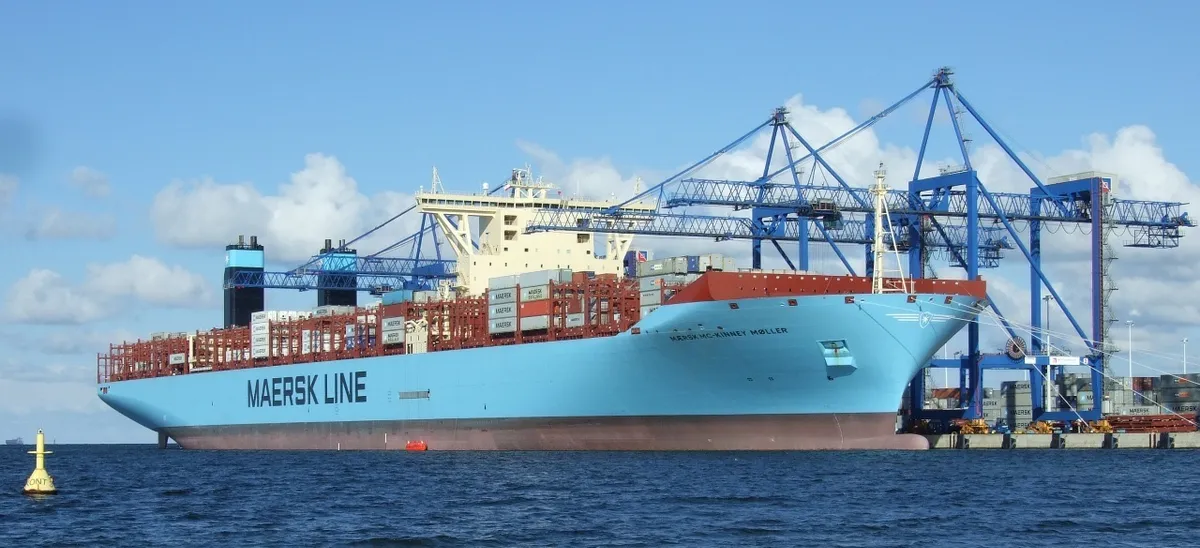
Maersk Triple E-class
The Triple E-class is the industrial revolution's final form. A quarter-mile of steel carrying $1 billion in cargo, run by 22 people. When the first one, Maersk Mc-Kinney Moller, launched in 2013, she was the largest container ship ever built. The name stands for Economy of scale, Energy efficiency, Environmentally improved. Maersk wasn't being poetic. They were being accurate. These ships rewired global infrastructure just by existing. The channels into the Port of Baltimore had to be dredged deeper. The Bayonne Bridge in New Jersey had to be raised so they could pass underneath. The Francis Scott Key Bridge replacement (after the Dali brought down the original in 2024) had to account for these monsters in its design. When a single ship class forces a country to rebuild its bridges and harbors, that's not a vessel. That's a geological event. If you live near the Chesapeake Bay, you've seen them. They're the ships on the horizon that look wrong because your brain can't reconcile the scale. A quarter-mile long, stacked fourteen containers high on deck, gliding at 23 knots with the grace of something that has no business being graceful. The wake alone is a hazard to small craft. The economics are staggering. One Triple E can carry 18,340 containers. Each container holds roughly $50,000 in goods. Do the math and you get close to a billion dollars of cargo per voyage. The shipping cost per container? About $500 across the Pacific. That's why your TV costs $300 instead of $3,000. That's why global manufacturing works. Twenty ships were built in the class, all at Daewoo's Okpo yard in South Korea. They represent the point where container shipping stopped being about boats and became pure logistics infrastructure that happens to float.
Mary Celeste
On December 4, 1872, the British brigantine Dei Gratia spotted a vessel drifting erratically in the Atlantic about 400 miles east of the Azores. Captain David Morehouse recognized her as the Mary Celeste, which had departed New York eight days before his own ship. He sent a boarding party. What they found has haunted maritime history ever since. The ship was seaworthy. The cargo of 1,701 barrels of denatured alcohol was largely intact. Personal belongings were undisturbed. The captain's wife had left her sewing machine mid-project. Six months of food and water remained. But every single person was gone. Captain Benjamin Briggs, his wife Sarah, their two-year-old daughter Sophia, and seven crew members had vanished. The lifeboat was missing, and the main halyard was found broken, but there was no sign of violence, no evidence of piracy, and no indication of catastrophic weather. The ship's chronometer and sextant were gone, suggesting a deliberate, orderly departure. But why would you abandon a seaworthy vessel into a small boat in the open Atlantic? Theories have piled up for 150 years. Alcohol fumes creating an explosion risk. A waterspout. A seaquake. Mutiny. Insurance fraud. None of them fully explain the evidence. The Dei Gratia's crew collected a salvage award, and the British Vice Admiralty Court in Gibraltar investigated aggressively, clearly suspicious of foul play but unable to prove it. The Mary Celeste became the template for every ghost ship story that followed. Arthur Conan Doyle fictionalized it (misspelling the name as "Marie Celeste," which stuck in popular culture for decades). The reason people can't let it go is simple: the evidence is just complete enough to rule out the easy answers, and just incomplete enough to prevent any answer at all.
SS Baychimo
The SS Baychimo was a perfectly ordinary cargo steamer until the Arctic decided to make her extraordinary. Built in 1914 at Framnes shipyard in Sandefjord, Norway, she spent her first years as a German trading vessel before being seized as a war reparation and handed to the Hudson's Bay Company. For a decade, she ran a routine supply route along the northern coast of Canada, hauling fur pelts out and provisions in. In October 1931, she got trapped in pack ice near Barrow, Alaska. The crew waited, hoping for a thaw. When conditions worsened, they abandoned ship and set up camp on shore. A blizzard hit. When it cleared, the Baychimo was gone. They assumed she'd sunk. She hadn't. An Inuit seal hunter spotted her 45 miles away, drifting free. The Hudson's Bay Company decided the ship was too damaged to be worth recovering. They were wrong about the damage, and spectacularly wrong about the drifting. The Baychimo became a phantom. She was spotted in 1933 by a group of Inuit who boarded her and got trapped by ice for ten days. She was seen in 1934 near the Beaufort Sea. In 1939, she was found again, still afloat, eight years after abandonment. Expeditions tried to reach her and failed. She kept showing up, drifting through the Arctic like she had somewhere to be. The last confirmed sighting was in 1969, thirty-eight years after her crew walked away. A frozen steel hull, unmanned, drifting through some of the most dangerous waters on earth for nearly four decades. The Alaskan government launched a search in 2006 but found nothing. She may have finally sunk. Or she may still be out there, locked in ice somewhere north of the charts.
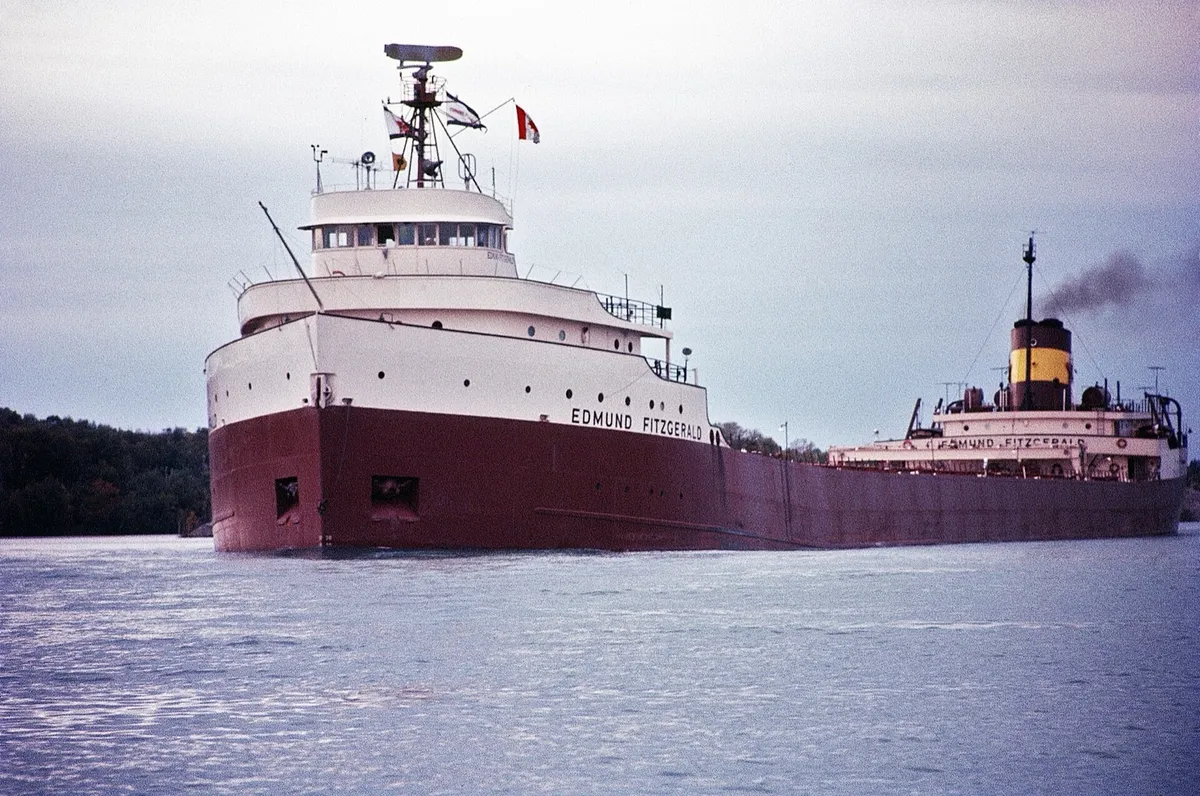
SS Edmund Fitzgerald
When the Edmund Fitzgerald launched in 1958, she was the largest ship on the Great Lakes and a point of pride for the iron ore trade. She spent seventeen years hauling taconite pellets between the mines of Minnesota and the steel mills of the lower lakes. She set cargo records. People watched her pass through the Soo Locks the way they'd watch a parade float. She had a nickname: the Fitz. On November 10, 1975, she sank in a storm on Lake Superior. All 29 crew members died. There was no distress signal. The last communication was Captain Ernest McSorley telling the Arthur M. Anderson, "We are holding our own." Then she was gone. The cause is still debated fifty years later, and that debate has become part of the story. The leading theories are structural failure from stress fractures in the hull, flooding through improperly secured hatch covers, shoaling over Six Fathom Shoal that ripped the bottom, or a rogue wave. The Coast Guard blamed the hatch covers. The lake pilots' union blamed structural failure. Nobody knows for certain because the crew isn't here to tell us. Gordon Lightfoot released "The Wreck of the Edmund Fitzgerald" a year later, and it turned a regional maritime disaster into a permanent piece of American folklore. The song plays in every bar in the Upper Peninsula. It made the Fitzgerald the most famous shipwreck in Great Lakes history, and it ensured that the 29 men who died would never be anonymous statistics. The wreck also forced real changes. The Coast Guard mandated stricter inspection schedules for Great Lakes freighters, required survival suits for crews, and tightened hatch cover standards. Twenty-nine men died to get those rules written.