expedition
2 vessels
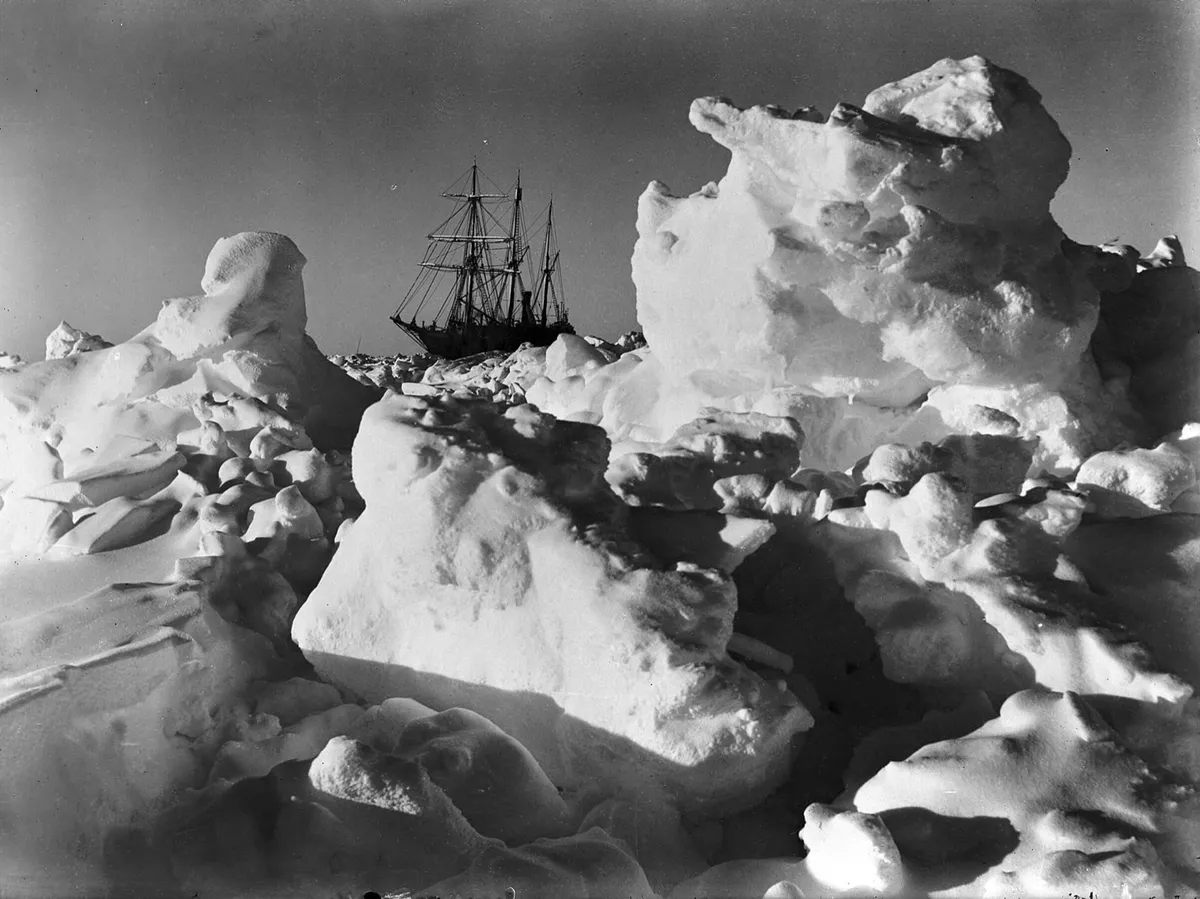
Endurance
Endurance never reached Antarctica. That's the first thing to understand. Shackleton's Imperial Trans-Antarctic Expedition was supposed to cross the continent from the Weddell Sea to the Ross Sea, roughly 1,800 miles over the pole. They didn't make it to shore. Endurance entered the Weddell Sea pack ice in December 1914 and became trapped on January 19, 1915. For ten months the crew lived aboard while the ice slowly crushed the ship around them. Frank Hurley's photographs show the hull buckling, the deck timbers splintering, the masts leaning at impossible angles. On October 27, 1915, Shackleton ordered the crew onto the ice. Endurance sank on November 21. What followed is the greatest survival story in the history of exploration. Twenty-eight men camped on drifting ice floes for five months, eating seals and penguins, watching the floe they lived on crack and shrink. When the ice broke up in April 1916, they launched three salvaged lifeboats and sailed through open Antarctic seas to Elephant Island, a desolate rock at the tip of the Antarctic Peninsula. It was the first time they'd stood on solid ground in 497 days. Shackleton then took five men in the 22-foot James Caird and sailed 800 miles across the Southern Ocean to South Georgia Island. The Drake Passage is the most violent stretch of open water on earth. The boat was open. They navigated by dead reckoning and occasional sun sights through storm clouds. They made landfall on the wrong side of the island and Shackleton, Worsley, and Crean then crossed South Georgia's unmapped mountain range on foot to reach the whaling station at Stromness. Not a single man died. All 28 survived. The Trans-Antarctic Expedition was a complete failure by its stated objective and an absolute triumph of leadership. Shackleton brought everybody home. The wreck was found in March 2022 by the Endurance22 expedition at a depth of 10,000 feet in the Weddell Sea. The ship is upright, intact, with the name "ENDURANCE" still clearly visible on the stern. The cold, low-oxygen water preserved her like no one expected.
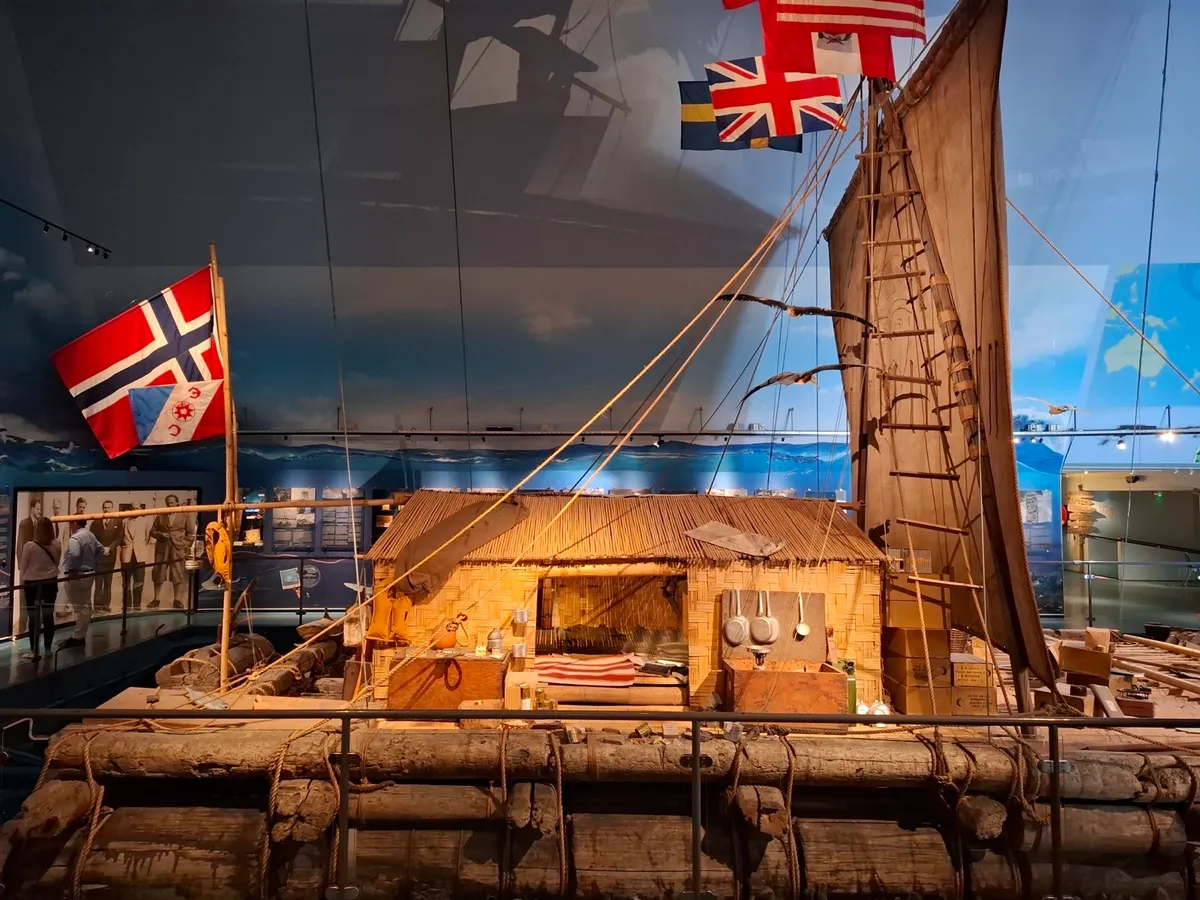
Kon-Tiki
In 1947, Thor Heyerdahl built a raft from balsa logs using techniques available to pre-Columbian South Americans and sailed it 4,300 miles across the Pacific to prove that ancient peoples could have colonized Polynesia from South America. The scientific establishment thought he was insane. Balsa wood, they said, would become waterlogged and sink. The raft would break apart in heavy seas. Six men would die in the Pacific to prove a crackpot theory. Heyerdahl sailed anyway. The voyage took 101 days. The raft held together. The balsa didn't waterlog (the outer layer saturated but the core stayed buoyant). They caught fish, collected rainwater, and navigated by stars. They crash-landed on a reef in the Tuamotu Islands. Everyone survived. The book sold 50 million copies. The theory has been largely disproven by DNA evidence — Polynesians came from Asia, not South America — but Heyerdahl proved the voyage was possible, and that matters.