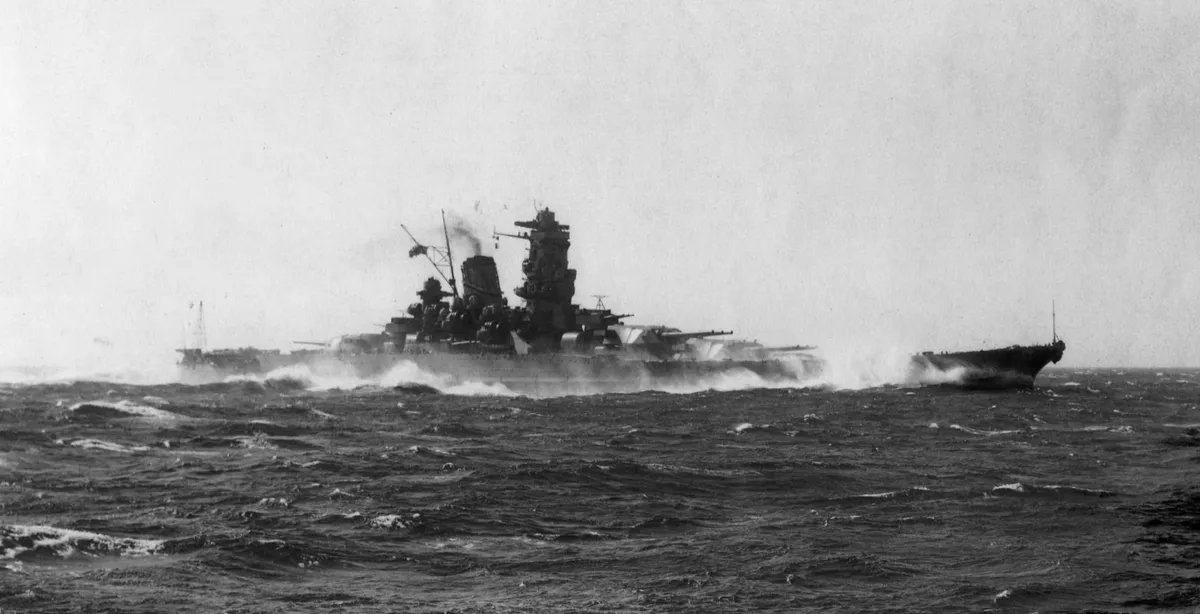
Yamato
Yamato-class Battleship
Why it matters
Yamato was the largest, heaviest, most powerfully armed battleship ever built. Her 18.1-inch guns could throw 3,200-pound shells 26 miles. She displaced more than any warship before or since.
The Japanese kept her existence secret — workers at Kure Naval Arsenal were forbidden from discussing what they were building. Yamato represented the pinnacle of battleship design, and she was obsolete before her paint dried.
By 1945, carrier aviation had made the battleship a relic. Japan's navy was shattered. Yamato was sent on Operation Ten-Go — a one-way mission to beach herself at Okinawa and fight as a fixed battery until destroyed.
She never got close. On April 7, 1945, 386 American aircraft swarmed her. She took 10 torpedo hits and 7 bomb hits before her forward magazines exploded. She capsized and sank, taking 3,055 of her 3,332 crew.
What it was like
Yamato was called a 'hotel' by the rest of the Japanese fleet. She had air conditioning, better food, and larger quarters than any ship in the Imperial Navy.
Her crew ate ice cream while sailors on destroyers ate rice and pickles. But by April 1945, the luxury was gone. Yamato was loaded with only enough fuel for a one-way trip.
The crew knew. Many wrote farewell letters. Some were teenagers — by 1945, the Imperial Navy was drafting boys. The attack lasted two hours. American torpedo bombers concentrated on the port side to accelerate capsizing.
Men on deck were strafed by fighters. Below decks, compartments flooded one by one, trapping hundreds. When the forward magazine exploded, the mushroom cloud was visible from Kagoshima, 120 miles away.
The crew
Anti-Aircraft Gunners
By 1945, Yamato bristled with 162 anti-aircraft guns. The Type 96 25mm guns were the primary defense, but they were inadequate — too slow to track American planes, too light to bring them down reliably, and fed by 15-round magazines that required constant reloading. The gunners fought with dedication but lacked radar-directed fire control. American pilots later described the AA fire as 'heavy but inaccurate.'
Damage Control
Yamato's damage control teams performed extraordinary work, counter-flooding compartments to correct list as torpedoes struck the port side. They kept the ship fighting for two hours under the most concentrated air attack of the Pacific War. But with ten torpedo hits concentrated on one side, the laws of physics won. The counter-flooding order came too late, and when Yamato rolled, the damage control teams deep in the hull had no escape.
Patina notes
Yamato lies in two main pieces at 1,120 feet in the East China Sea, south of Kyushu. The forward section separated from the stern when the magazine exploded.
Deep-sea surveys in 1985 and 1999 confirmed the wreck's location. The hull shows massive blast damage consistent with the magazine detonation. Debris is scattered across the sea floor.
Preservation reality
The wreck is a protected war grave. Japan's Kure Maritime Museum (called the 'Yamato Museum') houses a 1/10 scale model that fills an entire gallery, along with surviving artifacts.
The Zero fighter recovered from the wreck site is on display. Yamato occupies a cultural position in Japan similar to Titanic in the West — she's the subject of films, anime, manga, and a persistent national fascination with magnificent futility.
Where to see one
- • Kure Maritime Museum (Yamato Museum), Kure, Japan
- • Yasukuni Shrine Museum, Tokyo (related artifacts)
Preservation organizations
- • Kure Maritime Museum Foundation
Sources
- Naval History and Heritage Command (2026-03-05)
Related vessels
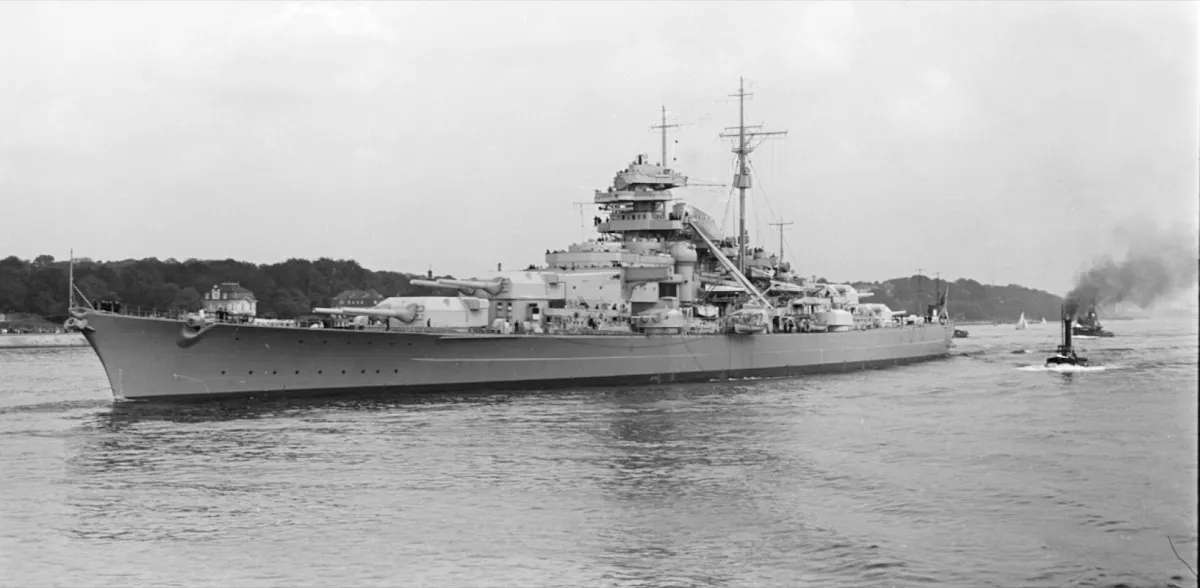
Bismarck
Bismarck's operational career lasted eight days. In that time, she became the most famous warship of the twentieth century. On May 24, 1941, she engaged HMS Hood and HMS Prince of Wales in the Denmark Strait. A shell from Bismarck penetrated Hood's magazine. The explosion broke Hood in half. She sank in three minutes. Of 1,418 crew, three survived. Hood was the pride of the Royal Navy. Churchill's order was immediate and absolute: sink the Bismarck. The Royal Navy sent everything. Battleships, carriers, cruisers, destroyers. Swordfish torpedo bombers — fabric-covered biplanes that looked like they belonged in the previous war — scored the hit that jammed Bismarck's rudder. She could only steam in circles. The next morning, King George V and Rodney pounded her for ninety minutes. Bismarck's crew scuttled her. Of 2,065 men, 114 survived.
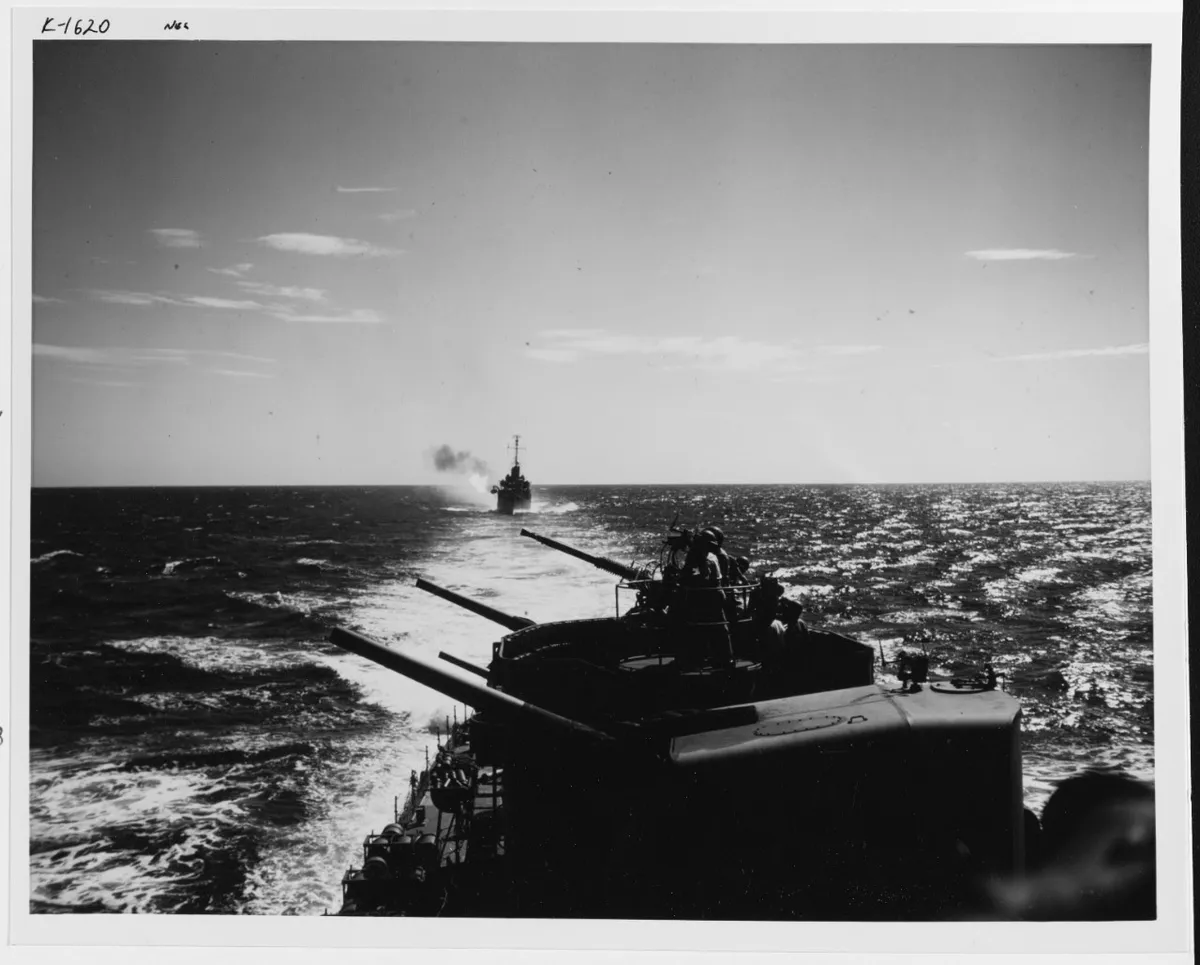
Fletcher-class Destroyer
The Fletcher class was the destroyer that won the Pacific. 175 built, more than any other destroyer class in history, and they did everything. Convoy escort in the Atlantic. Shore bombardment at Normandy. Surface actions in the Solomons. Radar picket duty at Okinawa, where they were positioned as sacrificial early-warning stations against kamikaze attacks. Nineteen Fletchers were lost during the war. They weren't glamorous. They were the ships that showed up everywhere, did the ugly work, and took casualties doing it.
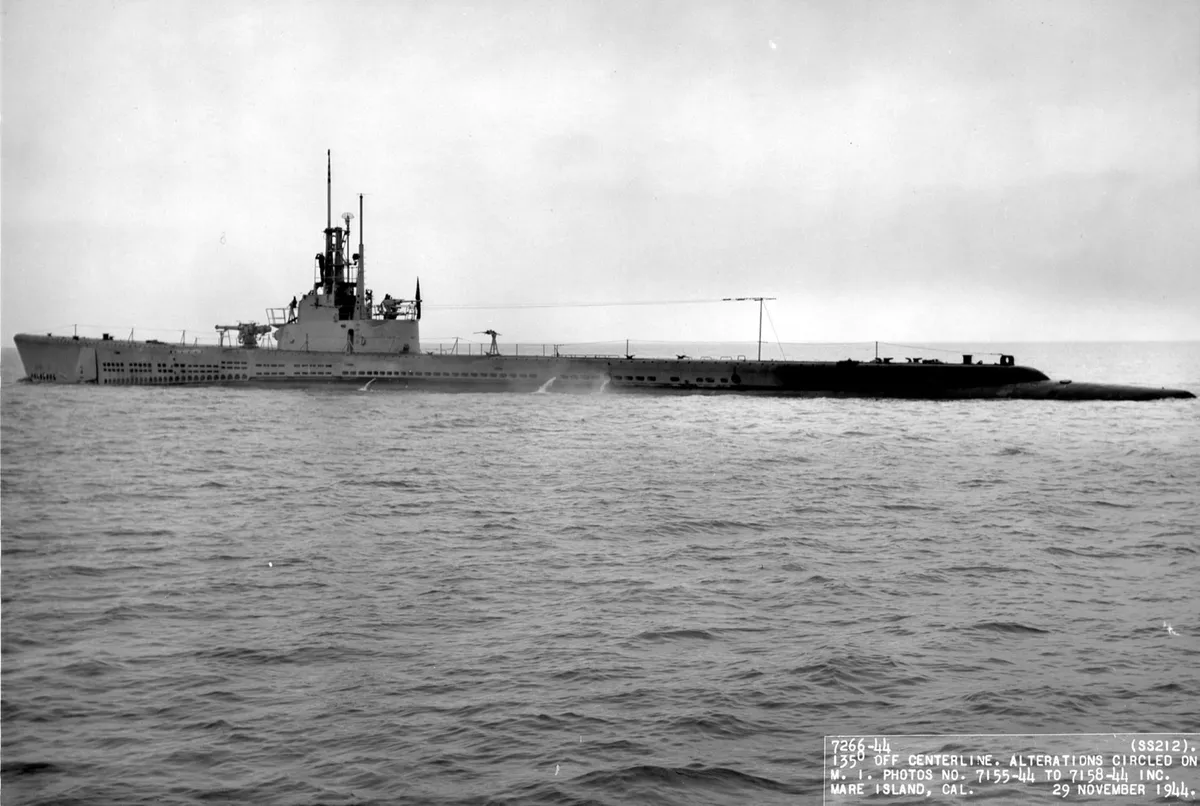
Gato-class Submarine
The Gato class fought the submarine war that strangled Japan. American submarines comprised less than 2% of the Navy's personnel and sank over 55% of Japan's merchant tonnage. The cost was staggering. 52 US submarines were lost during the war. 3,505 submariners killed. That's a 22% casualty rate, the highest of any branch of the US military in any war. One in five men who went on patrol in a fleet submarine did not come home. The Gato class bore the brunt of this campaign, running long patrols from Pearl Harbor and Australia into Japanese-controlled waters, operating alone, with no rescue if things went wrong.