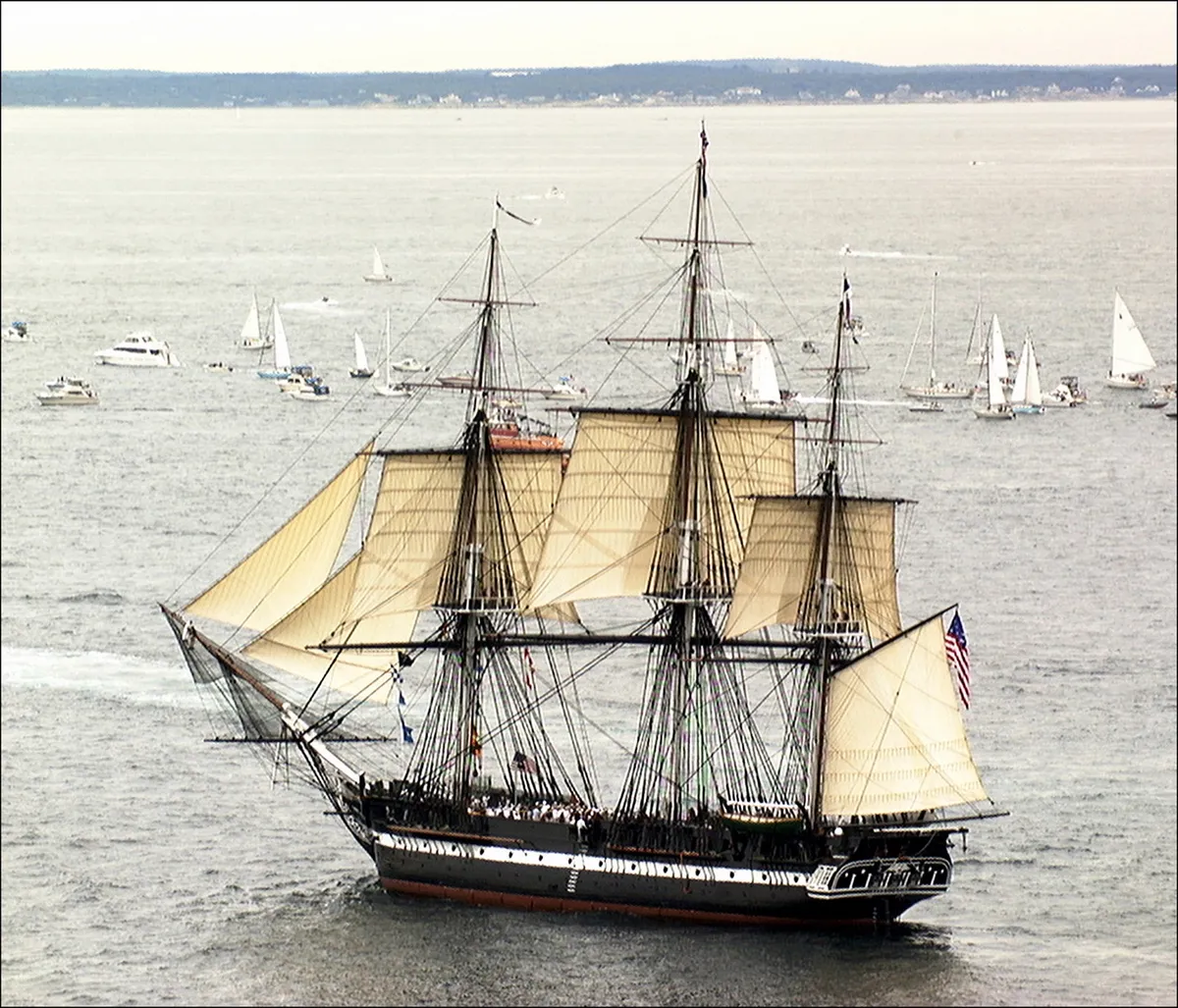
USS Constitution
44-gun heavy frigate
Why it matters
USS Constitution is the oldest commissioned warship still afloat. She was launched in 1797 and is still in the U.S. Navy. Not as a museum — as an active-duty warship with a crew of U.S.
Navy sailors. During the War of 1812, she defeated five British warships in single combat. In the battle against HMS Guerriere, British sailors watched their cannonballs bounce off Constitution's hull and shouted 'Huzzah, her sides are made of iron!' The nickname stuck.
The hull was built with live oak — a Southern wood so dense it sinks in water and resists cannonball penetration better than any other timber. Constitution was saved from the scrapyard multiple times: once by Oliver Wendell Holmes' poem in 1830, once by a nationwide penny drive in 1905, and once by a $12 million restoration in the 1990s.
What it was like
A crew of 450 men lived and fought on a 204-foot wooden ship. Sailors slept in hammocks hung 14 inches apart on the gun deck, alongside the 24-pounder cannons they would fire in battle.
In combat, the gun crews were drenched in sweat, deafened by the cannons, and surrounded by wood splinters that flew like shrapnel when enemy shot hit the hull.
A 24-pound cannonball could send a chest-high spray of oak splinters across the deck. More men were killed by splinters than by the cannonballs themselves.
Between battles, life was hard labor: climbing rigging, hauling lines, holystoning decks, and standing watches in all weather. Discipline was maintained with the lash. The food was terrible. The grog ration was the high point of the day.
The crew
Topman
The topmen worked the upper rigging — the highest, most dangerous job on a sailing warship. They climbed 130 feet up the masts in any weather to set and furl sails. In battle, they were stationed in the fighting tops with muskets and grenades. A fall meant death. The best topmen were young, agile, and fearless. They were the elite of the crew, and they knew it.
Gun Crew
A 24-pounder required a crew of 14 men to load, run out, aim, fire, and haul back. A well-drilled crew could fire once every 90 seconds. The gun deck during battle was a vision of hell: smoke so thick you couldn't see the next gun, the roar of 30 cannons firing in succession, and the ship shuddering with each broadside. Men who lost limbs were carried below to the surgeon. The firing continued.
Patina notes
Constitution has been rebuilt several times — during major restorations in 1833, 1927, 1973, and 1992-96. Less than 15% of the original wood remains. But the Navy maintains her as a functional warship, not a frozen artifact.
She sailed under her own power in 1997 for the first time in 116 years, and again in 2012. Each restoration uses the same materials (live oak, white oak, copper) and traditional shipbuilding methods where possible.
Preservation reality
Constitution is maintained by the U.S. Navy at Charlestown Navy Yard in Boston. She has a full-time active-duty crew of about 80 sailors. She's open for free public tours year-round.
The Navy considers her assignment a prestigious posting. Annual turnaround cruises keep her seaworthy. The adjacent Constitution Museum provides historical context. Of the six original frigates authorized by Congress in 1794, Constitution is the only one that survives.
Where to see one
- • Charlestown Navy Yard, Boston, MA (free tours, year-round)
- • USS Constitution Museum, Boston
Preservation organizations
- • USS Constitution Museum
- • U.S. Navy
Sources
- USS Constitution Museum (2026-03-05)
Related vessels
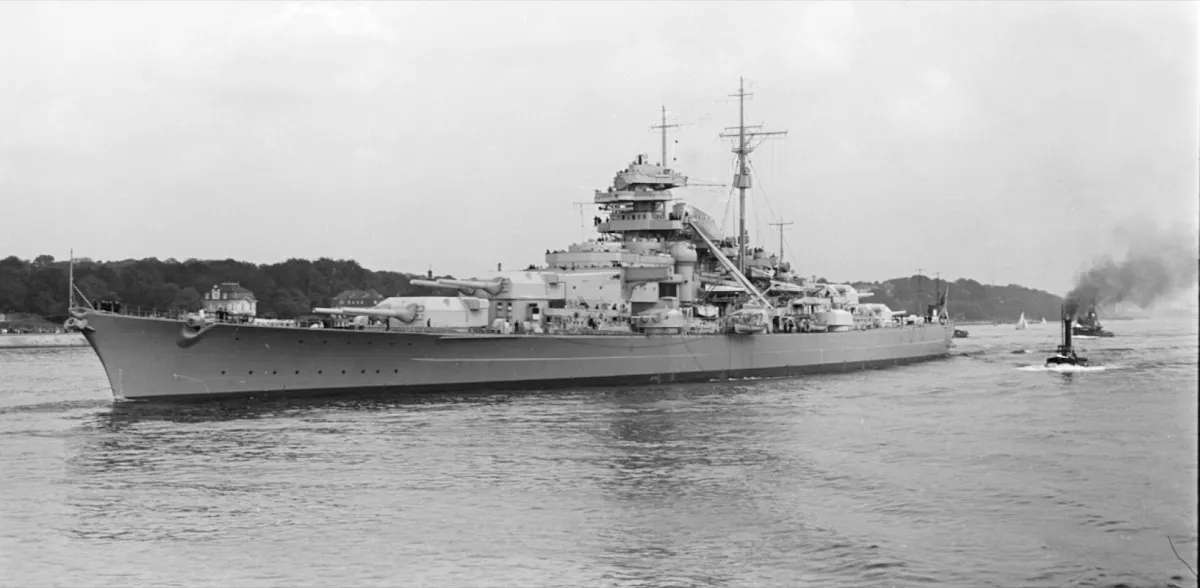
Bismarck
Bismarck's operational career lasted eight days. In that time, she became the most famous warship of the twentieth century. On May 24, 1941, she engaged HMS Hood and HMS Prince of Wales in the Denmark Strait. A shell from Bismarck penetrated Hood's magazine. The explosion broke Hood in half. She sank in three minutes. Of 1,418 crew, three survived. Hood was the pride of the Royal Navy. Churchill's order was immediate and absolute: sink the Bismarck. The Royal Navy sent everything. Battleships, carriers, cruisers, destroyers. Swordfish torpedo bombers — fabric-covered biplanes that looked like they belonged in the previous war — scored the hit that jammed Bismarck's rudder. She could only steam in circles. The next morning, King George V and Rodney pounded her for ninety minutes. Bismarck's crew scuttled her. Of 2,065 men, 114 survived.
Black Pearl
Before 2003, the pirate movie was a dead genre. After Pirates of the Caribbean, every kid in America wanted a ship with black sails. The Black Pearl did for pirate vessels what the Millennium Falcon did for spaceships. It made the vehicle a character. The ship represents freedom in its purest cinematic form. Jack Sparrow doesn't want gold or power. He wants his ship back. That's it. The entire first film is a man trying to reclaim the one thing that makes him who he is. The Black Pearl isn't transportation. It's identity. Johnny Depp's performance gets the credit, and it should. But the ship sells the fantasy. The black sails against a Caribbean sunset. The ragged rigging. The impossible speed. You believe this ship is alive because the movie treats it like one. The prop was built on a steel barge called the Sunset, dressed with a full wooden superstructure. Additional ships were constructed for later films, and digital effects expanded the Pearl's capabilities well beyond anything that floats.
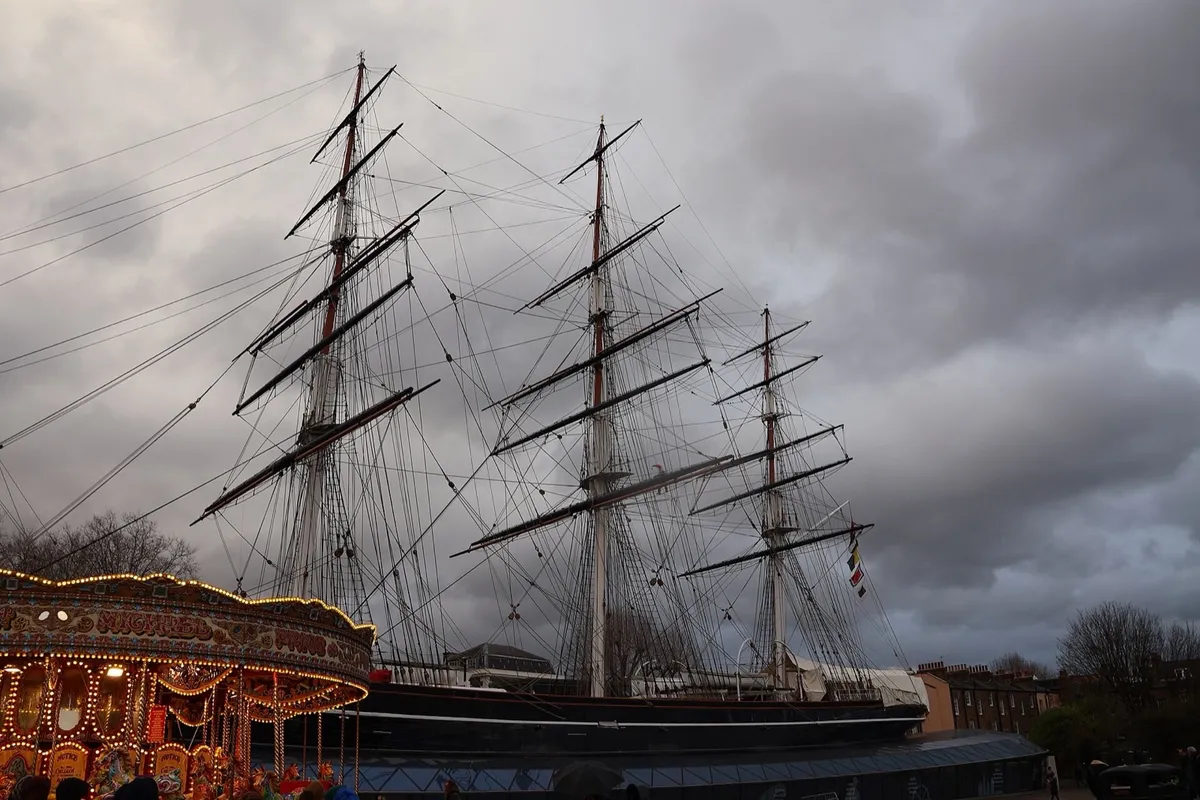
Cutty Sark
The Cutty Sark was born obsolete. She launched in 1869, the same year the Suez Canal opened and killed the tea clipper trade in a single stroke. Steam ships could use the canal. Sailing ships couldn't. The entire economic logic that justified building a vessel optimized for speed from China to London evaporated before she'd completed her first season. That's either terrible timing or a fitting monument to an era that was already dead. She raced in the tea trade anyway for a few seasons, most famously against the clipper Thermopylae in 1872. Cutty Sark was winning when she lost her rudder in a gale and had to jury-rig a replacement from spare spars. She still finished the voyage, arriving in London only a week behind Thermopylae. That tells you everything about the ship and the men who sailed her. Her second life was in the Australian wool trade, and this is where she finally proved herself. Under Captain Richard Woodget (1885-1895), she became the fastest wool clipper afloat, consistently making the passage from Sydney to London in under 80 days. She'd load over 5,000 bales of wool, drive south into the roaring forties, and run her easting down at speeds that left every other sailing vessel behind. Woodget was the captain she deserved. The name comes from Robert Burns's 1791 poem "Tam o' Shanter." Tam, drunk and riding home, watches witches dance and shouts in admiration at a young witch wearing a cutty sark, a short nightgown. She chases him. He barely escapes. The ship's figurehead is the witch Nannie, reaching forward with arm outstretched. It's a perfect name for a ship that was always chasing something just out of reach. After the wool trade declined, she was sold to a Portuguese company, renamed Ferreira, and spent decades hauling cargo in the South Atlantic. A retired sea captain named Wilfred Dowman found her in a Portuguese port in 1922, recognized what she was, bought her, and brought her home to England. Without Dowman, she would have been broken up. She is the only clipper ship that survives.