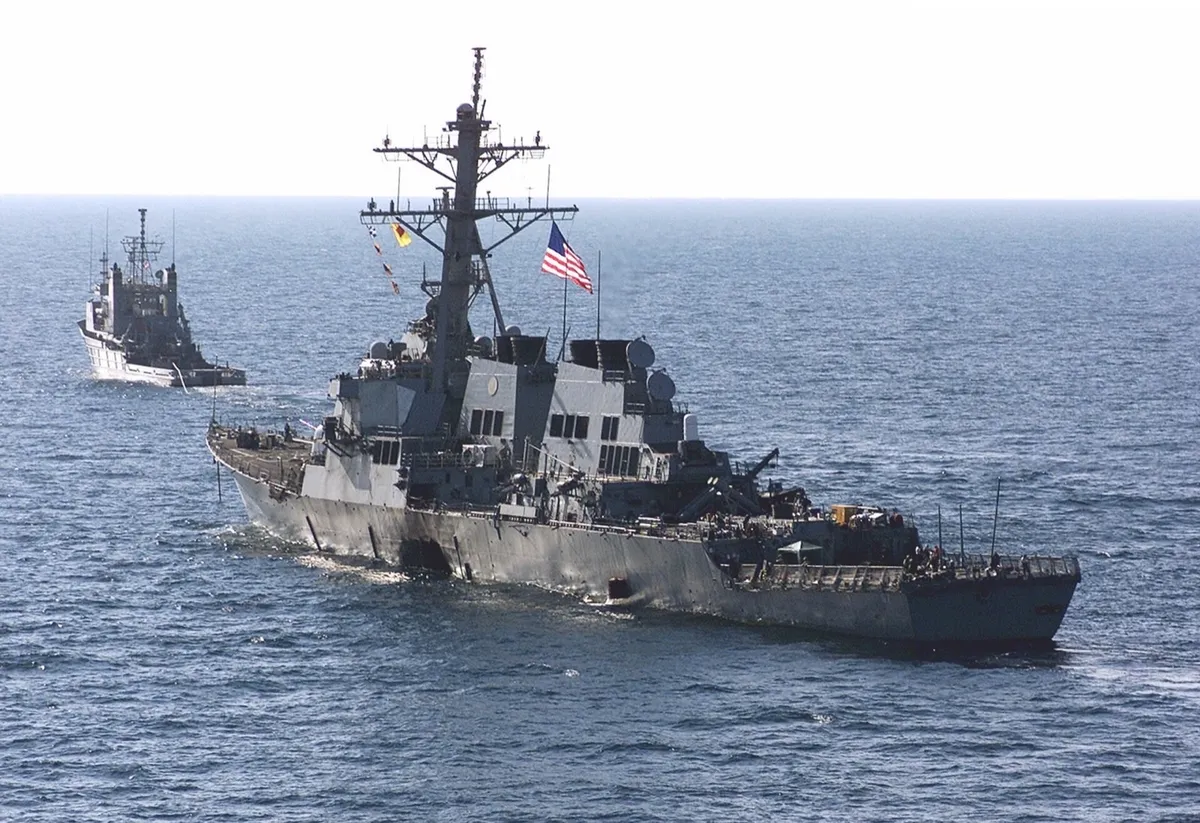
USS Cole
DDG-67
Why it matters
On October 12, 2000, the USS Cole pulled into Aden, Yemen, for a routine refueling stop. A small fiberglass boat piloted by two al-Qaeda operatives pulled alongside and detonated roughly 400 to 700 pounds of shaped explosives against the port side of the hull. The blast tore a hole 40 feet wide and 60 feet high in the destroyer's side. Seventeen sailors were killed. Thirty-seven were injured. Most of the dead were in the galley, eating lunch.
The crew's response was extraordinary. The ship was flooding, without power, listing, and on fire. Sailors formed bucket brigades, shored up bulkheads with mattresses and wooden shores, and kept the Cole from sinking through three days of round-the-clock damage control. They saved the ship with training, grit, and improvisation. The Navy later said the crew's performance was one of the finest displays of damage control in the service's history.
The Cole bombing was a direct precursor to September 11, 2001. Al-Qaeda planned and executed both. The mastermind of the Cole attack, Abd al-Rahim al-Nashiri, was later captured and held at Guantanamo Bay. Osama bin Laden referenced the Cole attack in recruitment videos. The attack demonstrated that a billion-dollar warship with the most advanced combat system in the world could be crippled by two men in a fishing boat with homemade explosives. It was asymmetric warfare made real.
The Navy transported Cole home on the heavy-lift ship MV Blue Marlin, a surreal image of a destroyer riding piggyback across the Atlantic. Ingalls Shipbuilding in Pascagoula repaired her over 14 months. She returned to the fleet in 2002 and has deployed multiple times since. The 17 sailors who died are memorialized on the ship and at Arlington National Cemetery.
The Cole changed how the Navy thinks about force protection. Port visits in hostile regions now involve layered security, armed watch teams, and barriers. The days of a warship sitting unprotected in a foreign harbor are over. Seventeen people died for that lesson.
What it was like
An Arleigh Burke destroyer is a sophisticated weapons platform, but the crew spaces are still cramped. Enlisted sailors sleep in stacked racks in berthing compartments, six high in some cases. The ship hums constantly from the gas turbines and electronics. Climate control fights a losing battle against the heat of the Arabian Peninsula.
When the bomb detonated, the ship lurched sideways. The lights went out. In the galley and the engineering spaces nearest the blast, the concussion was instantly lethal. Sailors who survived the initial explosion found themselves in darkness, knee-deep in rising water, with no power and no communications. They organized themselves without orders from the bridge, because the bridge had its own problems. Junior sailors, some of them teenagers on their first deployment, made decisions that kept the ship afloat.
The three days between the attack and the arrival of outside help were a test of everything the crew had ever been trained for. They worked in shifts, barely sleeping, rotating between damage control stations. They treated their own wounded. They recovered their own dead. Some of them were 19 years old.
The crew
Damage Control Team
Rushed toward the blast, not away from it. Found a 40-by-60-foot hole in the side of the ship and seawater pouring in at a rate that would have sunk them in hours. With no power to run pumps, they used portable P-250 pumps, bucket brigades, and wooden shores braced against bulkheads. They stuffed mattresses into cracks. They welded patches in the dark by flashlight. The Navy's damage control training saved the ship, and the crew executed it under conditions no training exercise ever replicated.
Corpsman / Medical Team
Set up a triage station on the mess deck and treated blast injuries, burns, and shrapnel wounds with the ship's medical supplies. The ship's doctor and corpsmen performed emergency surgery under battery-powered lights. They kept the critically wounded alive long enough for medevac. Some of the injuries were horrific. The medical team worked for 72 hours straight.
Topside Watch
The sailors on watch when the small boat approached had seconds to react and no clear authority to fire on an unidentified vessel in a foreign port. Rules of engagement didn't cover this scenario in 2000. The watch team had no mounted weapons ready to fire. After the attack, every topside watch on every Navy ship in the world was armed, briefed, and authorized to engage threats. The watch standers on Cole that morning are the reason those rules exist.
Patina notes
The Cole bears a scar you can't see from the outside. Ingalls Shipbuilding cut out the damaged section, fabricated 550 tons of new steel, and rebuilt the ship from the keel up in the blast zone.
The repair was so thorough that the hull shows no visible evidence of the attack. But the crew knows where it happened. There's a memorial plaque on the mess deck near the point of impact.
The ship has been repainted, overhauled, and upgraded multiple times since 2000. She looks like every other Burke-class destroyer in the fleet. The damage is carried by the people, not the steel.
Preservation reality
The Cole is still in active service with the US Navy, homeported in Norfolk, Virginia. She's not a museum ship and won't be for years, if ever. The Navy has a long backlog of decommissioned ships waiting for museum status, and Burke-class destroyers are still in high demand.
A memorial to the 17 killed stands at Norfolk Naval Station. Individual memorials exist at Arlington National Cemetery. The most powerful artifact of the attack is the photograph of Cole on the deck of the Blue Marlin, riding home with a hole in her side. That image is in every naval history textbook published since 2001.
Where to see one
- • USS Cole Memorial, Norfolk Naval Station, Virginia
- • Arlington National Cemetery, Washington, DC (individual memorials)
Preservation organizations
- • USS Cole Memorial Foundation
- • Navy League of the United States
Sources
- USS Cole Commission Report (2026-03-05)
- Naval History and Heritage Command - USS Cole (2026-03-05)
Related vessels
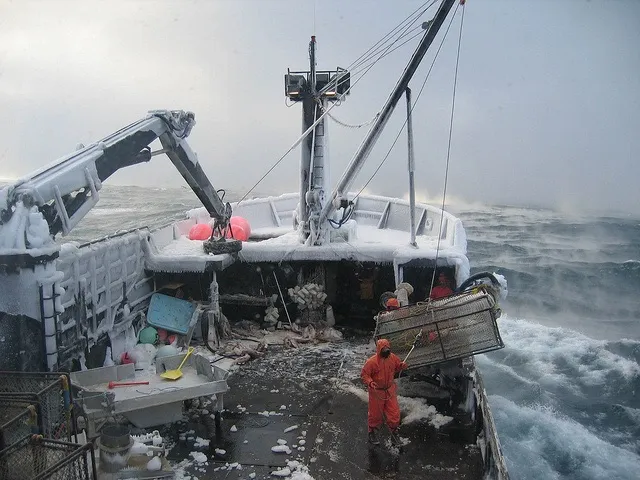
Bering Sea Crab Boat
Before Deadliest Catch premiered on Discovery Channel in 2005, almost nobody outside Alaska knew what Bering Sea crab fishing looked like. Afterward, boats like the Northwestern, Cornelia Marie, and Time Bandit became household names. The show turned a brutal, obscure commercial fishery into reality television. What it got right is that the job is genuinely insane. The Bering Sea king crab and opilio (snow crab) fisheries operate in some of the worst conditions on earth. Winter storms generate 40-foot seas. Wind chill drops to minus 40. Spray freezes on contact with the superstructure, adding tons of topside weight that can capsize a boat if not knocked off. The crews use baseball bats and sledgehammers to break ice off the rails, rigging, and wheelhouse. This is a real thing that happens on a regular basis. The fatality rate for Bering Sea crab fishing has historically been 80 times the national average for workplace deaths. Coast Guard reforms, rationalization of the fishery (switching from a short derby season to individual fishing quotas), and better safety equipment have brought the rate down, but it's still the most dangerous fishery in North America. Between 1990 and 2010, dozens of boats and over a hundred lives were lost. The economics are as extreme as the conditions. Under the old derby system, the entire king crab season was compressed into a few days. Boats raced to catch as much as possible before the season closed. Crews could earn $30,000-$80,000 for a few weeks of work. They could also earn nothing if the catch was poor, or die if the weather turned. The quota system, implemented in 2005, spread the season out and reduced the death rate. It also reduced the gold-rush paydays. Now the money is steadier but lower. The boats still go out in terrible weather because that's where the crab are.
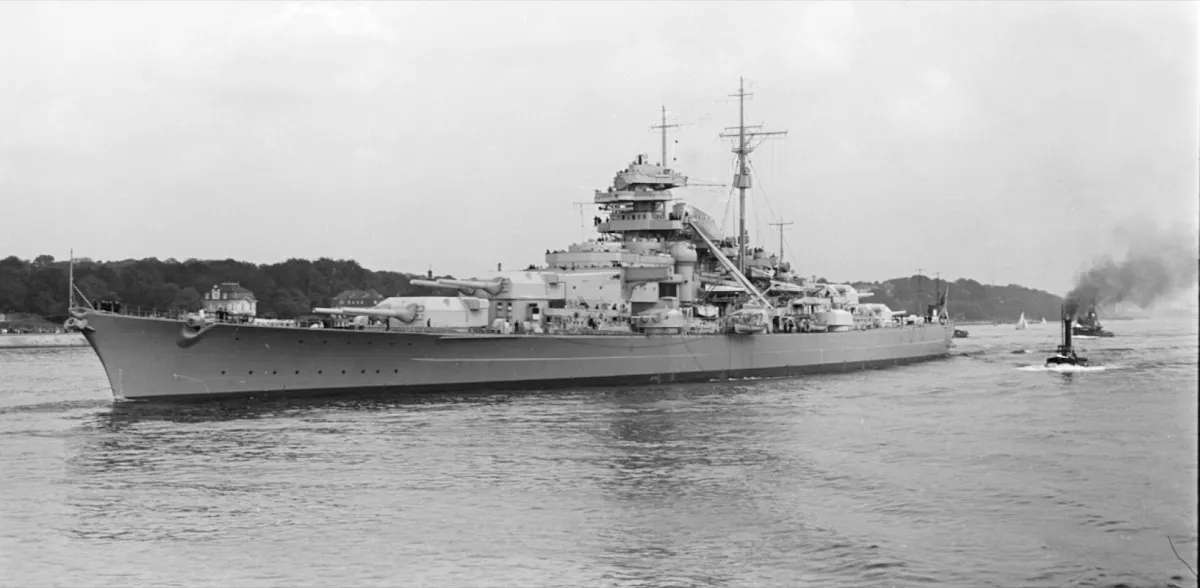
Bismarck
Bismarck's operational career lasted eight days. In that time, she became the most famous warship of the twentieth century. On May 24, 1941, she engaged HMS Hood and HMS Prince of Wales in the Denmark Strait. A shell from Bismarck penetrated Hood's magazine. The explosion broke Hood in half. She sank in three minutes. Of 1,418 crew, three survived. Hood was the pride of the Royal Navy. Churchill's order was immediate and absolute: sink the Bismarck. The Royal Navy sent everything. Battleships, carriers, cruisers, destroyers. Swordfish torpedo bombers — fabric-covered biplanes that looked like they belonged in the previous war — scored the hit that jammed Bismarck's rudder. She could only steam in circles. The next morning, King George V and Rodney pounded her for ninety minutes. Bismarck's crew scuttled her. Of 2,065 men, 114 survived.
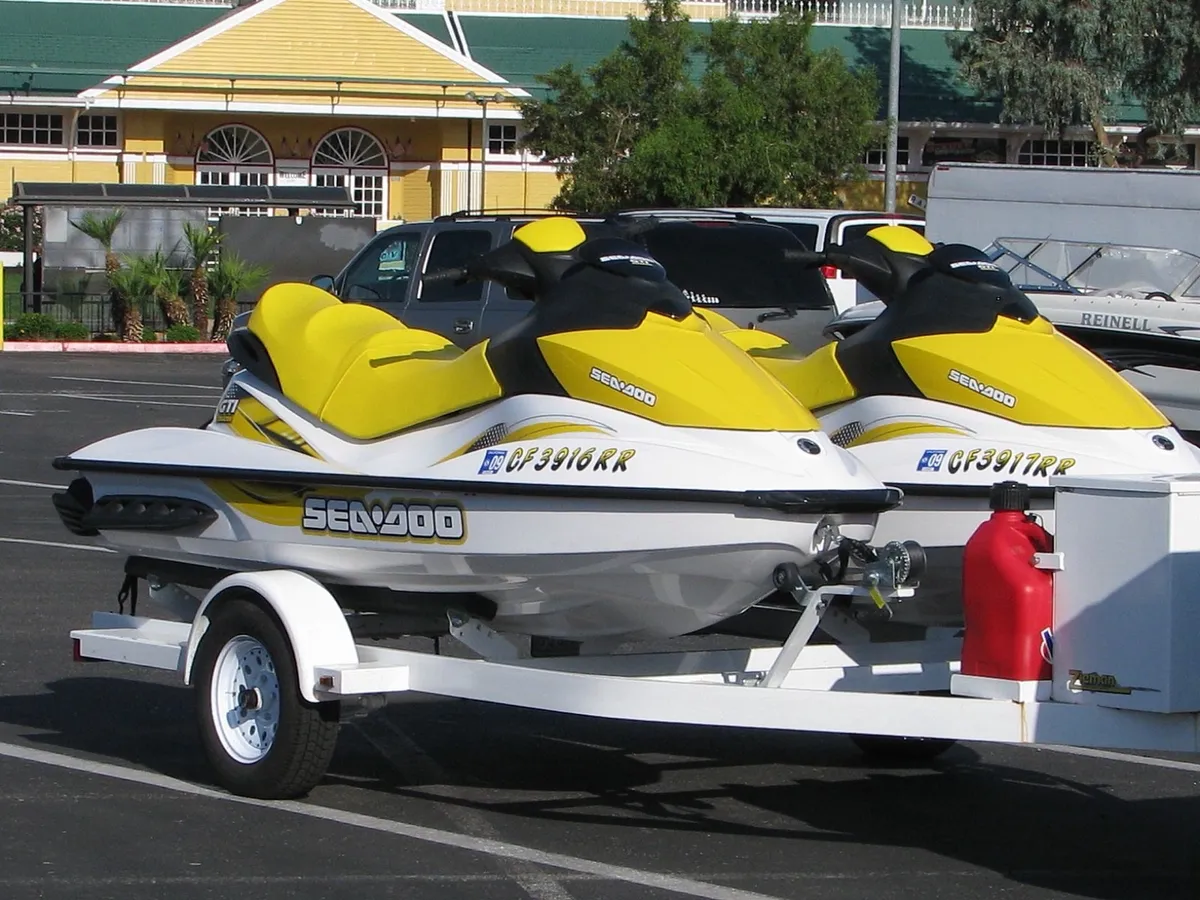
Bombardier Sea-Doo
Sea-Doo has the weirdest origin story in powersports. Bombardier, a Canadian aerospace and train company, decided in 1968 that personal watercraft were the future. They built the Sea-Doo, it flopped, and they shelved it for twenty years. In 1988 they relaunched with modern engineering and a Rotax engine, and within five years they were outselling Kawasaki. A company that builds subway cars and business jets makes one of the most popular toys on the water. That's a sentence nobody predicted. If the WaveRunner is the Accord, the Sea-Doo is the WRX. Bombardier's approach has always been engineering-first. They were first with on-water braking (the iBR system, which uses a reverse gate to slow down). First with a viable fishing PWC. First with closed-loop cooling to keep saltwater out of the engine. They treat PWC like a technology platform rather than a toy, and it shows. The FISH PRO is the most absurd and brilliant product in the PWC market. It's a $20,000 personal watercraft with a Garmin fish finder, a 13.5-gallon cooler, rod holders, and a trolling mode. The idea that someone would go offshore fishing on something the size of a motorcycle seemed insane. Then people started actually catching fish on them, and now there's a whole subculture of PWC anglers. Sea-Doo's Achilles heel has historically been reliability. The Rotax engines are powerful but the electrical systems and supercharger seals on the high-performance models have earned a reputation for expensive repairs. Yamaha owners love pointing this out. Sea-Doo owners don't hear them because they're too far ahead.