workboat
13 vessels
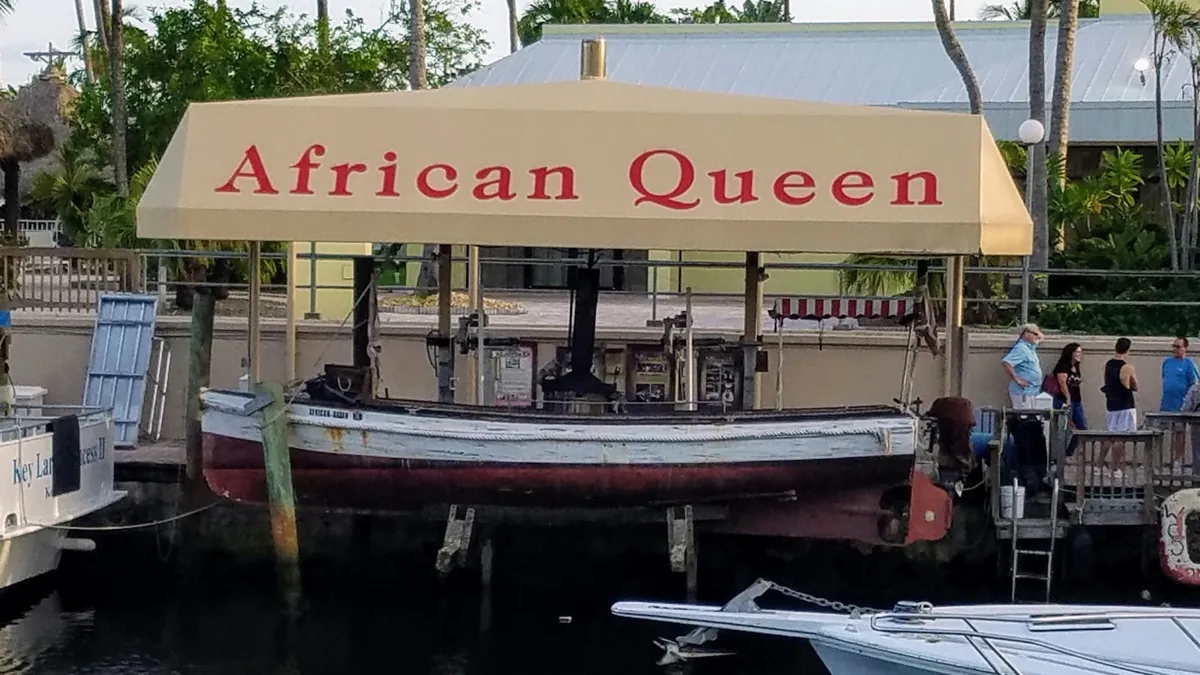
African Queen
The African Queen is a 30-foot steam launch built in 1912 by a British shipyard for the British East Africa Company. She spent decades hauling cargo and passengers on Lake Albert and the Victoria Nile in Uganda. Then John Huston needed a boat for his 1951 film. The African Queen became one of the most recognizable vessels in cinema — Humphrey Bogart won his only Academy Award pulling leeches off his legs on its deck. Katherine Hepburn poured his gin overboard. The boat survived the film, decades of neglect, and multiple restorations. She's currently in Key Largo, Florida, operating as a tourist excursion boat. You can ride on the same vessel that Bogart steered through the papyrus.
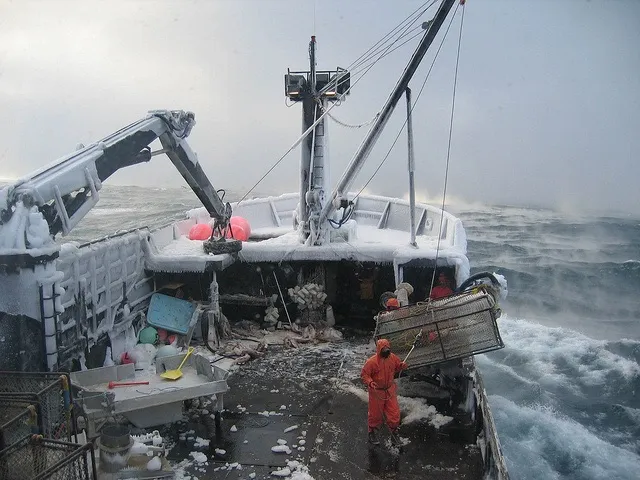
Bering Sea Crab Boat
Before Deadliest Catch premiered on Discovery Channel in 2005, almost nobody outside Alaska knew what Bering Sea crab fishing looked like. Afterward, boats like the Northwestern, Cornelia Marie, and Time Bandit became household names. The show turned a brutal, obscure commercial fishery into reality television. What it got right is that the job is genuinely insane. The Bering Sea king crab and opilio (snow crab) fisheries operate in some of the worst conditions on earth. Winter storms generate 40-foot seas. Wind chill drops to minus 40. Spray freezes on contact with the superstructure, adding tons of topside weight that can capsize a boat if not knocked off. The crews use baseball bats and sledgehammers to break ice off the rails, rigging, and wheelhouse. This is a real thing that happens on a regular basis. The fatality rate for Bering Sea crab fishing has historically been 80 times the national average for workplace deaths. Coast Guard reforms, rationalization of the fishery (switching from a short derby season to individual fishing quotas), and better safety equipment have brought the rate down, but it's still the most dangerous fishery in North America. Between 1990 and 2010, dozens of boats and over a hundred lives were lost. The economics are as extreme as the conditions. Under the old derby system, the entire king crab season was compressed into a few days. Boats raced to catch as much as possible before the season closed. Crews could earn $30,000-$80,000 for a few weeks of work. They could also earn nothing if the catch was poor, or die if the weather turned. The quota system, implemented in 2005, spread the season out and reduced the death rate. It also reduced the gold-rush paydays. Now the money is steadier but lower. The boats still go out in terrible weather because that's where the crab are.
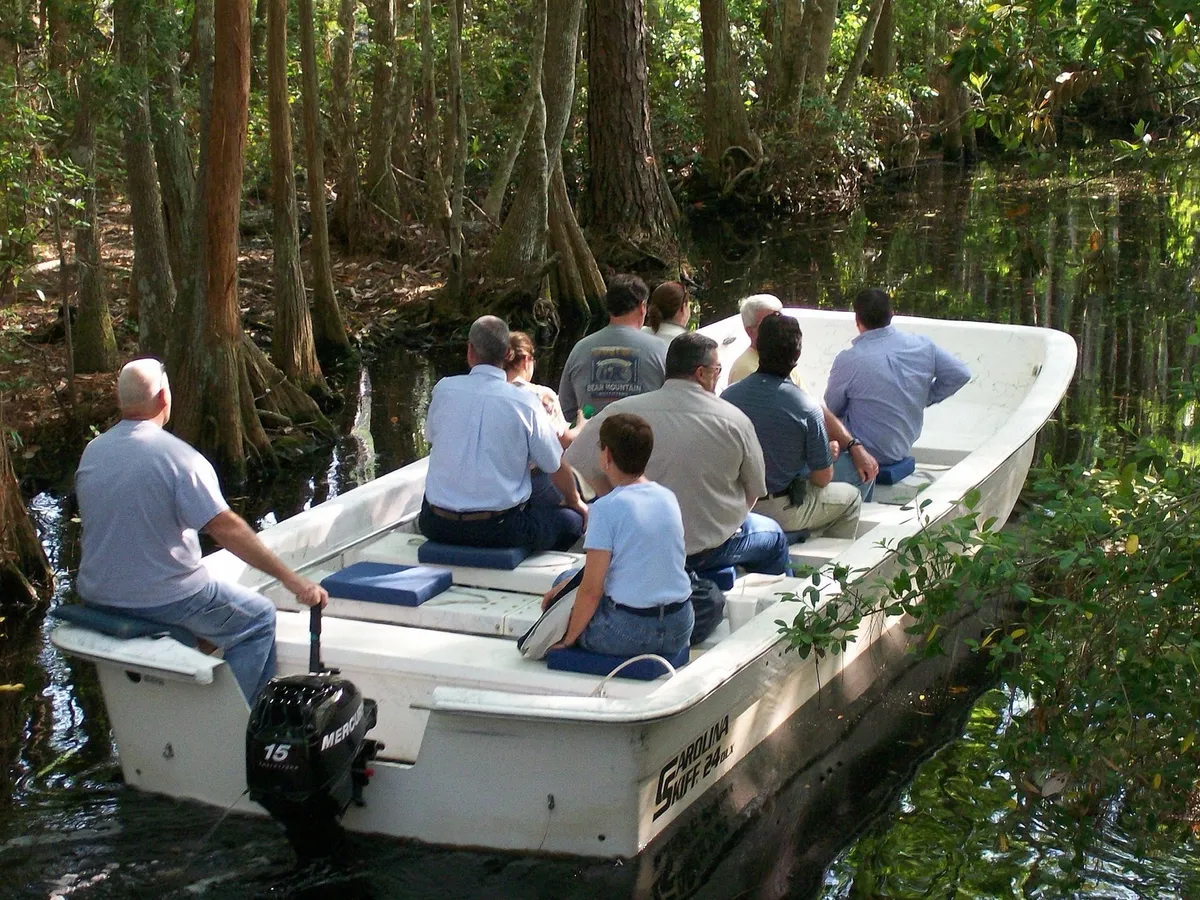
Carolina Skiff
The Carolina Skiff is the most popular boat in America that nobody brags about owning. Founded in 1983 in Wadesboro, North Carolina, the company had one idea: build the cheapest, simplest fiberglass boat possible and sell a ton of them. It worked. Carolina Skiff moves more units than brands costing three times as much. The design philosophy is aggressive simplicity. Flat bottom. No wood anywhere in the hull (wood rots, which is why cheap boats fall apart). One-piece fiberglass layup. Self-bailing cockpit. The boats are sold without engines because the company figured out that letting buyers rig their own outboard kept the sticker price low and the customization high. A bare 17-footer can be had for under $10,000. Rig a used Yamaha on the back and you're fishing for less than a decent used car. People who own Boston Whalers and Grady-Whites look down on Carolina Skiffs. This is documented, quantifiable snobbery. The Carolina Skiff owner's response is universal: they're out fishing right now while the Grady-White is in the shop getting its third trim tab adjusted. The Skiff doesn't ride as well in rough water (flat bottom, remember). It doesn't look as pretty at the dock. It will never be featured in a glossy boat magazine. But it floats in six inches of water, it's nearly impossible to sink, and it costs less than the electronics package on a center console. The Corolla of boats. The Timex of boats. The "it just works" of boats. Carolina Skiff understood something that premium brands never will: most fishing happens in calm water within five miles of the ramp.
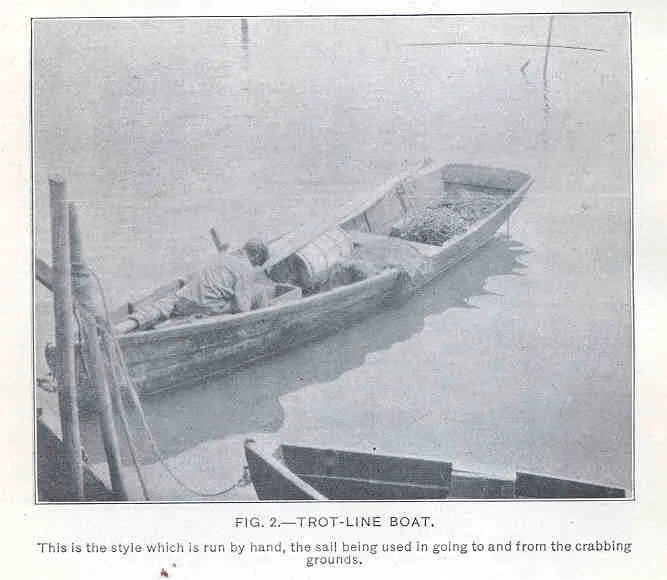
Chesapeake Bay Crab Boat
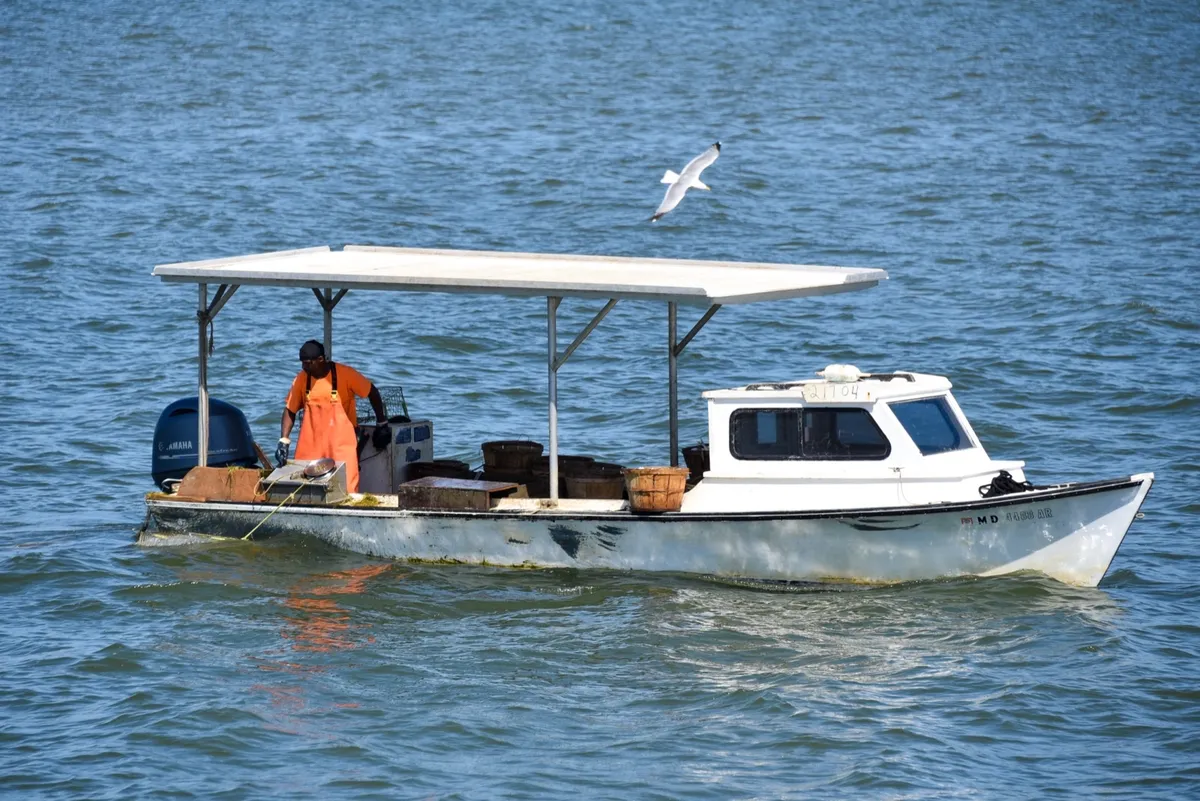
This is not the same boat as the Chesapeake deadrise entry on this site. The deadrise is a hull design. This is the specific working configuration: the boat rigged for crabbing, run by watermen who've been doing this since before anyone was keeping records. Chesapeake Bay blue crab is a $200+ million annual industry in Maryland alone. Every bushel of that crab comes off a boat like this. The boats run trotlines (a baited line laid along the bottom, pulled slowly while the crabber scoops crabs with a net as they surface) or haul crab pots (wire traps baited with chicken necks, fish heads, or commercial bait). The method depends on the waterman, the location, and the regulations. The boats reflect the economics of crabbing. Crab prices fluctuate wildly. A bushel of number ones might bring $200 one week and $120 the next. Fuel costs are fixed. Bait costs are fixed. So the boats are cheap to buy, cheap to run, and rigged for efficiency. Nothing decorative. Everything has a purpose. The culling board stretches across the beam so the crabber can sort the catch: legal males in one basket, too-small in another, females back in the water (in most seasons). The bushel baskets stack in the stern. The season runs roughly April to November. The watermen who run these boats wake up at 3 AM, six days a week, for eight months. They do it because it's what their fathers did and their grandfathers did, and because the Bay is the only office that matters.
Chesapeake Deadrise
The Chesapeake deadrise is the working truck of the Chesapeake Bay. Every waterman has one. The hull design — a V-bottom that is sharp at the bow for cutting through chop and flattens toward the stern for stability while working — was developed specifically for the Bay's short, steep chop. The name 'deadrise' refers to the angle of the hull bottom: higher deadrise means sharper V, better rough-water ride. These boats crab, fish, oyster, and do everything else that keeps watermen working. They're built by hand in small boatyards on the Eastern Shore, many by builders whose families have been at it for generations.
Chesapeake Skipjack
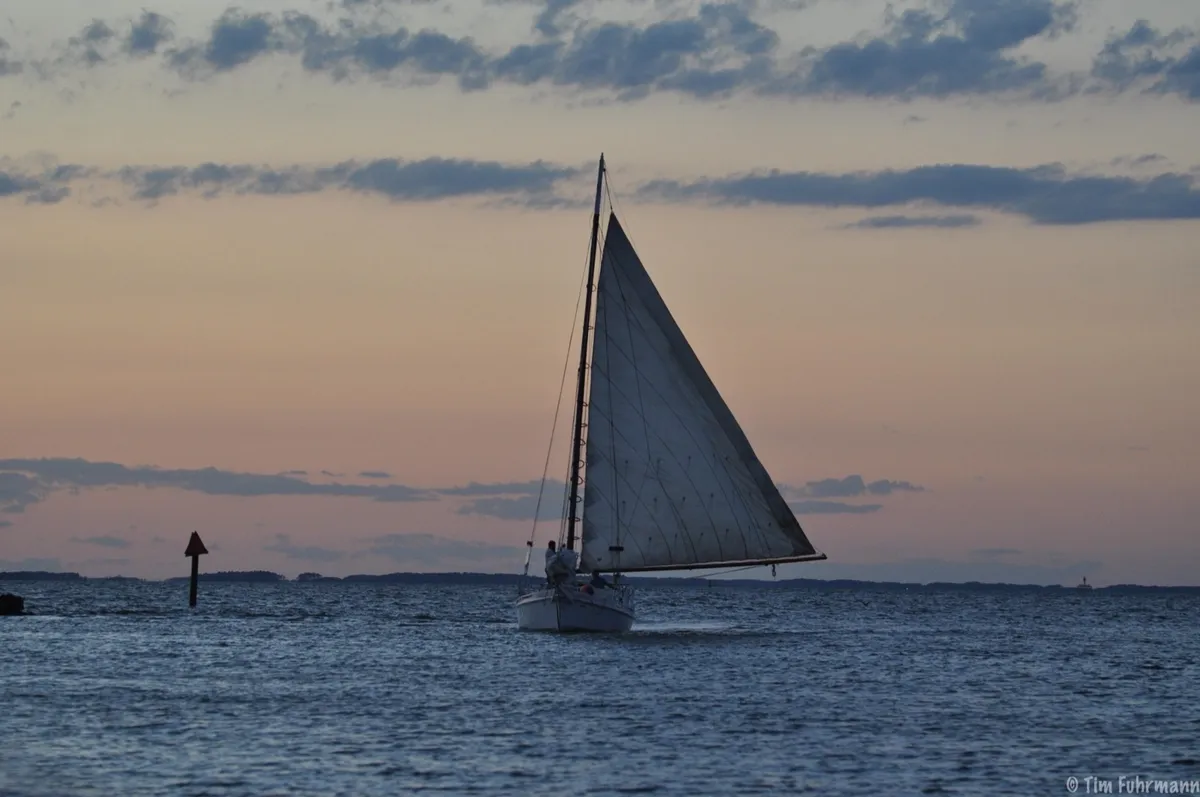
The Chesapeake skipjack is the last commercial sailing vessel in North America. Maryland law requires that oysters be dredged under sail — a conservation measure from 1865 that accidentally preserved an entire way of life. Skipjacks have been working the Chesapeake Bay since the 1890s, and a handful are still dredging oysters today. They're not preserved as museum pieces. They're still doing the job they were built for. The fleet has dwindled from thousands to fewer than thirty, but the ones that remain are working boats sailed by watermen whose families have been oystering for generations.
F/V Andrea Gail
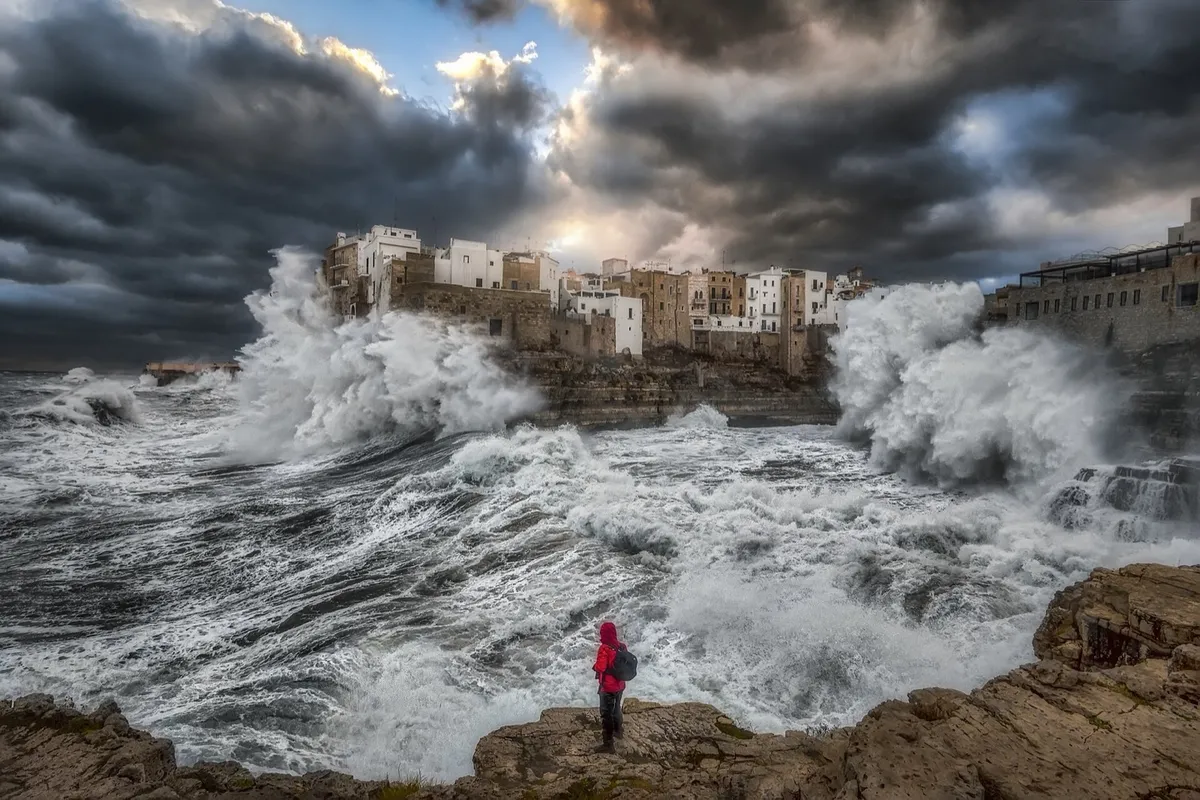
The Andrea Gail is the most famous fishing boat in American history, and she's famous for dying. Built in 1978 in Panama City, Florida, by Robert Brown Inc., she was a steel-hulled commercial swordfishing vessel working out of Gloucester, Massachusetts. On October 28, 1991, she left the Grand Banks heading home with a hold full of swordfish and ran straight into the collision of a nor'easter, Hurricane Grace, and a cold front. The meteorologists later called it the "Perfect Storm." Sebastian Junger wrote the book. Wolfgang Petersen made the movie with George Clooney. The Andrea Gail became shorthand for the sea taking what it wants. Six men died. Billy Tyne, the captain. Bobby Shatford, Dale Murphy, Michael "Bugsy" Moran, David Sullivan, and Alfred Pierre. Their names are on the Gloucester Fishermen's Memorial, along with more than 5,000 other names going back centuries. Gloucester has been burying fishermen since before the country existed. The boat was never found. The ocean is 15,000 feet deep where she likely went down. All that was recovered were some fuel drums, her EPIRB (emergency beacon), and a propane tank. The EPIRB had been manually activated, which means someone on the Andrea Gail knew they were in trouble and hit the button. Then nothing. The Andrea Gail represents something that Junger's book captured and the movie mostly missed. Commercial fishing is the most dangerous job in America. The men who do it aren't daredevils. They're working people trying to make a living. The economics of swordfishing in 1991 were brutal: long trips, uncertain catch, perishable product. Tyne pushed further east to the Flemish Cap because the fishing closer to home wasn't producing. The crew followed because that's what crews do. They trusted the captain and the boat and the forecast. The forecast was wrong.
Grand Banks Dory
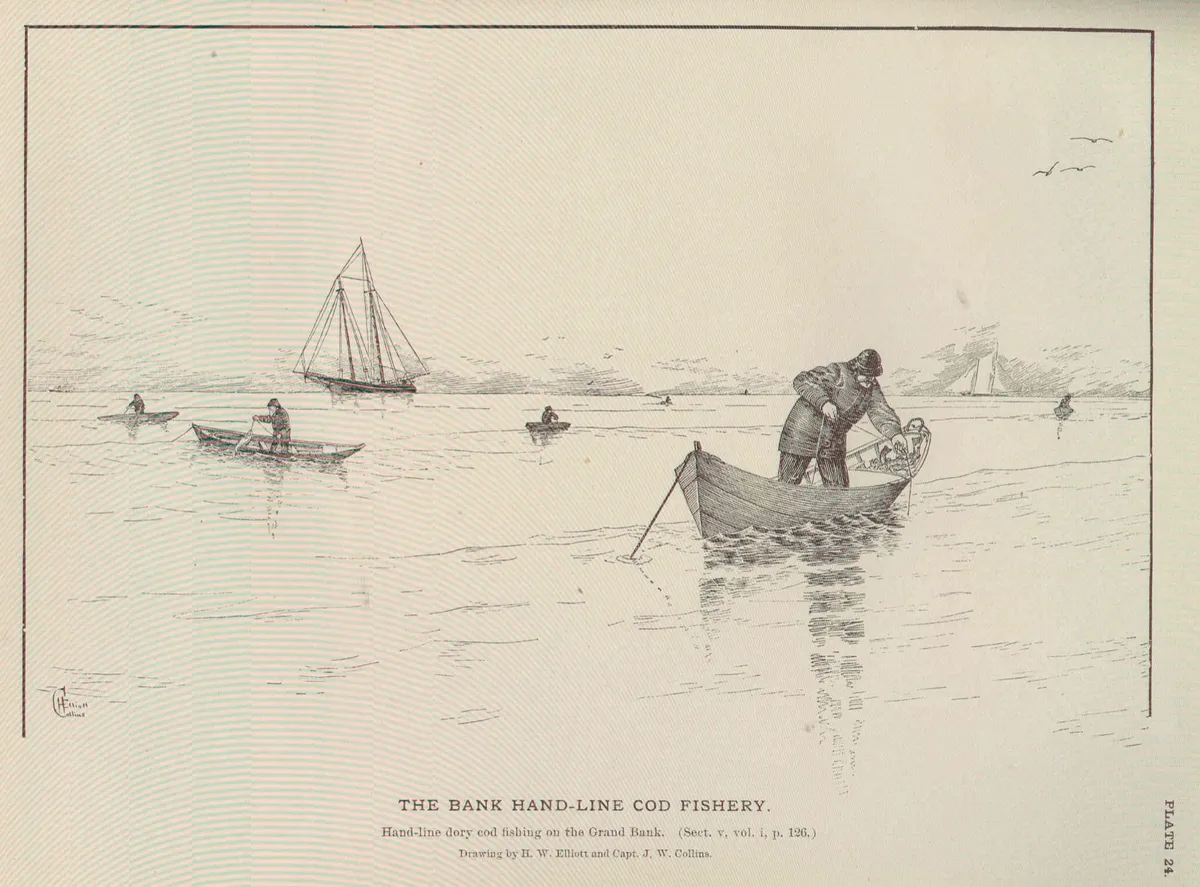
The Grand Banks dory is the boat that fed the eastern seaboard for a century. Schooners would sail from Gloucester, Lunenburg, and other ports to the Grand Banks of Newfoundland, carrying a dozen dories stacked like nesting cups on deck. At the fishing grounds, each dory was launched with one or two men who fished with handlines and longlines. The dory's genius was its simplicity — flat-bottomed, flared-sided, cheap to build, and almost impossible to capsize when loaded with fish. They were disposable boats used by expendable men. Thousands of dorymen drowned when fog rolled in and they couldn't find their schooner. Thousands more were crushed between vessels, swamped by waves, or simply lost. The Grand Banks fishery built New England. The dory was the instrument.
Harbor Tugboat
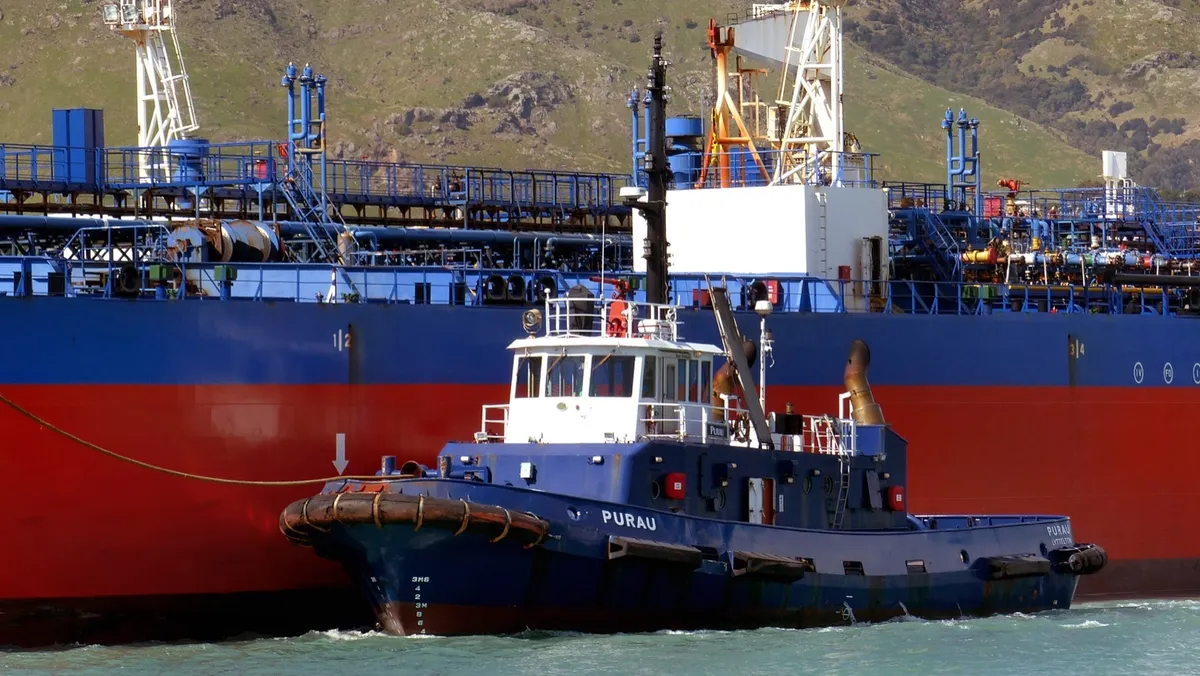
Every ship that enters a port does so with the help of tugboats. Container ships, tankers, cruise ships, naval vessels — they all need tugs to dock. The tugboat is the most understated essential vessel in maritime commerce. Without them, ports don't function. The engineering is focused entirely on power relative to size: a 100-foot tugboat can control a 1,300-foot container ship. The bollard pull of a modern harbor tug exceeds 80 tons. The skill of the tug operators is extraordinary — they're pushing and pulling against vessels fifty times their size in tight quarters, in current, in wind, communicating by radio with the pilot on the big ship.
Lobster Boat (Downeast)
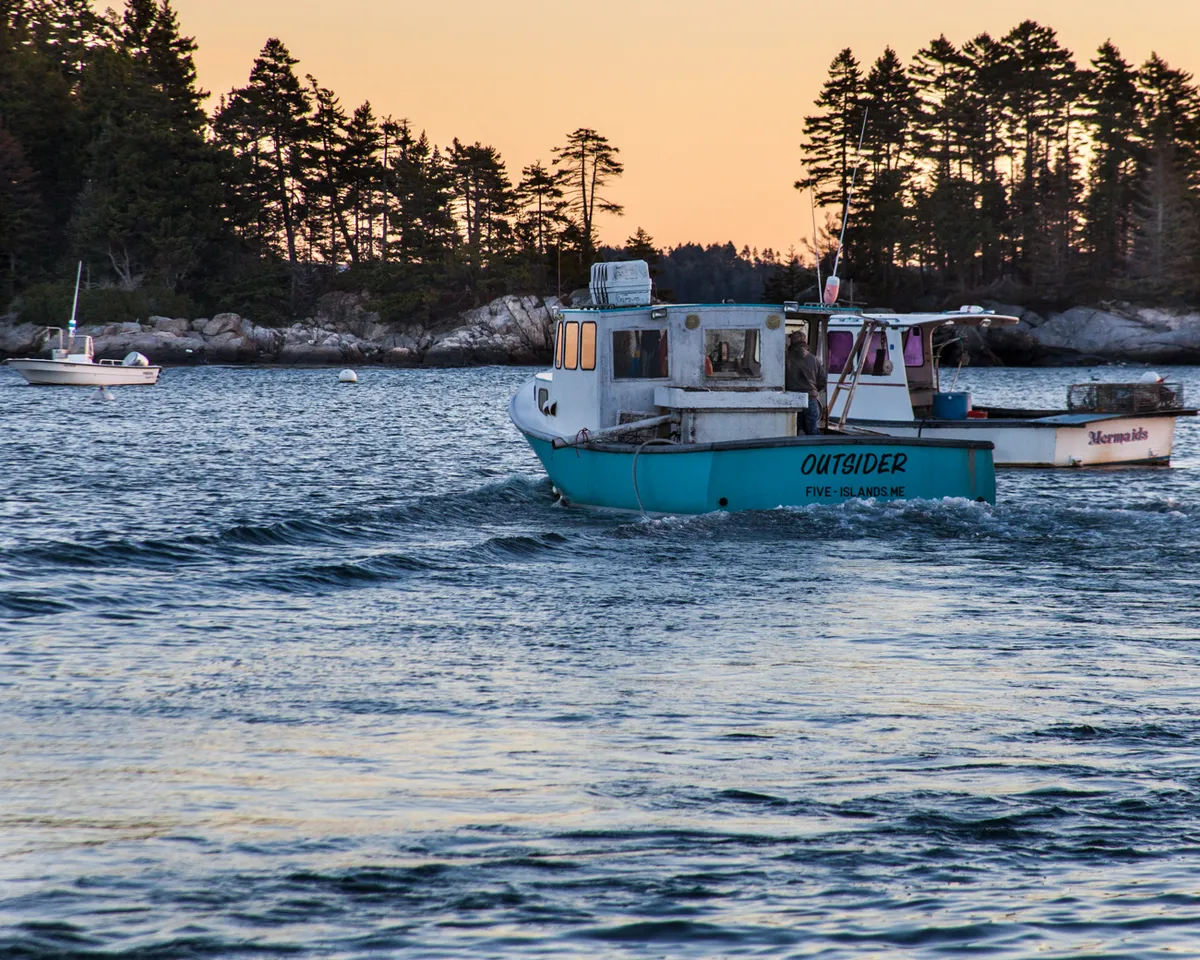
The Downeast lobster boat is the defining vessel of the Maine coast. The hull shape — high bow for cutting through North Atlantic seas, low stern for hauling traps over the side — was perfected over a century of practical use. These boats are owner-operated, often by families who've been lobstering for generations. The economics are simple: you own the boat, you own the traps, you own the license, and you take home what's left after diesel and bait. The lobster boat races held in harbors along the Maine coast every summer are the only motorsport where the competitors use the same boat for work on Monday.
Orca (Jaws)
Jaws invented the summer blockbuster in 1975, and the Orca is the blue-collar soul of that movie. Spielberg could have put his shark hunters on a Coast Guard cutter or a gleaming sportfisher. Instead he put them on a beat-up fishing boat captained by a man who clearly hadn't painted his hull in years. That choice matters. The Orca tells you everything about Quint before he opens his mouth. This is a man who works for a living, who trusts wood and diesel over fiberglass and technology, and who would rather die on his own boat than live on someone else's. The vessel is too small for the job. That's the point. The real boat was a 42-foot Nova Scotia lobster boat named Warlock, purchased for $1 and modified for filming on Martha's Vineyard. She was never meant to survive the production. She barely did.
Pequod
The Pequod is the floating stage for the most ambitious novel in American literature. Melville didn't invent the whaling ship. He worked on real ones. He knew what the deck felt like under his feet, what whale blood smelled like, what three years at sea did to a man's mind. The Pequod is drawn from that experience. Every plank of the ship serves the story. The bone trophies on the hull are both real whaling tradition and a warning. The try-works, where blubber is rendered into oil over brick furnaces on a wooden deck, is Melville's metaphor made physical. Fire on a wooden ship in the middle of the ocean. That's the whole book. The Pequod matters because Melville used a working vessel as the architecture of meaning. The ship is a factory, a democracy, a dictatorship, a coffin, and a church. She carries thirty men from dozens of nations on a voyage that starts as commerce and ends as obsession. No other vessel in literature carries that weight.
Thames Sailing Barge
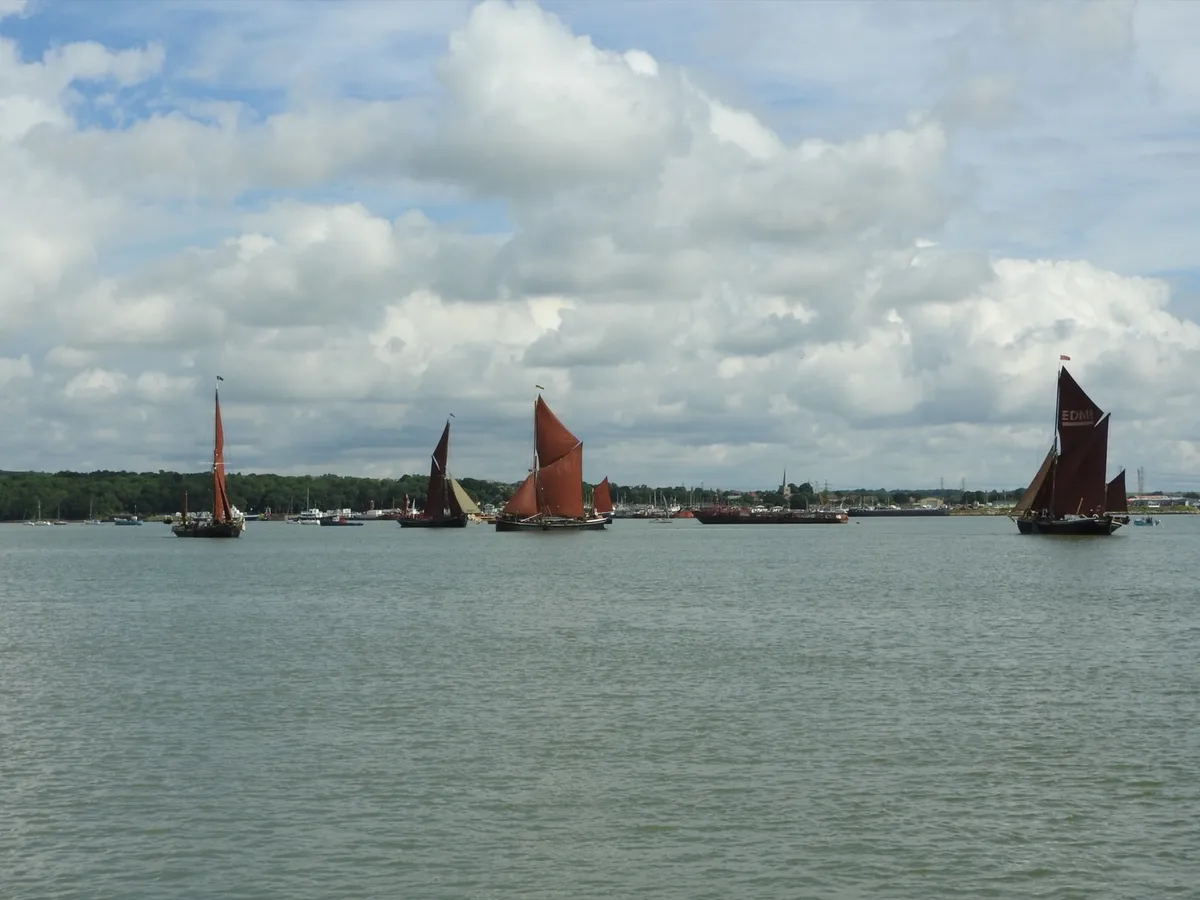
The Thames sailing barge was London's delivery truck for two hundred years. Flat-bottomed and shallow-drafted, they could navigate the tidal creeks of the Thames Estuary and sit upright on the mud at low tide while being loaded and unloaded. A crew of two — skipper and mate — could handle a 90-foot vessel carrying 200 tons of cargo. Hay, bricks, grain, coal, timber, cement. Everything London consumed arrived by barge. At the peak in the early 1900s, over 2,000 barges worked the Thames. The spritsail rig, with its massive sprit supporting the mainsail, is unique to these vessels and instantly recognizable. They're the signature silhouette of the Thames Estuary, and they were the last commercial sailing vessels in Britain.