USS Missouri
BB-63
Why it matters
USS Missouri is where World War II ended. On September 2, 1945, the Japanese delegation came aboard and signed the instrument of surrender on her deck in Tokyo Bay.
That single event made Missouri the most historically significant warship of the 20th century, but it shouldn't overshadow what she actually was: an Iowa-class battleship, the most powerful surface warship class ever built by the United States.
She served in Korea, shelling coastal positions, and was recommissioned in the 1980s as part of Reagan's 600-ship Navy, refitted with Tomahawk cruise missiles and Harpoon anti-ship missiles.
She fired Tomahawks and her 16-inch guns in Desert Storm in 1991. She is the last American battleship to have fired her guns in combat.
What it was like
Missouri was a steel city. 2,700 men lived and worked inside nearly 900 feet of armored hull. You could walk for ten minutes belowdecks and still be in the same ship.
The interior was a labyrinth of passageways, hatches, ladders, and compartments that took new crew members weeks to learn. Getting lost wasn't embarrassing.
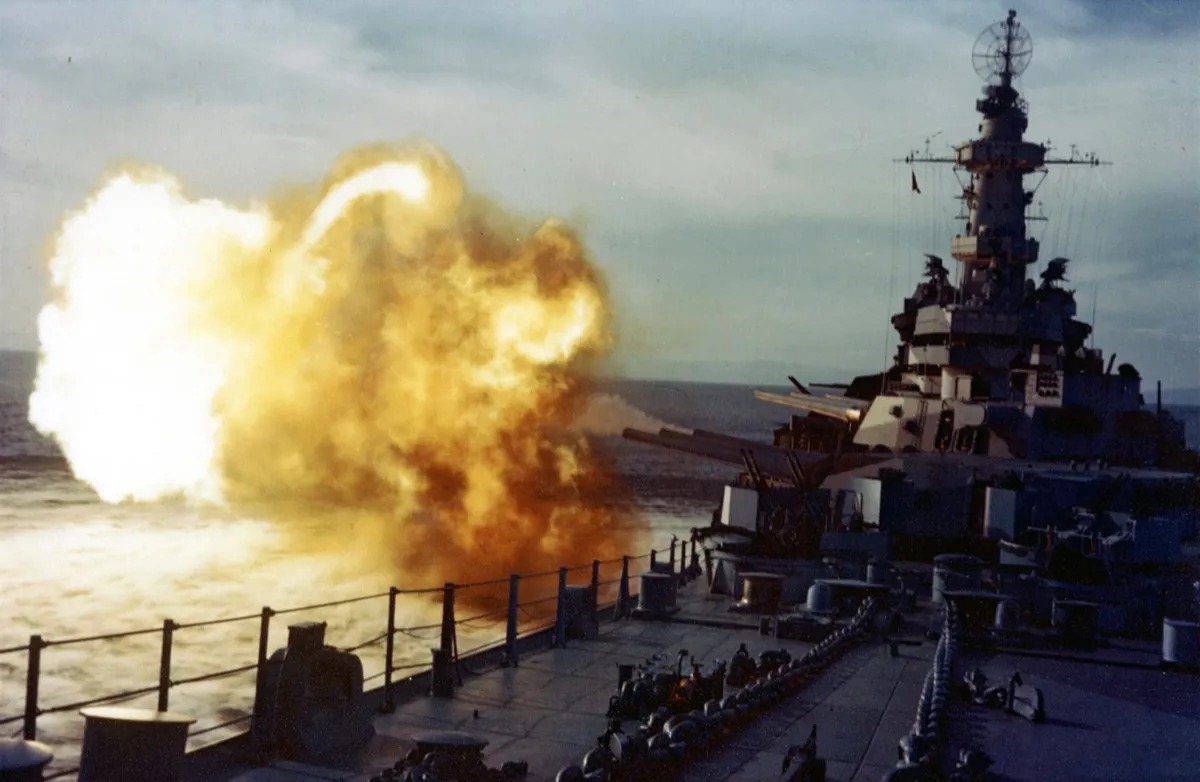
It was expected. When the 16-inch guns fired, the physical experience was unlike anything else in naval warfare. Each turret held three guns, each barrel 67 feet long, each shell weighing as much as a Volkswagen.
When a nine-gun broadside fired, the ship heeled visibly. The concussion hit your chest before the sound reached your ears. Windows in the superstructure were opened before firing to prevent them from shattering.
Crew topside felt the pressure wave in their sinuses. Men inside the turrets worked in a choreographed sequence: the powder charges came up on hoists from the magazines six decks below, rammed into the breech behind the shell, and the gun fired at a signal.
The noise inside the turret was beyond description. Even with hearing protection, turret crews suffered permanent hearing damage. The turret was also the most dangerous duty station on the ship.
A misfire or a powder charge detonating prematurely meant the entire turret crew died. The 1989 turret explosion on USS Iowa killed 47 men. That catastrophe was always a possibility, and every turret crew knew it.
Life aboard was stratified by rate and rank. Officers had staterooms. Senior enlisted had relative privacy. Junior sailors slept in berthing compartments stacked four bunks high, sharing a rack with men on opposite watches.
The mess decks fed the crew in shifts. The ship had its own bakery, laundry, post office, barber shop, and dental office. It was, in every functional sense, a small town that happened to carry more firepower than most countries' entire armies.
The crew
Turret Crew (16-inch guns)
A 16-inch gun turret required a crew of approximately 77 men, from the gun chamber at the top to the powder magazines six decks below. The turret was a self-contained system: the men at the top loaded, aimed, and fired, while the men at the bottom handled propellant charges that could vaporize the entire turret if mishandled. The 16-inch shell weighed 2,700 pounds. The powder charge, six silk bags of propellant, followed it into the breech on a rammer. The entire loading and firing sequence took about 30 seconds. The turret captain commanded this operation in a space where the noise, concussion, and smoke made normal communication impossible. Hand signals and muscle memory ran the gun.
Boiler Technician
Eight Babcock & Wilcox boilers generated the steam that drove 212,000 horsepower to four screws. The fire rooms were the hottest inhabited spaces on the ship, routinely exceeding 130 degrees. Boiler technicians stood four-hour watches monitoring steam pressure, water levels, and fuel flow. A boiler casualty, a sudden pressure drop or a tube failure, could scald everyone in the compartment. The fire rooms were also the deepest occupied spaces in the ship, below the waterline, behind armored bulkheads. In a torpedo hit, the boiler technicians were among the least likely to get out.
Quartermaster
Navigating 887 feet of battleship through combat waters, harbors, and alongside other ships in formation. The quartermaster stood watch on the bridge, maintaining the ship's course and position, taking bearings, and advising the officer of the deck. In tight formations at high speed, a navigation error didn't mean a grounding. It meant a collision with another warship, something that happened more than the Navy liked to admit. During shore bombardment, the quartermaster's position fixes determined whether the 16-inch shells hit the target or landed on friendly troops.
Patina notes
Missouri's armor has held up remarkably well. Iowa-class battleships were built with steel so thick that corrosion works slowly by comparison. The most visible patina is on the teak weather decks, which have been refinished multiple times but still show the wear patterns of thousands of feet.
The surrender deck, where the ceremony took place, is marked and preserved. Below the waterline, the hull has been maintained in dry dock. The turrets, sealed since decommissioning, are time capsules of 1980s-era fire control and 1940s-era gun mechanics existing in the same space.
Preservation reality
USS Missouri is a museum ship at Pearl Harbor, berthed near the USS Arizona Memorial. The juxtaposition is deliberate: the Arizona marks where WWII began for America, and Missouri marks where it ended.
The ship is operated by the USS Missouri Memorial Association, which maintains her to a high standard with a combination of admission revenue, donations, and Navy support.
She sits in relatively benign Hawaiian waters, which helps. The ship's sheer size makes maintenance a permanent, large-scale operation. Painting the hull alone is a major project. But Missouri has what most museum ships lack: a powerful symbolic role that ensures continued public and institutional support.
Where to see one
- • USS Missouri Memorial, Pearl Harbor, Hawaii
Preservation organizations
- • USS Missouri Memorial Association
- • Battleship Missouri Memorial
Sources
- Naval History and Heritage Command (2026-03-05)
Related vessels
Bismarck
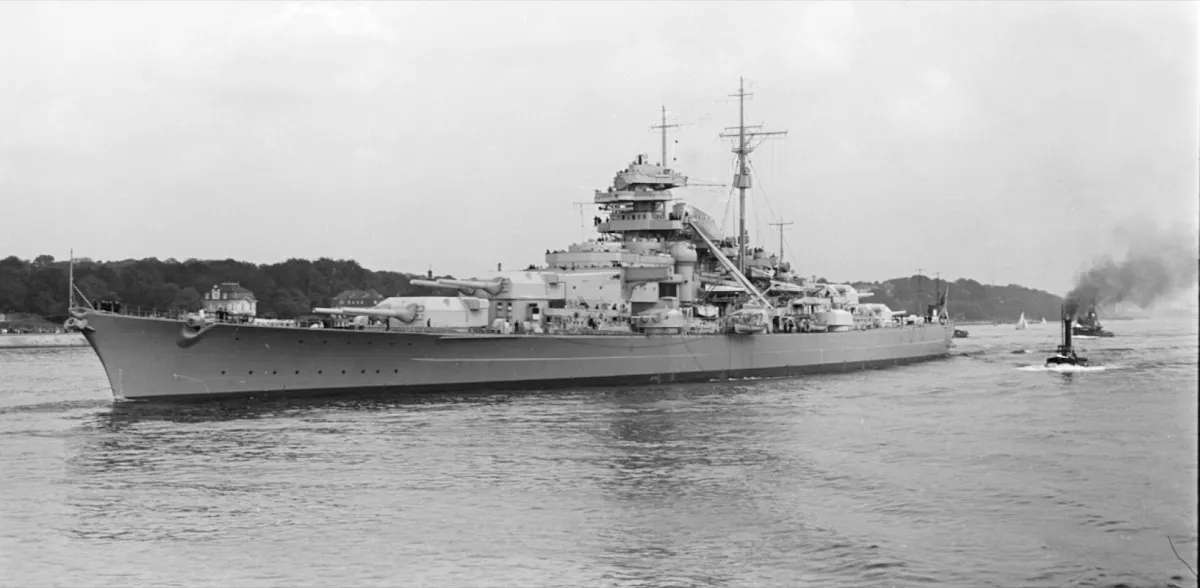
Bismarck's operational career lasted eight days. In that time, she became the most famous warship of the twentieth century. On May 24, 1941, she engaged HMS Hood and HMS Prince of Wales in the Denmark Strait. A shell from Bismarck penetrated Hood's magazine. The explosion broke Hood in half. She sank in three minutes. Of 1,418 crew, three survived. Hood was the pride of the Royal Navy. Churchill's order was immediate and absolute: sink the Bismarck. The Royal Navy sent everything. Battleships, carriers, cruisers, destroyers. Swordfish torpedo bombers — fabric-covered biplanes that looked like they belonged in the previous war — scored the hit that jammed Bismarck's rudder. She could only steam in circles. The next morning, King George V and Rodney pounded her for ninety minutes. Bismarck's crew scuttled her. Of 2,065 men, 114 survived.
Fletcher-class Destroyer
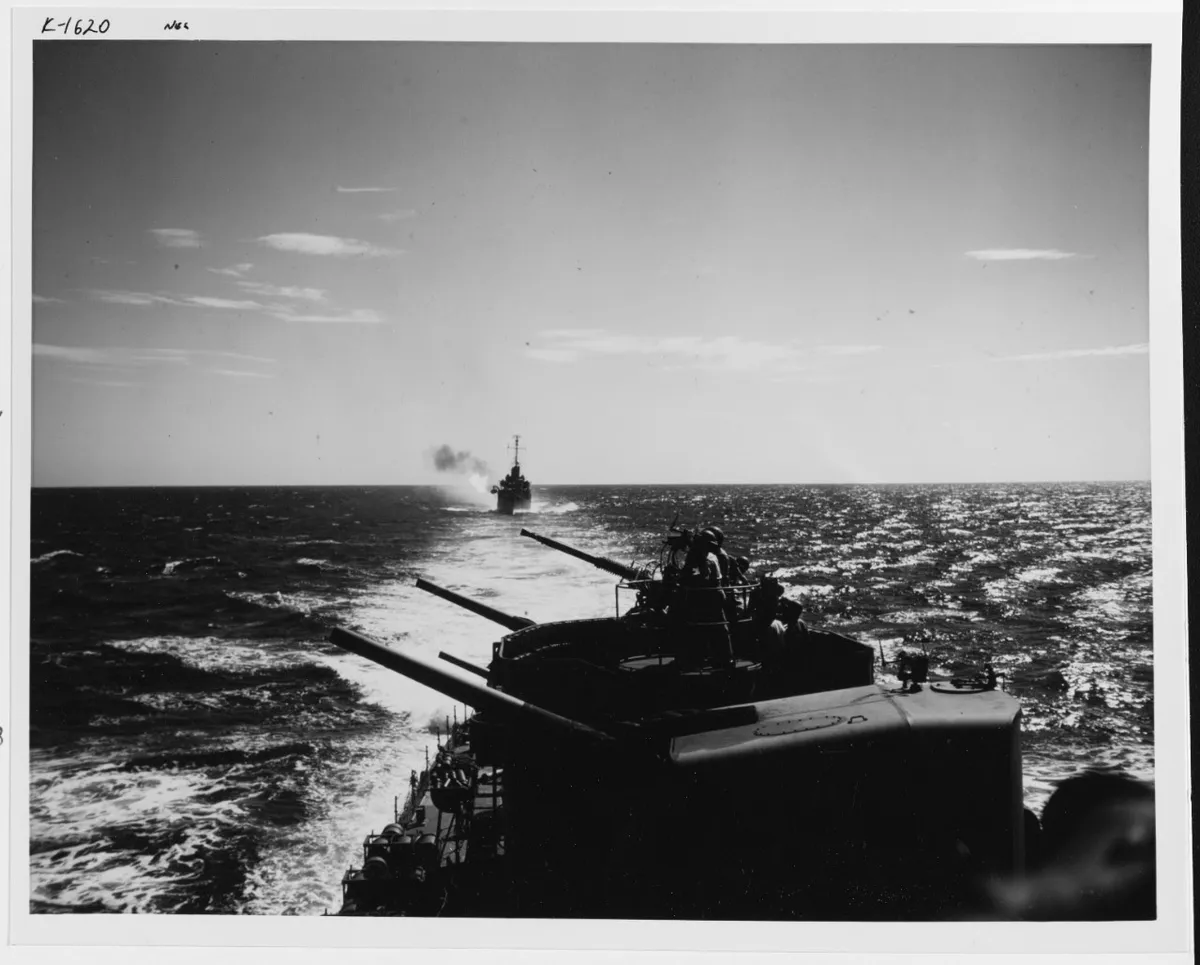
The Fletcher class was the destroyer that won the Pacific. 175 built, more than any other destroyer class in history, and they did everything. Convoy escort in the Atlantic. Shore bombardment at Normandy. Surface actions in the Solomons. Radar picket duty at Okinawa, where they were positioned as sacrificial early-warning stations against kamikaze attacks. Nineteen Fletchers were lost during the war. They weren't glamorous. They were the ships that showed up everywhere, did the ugly work, and took casualties doing it.
Gato-class Submarine
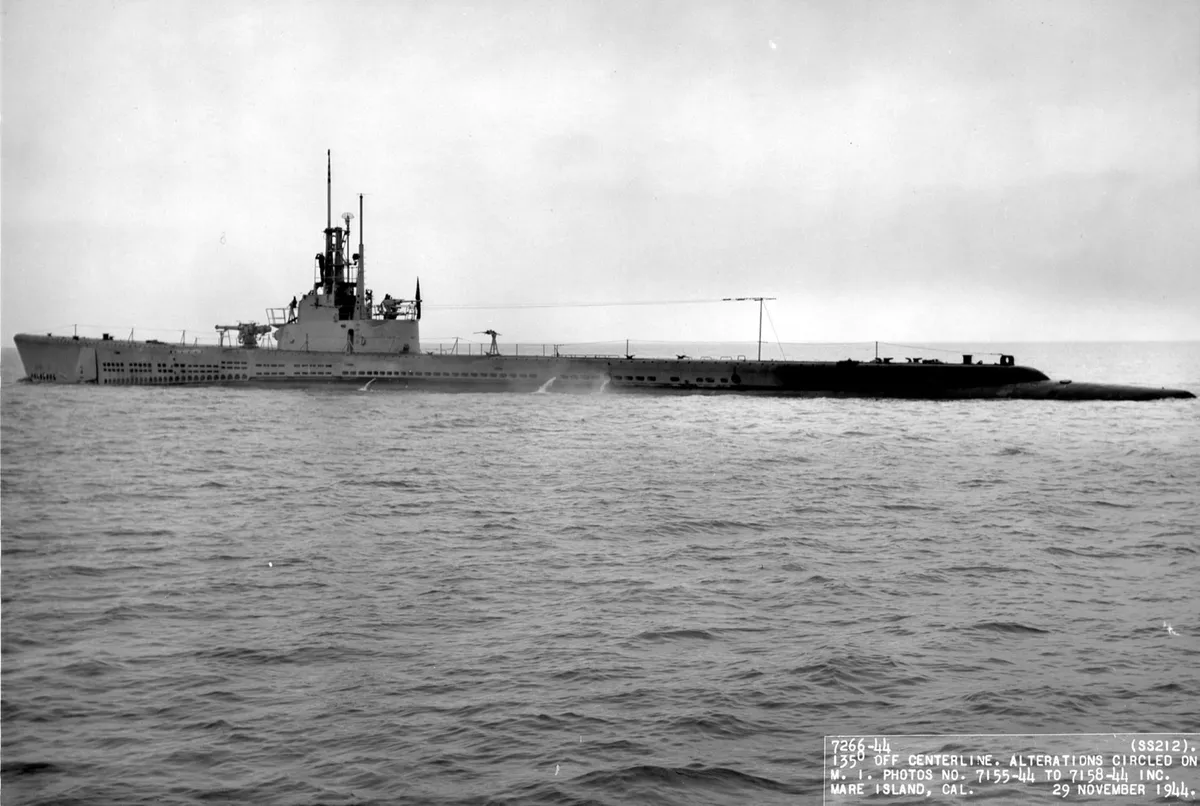
The Gato class fought the submarine war that strangled Japan. American submarines comprised less than 2% of the Navy's personnel and sank over 55% of Japan's merchant tonnage. The cost was staggering. 52 US submarines were lost during the war. 3,505 submariners killed. That's a 22% casualty rate, the highest of any branch of the US military in any war. One in five men who went on patrol in a fleet submarine did not come home. The Gato class bore the brunt of this campaign, running long patrols from Pearl Harbor and Australia into Japanese-controlled waters, operating alone, with no rescue if things went wrong.