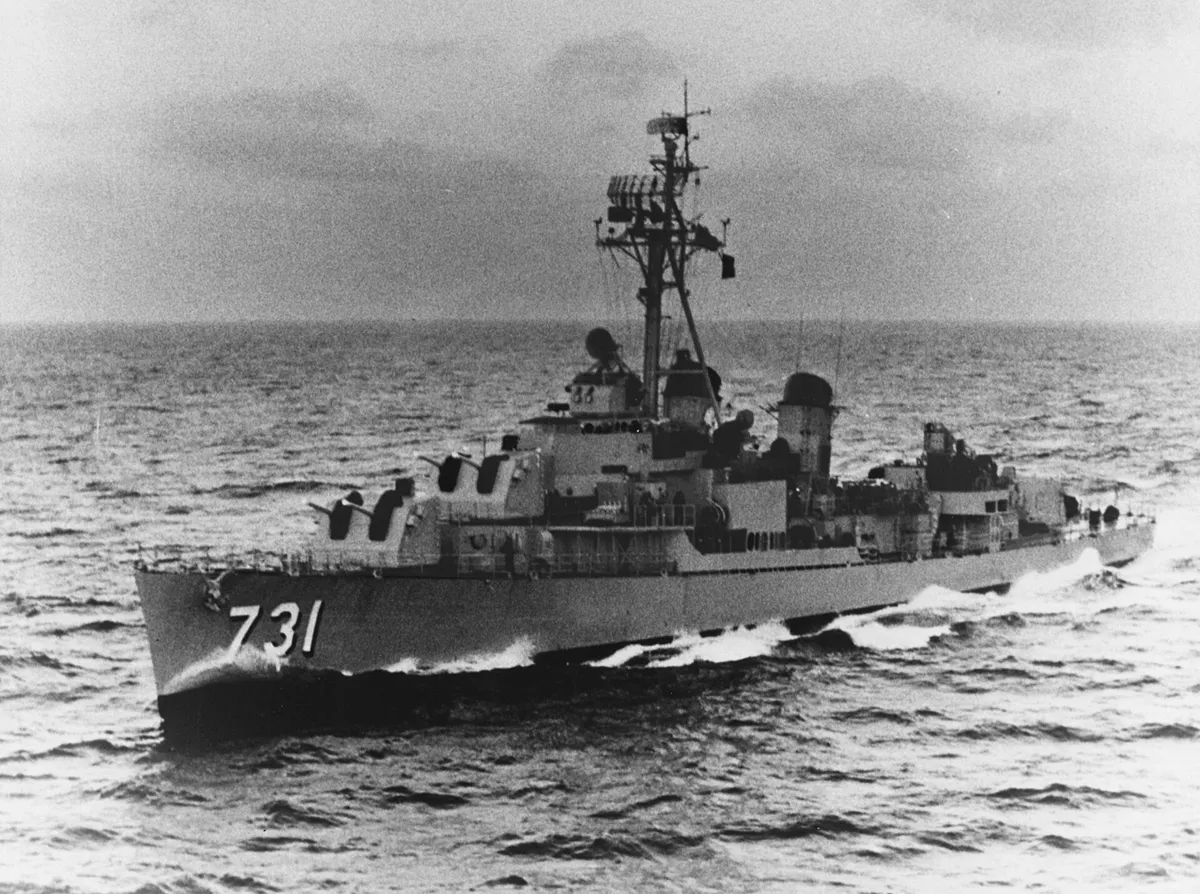
USS Maddox
DD-731
Why it matters
The USS Maddox is probably responsible for more American deaths than any other destroyer in history, and she never fired a shot that caused them. On August 2, 1964, three North Vietnamese torpedo boats attacked Maddox in the Gulf of Tonkin. That part actually happened. Maddox returned fire, took one bullet hole in her superstructure, and the torpedo boats got chewed up by aircraft from the carrier Ticonderoga. A minor skirmish by any standard.
Two days later, on August 4, Maddox and the destroyer Turner Joy reported a second attack. Radar contacts. Sonar contacts. Both ships fired into the darkness for hours. The problem is that the second attack almost certainly never happened. The radar and sonar returns were ghosts caused by weather, sea conditions, and jumpy operators. Captain Herrick of the Maddox sent a message within hours expressing doubt about the whole thing.
It didn't matter. President Johnson went to Congress with both incidents and got the Gulf of Tonkin Resolution, which gave him authority to escalate military operations in Vietnam without a formal declaration of war. Congress voted 416-0 in the House and 88-2 in the Senate. The two senators who voted no were Wayne Morse and Ernest Gruening, and they were right.
58,220 Americans died in Vietnam. Somewhere north of two million Vietnamese died. The war tore the country apart for a decade. And it was launched on the back of an attack that a destroyer captain doubted before the gun barrels cooled. Robert McNamara admitted decades later that the August 4 attack didn't happen. The NSA declassified documents in 2005 confirming that intelligence had been deliberately skewed to support the narrative.
The Maddox herself had an unremarkable career otherwise. She served in three wars, did her job, and was scrapped in 1972. The ship is gone. What she started isn't.
What it was like
Life on a Sumner-class destroyer was cramped, loud, and wet. These were 376-foot warships designed to pack maximum armament into minimum displacement, and crew comfort was not a design priority. Enlisted men slept in stacked bunks in berthing compartments that smelled like diesel, sweat, and whatever the galley was cooking. The ship rolled in any kind of sea state.
During the August 2 attack, the crew went to general quarters and fought a real engagement. Torpedo boats closing at 50 knots, 5-inch guns firing, aircraft overhead. It was fast and violent and over in minutes. Two days later, on the night of August 4, the crew spent hours at battle stations firing at contacts that kept appearing and disappearing on the scopes. Men were exhausted, on edge, and shooting at shadows in the dark. Some crew members later said they never saw anything. Others swore they did. The human mind fills in gaps when it's scared enough.
The crew
Sonar Operator
Sat in a dark room wearing headphones, listening for the distinctive sound of torpedo screws in the water. On the night of August 4, sonar operators reported multiple torpedo contacts. In the South China Sea, thermal layers, biologics, and the ship's own wake can produce convincing false returns. Distinguishing a real torpedo from ocean noise requires experience and calm. The operators had experience. Calm was in short supply.
Gun Director
Controlled the fire direction for the 5-inch mounts, tracking radar contacts and feeding solutions to the gun crews. On August 4, the fire control radar was painting intermittent contacts that appeared and vanished. The director had to make split-second calls about what was real and what was weather. They fired at everything. In the morning there was no wreckage, no oil slicks, no evidence that any of the targets had been real.
Radioman
Transmitted Captain Herrick's messages to higher command, including the follow-up cable expressing serious doubts about whether any attack had occurred. That message went up the chain. It was received. The decision to proceed with the Congressional resolution was made with full knowledge that the on-scene commander wasn't sure the attack was real. The radioman sent the truth. Washington chose not to hear it.
Patina notes
The Maddox was decommissioned in 1972 and sold for scrap. She was cut apart at a shipbreaking yard in Taiwan. There is no wreck to visit, no hull rusting at a pier.
She was reduced to steel plate and sold by the ton. The most consequential destroyer in American Cold War history ended up as rebar or car parts or filing cabinets.
The only physical remnant of the Gulf of Tonkin Incident is the bullet hole in one piece of her superstructure plating, if anyone thought to save it. Nobody did.
Preservation reality
Nothing survives of the Maddox herself. No museum ship, no preserved section, no memorial at the scrapping site. The Gulf of Tonkin Incident is documented extensively at the National Archives, and the NSA's declassified signals intelligence is available online.
The Lyndon B. Johnson Presidential Library in Austin has the audio recordings of Johnson discussing the incident with McNamara. Those tapes are the closest thing to a memorial the Maddox will ever get. The ship that started a war was erased more thoroughly than the war itself.
Where to see one
- • USS Laffey (DD-724), Patriots Point, Mount Pleasant, SC (sister ship, Allen M. Sumner class)
- • National Archives, Washington, DC (Gulf of Tonkin documents)
Preservation organizations
- • Tin Can Sailors (National Association of Destroyer Veterans)
- • Naval Historical Foundation
Sources
- NSA Declassified Gulf of Tonkin Documents (2026-03-05)
- The Gulf of Tonkin Resolution - US Senate Historical Office (2026-03-05)
Related vessels
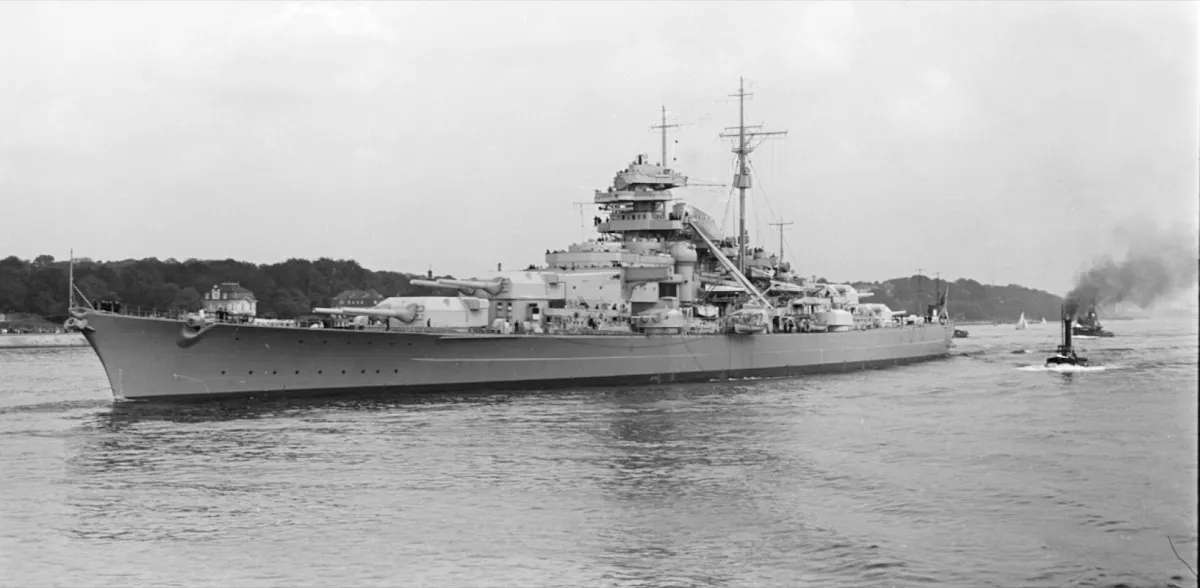
Bismarck
Bismarck's operational career lasted eight days. In that time, she became the most famous warship of the twentieth century. On May 24, 1941, she engaged HMS Hood and HMS Prince of Wales in the Denmark Strait. A shell from Bismarck penetrated Hood's magazine. The explosion broke Hood in half. She sank in three minutes. Of 1,418 crew, three survived. Hood was the pride of the Royal Navy. Churchill's order was immediate and absolute: sink the Bismarck. The Royal Navy sent everything. Battleships, carriers, cruisers, destroyers. Swordfish torpedo bombers — fabric-covered biplanes that looked like they belonged in the previous war — scored the hit that jammed Bismarck's rudder. She could only steam in circles. The next morning, King George V and Rodney pounded her for ninety minutes. Bismarck's crew scuttled her. Of 2,065 men, 114 survived.
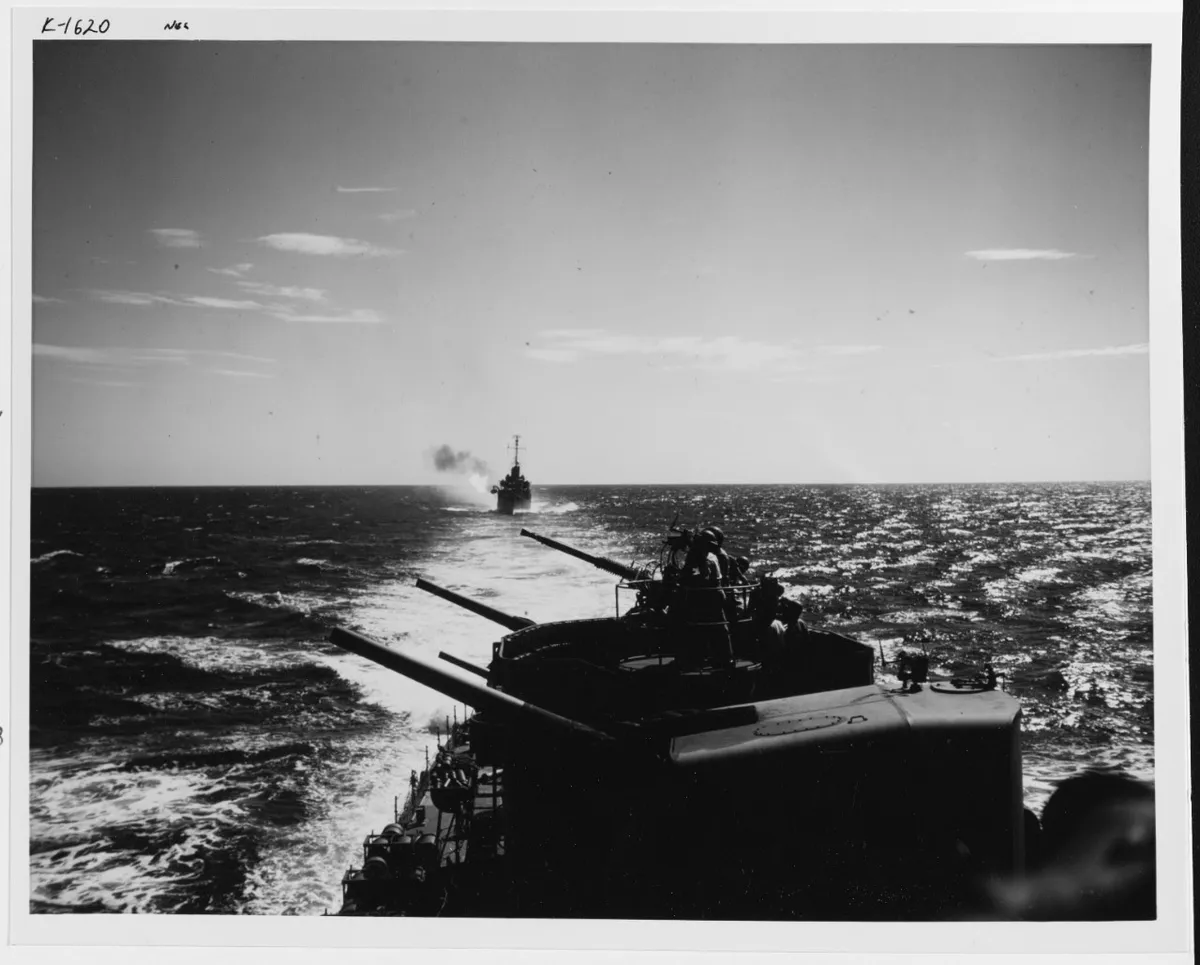
Fletcher-class Destroyer
The Fletcher class was the destroyer that won the Pacific. 175 built, more than any other destroyer class in history, and they did everything. Convoy escort in the Atlantic. Shore bombardment at Normandy. Surface actions in the Solomons. Radar picket duty at Okinawa, where they were positioned as sacrificial early-warning stations against kamikaze attacks. Nineteen Fletchers were lost during the war. They weren't glamorous. They were the ships that showed up everywhere, did the ugly work, and took casualties doing it.
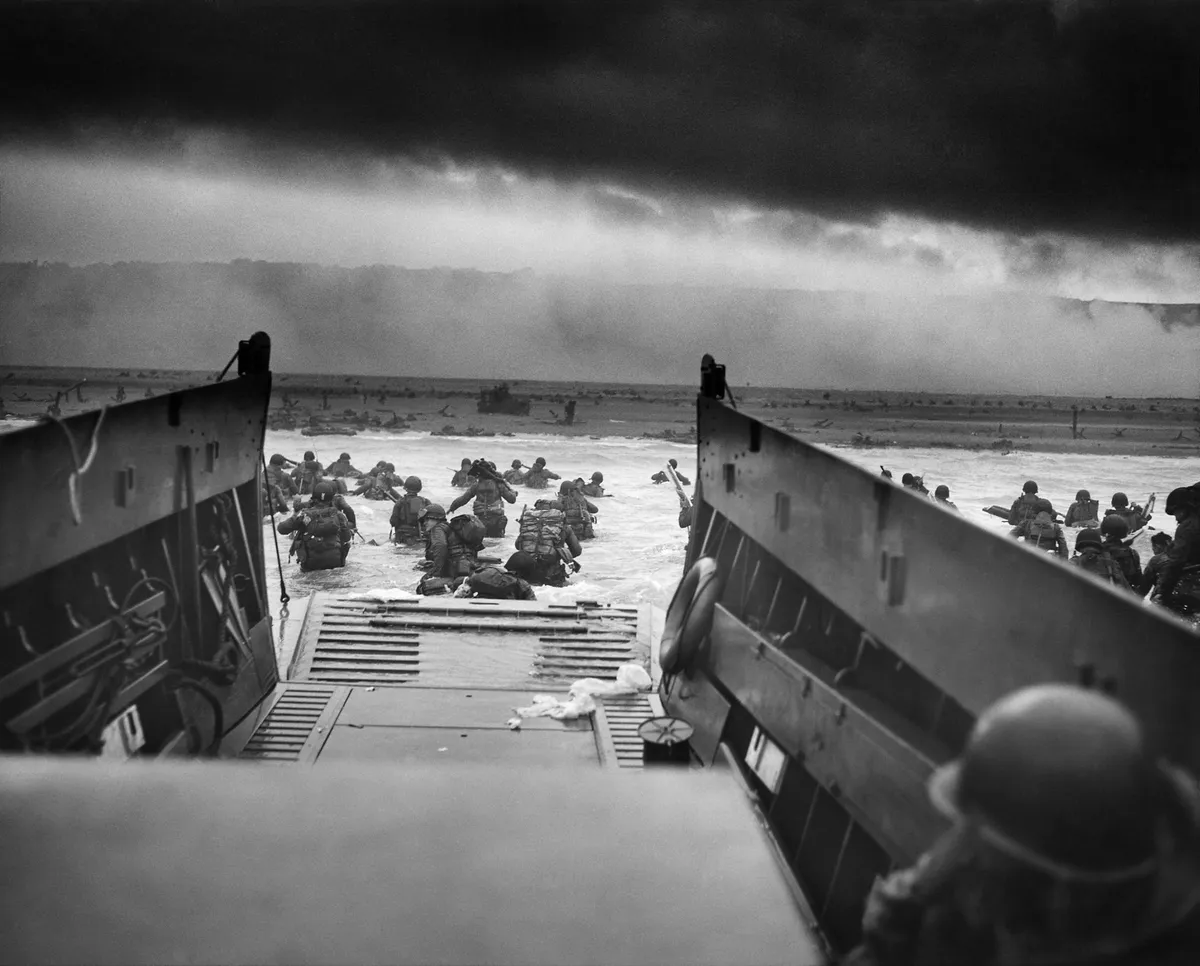
Higgins Boat (LCVP)
Eisenhower said Andrew Higgins was 'the man who won the war for us.' The LCVP — Landing Craft, Vehicle, Personnel — was the boat that put soldiers on the beach. At Normandy, Iwo Jima, Okinawa, North Africa, Sicily. The bow ramp was Higgins' innovation, borrowed from boats he'd seen in the Louisiana bayou. When that ramp dropped, you were looking at the beach, and the beach was looking at you. 23,398 were built. Without them, no amphibious invasion was possible.