Age of Sail
1500-1860When wooden ships and iron men ruled the oceans. Empires rose and fell based on who controlled the sea lanes.
Context
For three centuries, the ability to build, crew, and fight wooden sailing ships determined global power. The technology changed slowly — a frigate from 1800 would be recognizable to a sailor from 1650. What changed was scale, organization, and the industrial capacity to build fleets. The transition from sail to steam in the mid-1800s ended an era so completely that within a generation, the skills to sail a ship of the line were extinct.
Defining characteristics
- Wooden hulls
- Sail power
- Cannon broadsides
- Imperial navies
- Global trade routes
Vessels (18)
Black Pearl
Before 2003, the pirate movie was a dead genre. After Pirates of the Caribbean, every kid in America wanted a ship with black sails. The Black Pearl did for pirate vessels what the Millennium Falcon did for spaceships. It made the vehicle a character. The ship represents freedom in its purest cinematic form. Jack Sparrow doesn't want gold or power. He wants his ship back. That's it. The entire first film is a man trying to reclaim the one thing that makes him who he is. The Black Pearl isn't transportation. It's identity. Johnny Depp's performance gets the credit, and it should. But the ship sells the fantasy. The black sails against a Caribbean sunset. The ragged rigging. The impossible speed. You believe this ship is alive because the movie treats it like one. The prop was built on a steel barge called the Sunset, dressed with a full wooden superstructure. Additional ships were constructed for later films, and digital effects expanded the Pearl's capabilities well beyond anything that floats.
Cutty Sark
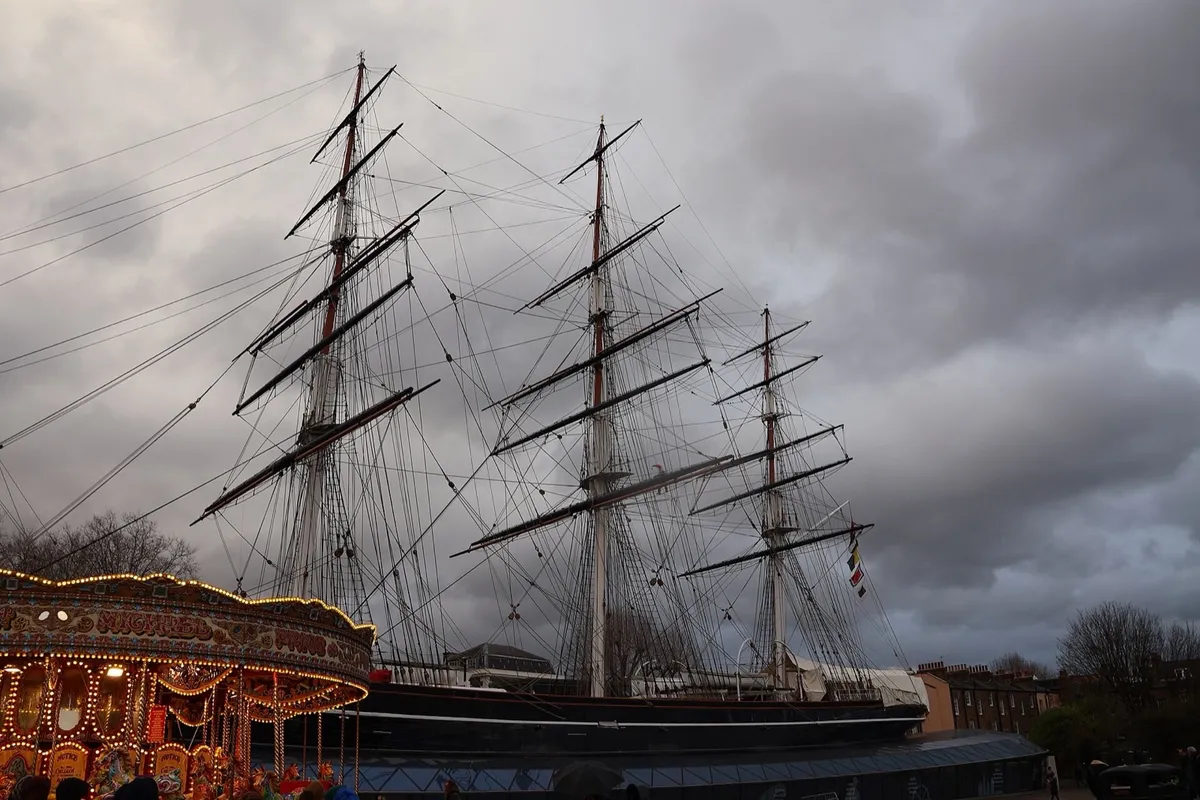
The Cutty Sark was born obsolete. She launched in 1869, the same year the Suez Canal opened and killed the tea clipper trade in a single stroke. Steam ships could use the canal. Sailing ships couldn't. The entire economic logic that justified building a vessel optimized for speed from China to London evaporated before she'd completed her first season. That's either terrible timing or a fitting monument to an era that was already dead. She raced in the tea trade anyway for a few seasons, most famously against the clipper Thermopylae in 1872. Cutty Sark was winning when she lost her rudder in a gale and had to jury-rig a replacement from spare spars. She still finished the voyage, arriving in London only a week behind Thermopylae. That tells you everything about the ship and the men who sailed her. Her second life was in the Australian wool trade, and this is where she finally proved herself. Under Captain Richard Woodget (1885-1895), she became the fastest wool clipper afloat, consistently making the passage from Sydney to London in under 80 days. She'd load over 5,000 bales of wool, drive south into the roaring forties, and run her easting down at speeds that left every other sailing vessel behind. Woodget was the captain she deserved. The name comes from Robert Burns's 1791 poem "Tam o' Shanter." Tam, drunk and riding home, watches witches dance and shouts in admiration at a young witch wearing a cutty sark, a short nightgown. She chases him. He barely escapes. The ship's figurehead is the witch Nannie, reaching forward with arm outstretched. It's a perfect name for a ship that was always chasing something just out of reach. After the wool trade declined, she was sold to a Portuguese company, renamed Ferreira, and spent decades hauling cargo in the South Atlantic. A retired sea captain named Wilfred Dowman found her in a Portuguese port in 1922, recognized what she was, bought her, and brought her home to England. Without Dowman, she would have been broken up. She is the only clipper ship that survives.
Flying Cloud
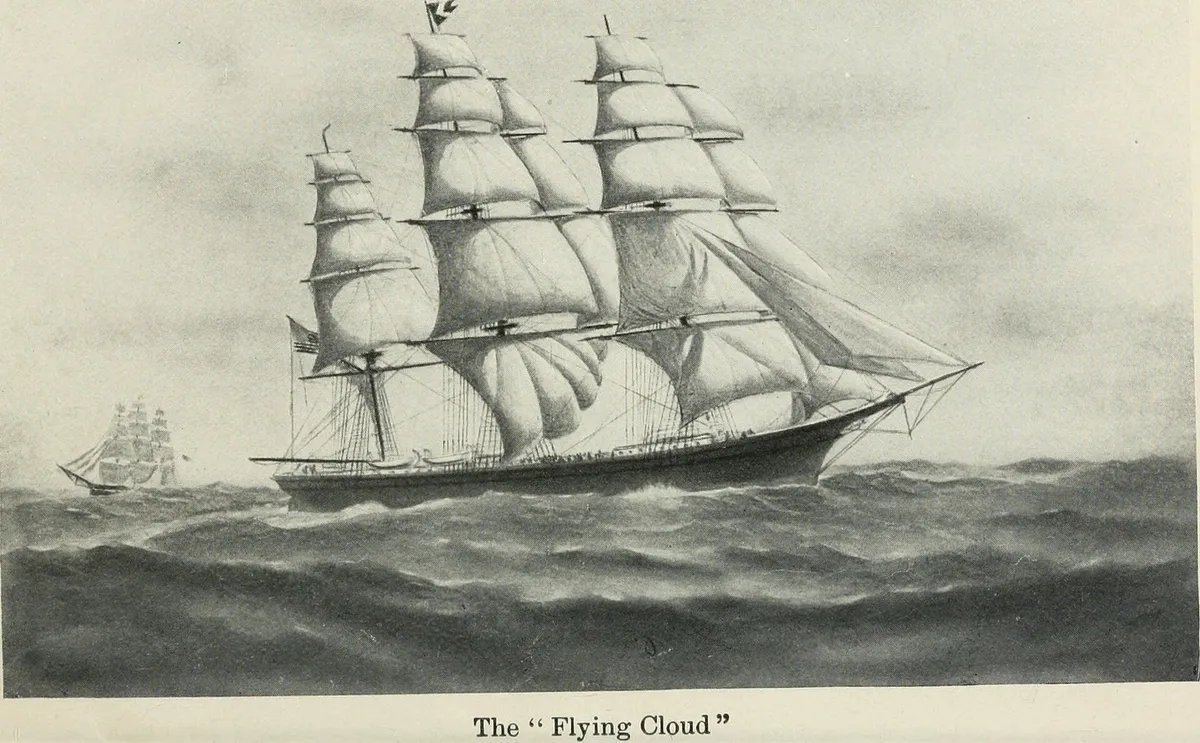
Flying Cloud was the fastest sailing vessel of her era, and her speed record from New York to San Francisco stood for over 100 years. She made the passage around Cape Horn in 89 days and 8 hours in 1854, a mark no commercial sailing vessel would beat until 1989. To put that in perspective: a record set before the Civil War survived the invention of the telephone, the automobile, both World Wars, and the moon landing. She was built by Donald McKay in East Boston, the best clipper ship designer who ever lived, at the peak of the California Gold Rush. Speed was money. Every day shaved off the passage to San Francisco meant earlier access to cargo rates that could pay for the ship in a single voyage. Owners drove these ships hard, and captains who delivered fast passages became celebrities. Josiah Perkins Creesy commanded Flying Cloud, but the secret weapon was his wife. Eleanor Creesy was the ship's navigator. She plotted the courses, read the currents, and made the decisions about when to press south into the roaring forties and when to hold off. Her work with Matthew Fontaine Maury's wind and current charts was masterful. She found favorable currents and winds that other navigators missed. On the record-setting 1854 voyage, she navigated through a cracked mainmast and a near-mutiny. She never held an official rank, was never paid, and appears in most histories as a footnote to her husband. She was one of the best navigators in the world. The clipper ship era lasted barely 15 years. Steam was already winning when Flying Cloud launched. These ships were profitable only because the Gold Rush created insane demand for fast passage to California, and the tea trade paid premiums for early-season delivery. Once the transcontinental railroad was completed in 1869 and the Suez Canal opened the same year, clippers were obsolete overnight. Beautiful, fast, and suddenly pointless. Flying Cloud herself was worked to death. After her glory years on the California run, she was sold to British owners who used her in the timber trade. She was condemned and burned for her copper fastenings at St. John, New Brunswick in 1874. She was 23 years old. Clipper ships were built for speed, not longevity, and hard driving wore them out fast. The hull that could do 18 knots was also a hull that was being slowly torn apart by the forces that made it fast.
Flying Dutchman
The Flying Dutchman is the oldest ghost ship legend that still has teeth. It predates every haunted house, every campfire story, every horror franchise. Sailors were telling this story in the 1700s, and it spooked people who had genuinely hard lives on genuinely dangerous oceans. The core legend is simple. A Dutch captain, usually named Hendrick van der Decken, tried to round the Cape of Good Hope in a storm. He swore an oath that he would round the Cape if it took him until Judgment Day. God, or the Devil, or the sea itself took him at his word. The ship sails forever, never making port, its crew aging without dying. The legend persists because it speaks to something real about the ocean. The sea doesn't care about your schedule, your cargo, or your oath. It will take your ship and your life with equal indifference. The Flying Dutchman is what happens when human stubbornness meets a force that has no concept of surrender. Wagner wrote an opera about it in 1843. Coleridge riffed on it in The Rime of the Ancient Mariner. Disney put it in Pirates of the Caribbean. Spongebob Squarepants lives near one. The legend adapts to every era because the fear it represents never goes away. The ocean is still out there, and it's still bigger than you are.
HMS Beagle
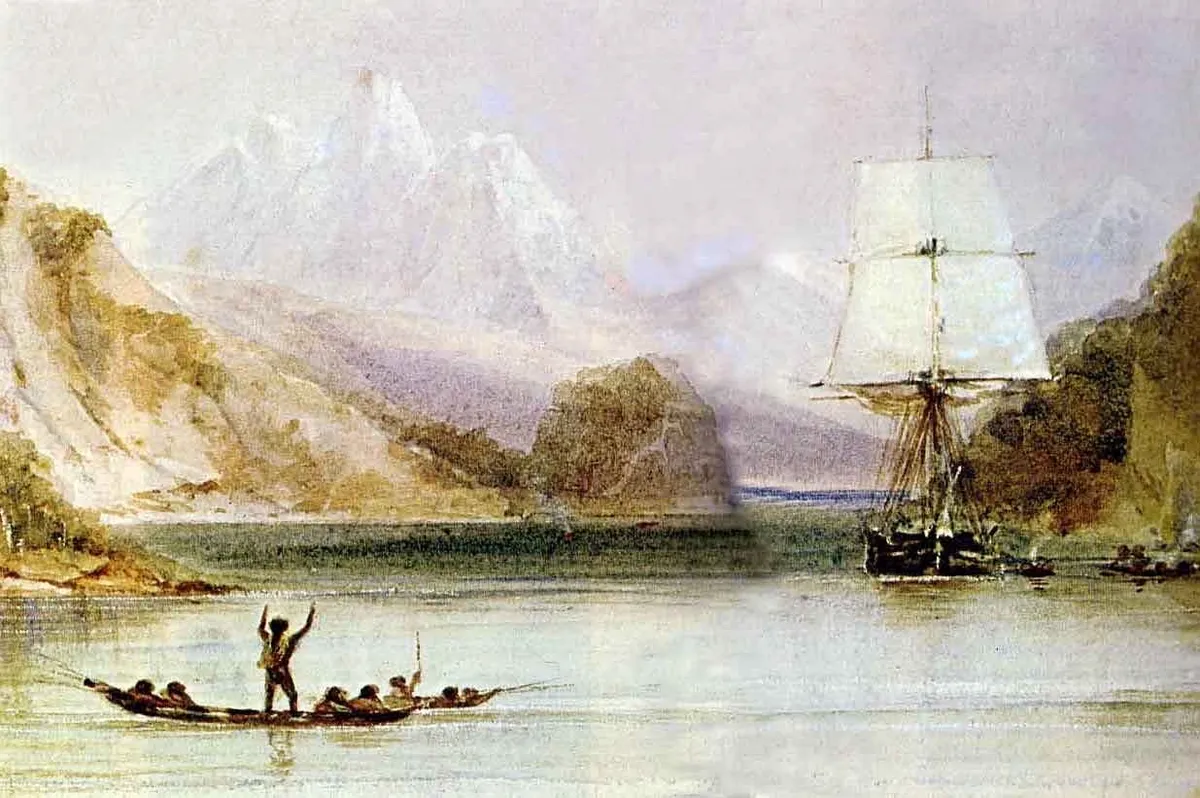
HMS Beagle was a perfectly ordinary warship that happened to carry the right person to the right places at the right time. She was one of over 100 Cherokee-class brig-sloops built by the Royal Navy. Nothing special about the hull, the rig, or the design. What made her extraordinary was that in 1831, a 22-year-old theology graduate named Charles Darwin talked his way aboard as the captain's gentleman companion and unpaid naturalist, and what he saw during the next five years rewrote the story of life on earth. The Beagle made three voyages. The first (1826-1830) was a survey mission to South America under Captain Pringle Stokes, who shot himself in the head in a fit of despair at the conditions in Tierra del Fuego. Robert FitzRoy took command and brought the ship home. The second voyage (1831-1836) is the famous one. FitzRoy wanted a gentleman companion to keep him company and keep him sane. He'd seen what isolation did to Stokes and knew he carried the same risk. Darwin got the job partly because FitzRoy liked the shape of his nose. Phrenology was taken seriously in 1831. Darwin spent five years collecting specimens, making observations, and being violently seasick. He was miserable at sea and ecstatic on land. The Galápagos Islands got most of the credit, but it was the full range of observations across South America, the Pacific, and beyond that built the case for evolution by natural selection. On the Origin of Species wouldn't be published until 1859, twenty-three years after the voyage ended. The ideas needed that long to mature, and Darwin needed that long to gather his nerve. FitzRoy's story is the darker thread. He was a brilliant navigator and a deeply religious man who came to believe that Darwin's work contradicted Scripture. He spent years trying to reconcile what the voyage had revealed with his faith. He couldn't. He became Chief of the new Meteorological Department, invented weather forecasting, was mocked by the press for inaccurate predictions, and cut his throat with a razor in 1865. The man who made Darwin's voyage possible was destroyed in part by what that voyage produced. The Beagle herself was retired from naval service in 1845 and transferred to the Coastguard. She was moored in the Essex marshes as Watch Vessel 7, had her masts removed, and was used as a floating customs station to catch smugglers. By 1870, she was sold for scrap. The ship that changed biology was buried in river mud.
HMS Bounty
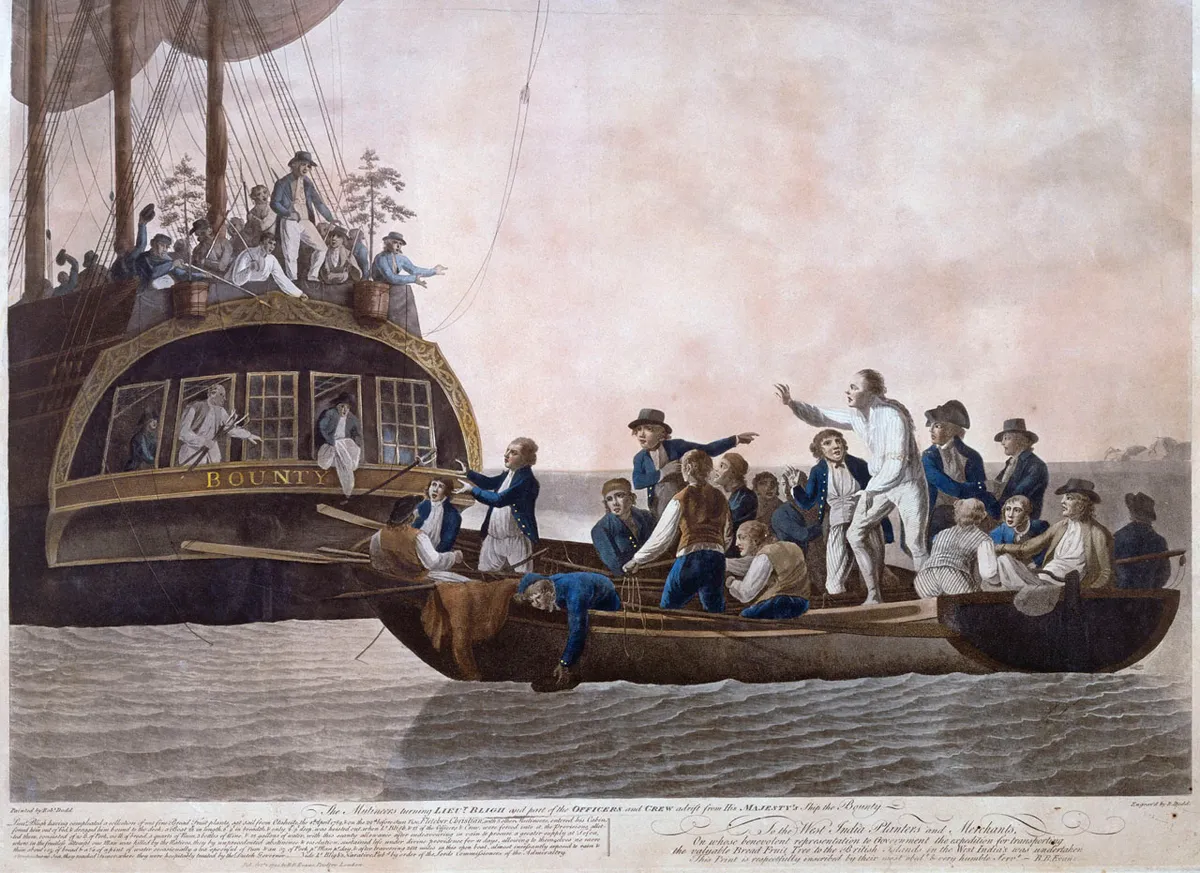
The Bounty's story isn't really about a ship. It's about what happens when you put 46 men on a 91-foot vessel, send them to paradise, and then ask them to leave. The mission was simple enough: sail to Tahiti, collect breadfruit plants, deliver them to the Caribbean as cheap food for enslaved workers. The plants mattered more than the crew. Captain Bligh had the great cabin converted into a greenhouse, and the men slept where they could. The mutiny on April 28, 1789 was fast and ugly. Fletcher Christian and roughly half the crew seized the ship at dawn. Bligh and 18 loyal men were put into a 23-foot open launch with minimal provisions. What happened next is one of the most extraordinary feats of seamanship in recorded history. Bligh navigated that overloaded boat 3,618 nautical miles across open ocean to Timor, using a pocket watch and memory for charts. He lost only one man, killed by hostile islanders at Tofua. The voyage took 47 days. The mutineers didn't fare as well. Christian took the Bounty to Pitcairn Island with eight other mutineers, six Polynesian men, and twelve Polynesian women. They burned the ship in Bounty Bay to avoid detection. Within four years, most of the men were dead. Murder, alcohol distilled from a local root, jealousy over the women. By 1800, only one mutineer was still alive: John Adams, surrounded by the women and children of dead men. The Bounty has been romanticized into a story about tyranny versus freedom. The reality is messier. Bligh was demanding but not unusually cruel by Royal Navy standards. Christian may have been suffering a breakdown. The Tahitian stopover lasted five months, and many crew members formed relationships with local women. Leaving paradise for a return voyage under strict naval discipline was more than some of them could bear. The ship itself was unremarkable. A small, converted merchant vessel that served the Navy for barely three years before being torched in a South Pacific bay. But the story it generated has been retold in novels, films, and naval histories for over two centuries. Every version says more about the era that produced it than about what actually happened on that ship.
HMS Victory
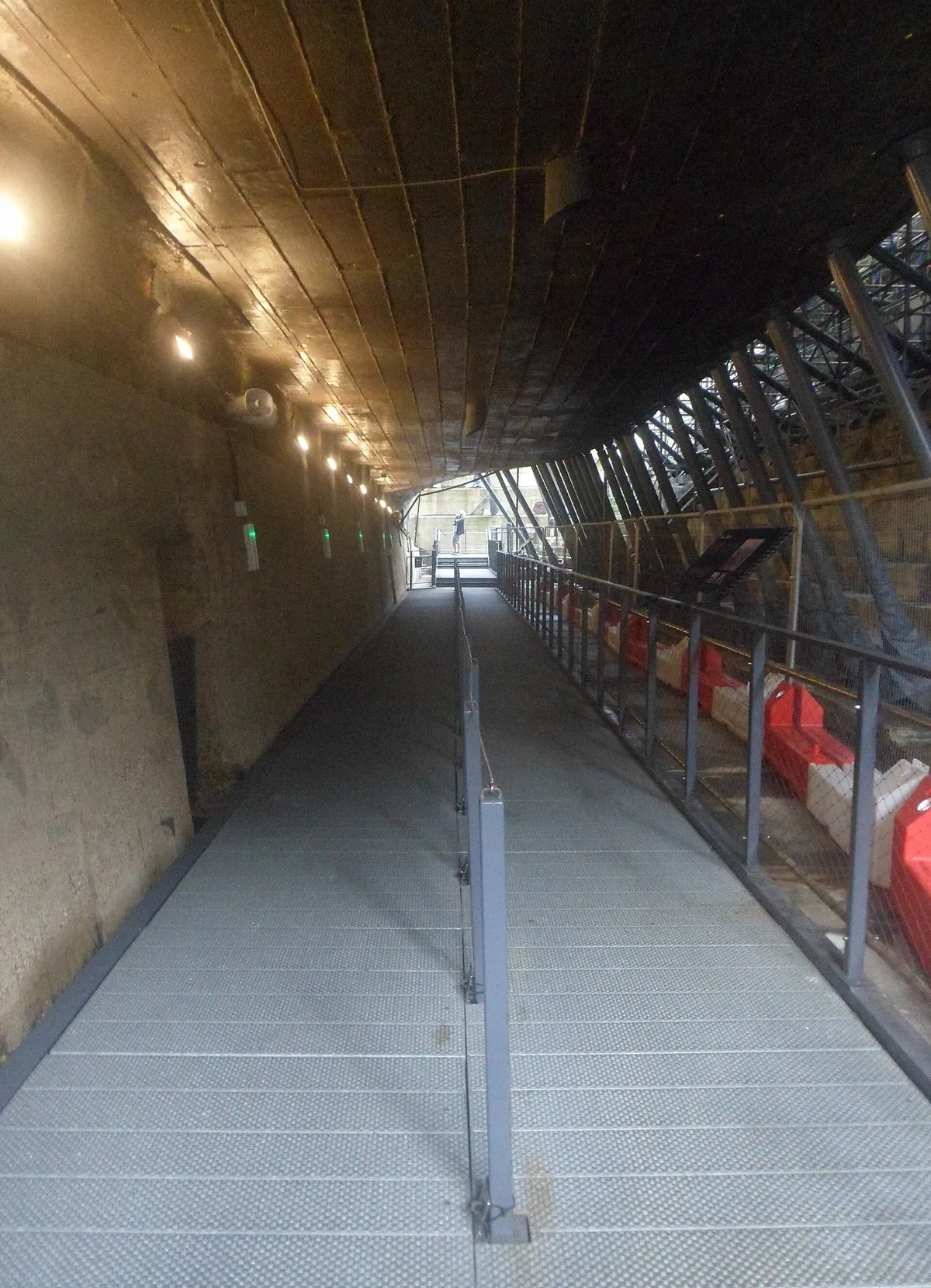
HMS Victory is the ship where Horatio Nelson died. She's also the oldest commissioned warship in the world, still on the books of the Royal Navy after 260 years. But Nelson's death is the thing. It's always been the thing. At Trafalgar on October 21, 1805, Nelson led the British fleet in two columns directly at the combined French and Spanish line. This was deliberate insanity. Sailing straight at an enemy line meant the lead ships would take raking fire for 40 minutes before they could fire back. Victory was the lead ship of the windward column. She absorbed broadside after broadside before crashing through the enemy line between Bucentaure and Redoutable. Nelson stood on Victory's quarterdeck in full dress uniform with his medals and decorations clearly visible. His officers begged him to change or cover the insignia. He refused. At 1:15 p.m., a musket ball fired from the fighting top of Redoutable hit Nelson in the left shoulder, passed through his lung, and lodged in his spine. He was carried below to the orlop deck where the surgeon, William Beatty, told him there was nothing to be done. Nelson died at 4:30 p.m. His last confirmed words were "Thank God I have done my duty." Britain won Trafalgar. The combined fleet lost 22 ships. The Royal Navy lost none. Nelson's tactical genius and personal courage broke Napoleon's naval power permanently. Britain would rule the seas for the next century. The cost was one admiral, beloved by his sailors and his nation, bleeding out on the planking of his own ship while the guns roared overhead. Victory herself took 12 years to build. Six thousand trees, mostly English oak, went into her construction. She was launched in 1765, didn't commission until 1778, and served in the American Revolutionary War, the French Revolutionary Wars, and the Napoleonic Wars before Trafalgar. She's been in dry dock at Portsmouth since 1922.
La Amistad
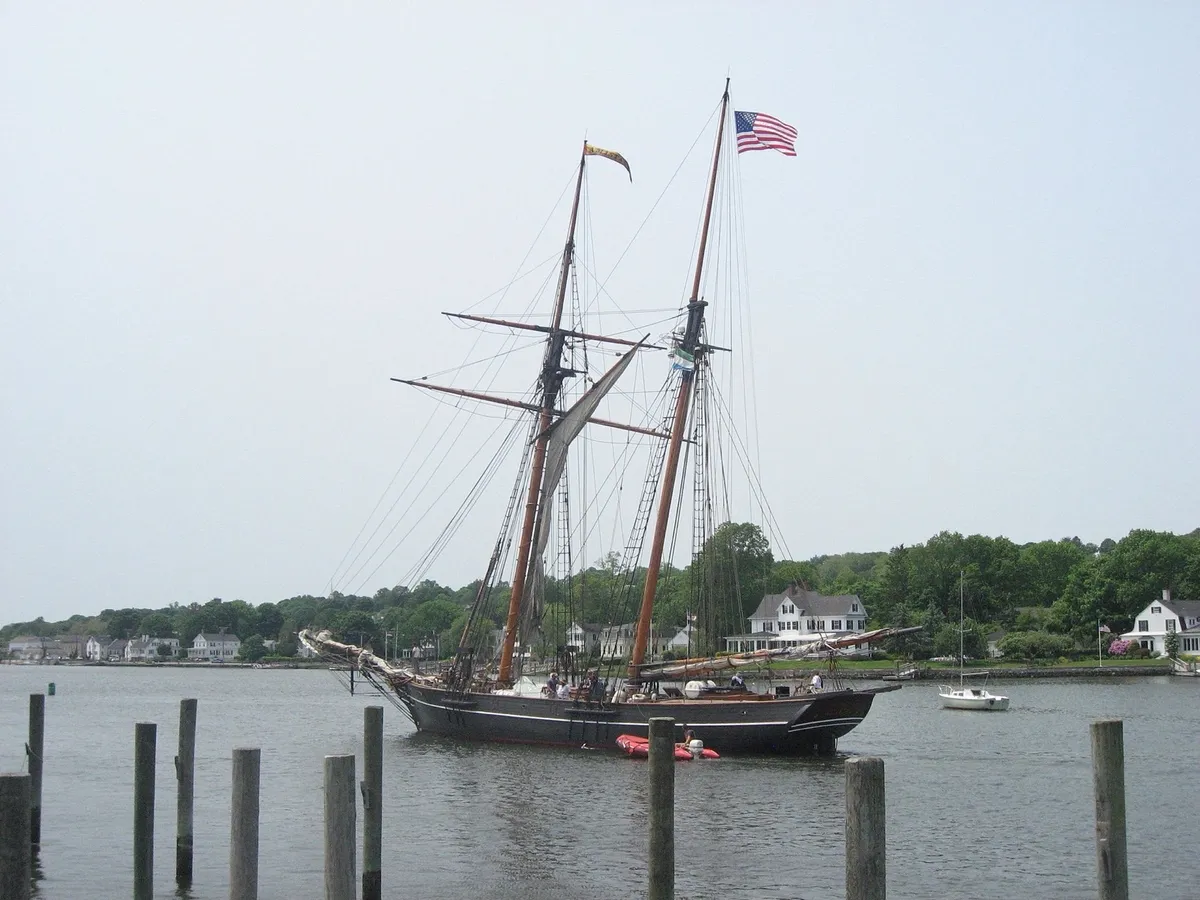
The Amistad was a small, unremarkable Spanish schooner that moved cargo between Cuban ports. In June 1839, she was carrying 53 Africans who had been kidnapped from Sierra Leone, shipped across the Atlantic on the slave ship Tecora, and sold at auction in Havana. They were being transported to a sugar plantation in Puerto Principe when Sengbe Pieh, known to the courts as Joseph Cinque, led a revolt. The captives broke free of their chains using a nail and a file. They killed the captain and the cook. They spared two crew members, Jose Ruiz and Pedro Montes, and ordered them to sail back to Africa. Ruiz and Montes complied during the day but reversed course at night, sailing northwest instead of east. For two months the Amistad zigzagged up the American coast while the Africans slowly starved. The US Navy brig Washington intercepted the Amistad off Long Island in August 1839. What followed was a legal battle that went all the way to the Supreme Court. The Spanish government demanded the return of their "property." President Van Buren wanted to comply. Abolitionists funded the defense. Former president John Quincy Adams, 73 years old and half-retired, argued the case before the Supreme Court in a performance that lasted eight hours over two days. The Court ruled that the Africans had been illegally kidnapped and had the right to use force to secure their freedom. They were not property. They were free people. Thirty-five survivors eventually returned to Sierra Leone in 1842, funded by abolitionist donations. The case didn't end slavery. It didn't even slow it down much. But it established in American law that enslaved people were human beings with legal rights, and it gave the abolitionist movement a victory they could point to for the next twenty years. The ship's name means "friendship" in Spanish. The irony writes itself.
Mayflower
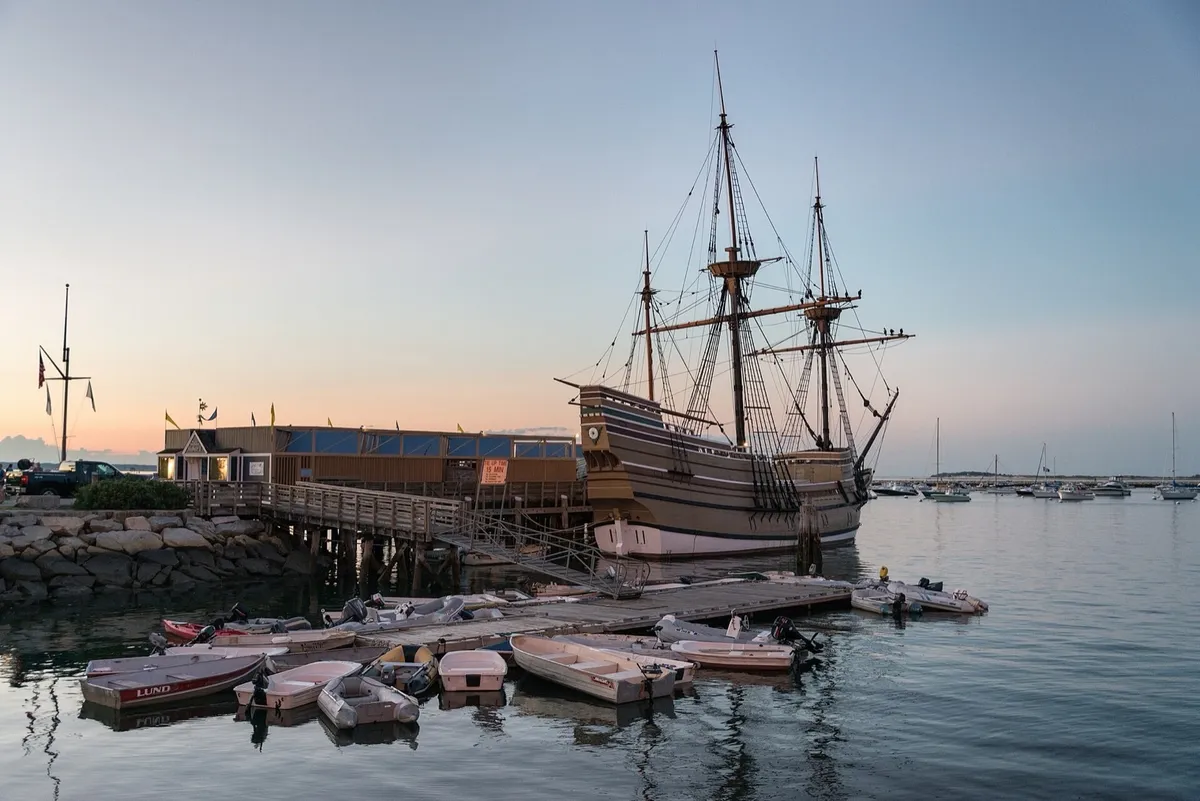
Mayflower carried 102 passengers and about 30 crew from Plymouth, England to Cape Cod in the autumn of 1620. The crossing took 66 days. They were aiming for Virginia. They hit Massachusetts instead. That navigational miss changed the political trajectory of North America. The ship was a cargo hauler, not a passenger vessel. She'd spent years carrying wine between England and France. For the Atlantic crossing, the 'tween decks cargo hold was converted into living space by building crude wooden partitions. The ceiling height was about five feet. Into this space they packed 102 people, their belongings, livestock, tools, food stores, and their ambitions for a new world. Two people died during the crossing. One baby was born. The passengers arrived exhausted, malnourished, and sick. They anchored off Provincetown, explored for a month, then settled at Plymouth. That first winter killed half of them. The ship sat in Plymouth harbor through the winter because the crew was too sick to sail home. Mayflower matters not because the voyage was heroic. It wasn't. It was a desperate, poorly planned, badly timed expedition by people who had burned every bridge behind them. They left too late in the season, on a ship that leaked, with inadequate supplies, and landed in the wrong place. What makes it significant is that the survivors stayed. The Mayflower Compact, signed aboard before anyone went ashore, was a self-governing agreement that became a foundational document for American democracy. It was born of practical necessity, not idealism. They needed rules because they'd landed outside the jurisdiction of their charter.
Niña
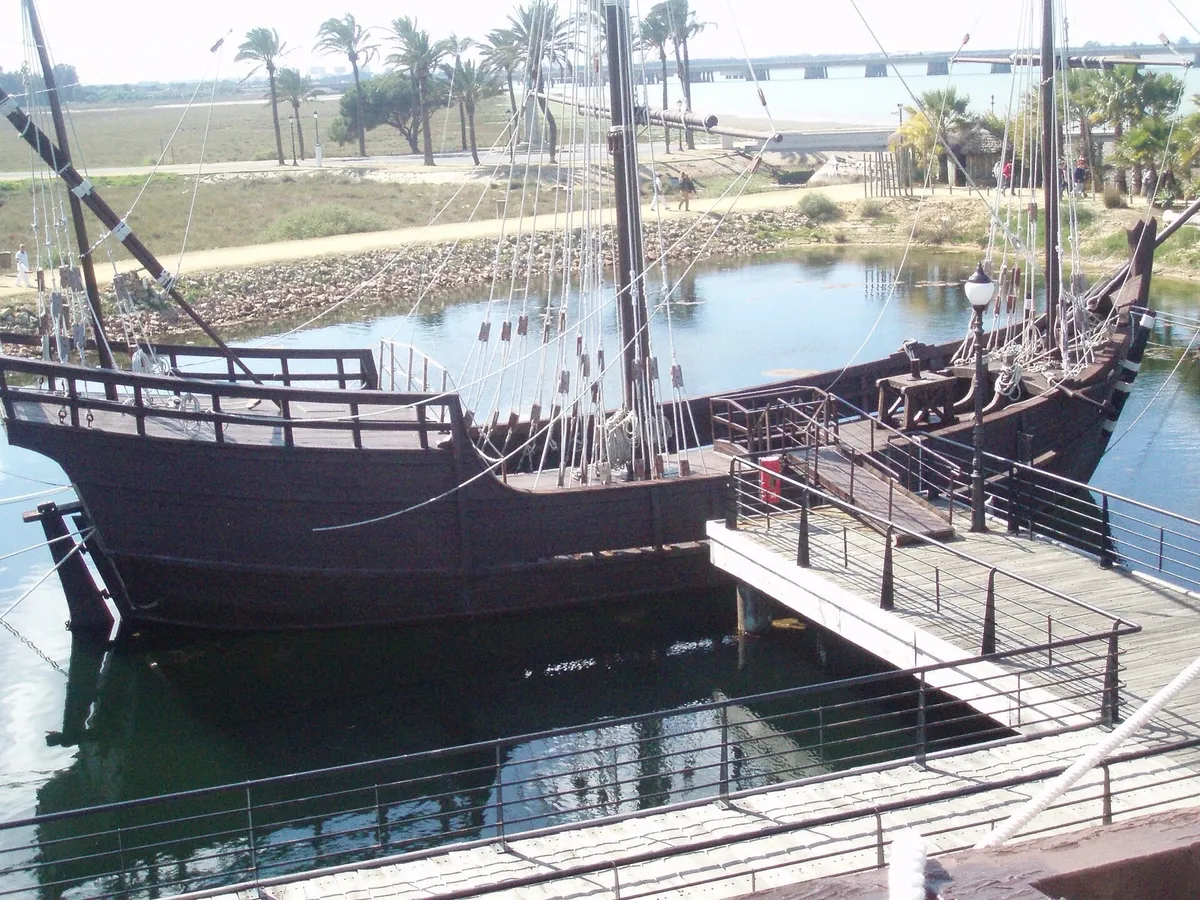
Niña was the workhorse of Columbus's expeditions and the ship he actually trusted with his life. Her real name was Santa Clara. 'Niña' was a nickname, probably after her owner Juan Niño. Columbus sailed her on the first and second voyages and she made at least five Atlantic crossings total, more than any other vessel of the 15th century. When Santa María ran aground on Christmas Day 1492, Columbus transferred to Niña for the return voyage. She carried him home. During the crossing back, they hit a storm so severe that Columbus wrote out an account of his discoveries on parchment, sealed it in a wax-coated barrel, and threw it overboard in case the ship went down. The ship didn't go down. Niña was that kind of vessel. She was a caravel, a Portuguese-developed design that was the technological marvel of the age. Small, shallow-drafted, and maneuverable, caravels could sail closer to the wind than any square-rigged ship. Columbus had her re-rigged from lateen to square sails in the Canary Islands before the Atlantic crossing, giving her the best of both worlds: square sails for running before the trade winds, with the option to go back to lateen for coastal work. Niña survived at least two Caribbean hurricanes after the first voyage. She was still sailing in 1501, possibly later. For a 50-foot wooden vessel built in the 1480s to still be operational after 15 years of hard Atlantic service is extraordinary. Most ships of her size and era lasted 10 years.
Pequod
The Pequod is the floating stage for the most ambitious novel in American literature. Melville didn't invent the whaling ship. He worked on real ones. He knew what the deck felt like under his feet, what whale blood smelled like, what three years at sea did to a man's mind. The Pequod is drawn from that experience. Every plank of the ship serves the story. The bone trophies on the hull are both real whaling tradition and a warning. The try-works, where blubber is rendered into oil over brick furnaces on a wooden deck, is Melville's metaphor made physical. Fire on a wooden ship in the middle of the ocean. That's the whole book. The Pequod matters because Melville used a working vessel as the architecture of meaning. The ship is a factory, a democracy, a dictatorship, a coffin, and a church. She carries thirty men from dozens of nations on a voyage that starts as commerce and ends as obsession. No other vessel in literature carries that weight.
Pinta
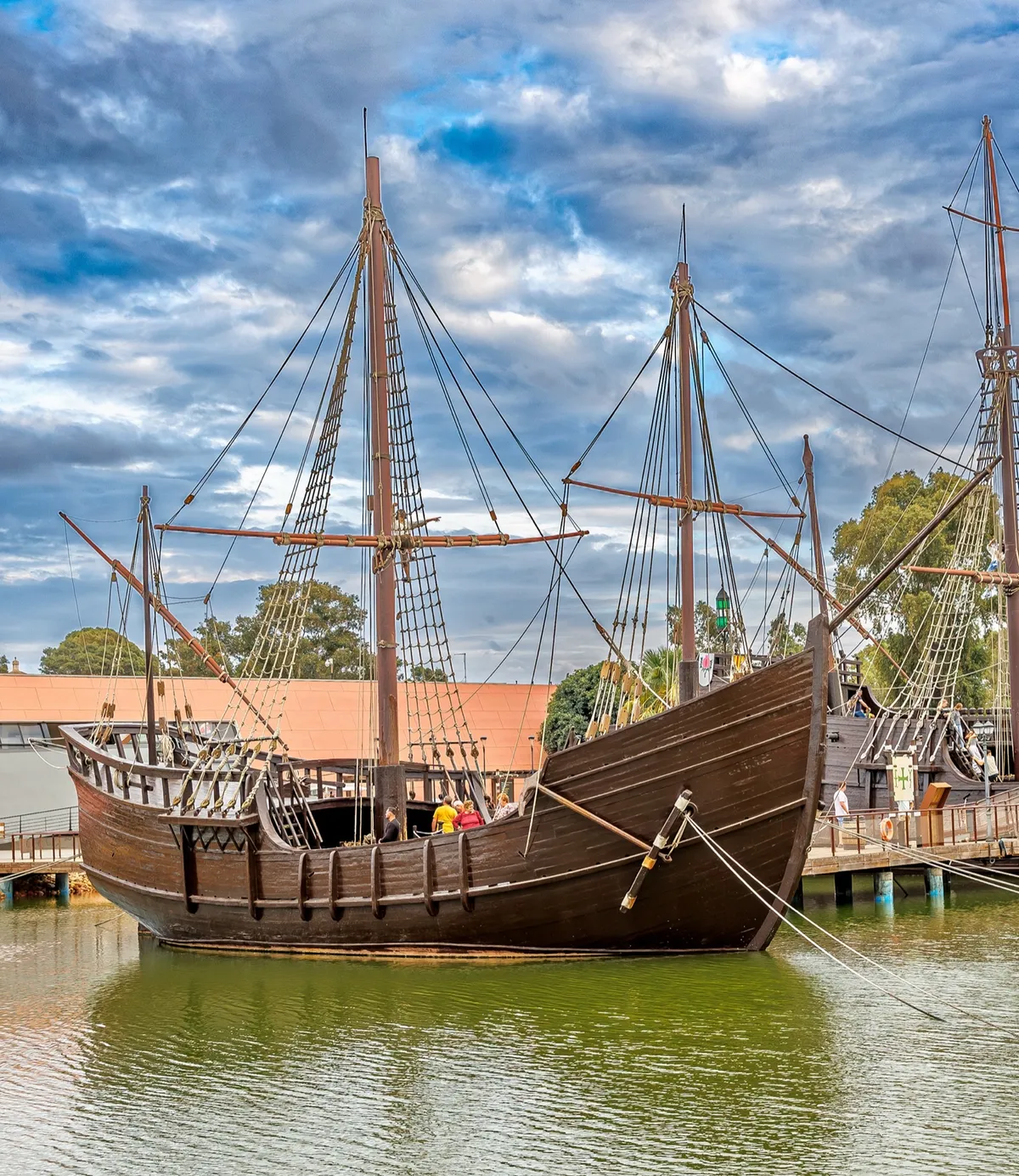
Pinta was the first European ship to sight the Americas. At 2 a.m. on October 12, 1492, her lookout Rodrigo de Triana spotted a white cliff in the moonlight and fired a lombard to signal the fleet. Thirty-three days of open ocean sailing were over. Land. Columbus later claimed he'd seen a light the evening before, which conveniently entitled him to the lifetime pension the Spanish crown had promised to the first man to sight land. Rodrigo de Triana never received a cent. He reportedly converted to Islam and moved to North Africa. The first man to see the New World died in obscurity, cheated by his own admiral. Pinta's captain was Martín Alonso Pinzón, the most experienced sailor on the expedition and a man who did not enjoy taking orders from Columbus. Pinzón went rogue at least twice. In late November 1492, he sailed Pinta away from the fleet without permission, heading for a large island (probably Great Inagua) where he'd heard there was gold. He was gone for six weeks. Columbus was furious. Pinzón rejoined the fleet in January, offered a weak excuse, and the two men barely spoke for the remainder of the voyage. On the return crossing, another storm separated the ships. Pinta reached Bayona, Spain before Niña reached Lisbon. Pinzón sent a message to Ferdinand and Isabella requesting an audience to report the discoveries himself. The monarchs refused and told him to wait for Columbus. Pinzón was already sick. He died within weeks of reaching Spain, probably from syphilis contracted in the Caribbean. The Pinzón family spent the next 20 years in court, suing the Columbus estate for credit and compensation.
Queen Anne's Revenge
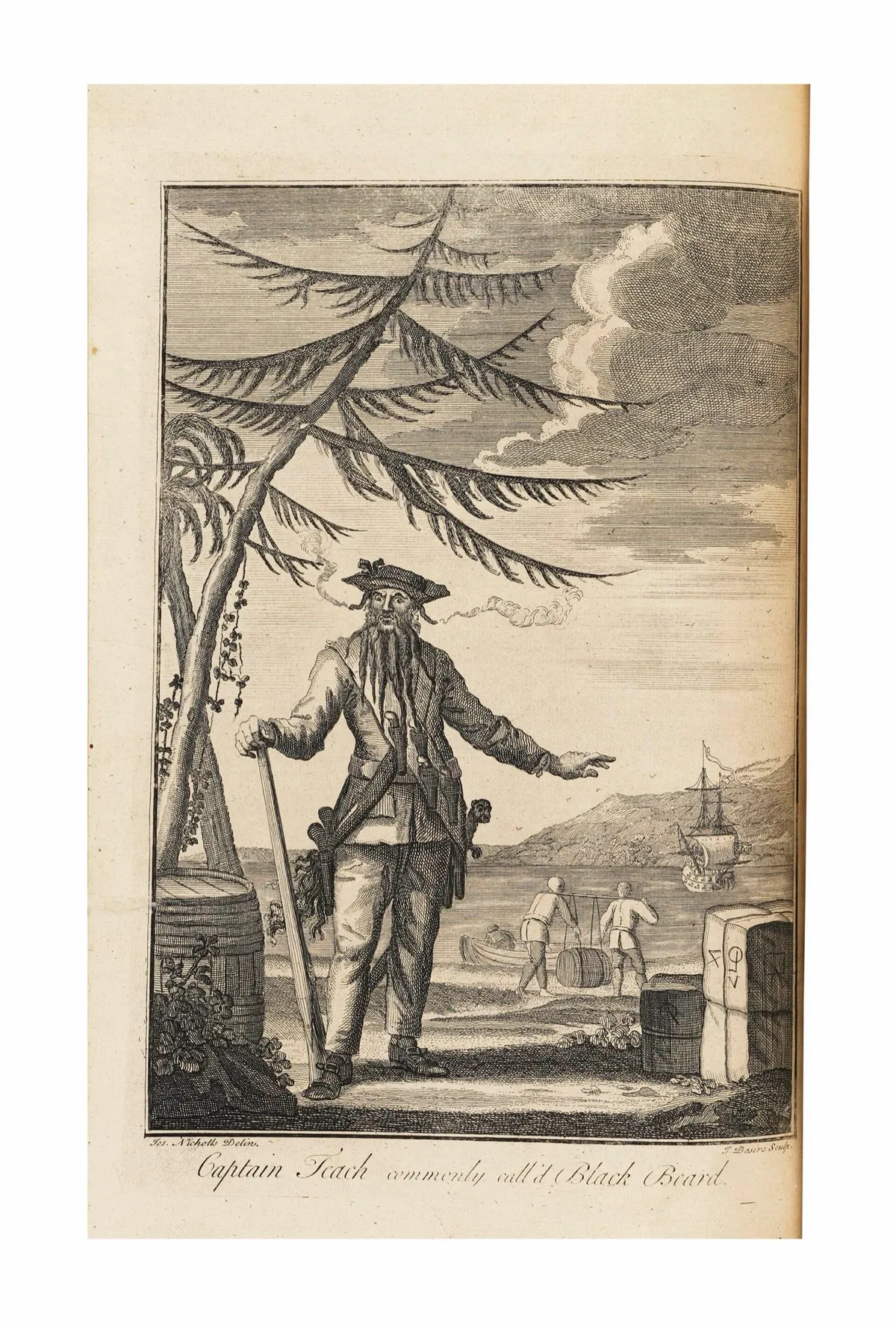
Queen Anne's Revenge started life as La Concorde, a French slave ship working the triangle trade between Nantes, West Africa, and the Caribbean. Edward Teach, who the world would remember as Blackbeard, captured her near Martinique in November 1717. He renamed her, stuffed her with cannons, and turned a vessel built to transport human misery into a floating fortress of a different kind. For about six months, she was the most feared ship in the Atlantic. Blackbeard used her to blockade the port of Charleston, South Carolina in May 1718. He held the entire city hostage for a week, capturing ships in the harbor and demanding a chest of medicine as ransom. Charleston paid. The blockade worked not because of superior firepower but because of reputation. Nobody wanted to find out if the stories were true. Then Blackbeard did something nobody expected. He ran Queen Anne's Revenge aground at Beaufort Inlet, North Carolina, in June 1718. The official story was an accident. The real story, most historians believe, was deliberate. Blackbeard marooned most of his crew on a sandbar, took the loot and his closest allies, and sailed off in a smaller sloop. It was a heist within a heist. Blackbeard didn't last long after that. Lt. Robert Maynard of the Royal Navy found him anchored at Ocracoke Inlet on November 22, 1718. The fight was vicious. Blackbeard took five musket balls and twenty sword cuts before he finally dropped. They cut off his head and hung it from the bowsprit. The ship matters because it connects the slave trade, piracy, and colonial politics in ways that are uncomfortable and honest. La Concorde carried enslaved Africans. Queen Anne's Revenge carried pirates, many of whom were formerly enslaved or pressed sailors who chose piracy over legitimate service. The line between legal and illegal cruelty was thinner than anyone wanted to admit.
Royal Fortune
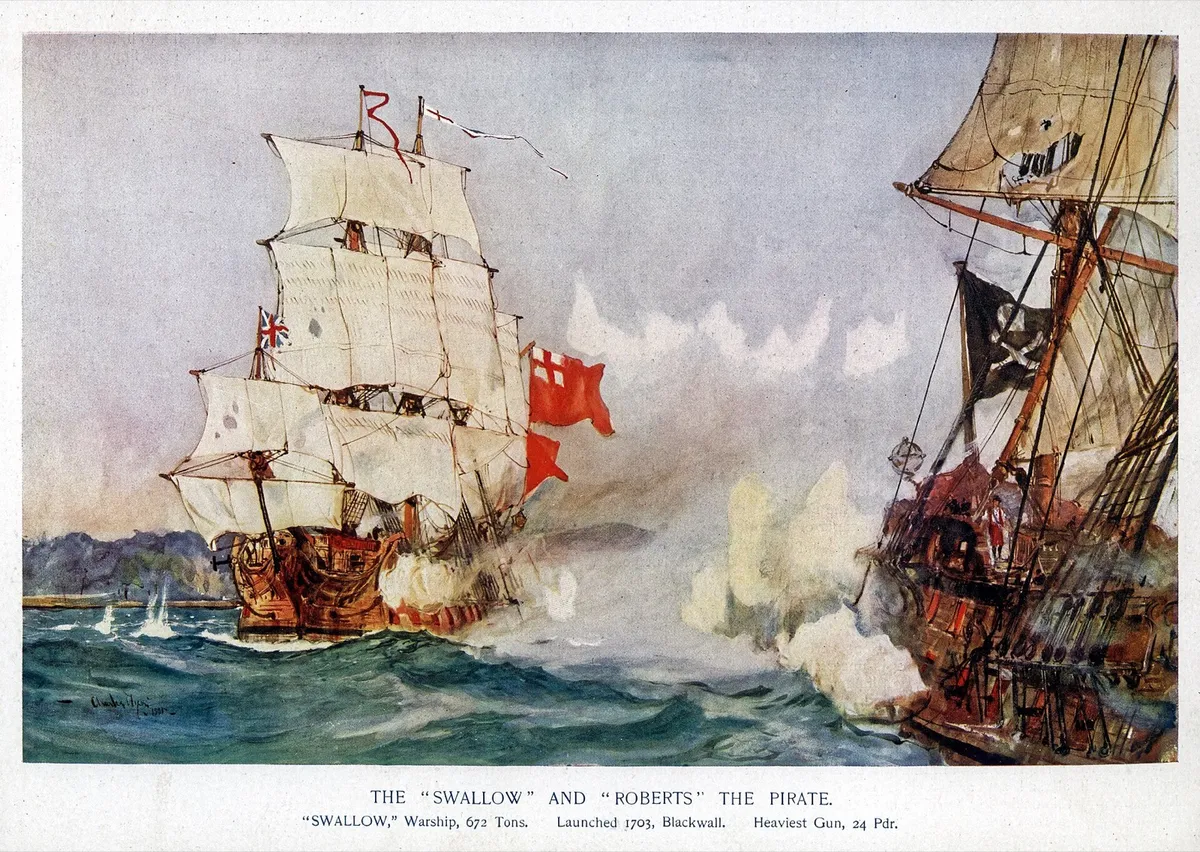
Bartholomew Roberts, "Black Bart," captured over 400 ships in three years. That number is not a typo. Four hundred. No pirate before or since came close. He operated from Newfoundland to Brazil to West Africa, and every navy in the Atlantic wanted him dead. The final Royal Fortune was his last and largest flagship, a 52-gun warship that could go toe-to-toe with anything the Royal Navy sent after him. Roberts is the pirate who actually wrote the code. Not the Hollywood version. Real articles of agreement that his crew signed. Lights out at eight. No gambling for money aboard. Every man gets a vote. Every man gets a share. If you lose your right arm in battle, you get 600 pieces of eight in compensation. If you desert during a fight, the punishment is death or marooning. It was a constitution for thieves, and it worked better than most legitimate governments of the era. The man himself was a contradiction. He dressed extravagantly, wearing crimson damask waistcoats and diamond crosses. He never drank anything stronger than tea. He was Welsh, deeply religious by pirate standards, and reportedly furious about being forced into piracy when his merchant ship was captured. He turned out to be spectacularly good at it. Roberts went through multiple ships named Royal Fortune, trading up as he captured better vessels. The final one was a French warship he took off the African coast. He refitted her, loaded her with guns, and sailed her for roughly two years. She was the most heavily armed pirate ship of the Golden Age. It ended on February 10, 1722, off Cape Lopez in present-day Gabon. HMS Swallow, a Royal Navy warship under Captain Chaloner Ogle, caught Roberts at anchor. Roberts dressed in his finest clothes and sailed out to fight. A blast of grapeshot hit him in the throat. He was dead before he hit the deck. His crew, following his standing orders, threw his body overboard in full dress before the Navy could take it as a trophy. The sea got him. Nobody else did.
Santa María
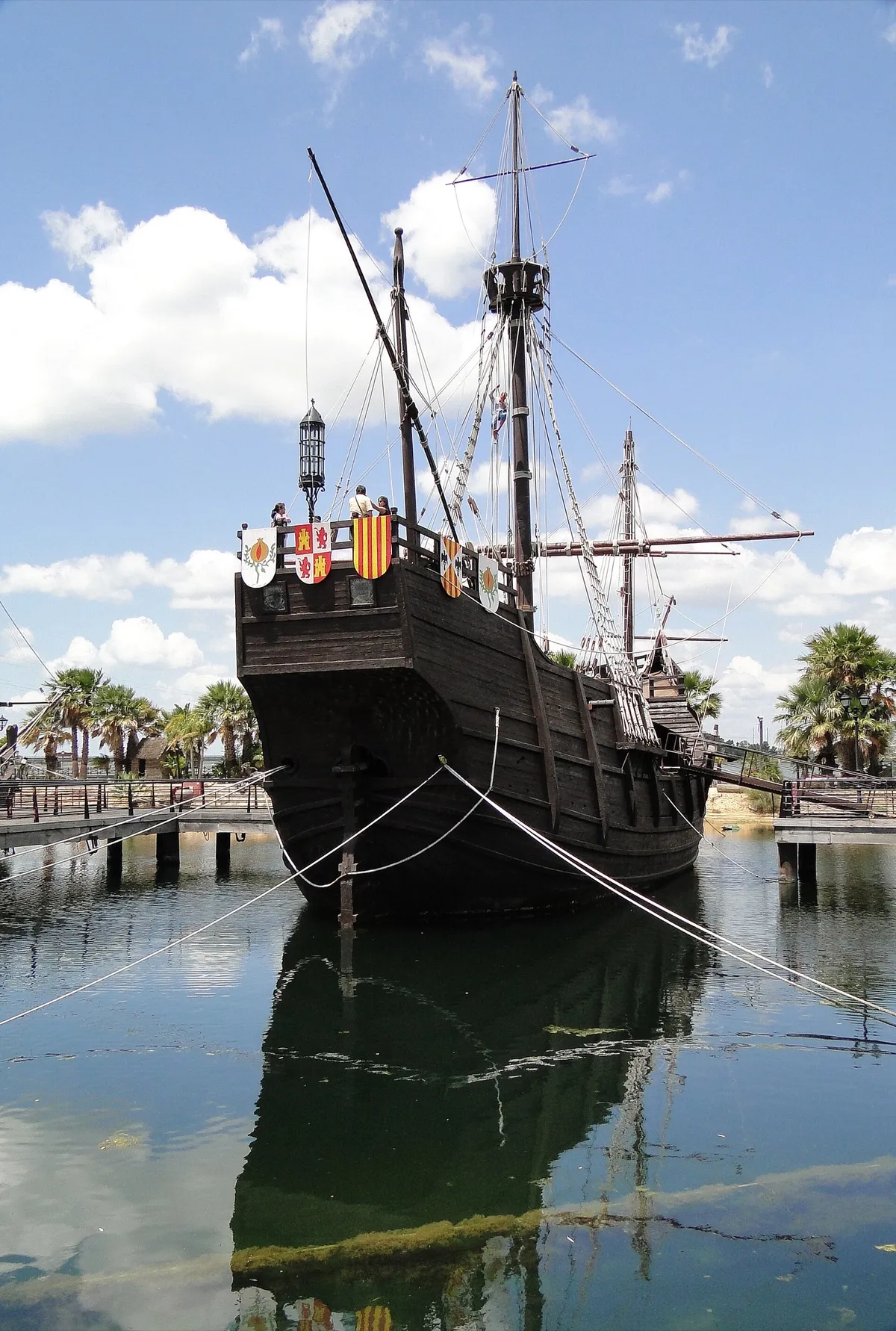
Santa María was the flagship of the most consequential naval expedition in history. Columbus sailed her across the Atlantic in 1492 and she never came back. She ran aground on a coral reef off the north coast of Hispaniola on Christmas Day while a cabin boy was at the tiller. Columbus was asleep. The captain was asleep. The watch officer had handed the helm to a kid, which Columbus had expressly forbidden. The ship couldn't be freed. Columbus ordered her stripped. The crew salvaged timber, nails, fittings, and stores, and built a fortified settlement on shore called La Navidad. Thirty-nine men volunteered to stay. When Columbus returned on his second voyage in November 1493, the settlement was burned to the ground and every man was dead. The Taíno had killed them, reportedly in retaliation for the Spaniards' violence and abduction of women. Columbus despised the Santa María. He considered her too slow, too heavy, and too deep-drafted for coastal exploration. She was a nao, a cargo vessel built to haul goods in bulk, not to thread through uncharted shoals. Columbus called her "la capitana" when being formal and complained about her in his log constantly. His real love was the Niña. The loss of Santa María on a reef validated every objection he'd ever raised about her. The ship's historical importance is enormous and brutal. She carried the first sustained European contact with the Americas. Everything that followed, the colonization, the slave trade, the decimation of indigenous populations, the creation of the modern Atlantic world, traces a line back to this sluggish, unloved cargo ship and the 40 men who sailed her into the unknown.
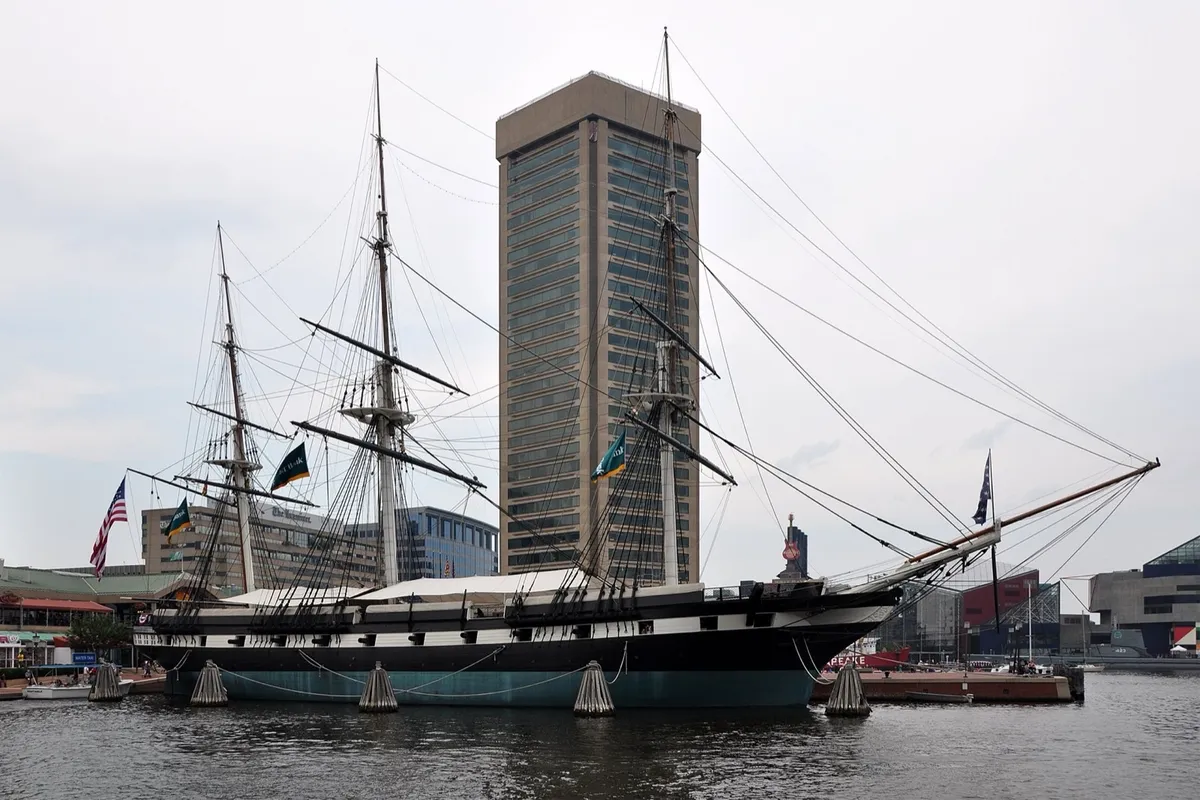
USS Constellation
The USS Constellation in Baltimore Harbor is a beautiful ship with an identity crisis. For decades, the Navy and the city of Baltimore claimed she was the original 1797 frigate, one of the first six frigates authorized by Congress, the first U.S. Navy warship to put to sea, sister to the USS Constitution. That story is almost certainly wrong. The scholarly consensus, led by naval historian Dana Wegner's 1991 study, is that the ship in Baltimore is the 1854 sloop-of-war. A different vessel. The original 1797 frigate was broken up at the Gosport Navy Yard in Norfolk, and the 1854 ship was built using some of the old timbers but on a completely different design. She's a sloop-of-war, not a frigate. Different hull shape, different gun arrangement, different dimensions. The Navy muddied the waters by giving her the same name and claiming continuity for budget reasons. It was cheaper to "rebuild" an existing ship than to fund a new one from Congress. This matters because the truth is more interesting than the myth. The 1854 Constellation served in the Africa Squadron, intercepting slave ships during the illegal transatlantic slave trade. In 1858, she captured the slaver Cora with 705 enslaved Africans aboard. In 1860, she captured three more ships. These were real operations with real consequences. The people freed from those ships were taken to Liberia. Whether that constituted rescue is its own complicated question. She served as a training ship at the Naval Academy during the Civil War, then spent decades in various roles before being brought to Baltimore in 1955 as a museum ship. The restoration work assumed she was the 1797 vessel and added frigate-style gun ports that the 1854 sloop never had. So the ship you see today is a 19th-century sloop wearing an 18th-century frigate costume. Baltimore has largely stopped making the 1797 claim, though the debate still generates heat. The ship is worth visiting on her own merits. She's the last surviving Civil War-era naval vessel and one of the oldest ships in the Navy's inventory, even without the frigate pedigree.
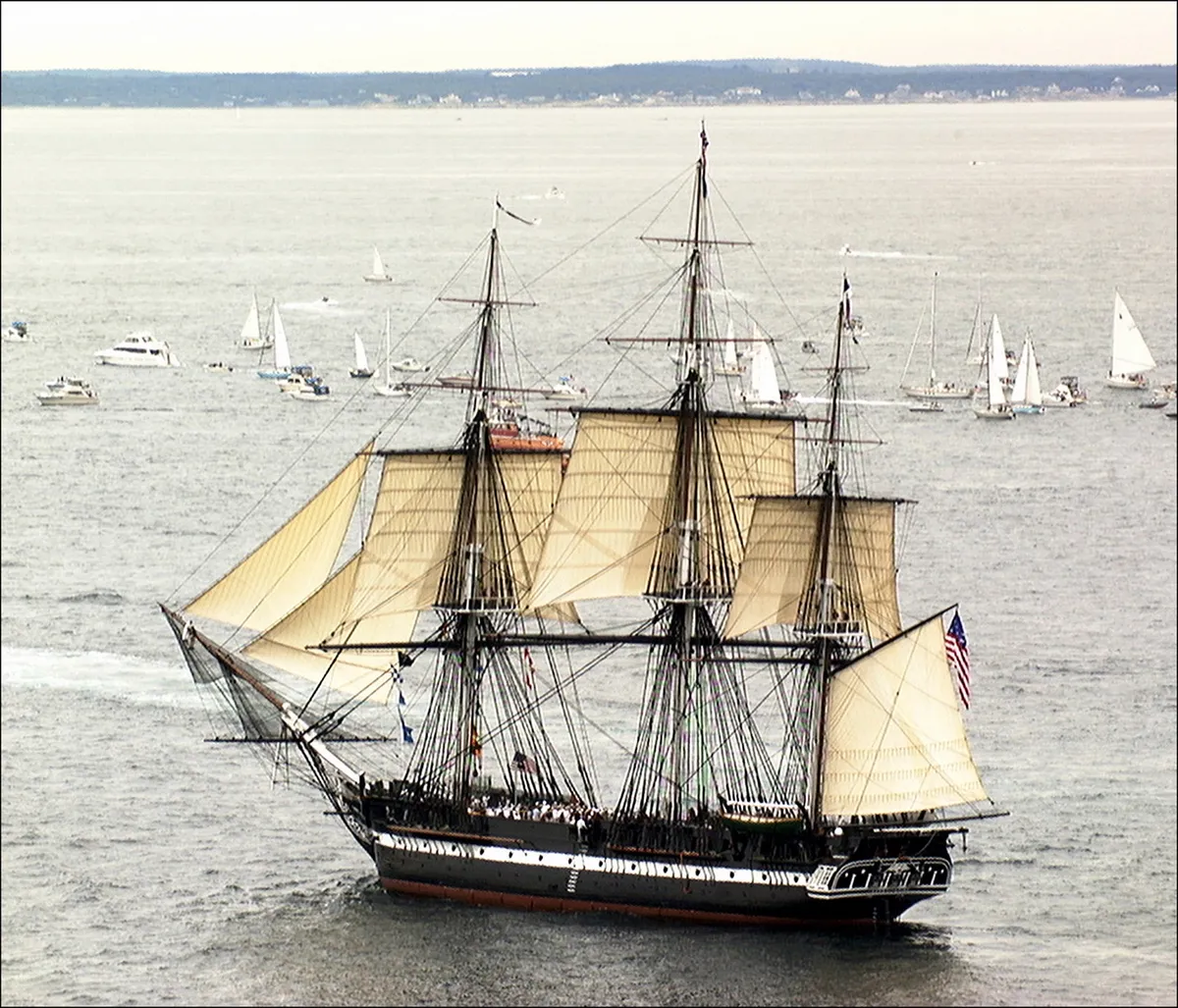
USS Constitution
USS Constitution is the oldest commissioned warship still afloat. She was launched in 1797 and is still in the U.S. Navy. Not as a museum — as an active-duty warship with a crew of U.S. Navy sailors. During the War of 1812, she defeated five British warships in single combat. In the battle against HMS Guerriere, British sailors watched their cannonballs bounce off Constitution's hull and shouted 'Huzzah, her sides are made of iron!' The nickname stuck. The hull was built with live oak — a Southern wood so dense it sinks in water and resists cannonball penetration better than any other timber. Constitution was saved from the scrapyard multiple times: once by Oliver Wendell Holmes' poem in 1830, once by a nationwide penny drive in 1905, and once by a $12 million restoration in the 1990s.
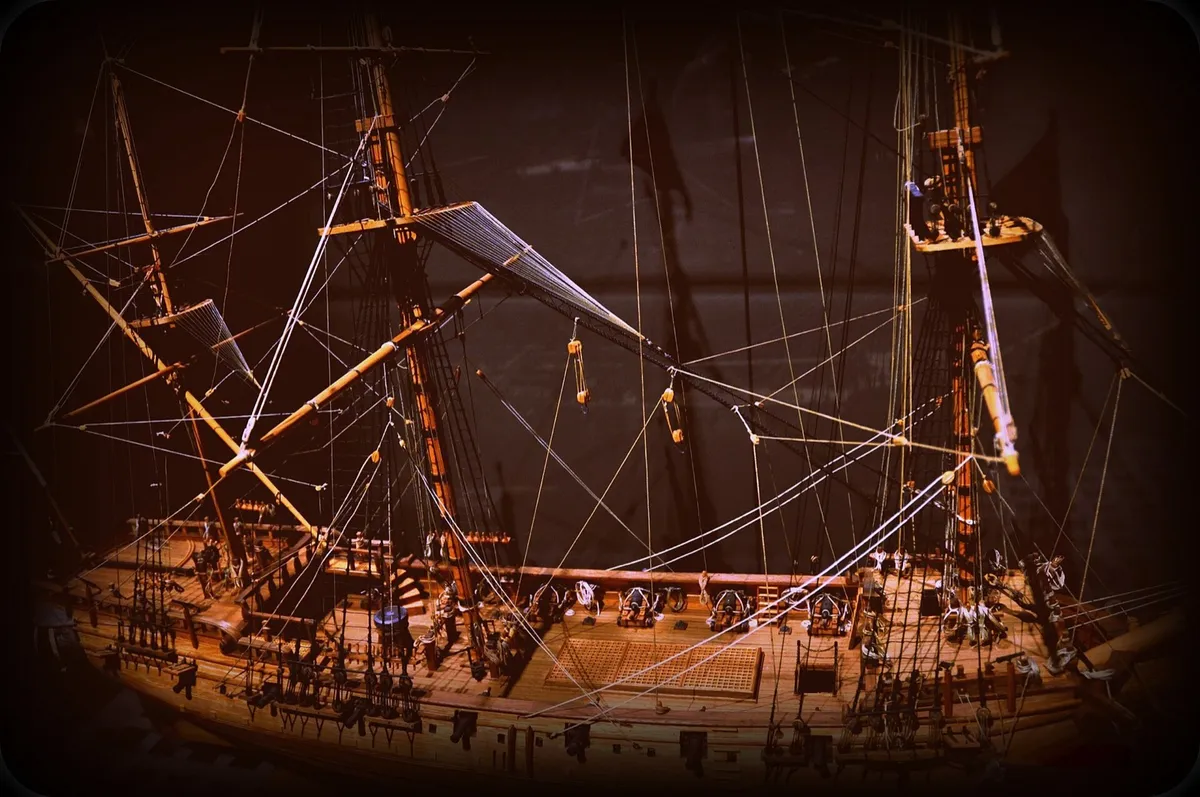
Whydah Gally
The Whydah (pronounced "WID-uh") is the only verified pirate shipwreck in the world. Every other supposed pirate wreck is a guess, a legend, or a tourism pitch. The Whydah has a ship's bell with the name on it. That's authentication you can't argue with. She was built in London around 1715 as a slave ship, purpose-built for speed. The triangle trade demanded fast hulls. You loaded trade goods in England, exchanged them for enslaved people in West Africa, crossed the Atlantic as quickly as possible because your cargo was dying every day, sold the survivors in the Caribbean, then loaded sugar and headed home. The Whydah made at least one full circuit before Captain Sam Bellamy took her. Bellamy captured the Whydah in February 1717 near the Bahamas. He was 28 years old, handsome, and reportedly refused to wear wigs, earning him the name "Black Sam." He'd been a pirate for about a year. When he took the Whydah, she was carrying the profits of her slave voyage: indigo, sugar, gold, silver, and ivory. Bellamy kept the cargo, transferred his crew aboard, and made her his flagship. For two months, Bellamy terrorized the Atlantic coast. He captured over 50 ships. By the time the Whydah went down, she was carrying an estimated 4.5 tons of gold and silver, the plunder of dozens of vessels. Bellamy was, by some calculations, the wealthiest pirate in recorded history. He just didn't get to spend any of it. On April 26, 1717, a nor'easter caught the Whydah off the coast of Cape Cod near Wellfleet, Massachusetts. The storm drove her onto a sandbar. The masts snapped. The hull broke apart. Bellamy and 143 of his 146 crew drowned. Two survivors washed ashore. The whole career, start to finish, lasted about fourteen months.