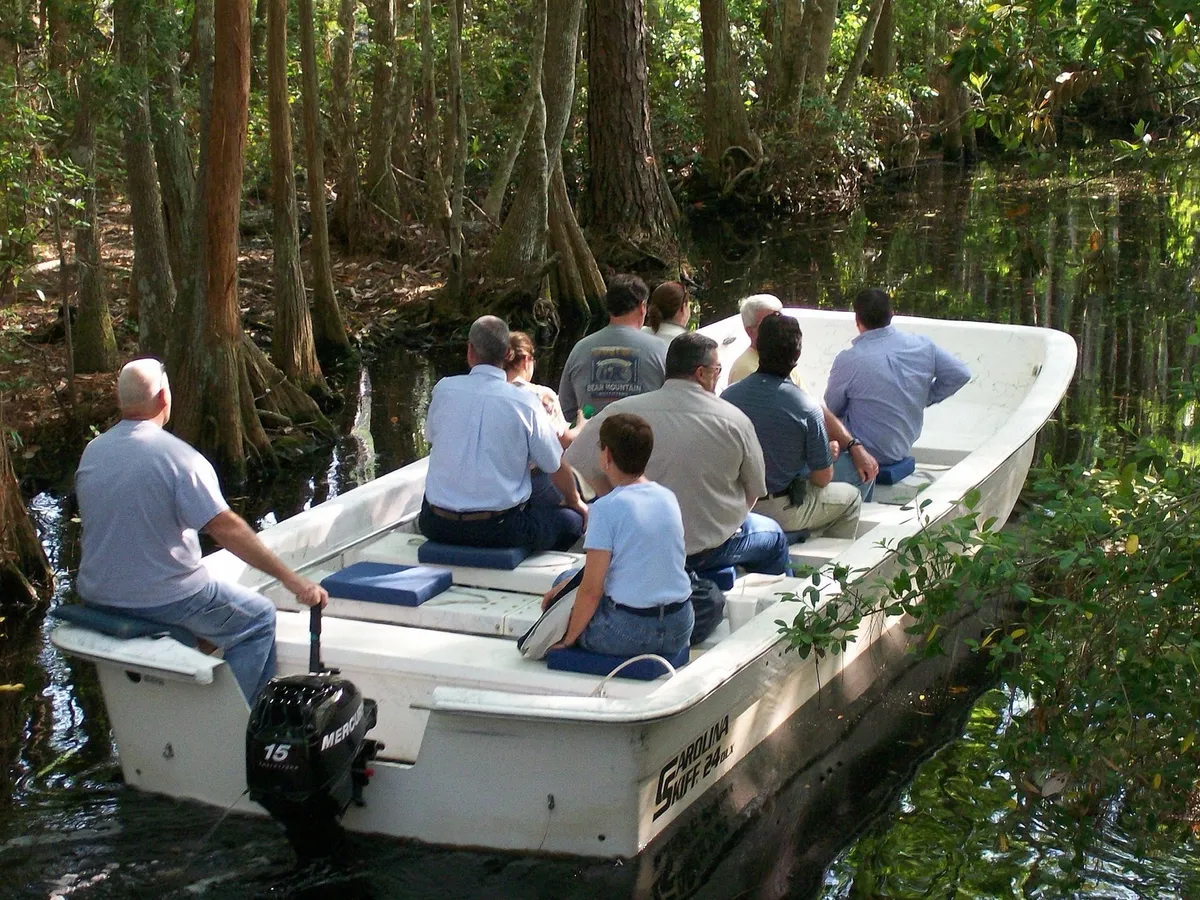
Carolina Skiff
Why it matters
The Carolina Skiff is the most popular boat in America that nobody brags about owning. Founded in 1983 in Wadesboro, North Carolina, the company had one idea: build the cheapest, simplest fiberglass boat possible and sell a ton of them. It worked. Carolina Skiff moves more units than brands costing three times as much.
The design philosophy is aggressive simplicity. Flat bottom. No wood anywhere in the hull (wood rots, which is why cheap boats fall apart). One-piece fiberglass layup. Self-bailing cockpit. The boats are sold without engines because the company figured out that letting buyers rig their own outboard kept the sticker price low and the customization high. A bare 17-footer can be had for under $10,000. Rig a used Yamaha on the back and you're fishing for less than a decent used car.
People who own Boston Whalers and Grady-Whites look down on Carolina Skiffs. This is documented, quantifiable snobbery. The Carolina Skiff owner's response is universal: they're out fishing right now while the Grady-White is in the shop getting its third trim tab adjusted. The Skiff doesn't ride as well in rough water (flat bottom, remember). It doesn't look as pretty at the dock. It will never be featured in a glossy boat magazine. But it floats in six inches of water, it's nearly impossible to sink, and it costs less than the electronics package on a center console.
The Corolla of boats. The Timex of boats. The "it just works" of boats. Carolina Skiff understood something that premium brands never will: most fishing happens in calm water within five miles of the ramp.
What it was like
Fishing from a Carolina Skiff is straightforward. You launch at the ramp (easy, because the flat bottom slides off the trailer without drama). You run to your spot in the shallows that deeper boats can't reach. You fish. The flat bottom means the boat is stable as a platform, which matters when you're standing up casting for redfish. It also means every wave hits the hull like a slap, which matters when you're running across open water.
The ride in chop is honest. The boat tells you exactly what the water is doing, translated through the hull directly into your spine. A two-foot chop at 30 mph in a Carolina Skiff is a dental appointment. The solution is to slow down or stay in protected water, which is what the boat was designed for anyway. In the creeks and flats where these boats live, the ride is fine. The deck space is generous. The simplicity means there's nothing to break.
The crew
Captain/Owner
Carolina Skiff owners are a specific breed. They're practical people who fish more than they shop for boats. They rig their own electronics, build their own rod holders, and consider a T-top an unnecessary luxury. The captain stands at a center or side console, running an outboard that was probably bought used from a guy who upgraded. The entire ownership experience is DIY. Carolina Skiff owners fix their own stuff because the boat is simple enough that anyone with a wrench can work on it.
Fishing Buddy
The open deck layout means there's room for two or three people to fish without tangling lines. The flat bottom means nobody's falling over. Seating is whatever folding chairs or coolers the owner brought aboard. Premium upholstery is not a Carolina Skiff concept. You sit on an Igloo cooler and you fish. If you want leather seats, you bought the wrong boat.
Patina notes
Carolina Skiffs age like work trucks. The gelcoat chalks and fades. The non-skid wears smooth in high-traffic areas. The console gets sun-bleached. But the one-piece fiberglass hull, with no wood to rot, just keeps going.
The structural integrity doesn't degrade the way a wood-cored hull does. Owners don't bother with cosmetic maintenance because the boat's value proposition was never about looks.
A ten-year-old Carolina Skiff with a good engine is still worth fishing from. A twenty-year-old one probably is too.
Preservation reality
Nobody preserves Carolina Skiffs. They're the most disposable durable good in boating. When one finally cracks or the owner upgrades, it gets sold on Craigslist for $2,000 or left in a yard.
There's no collector market, no heritage society, no museum wing. The preservation of the Carolina Skiff is in its continued production. The company still makes them in the same factory, using the same basic design, and sells more every year. That's the only kind of preservation that matters for a working boat.
Where to see one
- • Any boat ramp south of Virginia
- • Every inshore fishing tournament in the Southeast
- • Craigslist, Facebook Marketplace (cheap and plentiful)
Preservation organizations
- • Carolina Skiff Owners (Facebook groups, forums)
Sources
- Carolina Skiff LLC (2026-03-05)
Related vessels
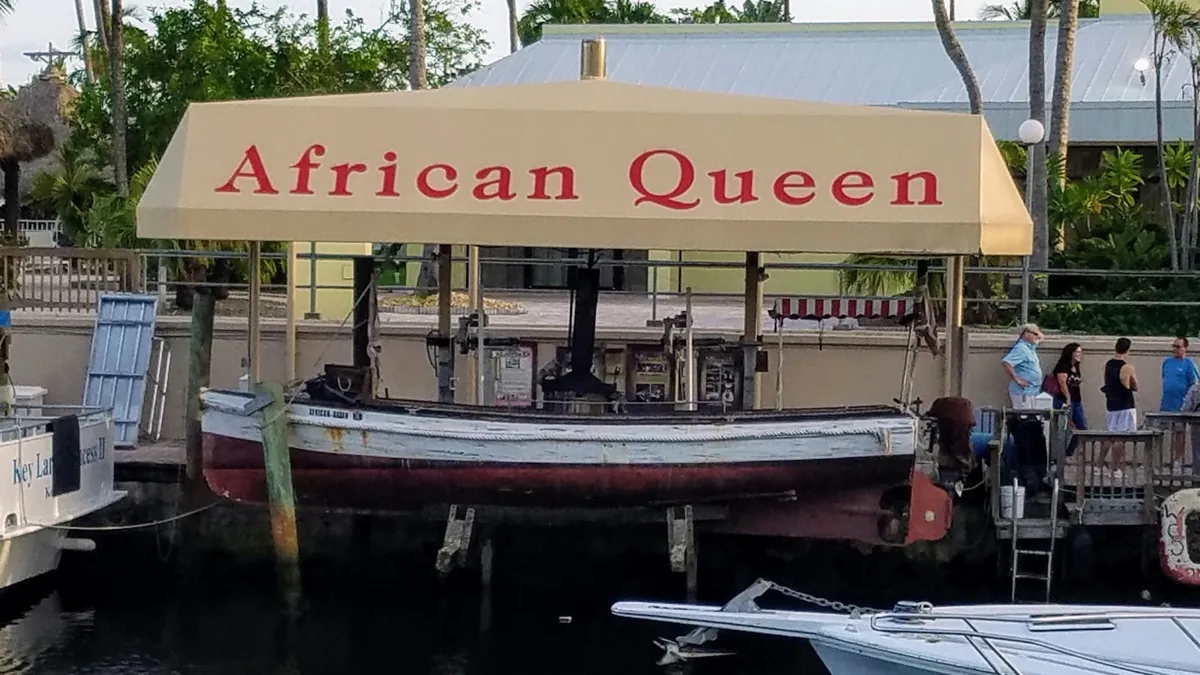
African Queen
The African Queen is a 30-foot steam launch built in 1912 by a British shipyard for the British East Africa Company. She spent decades hauling cargo and passengers on Lake Albert and the Victoria Nile in Uganda. Then John Huston needed a boat for his 1951 film. The African Queen became one of the most recognizable vessels in cinema — Humphrey Bogart won his only Academy Award pulling leeches off his legs on its deck. Katherine Hepburn poured his gin overboard. The boat survived the film, decades of neglect, and multiple restorations. She's currently in Key Largo, Florida, operating as a tourist excursion boat. You can ride on the same vessel that Bogart steered through the papyrus.
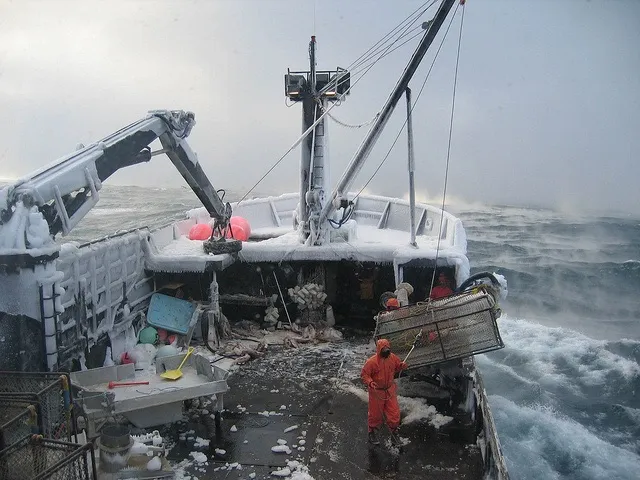
Bering Sea Crab Boat
Before Deadliest Catch premiered on Discovery Channel in 2005, almost nobody outside Alaska knew what Bering Sea crab fishing looked like. Afterward, boats like the Northwestern, Cornelia Marie, and Time Bandit became household names. The show turned a brutal, obscure commercial fishery into reality television. What it got right is that the job is genuinely insane. The Bering Sea king crab and opilio (snow crab) fisheries operate in some of the worst conditions on earth. Winter storms generate 40-foot seas. Wind chill drops to minus 40. Spray freezes on contact with the superstructure, adding tons of topside weight that can capsize a boat if not knocked off. The crews use baseball bats and sledgehammers to break ice off the rails, rigging, and wheelhouse. This is a real thing that happens on a regular basis. The fatality rate for Bering Sea crab fishing has historically been 80 times the national average for workplace deaths. Coast Guard reforms, rationalization of the fishery (switching from a short derby season to individual fishing quotas), and better safety equipment have brought the rate down, but it's still the most dangerous fishery in North America. Between 1990 and 2010, dozens of boats and over a hundred lives were lost. The economics are as extreme as the conditions. Under the old derby system, the entire king crab season was compressed into a few days. Boats raced to catch as much as possible before the season closed. Crews could earn $30,000-$80,000 for a few weeks of work. They could also earn nothing if the catch was poor, or die if the weather turned. The quota system, implemented in 2005, spread the season out and reduced the death rate. It also reduced the gold-rush paydays. Now the money is steadier but lower. The boats still go out in terrible weather because that's where the crab are.
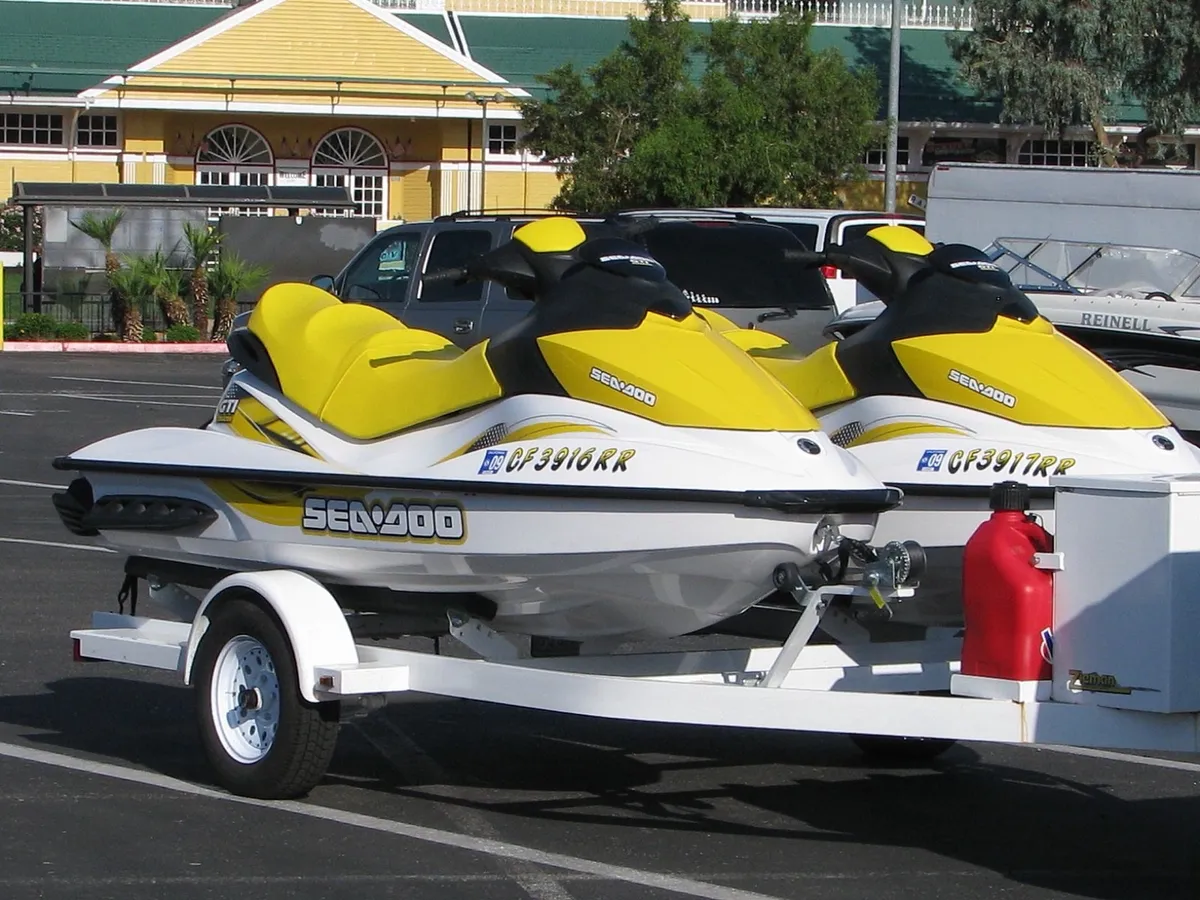
Bombardier Sea-Doo
Sea-Doo has the weirdest origin story in powersports. Bombardier, a Canadian aerospace and train company, decided in 1968 that personal watercraft were the future. They built the Sea-Doo, it flopped, and they shelved it for twenty years. In 1988 they relaunched with modern engineering and a Rotax engine, and within five years they were outselling Kawasaki. A company that builds subway cars and business jets makes one of the most popular toys on the water. That's a sentence nobody predicted. If the WaveRunner is the Accord, the Sea-Doo is the WRX. Bombardier's approach has always been engineering-first. They were first with on-water braking (the iBR system, which uses a reverse gate to slow down). First with a viable fishing PWC. First with closed-loop cooling to keep saltwater out of the engine. They treat PWC like a technology platform rather than a toy, and it shows. The FISH PRO is the most absurd and brilliant product in the PWC market. It's a $20,000 personal watercraft with a Garmin fish finder, a 13.5-gallon cooler, rod holders, and a trolling mode. The idea that someone would go offshore fishing on something the size of a motorcycle seemed insane. Then people started actually catching fish on them, and now there's a whole subculture of PWC anglers. Sea-Doo's Achilles heel has historically been reliability. The Rotax engines are powerful but the electrical systems and supercharger seals on the high-performance models have earned a reputation for expensive repairs. Yamaha owners love pointing this out. Sea-Doo owners don't hear them because they're too far ahead.