Grand Banks Dory
Why it matters
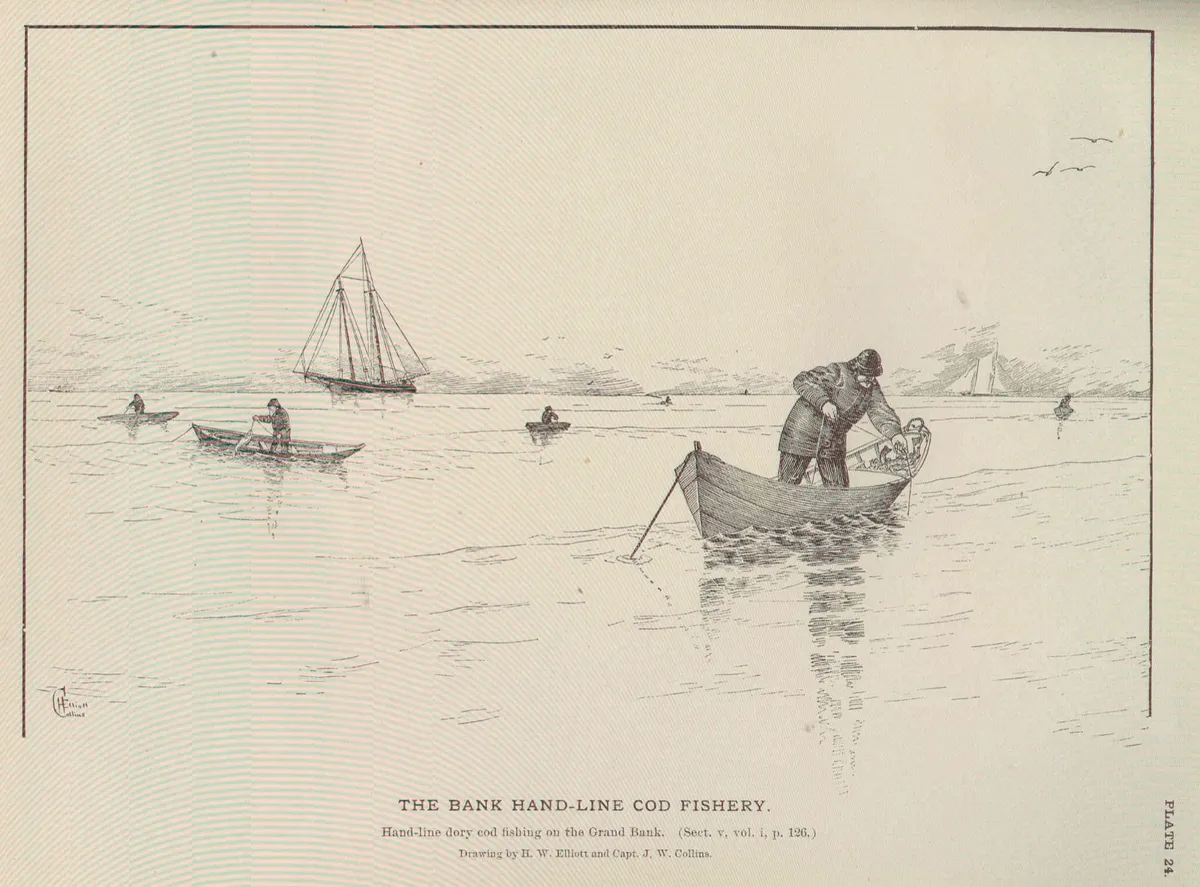
The Grand Banks dory is the boat that fed the eastern seaboard for a century. Schooners would sail from Gloucester, Lunenburg, and other ports to the Grand Banks of Newfoundland, carrying a dozen dories stacked like nesting cups on deck.
At the fishing grounds, each dory was launched with one or two men who fished with handlines and longlines. The dory's genius was its simplicity — flat-bottomed, flared-sided, cheap to build, and almost impossible to capsize when loaded with fish.
They were disposable boats used by expendable men. Thousands of dorymen drowned when fog rolled in and they couldn't find their schooner. Thousands more were crushed between vessels, swamped by waves, or simply lost. The Grand Banks fishery built New England. The dory was the instrument.
What it was like
You rowed away from the schooner at dawn in a 16-foot wooden boat with a tub of longline hooks and a water jug. Alone. In the North Atlantic. On the Grand Banks, the fog could roll in within minutes — dense enough that you couldn't see your own bow.
If you lost the schooner, you rowed toward where you thought she was and hoped. If night came and you hadn't found her, you were in serious trouble. The water was 35 degrees.
The dory had no shelter. Fishermen baited hooks with frozen fingers, hauled hundreds of pounds of cod by hand, and rowed back to the schooner loaded to the gunwales.
Then they did it again the next day. For weeks. The Grand Banks fishery had no safety net, no coast guard response, no GPS. You survived by skill, luck, and stubbornness.
The crew
Doryman
The doryman was the basic unit of the Grand Banks fishery. One man, one boat, alone on the North Atlantic. Many were Portuguese immigrants from the Azores, Cape Verdeans, or Nova Scotians. They were paid by the catch — no fish, no pay. A doryman who couldn't find his schooner in the fog might row for days. Howard Blackburn, a Gloucester doryman, lost his fingers to frostbite in 1883 and rowed his dory for five days to shore. He survived. His dorymate didn't. Stories like Blackburn's weren't exceptional — they were the cost of doing business.
Patina notes
Dories were meant to be used up and replaced. Pine planking rots, oak frames crack, and the constant cycle of soaking and drying opens seams. A working dory might last five to ten years.
The ones that survive today are either museum pieces or recreational boats maintained by enthusiasts. New dories are still being built in Lunenburg, Nova Scotia, using the same methods and materials as the originals.
Preservation reality
The Gloucester Fishing Museum and the Fisheries Museum of the Atlantic in Lunenburg both display original dories. The Gloucester Schooner Festival includes dory races.
Lunenburg's dory shop still produces traditional boats. The design is so simple and effective that it hasn't changed in 150 years. Anyone with basic woodworking skills and a set of plans can build one in a week.
Where to see one
- • Cape Ann Museum, Gloucester, MA
- • Fisheries Museum of the Atlantic, Lunenburg, NS
- • Gloucester Schooner Festival (annual)
- • Mystic Seaport Museum, CT
Preservation organizations
- • Gloucester Fishing Heritage Center
- • Dory Shop, Lunenburg
Sources
- Cape Ann Museum (2026-03-05)
Related vessels
African Queen
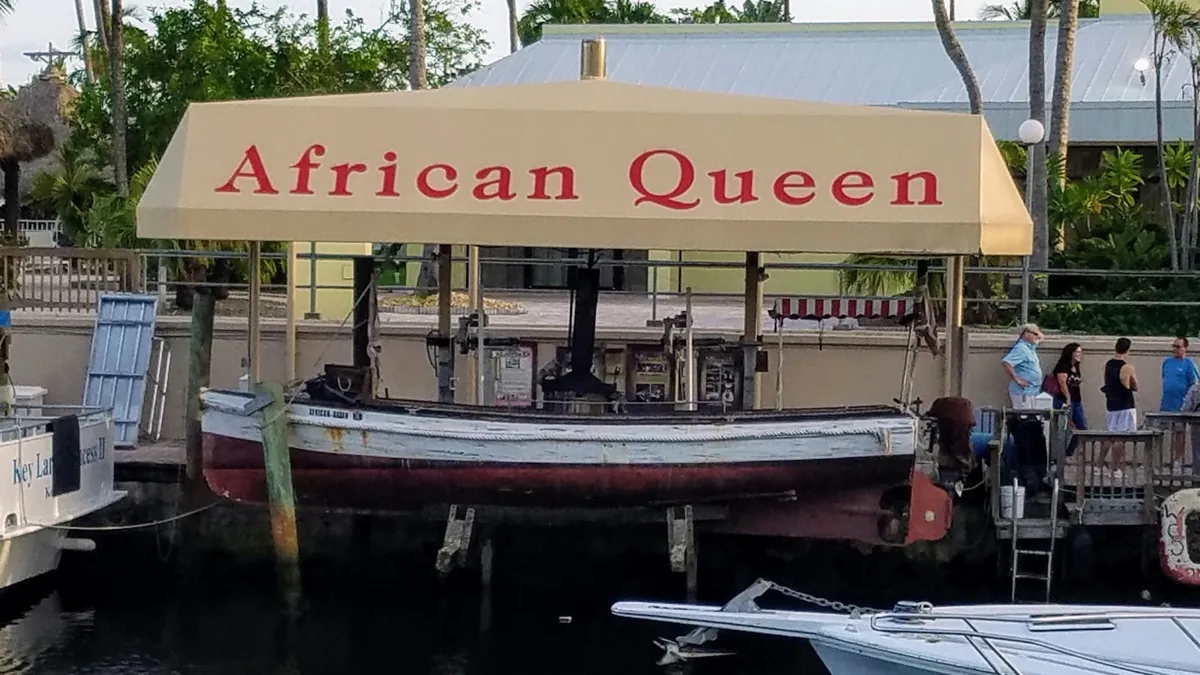
The African Queen is a 30-foot steam launch built in 1912 by a British shipyard for the British East Africa Company. She spent decades hauling cargo and passengers on Lake Albert and the Victoria Nile in Uganda. Then John Huston needed a boat for his 1951 film. The African Queen became one of the most recognizable vessels in cinema — Humphrey Bogart won his only Academy Award pulling leeches off his legs on its deck. Katherine Hepburn poured his gin overboard. The boat survived the film, decades of neglect, and multiple restorations. She's currently in Key Largo, Florida, operating as a tourist excursion boat. You can ride on the same vessel that Bogart steered through the papyrus.
Bering Sea Crab Boat
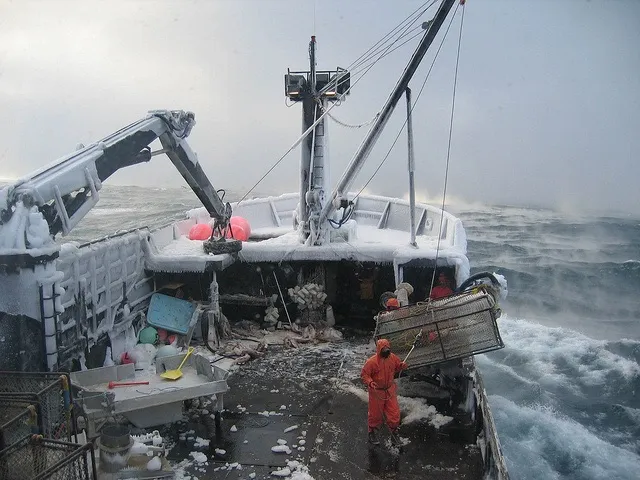
Before Deadliest Catch premiered on Discovery Channel in 2005, almost nobody outside Alaska knew what Bering Sea crab fishing looked like. Afterward, boats like the Northwestern, Cornelia Marie, and Time Bandit became household names. The show turned a brutal, obscure commercial fishery into reality television. What it got right is that the job is genuinely insane. The Bering Sea king crab and opilio (snow crab) fisheries operate in some of the worst conditions on earth. Winter storms generate 40-foot seas. Wind chill drops to minus 40. Spray freezes on contact with the superstructure, adding tons of topside weight that can capsize a boat if not knocked off. The crews use baseball bats and sledgehammers to break ice off the rails, rigging, and wheelhouse. This is a real thing that happens on a regular basis. The fatality rate for Bering Sea crab fishing has historically been 80 times the national average for workplace deaths. Coast Guard reforms, rationalization of the fishery (switching from a short derby season to individual fishing quotas), and better safety equipment have brought the rate down, but it's still the most dangerous fishery in North America. Between 1990 and 2010, dozens of boats and over a hundred lives were lost. The economics are as extreme as the conditions. Under the old derby system, the entire king crab season was compressed into a few days. Boats raced to catch as much as possible before the season closed. Crews could earn $30,000-$80,000 for a few weeks of work. They could also earn nothing if the catch was poor, or die if the weather turned. The quota system, implemented in 2005, spread the season out and reduced the death rate. It also reduced the gold-rush paydays. Now the money is steadier but lower. The boats still go out in terrible weather because that's where the crab are.
Carolina Skiff
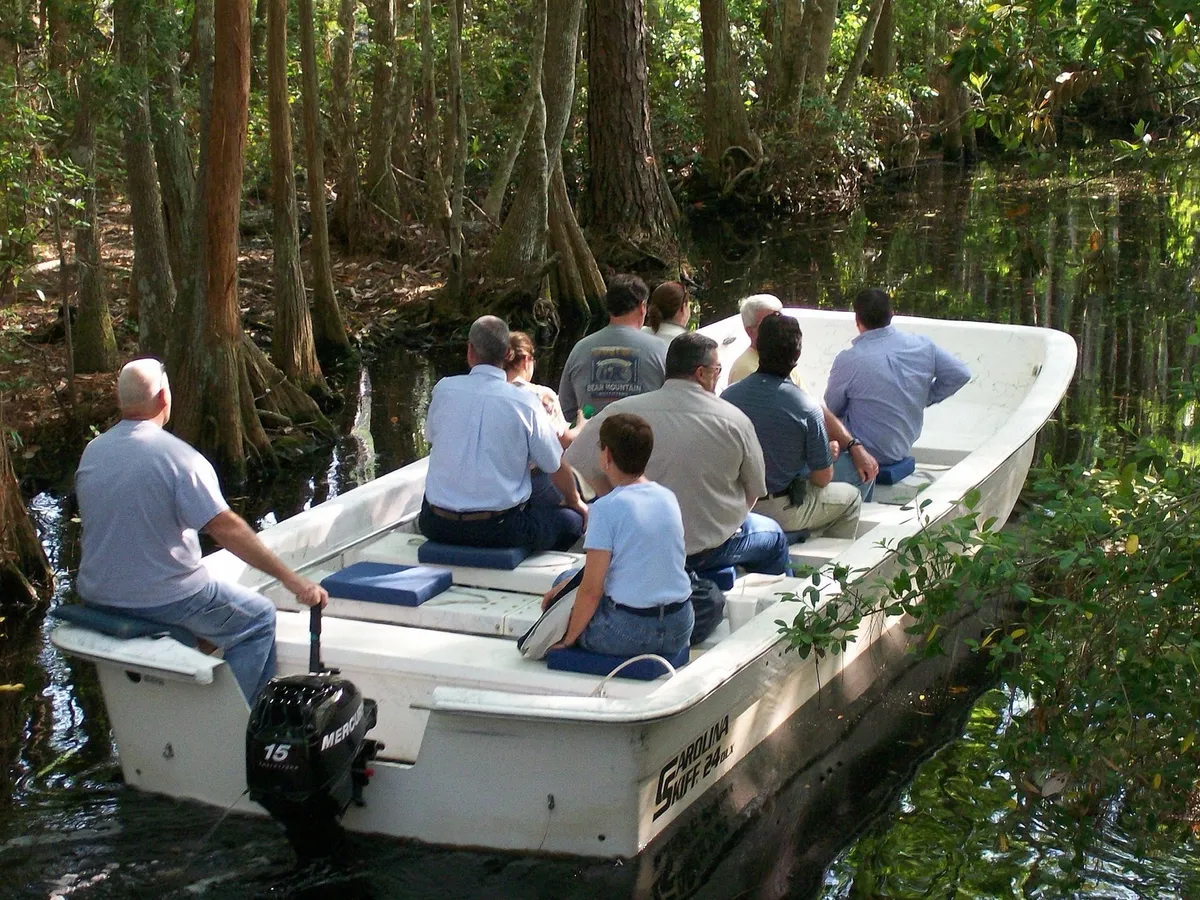
The Carolina Skiff is the most popular boat in America that nobody brags about owning. Founded in 1983 in Wadesboro, North Carolina, the company had one idea: build the cheapest, simplest fiberglass boat possible and sell a ton of them. It worked. Carolina Skiff moves more units than brands costing three times as much. The design philosophy is aggressive simplicity. Flat bottom. No wood anywhere in the hull (wood rots, which is why cheap boats fall apart). One-piece fiberglass layup. Self-bailing cockpit. The boats are sold without engines because the company figured out that letting buyers rig their own outboard kept the sticker price low and the customization high. A bare 17-footer can be had for under $10,000. Rig a used Yamaha on the back and you're fishing for less than a decent used car. People who own Boston Whalers and Grady-Whites look down on Carolina Skiffs. This is documented, quantifiable snobbery. The Carolina Skiff owner's response is universal: they're out fishing right now while the Grady-White is in the shop getting its third trim tab adjusted. The Skiff doesn't ride as well in rough water (flat bottom, remember). It doesn't look as pretty at the dock. It will never be featured in a glossy boat magazine. But it floats in six inches of water, it's nearly impossible to sink, and it costs less than the electronics package on a center console. The Corolla of boats. The Timex of boats. The "it just works" of boats. Carolina Skiff understood something that premium brands never will: most fishing happens in calm water within five miles of the ramp.