Mary Celeste
Why it matters
On December 4, 1872, the British brigantine Dei Gratia spotted a vessel drifting erratically in the Atlantic about 400 miles east of the Azores. Captain David Morehouse recognized her as the Mary Celeste, which had departed New York eight days before his own ship. He sent a boarding party.
What they found has haunted maritime history ever since. The ship was seaworthy. The cargo of 1,701 barrels of denatured alcohol was largely intact. Personal belongings were undisturbed. The captain's wife had left her sewing machine mid-project. Six months of food and water remained. But every single person was gone. Captain Benjamin Briggs, his wife Sarah, their two-year-old daughter Sophia, and seven crew members had vanished.
The lifeboat was missing, and the main halyard was found broken, but there was no sign of violence, no evidence of piracy, and no indication of catastrophic weather. The ship's chronometer and sextant were gone, suggesting a deliberate, orderly departure. But why would you abandon a seaworthy vessel into a small boat in the open Atlantic?
Theories have piled up for 150 years. Alcohol fumes creating an explosion risk. A waterspout. A seaquake. Mutiny. Insurance fraud. None of them fully explain the evidence. The Dei Gratia's crew collected a salvage award, and the British Vice Admiralty Court in Gibraltar investigated aggressively, clearly suspicious of foul play but unable to prove it.
The Mary Celeste became the template for every ghost ship story that followed. Arthur Conan Doyle fictionalized it (misspelling the name as "Marie Celeste," which stuck in popular culture for decades). The reason people can't let it go is simple: the evidence is just complete enough to rule out the easy answers, and just incomplete enough to prevent any answer at all.
What it was like
Life aboard a mid-19th-century brigantine was hard, unglamorous work. The Mary Celeste was a cargo hauler, not a clipper. She carried whatever needed moving across the Atlantic, and her crew worked the ship the old way.
A brigantine rig meant two masts, with square sails on the foremast and a fore-and-aft mainsail. A crew of eight to ten handled everything: setting and furling sails, manning the helm, pumping the bilges, maintaining rigging, and standing watches around the clock. There was no engine to fall back on. If the wind died, you waited. If a storm hit, you fought the sails with frozen hands and hoped.
Captain Briggs brought his wife and toddler on the voyage, which was common practice for experienced captains on established routes. Sarah Briggs was an experienced sailor's wife who had made Atlantic crossings before. Their seven-year-old son Arthur was left behind with relatives for schooling. The decision to bring Sophia and leave Arthur would become one of history's cruelest footnotes.
The crew
Master
Captain Benjamin Briggs was 37, experienced, and well-respected. He was part owner of the vessel and had commanded ships since his late twenties. He was a temperate, religious man from a prominent Massachusetts seafaring family. Five Briggs brothers went to sea. Not the type to abandon ship without reason.
First Mate
Albert Richardson was an experienced officer who Briggs trusted. He would have been responsible for navigation during the captain's off-watch hours, managing the crew, and maintaining the ship's log. The last log entry, dated November 25, placed the ship near the Azores. Nine days of silence followed.
Able Seaman
The Mary Celeste carried four German and Danish sailors, plus two who may have been American. They handled the physical work of the ship: hauling lines, setting canvas, scrubbing decks, and standing four-hour watches. They lived in the forecastle, ate salt provisions, and slept in shifts. Their personal effects were left behind.
Steward/Cook
The steward managed the galley and provisioned meals for the crew and the captain's family. When the boarding party arrived, they found the galley in order and provisions well-stocked. Whatever happened, it wasn't starvation or desperation. The crew left a functioning ship with six months of food.
Patina notes
The Mary Celeste didn't get a dignified retirement. After the Gibraltar investigation, she changed hands seventeen times in thirteen years. No owner could shake the reputation. Sailors considered her cursed, and crews were hard to recruit.
In January 1885, her final captain, Gilman Parker, deliberately ran her onto a reef off Haiti in an insurance fraud scheme. He had loaded her with a worthless cargo insured for far more than its value. The scheme was uncovered, Parker was charged with barratry, and the Mary Celeste broke apart on the Rochelais Reef.
The timbers that survived a decade of Atlantic crossings and the most famous maritime mystery in history were destroyed by a con man running a scam. The hull rotted on a Caribbean reef. There is a certain poetry in that ending, if you squint.
Preservation reality
Almost nothing survives. The wreck site on Rochelais Reef off Haiti was explored by Clive Cussler's team in 2001, and they found timbers and artifacts consistent with the Mary Celeste, though positive identification from a 116-year-old wooden wreck is difficult.
Spencer's Island, Nova Scotia, where the ship was built (originally as Amazon), has a small historical marker and museum exhibit. The village itself is tiny, and the shipyard is long gone.
The real preservation is in the archives. The Gibraltar Vice Admiralty Court records survive, including testimony from the Dei Gratia boarding party. The ship's register, insurance documents, and Briggs family correspondence are held by various historical societies. If you want to investigate the Mary Celeste, you read. There's nothing left to touch.
Related vessels
Carroll A. Deering
On January 31, 1921, the Carroll A. Deering ran aground on Diamond Shoals off Cape Hatteras, North Carolina, with all sails set. The Coast Guard reached her four days later. The lifeboats were gone. The crew's personal belongings were gone. But dinner was being prepared in the galley, the tables were set, and the ship's cats were still aboard. Eleven men had vanished from a brand-new, well-found schooner in one of the most heavily trafficked shipping lanes on the East Coast. No bodies were ever recovered. No lifeboat was ever found. The investigation pulled in five government agencies, and the deeper they dug, the stranger it got. The ship's logs were missing. The steering gear had been deliberately smashed. Navigation equipment was gone. Two anchors had been dropped, with their chains hanging over the bow in a way that suggested the ship had been anchored and then cut loose. Someone had wrecked the ship's ability to navigate and steer, then left. On January 29, two days before the grounding, a lightship keeper at Cape Lookout reported that a crewman on the Deering had hailed him through a megaphone, saying the ship had lost her anchors. The man on the megaphone was not an officer. That detail haunted investigators. Theories ranged from mutiny to rum-running pirates to Soviet agents. The Deering's first mate, Charles McLellan, had openly clashed with the original captain (who fell ill and was replaced before the final voyage). The replacement captain, W.B. Wormell, was 66 years old and may not have had full control of his crew. At least nine other vessels disappeared in the same area around the same time, leading some to call it an early "Bermuda Triangle" cluster. The FBI, the State Department, and the Department of Commerce all investigated. None of them solved it. The case files were sealed, then lost, then partially recovered decades later. Herbert Hoover, then Secretary of Commerce, personally oversaw the investigation and came away frustrated. Whatever happened aboard the Carroll A. Deering, eleven men took the answer with them.
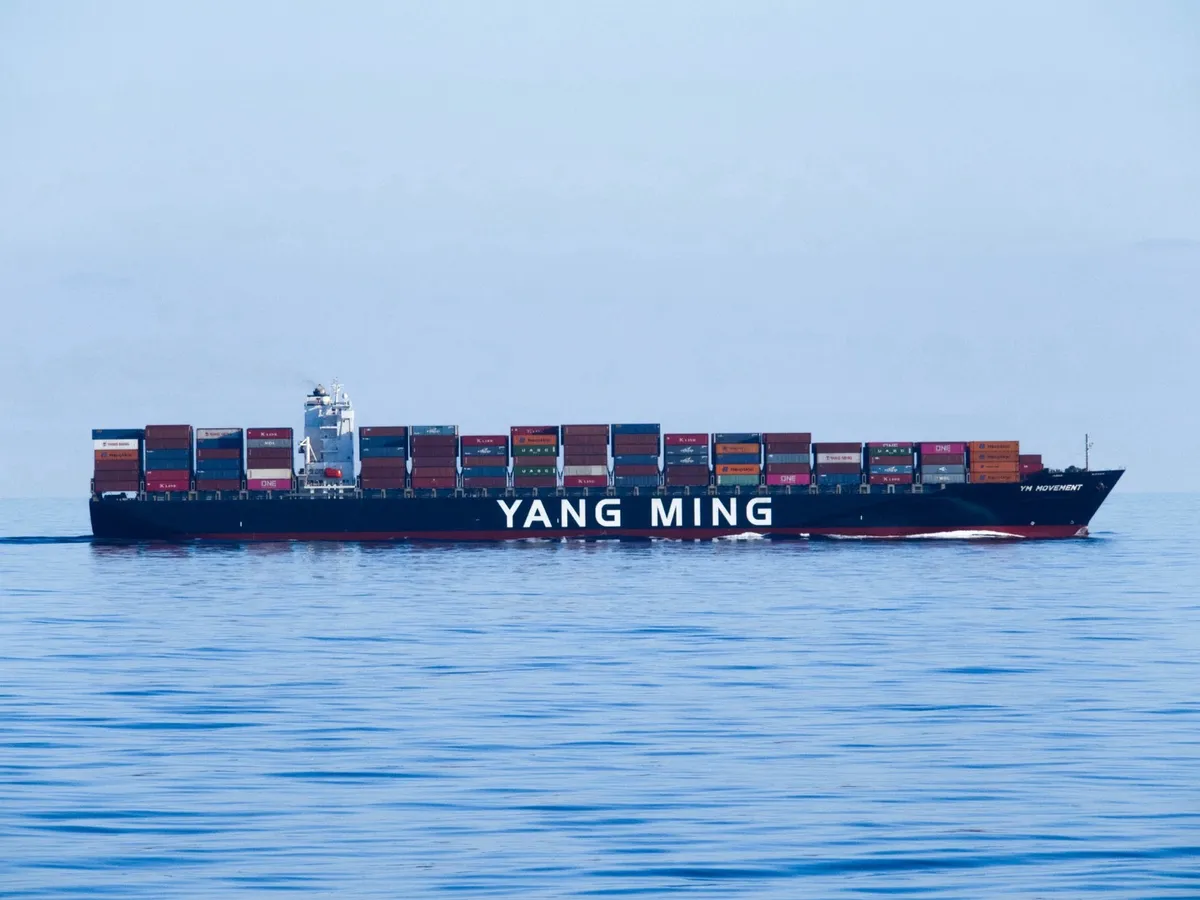
Container Ship
The container ship is the most consequential vessel of the modern era. Ninety percent of everything you own arrived on one. Before Malcom McLean standardized the shipping container in 1956, loading a cargo ship took weeks of manual labor. After containerization, the same job took hours. The economics cascaded: shipping costs dropped 95 percent, global trade exploded, and manufacturing moved to wherever labor was cheapest because transportation was essentially free. The modern container ship carries 24,000 containers on a hull longer than four football fields, operated by a crew of twenty. The disparity between the scale of the machine and the number of people running it is almost absurd.
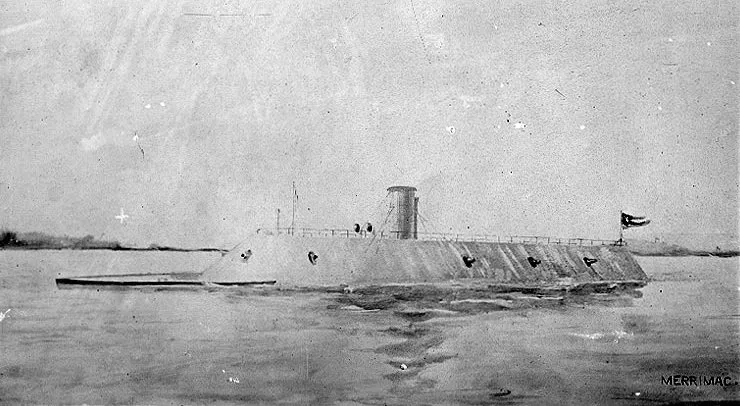
CSS Virginia
The CSS Virginia was born from desperation and scrap metal. When Union forces abandoned the Norfolk Navy Yard in April 1861, they burned the steam frigate USS Merrimack to the waterline and sank her. The Confederacy raised the hull, found the engines salvageable (barely), and built an armored casemate on top. Four inches of iron plate bolted over 24 inches of oak and pine, sloped at 36 degrees to deflect shot. She looked like a barn roof floating on a raft. She was the most dangerous warship in the Western Hemisphere. On March 8, 1862, Virginia steamed into Hampton Roads and attacked the Union blockading squadron. She rammed and sank the USS Cumberland, a 24-gun sloop that went down with 121 of her crew still fighting. Her guns couldn't hurt Virginia. The frigate USS Congress surrendered after Virginia's shells set her ablaze. Another 120 men died. The wooden warships USS Minnesota, USS Roanoke, and USS St. Lawrence all ran aground trying to escape. If Virginia had returned the next morning unopposed, she could have broken the Union blockade. But Monitor was waiting. The four-hour engagement the next day proved that the age of wooden warships was finished. Virginia landed dozens of hits on Monitor without breaking through. Monitor's Dahlgrens cracked Virginia's armor in places but couldn't penetrate. Virginia tried to ram but Monitor was too nimble. It was the first battle between ironclad warships, and it ended with both sides claiming victory and neither ship sunk. Virginia fought in the area for two more months but never left the Roads. Her 21-foot draft meant she could only navigate deep channels, and her engines, already condemned before the war started, could barely push her at walking speed. When Union forces advanced on Norfolk in May 1862, the crew tried to lighten her enough to escape upriver. They couldn't. On May 11, her crew set her afire and she exploded when the flames reached the magazine. Nothing of the ship survived.