Carroll A. Deering
Why it matters
On January 31, 1921, the Carroll A. Deering ran aground on Diamond Shoals off Cape Hatteras, North Carolina, with all sails set. The Coast Guard reached her four days later. The lifeboats were gone. The crew's personal belongings were gone. But dinner was being prepared in the galley, the tables were set, and the ship's cats were still aboard.
Eleven men had vanished from a brand-new, well-found schooner in one of the most heavily trafficked shipping lanes on the East Coast. No bodies were ever recovered. No lifeboat was ever found.
The investigation pulled in five government agencies, and the deeper they dug, the stranger it got. The ship's logs were missing. The steering gear had been deliberately smashed. Navigation equipment was gone. Two anchors had been dropped, with their chains hanging over the bow in a way that suggested the ship had been anchored and then cut loose. Someone had wrecked the ship's ability to navigate and steer, then left.
On January 29, two days before the grounding, a lightship keeper at Cape Lookout reported that a crewman on the Deering had hailed him through a megaphone, saying the ship had lost her anchors. The man on the megaphone was not an officer. That detail haunted investigators.
Theories ranged from mutiny to rum-running pirates to Soviet agents. The Deering's first mate, Charles McLellan, had openly clashed with the original captain (who fell ill and was replaced before the final voyage). The replacement captain, W.B. Wormell, was 66 years old and may not have had full control of his crew. At least nine other vessels disappeared in the same area around the same time, leading some to call it an early "Bermuda Triangle" cluster.
The FBI, the State Department, and the Department of Commerce all investigated. None of them solved it. The case files were sealed, then lost, then partially recovered decades later. Herbert Hoover, then Secretary of Commerce, personally oversaw the investigation and came away frustrated. Whatever happened aboard the Carroll A. Deering, eleven men took the answer with them.
What it was like
The Carroll A. Deering was a five-masted schooner, and working one was a particular kind of sailing. The rig was designed to be handled by a small crew, using the mechanical advantage of gaff sails and multiple masts rather than the massive square-sail yards that required fifty men to manage.
Even so, a crew of twelve worked hard. Each mast carried a gaff-rigged fore-and-aft sail, and the boom on a five-master was heavy enough to kill a man if the wind shifted wrong. Setting and striking sail, especially in the winter Atlantic, meant climbing aloft in freezing spray, hauling on lines with numb hands, and trusting your shipmates to manage their end.
The Deering's final voyage was a coal run from Norfolk, Virginia, to Rio de Janeiro, then a return trip in ballast. The southbound leg was uneventful. Whatever went wrong happened on the way home. The crew dynamic was reportedly tense. First Mate McLellan had been drinking heavily in port and had threatened to kill Captain Wormell. Whether he followed through, or whether something else entirely happened on that cold January passage, remains the question.
The crew
Master
Captain W.B. Wormell was 66, a veteran mariner brought in as a replacement when the original captain fell ill. He was competent but aging, and he was walking into a crew that wasn't his. First Mate McLellan reportedly resented serving under him. On a vessel where the captain's authority was everything, Wormell may have been captain in title only.
First Mate
Charles McLellan was trouble. He had been heard in a Barbados bar threatening to kill the old man and threatening the crew. When the ship was found, McLellan was gone along with everyone else. Whether he was the architect of what happened or just another victim depends on which theory you prefer.
Able Seaman
The Deering's sailors were experienced schooner men. They handled the big gaff sails, maintained the running rigging, stood watches, and kept the vessel moving. On a five-master, every hand counted. If even two or three men sided with a mutinous mate, the balance of power on a ship that size shifted fast.
Cook/Steward
The cook's workspace told the final story. When the Coast Guard boarded, they found food laid out for the next meal, pots on the stove, and the galley in working order. Whatever emptied the ship happened quickly. The cook didn't have time to put the food away. Or he didn't think he needed to.
Patina notes
The Carroll A. Deering didn't get a chance to age gracefully. She sat on Diamond Shoals for weeks while investigators picked through the wreck. The winter Atlantic did its work quickly on a stranded wooden hull.
By March 1921, the surf had opened her seams and she was breaking apart. Salvage was impossible. In March, the government dynamited the wreck to prevent it from becoming a navigation hazard. The remains scattered across the shoals and settled into the sand.
She was barely two years old when she died. Built in 1919, abandoned in January 1921, destroyed in March 1921. One of the shortest and strangest careers in American maritime history. The wood that the Deering Company had carefully selected and shaped in their Bath, Maine yard ended up as splinters on a sandbar off Hatteras.
Preservation reality
Very little survives. The ship was dynamited on the shoals, and what the explosives didn't destroy, the Atlantic finished. Some small artifacts were recovered during the investigation, but most are scattered across government archives or lost.
The most substantial surviving piece is one of the Deering's nameboard panels, held by a museum in Maine. The investigation files, partially recovered after being lost for decades, are in the National Archives.
Cape Hatteras itself is the memorial. Diamond Shoals has claimed hundreds of ships over the centuries, and the Deering is one more name on a long list. The Graveyard of the Atlantic Museum in Hatteras, North Carolina, covers the region's maritime disasters and includes information about the Deering. If you stand on Cape Point and look southeast toward the shoals, you're looking at where eleven men disappeared and left their dinner on the stove.
Related vessels
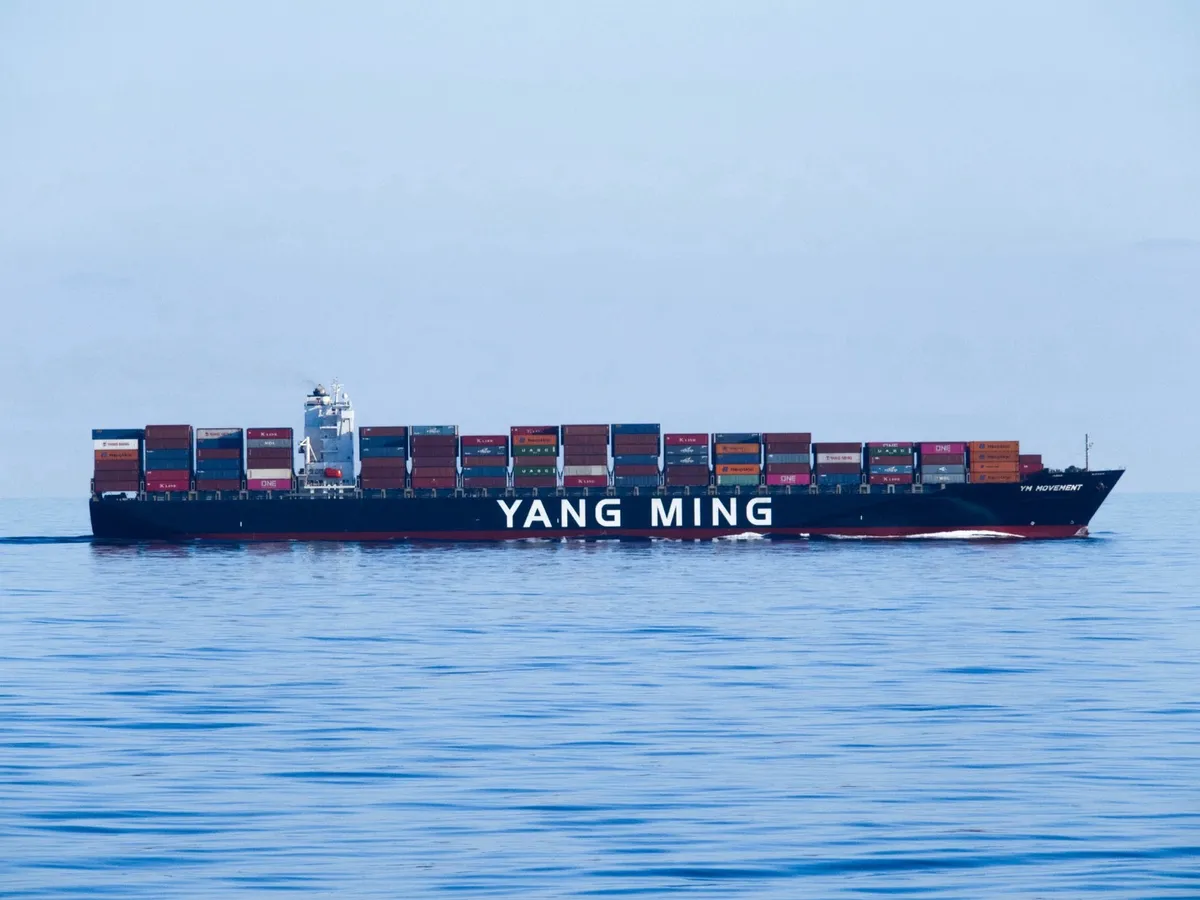
Container Ship
The container ship is the most consequential vessel of the modern era. Ninety percent of everything you own arrived on one. Before Malcom McLean standardized the shipping container in 1956, loading a cargo ship took weeks of manual labor. After containerization, the same job took hours. The economics cascaded: shipping costs dropped 95 percent, global trade exploded, and manufacturing moved to wherever labor was cheapest because transportation was essentially free. The modern container ship carries 24,000 containers on a hull longer than four football fields, operated by a crew of twenty. The disparity between the scale of the machine and the number of people running it is almost absurd.
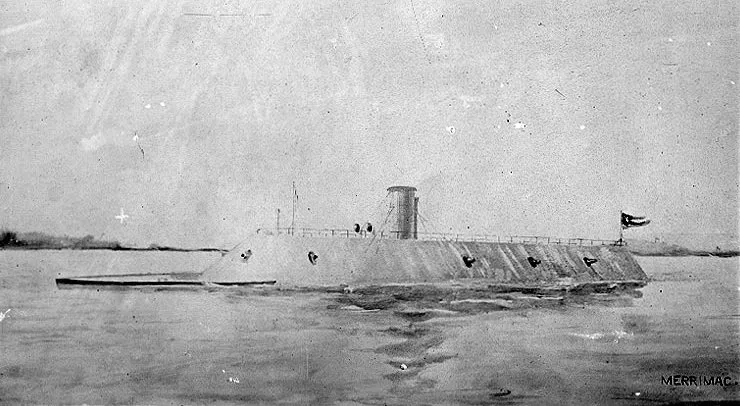
CSS Virginia
The CSS Virginia was born from desperation and scrap metal. When Union forces abandoned the Norfolk Navy Yard in April 1861, they burned the steam frigate USS Merrimack to the waterline and sank her. The Confederacy raised the hull, found the engines salvageable (barely), and built an armored casemate on top. Four inches of iron plate bolted over 24 inches of oak and pine, sloped at 36 degrees to deflect shot. She looked like a barn roof floating on a raft. She was the most dangerous warship in the Western Hemisphere. On March 8, 1862, Virginia steamed into Hampton Roads and attacked the Union blockading squadron. She rammed and sank the USS Cumberland, a 24-gun sloop that went down with 121 of her crew still fighting. Her guns couldn't hurt Virginia. The frigate USS Congress surrendered after Virginia's shells set her ablaze. Another 120 men died. The wooden warships USS Minnesota, USS Roanoke, and USS St. Lawrence all ran aground trying to escape. If Virginia had returned the next morning unopposed, she could have broken the Union blockade. But Monitor was waiting. The four-hour engagement the next day proved that the age of wooden warships was finished. Virginia landed dozens of hits on Monitor without breaking through. Monitor's Dahlgrens cracked Virginia's armor in places but couldn't penetrate. Virginia tried to ram but Monitor was too nimble. It was the first battle between ironclad warships, and it ended with both sides claiming victory and neither ship sunk. Virginia fought in the area for two more months but never left the Roads. Her 21-foot draft meant she could only navigate deep channels, and her engines, already condemned before the war started, could barely push her at walking speed. When Union forces advanced on Norfolk in May 1862, the crew tried to lighten her enough to escape upriver. They couldn't. On May 11, her crew set her afire and she exploded when the flames reached the magazine. Nothing of the ship survived.
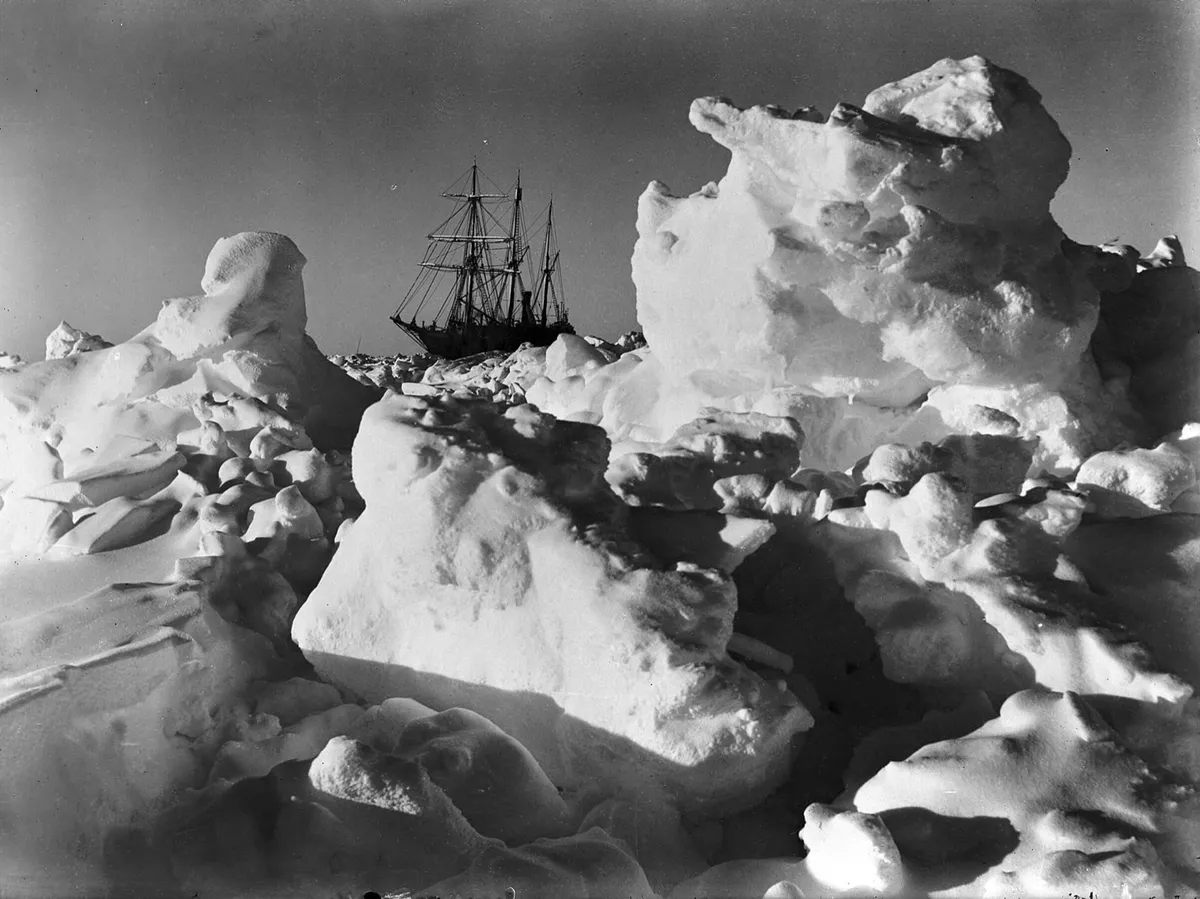
Endurance
Endurance never reached Antarctica. That's the first thing to understand. Shackleton's Imperial Trans-Antarctic Expedition was supposed to cross the continent from the Weddell Sea to the Ross Sea, roughly 1,800 miles over the pole. They didn't make it to shore. Endurance entered the Weddell Sea pack ice in December 1914 and became trapped on January 19, 1915. For ten months the crew lived aboard while the ice slowly crushed the ship around them. Frank Hurley's photographs show the hull buckling, the deck timbers splintering, the masts leaning at impossible angles. On October 27, 1915, Shackleton ordered the crew onto the ice. Endurance sank on November 21. What followed is the greatest survival story in the history of exploration. Twenty-eight men camped on drifting ice floes for five months, eating seals and penguins, watching the floe they lived on crack and shrink. When the ice broke up in April 1916, they launched three salvaged lifeboats and sailed through open Antarctic seas to Elephant Island, a desolate rock at the tip of the Antarctic Peninsula. It was the first time they'd stood on solid ground in 497 days. Shackleton then took five men in the 22-foot James Caird and sailed 800 miles across the Southern Ocean to South Georgia Island. The Drake Passage is the most violent stretch of open water on earth. The boat was open. They navigated by dead reckoning and occasional sun sights through storm clouds. They made landfall on the wrong side of the island and Shackleton, Worsley, and Crean then crossed South Georgia's unmapped mountain range on foot to reach the whaling station at Stromness. Not a single man died. All 28 survived. The Trans-Antarctic Expedition was a complete failure by its stated objective and an absolute triumph of leadership. Shackleton brought everybody home. The wreck was found in March 2022 by the Endurance22 expedition at a depth of 10,000 feet in the Weddell Sea. The ship is upright, intact, with the name "ENDURANCE" still clearly visible on the stern. The cold, low-oxygen water preserved her like no one expected.