SS Baychimo
Why it matters
The SS Baychimo was a perfectly ordinary cargo steamer until the Arctic decided to make her extraordinary. Built in 1914 at Framnes shipyard in Sandefjord, Norway, she spent her first years as a German trading vessel before being seized as a war reparation and handed to the Hudson's Bay Company. For a decade, she ran a routine supply route along the northern coast of Canada, hauling fur pelts out and provisions in.
In October 1931, she got trapped in pack ice near Barrow, Alaska. The crew waited, hoping for a thaw. When conditions worsened, they abandoned ship and set up camp on shore. A blizzard hit. When it cleared, the Baychimo was gone.
They assumed she'd sunk. She hadn't. An Inuit seal hunter spotted her 45 miles away, drifting free. The Hudson's Bay Company decided the ship was too damaged to be worth recovering. They were wrong about the damage, and spectacularly wrong about the drifting.
The Baychimo became a phantom. She was spotted in 1933 by a group of Inuit who boarded her and got trapped by ice for ten days. She was seen in 1934 near the Beaufort Sea. In 1939, she was found again, still afloat, eight years after abandonment. Expeditions tried to reach her and failed. She kept showing up, drifting through the Arctic like she had somewhere to be.
The last confirmed sighting was in 1969, thirty-eight years after her crew walked away. A frozen steel hull, unmanned, drifting through some of the most dangerous waters on earth for nearly four decades. The Alaskan government launched a search in 2006 but found nothing. She may have finally sunk. Or she may still be out there, locked in ice somewhere north of the charts.
What it was like
The Baychimo's annual run was one of the more demanding commercial routes in the world. She sailed from Vancouver north along the Canadian Arctic coast, stopping at remote Hudson's Bay Company trading posts to collect fur pelts and deliver supplies that communities depended on for the coming winter.
The season was brutally short. Open water in the western Arctic lasted from July through October at best, and the crew raced against freeze-up every year. Loading and unloading happened at posts with no docks, using the ship's own boats to lighter cargo ashore. The coast was uncharted in places, the weather changed without warning, and getting stuck meant spending the winter.
When the ice closed in during that final 1931 voyage, it wasn't a surprise so much as a fear confirmed. The crew had been watching the ice for weeks. Captain Sydney Cornwell tried to push through. The ice won. The crew set up camp ashore, built shelters, and waited for rescue that came by air. The company retrieved the valuable fur cargo but left the ship to her fate.
The crew
Master
Captain Sydney Cornwell commanded the Baychimo during her final crewed voyage. Arctic captains needed a particular skill set: reading ice conditions, navigating uncharted shallow coastlines, and making the call between pushing forward and turning back. Cornwell chose to push in 1931. The ice made that decision irrelevant.
Chief Engineer
The engineer kept a coal-fired steam plant running in conditions that conspired against machinery. Arctic cold made metal brittle, condensation froze in lines, and coal had to be loaded at remote northern ports with no guarantee of quality. When the ice trapped the ship, the engines became irrelevant. No amount of horsepower breaks pack ice.
Deckhand
Deckhands on the Arctic run earned their pay. Beyond normal seamanship, they lightered cargo in ship's boats through surf onto beaches, handled heavy bales of fur pelts, and kept watch for ice. When the ship was trapped, they built shelters on the ice and hauled supplies from the vessel to the camp. Hard labor in temperatures that could kill you.
Radio Operator
The Baychimo carried wireless radio, which proved critical in 1931. When the crew abandoned ship, the radio operator coordinated the air rescue. Without radio, thirty-six men would have spent the Arctic winter in improvised shelters with limited supplies. The technology that saved the crew couldn't save the ship.
Patina notes
The Baychimo's patina story is unlike any other vessel's, because nobody was there to watch it happen. A steel-hulled steamer drifted through Arctic waters for almost four decades, subjected to pack ice, storms, and temperatures that dropped past negative forty. Every sighting described a ship that looked more battered but was still, impossibly, afloat.
The 1933 Inuit boarding party found her hull intact but ice-damaged, the superstructure beaten up, and the interior wrecked by years of freezing and thawing. Water had gotten in, frozen, expanded, and torn at the structure from inside. Yet the hull held.
Steel in Arctic conditions develops a particular kind of decay. The cold actually slows corrosion (less oxygen in cold water, less biological fouling), but the mechanical damage from ice is relentless. The Baychimo survived because she was well-built and because the Arctic preserved her even as it tried to crush her.
Preservation reality
Nothing has been recovered. The Baychimo's final resting place is unknown. The State of Alaska designated her a historic site in 2006 and commissioned a search using side-scan sonar and aerial surveys, but the search area was enormous and the ship was never found.
If she sank in deep Arctic water, the cold would preserve her remarkably well. If she's locked in shallow coastal ice, she could theoretically still be found. The Hudson's Bay Company archives in Winnipeg hold her logs, crew records, and operational history from the trading post runs.
The Baychimo exists now as a story rather than an artifact. No museum has a piece of her. No diver has photographed her wreck. She sailed herself out of human reach and stayed there.
Related vessels
Carroll A. Deering
On January 31, 1921, the Carroll A. Deering ran aground on Diamond Shoals off Cape Hatteras, North Carolina, with all sails set. The Coast Guard reached her four days later. The lifeboats were gone. The crew's personal belongings were gone. But dinner was being prepared in the galley, the tables were set, and the ship's cats were still aboard. Eleven men had vanished from a brand-new, well-found schooner in one of the most heavily trafficked shipping lanes on the East Coast. No bodies were ever recovered. No lifeboat was ever found. The investigation pulled in five government agencies, and the deeper they dug, the stranger it got. The ship's logs were missing. The steering gear had been deliberately smashed. Navigation equipment was gone. Two anchors had been dropped, with their chains hanging over the bow in a way that suggested the ship had been anchored and then cut loose. Someone had wrecked the ship's ability to navigate and steer, then left. On January 29, two days before the grounding, a lightship keeper at Cape Lookout reported that a crewman on the Deering had hailed him through a megaphone, saying the ship had lost her anchors. The man on the megaphone was not an officer. That detail haunted investigators. Theories ranged from mutiny to rum-running pirates to Soviet agents. The Deering's first mate, Charles McLellan, had openly clashed with the original captain (who fell ill and was replaced before the final voyage). The replacement captain, W.B. Wormell, was 66 years old and may not have had full control of his crew. At least nine other vessels disappeared in the same area around the same time, leading some to call it an early "Bermuda Triangle" cluster. The FBI, the State Department, and the Department of Commerce all investigated. None of them solved it. The case files were sealed, then lost, then partially recovered decades later. Herbert Hoover, then Secretary of Commerce, personally oversaw the investigation and came away frustrated. Whatever happened aboard the Carroll A. Deering, eleven men took the answer with them.
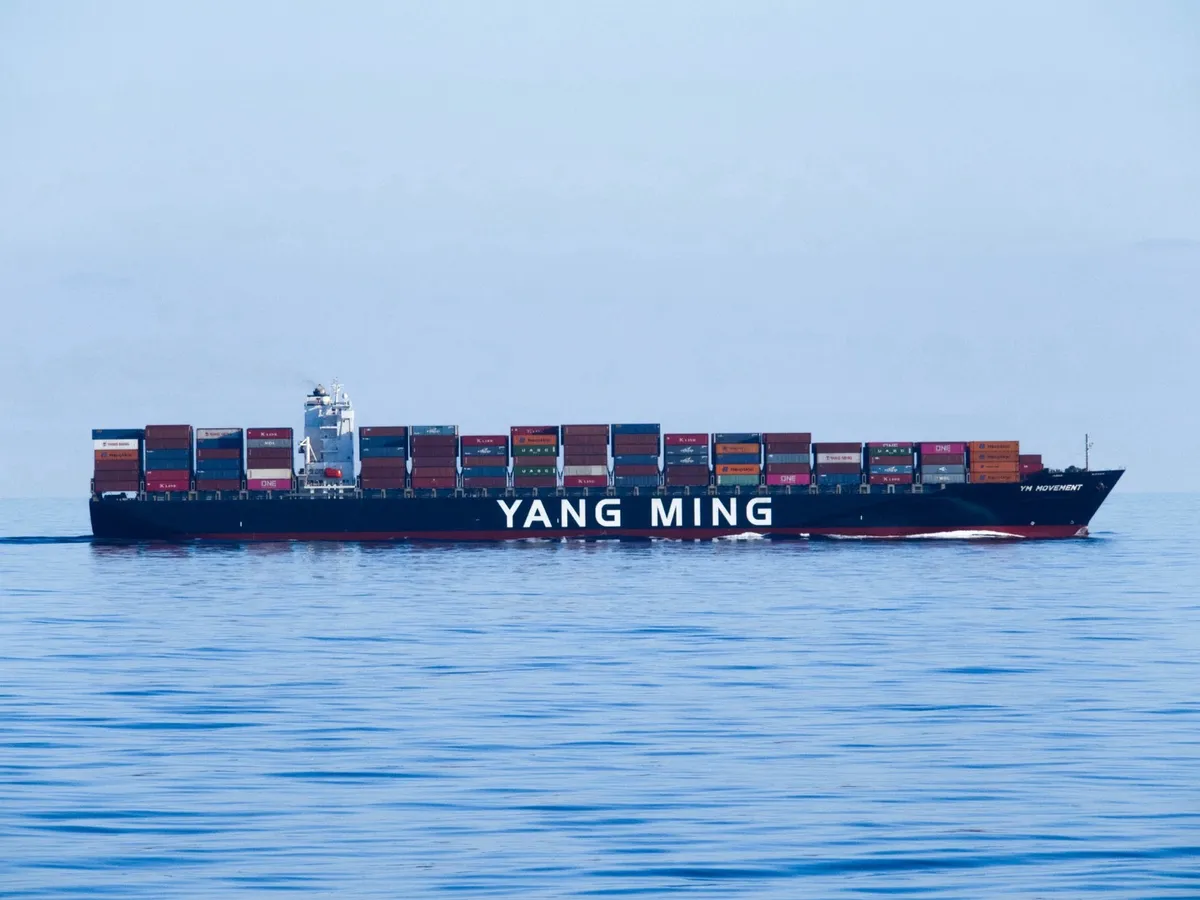
Container Ship
The container ship is the most consequential vessel of the modern era. Ninety percent of everything you own arrived on one. Before Malcom McLean standardized the shipping container in 1956, loading a cargo ship took weeks of manual labor. After containerization, the same job took hours. The economics cascaded: shipping costs dropped 95 percent, global trade exploded, and manufacturing moved to wherever labor was cheapest because transportation was essentially free. The modern container ship carries 24,000 containers on a hull longer than four football fields, operated by a crew of twenty. The disparity between the scale of the machine and the number of people running it is almost absurd.
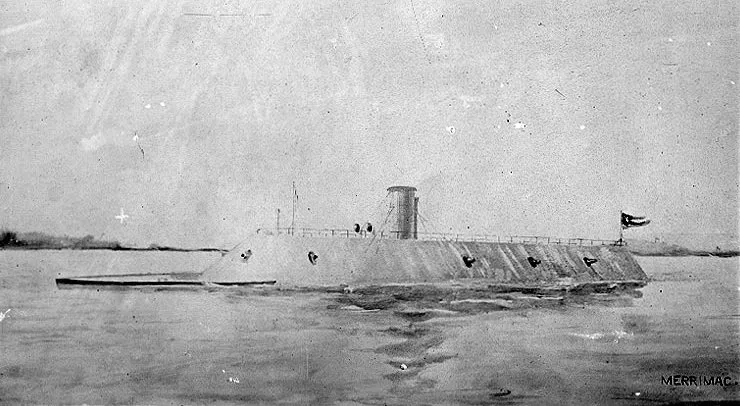
CSS Virginia
The CSS Virginia was born from desperation and scrap metal. When Union forces abandoned the Norfolk Navy Yard in April 1861, they burned the steam frigate USS Merrimack to the waterline and sank her. The Confederacy raised the hull, found the engines salvageable (barely), and built an armored casemate on top. Four inches of iron plate bolted over 24 inches of oak and pine, sloped at 36 degrees to deflect shot. She looked like a barn roof floating on a raft. She was the most dangerous warship in the Western Hemisphere. On March 8, 1862, Virginia steamed into Hampton Roads and attacked the Union blockading squadron. She rammed and sank the USS Cumberland, a 24-gun sloop that went down with 121 of her crew still fighting. Her guns couldn't hurt Virginia. The frigate USS Congress surrendered after Virginia's shells set her ablaze. Another 120 men died. The wooden warships USS Minnesota, USS Roanoke, and USS St. Lawrence all ran aground trying to escape. If Virginia had returned the next morning unopposed, she could have broken the Union blockade. But Monitor was waiting. The four-hour engagement the next day proved that the age of wooden warships was finished. Virginia landed dozens of hits on Monitor without breaking through. Monitor's Dahlgrens cracked Virginia's armor in places but couldn't penetrate. Virginia tried to ram but Monitor was too nimble. It was the first battle between ironclad warships, and it ended with both sides claiming victory and neither ship sunk. Virginia fought in the area for two more months but never left the Roads. Her 21-foot draft meant she could only navigate deep channels, and her engines, already condemned before the war started, could barely push her at walking speed. When Union forces advanced on Norfolk in May 1862, the crew tried to lighten her enough to escape upriver. They couldn't. On May 11, her crew set her afire and she exploded when the flames reached the magazine. Nothing of the ship survived.