Liberty Ship (EC2-S-C1)
EC2-S-C1
Why it matters
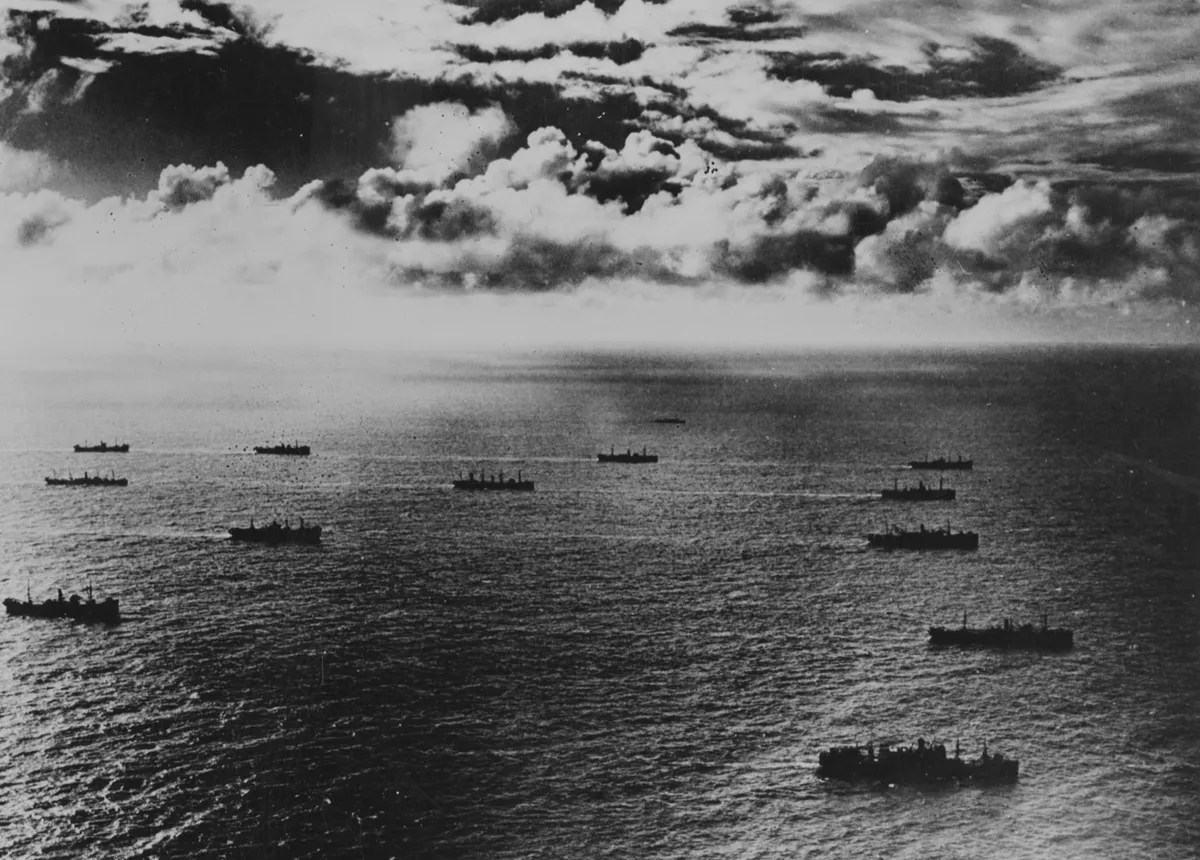
The Liberty Ship was the disposable lighter of maritime warfare. President Roosevelt called them 'ugly ducklings.' They were designed to be built fast, loaded fast, and sunk fast — with the expectation that America could build them faster than U-boats could sink them.
That bet paid off. 2,710 Liberty Ships were built in four years. Kaiser's Richmond shipyard assembled SS Robert E. Peary in 4 days, 15 hours, and 29 minutes as a publicity stunt.
The ships won the war of logistics. The merchant mariners who sailed them had the highest casualty rate of any U.S. service.
What it was like
Merchant mariners volunteered for Liberty Ship duty knowing the odds. In 1942, one in four ships crossing the Atlantic was sunk by U-boats. The crew of 38 to 62 men sailed in convoy, usually the slowest ships at 11 knots, while faster escorts tried to keep the submarines at bay.
When a torpedo hit, the welded hull — unlike a riveted hull — could crack catastrophically, splitting the ship in half. Some Liberty Ships broke apart in heavy seas without enemy action because the welded joints failed in cold water.
At night in convoy, running blacked out, you watched the ship ahead of you and hoped the ship behind you was watching you. If your ship was hit, rescue was not guaranteed.
Convoys couldn't stop. If you went in the water, you had minutes in North Atlantic winter temperatures. The merchant mariners who survived weren't even recognized as veterans until 1988.
The crew
Merchant Mariner
Civilian sailors, many teenagers, who signed on for convoy duty knowing the statistics. They were paid wages, not military pay. They had no military benefits if wounded. They had no veteran status if they survived. They had the highest casualty rate of any U.S. service in WWII — 1 in 26 merchant mariners died, higher than any branch of the military. They sailed because the ships had to sail.
Navy Armed Guard
Small detachments of Navy gunners assigned to man the defensive weapons on merchant ships. Usually 15-25 men per ship, operating the 20mm and 40mm guns. They were military personnel on civilian ships, caught between two worlds. When the ship was hit, the Armed Guard was expected to stay at their guns until the captain gave the order to abandon ship.
Patina notes
Only two Liberty Ships survive: SS John W. Brown in Baltimore and SS Jeremiah O'Brien in San Francisco. Both are in remarkable condition for vessels approaching 85 years old.
The welded steel hulls show the wear of decades, with replacement plates and patches telling the story of ongoing maintenance. The steam engines, incredibly, still function.
Preservation reality
Of 2,710 built, two survive as museum ships — an astonishing attrition rate. SS Jeremiah O'Brien is the last unaltered Liberty Ship, maintained by an all-volunteer crew in San Francisco.
SS John W. Brown, berthed in Baltimore, operates occasional cruises on the Chesapeake Bay. Both require constant maintenance and fundraising. The steam plants need specialized knowledge that is disappearing.
Where to see one
- • SS Jeremiah O'Brien, San Francisco
- • SS John W. Brown, Baltimore
Preservation organizations
- • National Liberty Ship Memorial
- • Project Liberty Ship
Sources
- American Merchant Marine at War (2026-03-05)
Related vessels
Bismarck
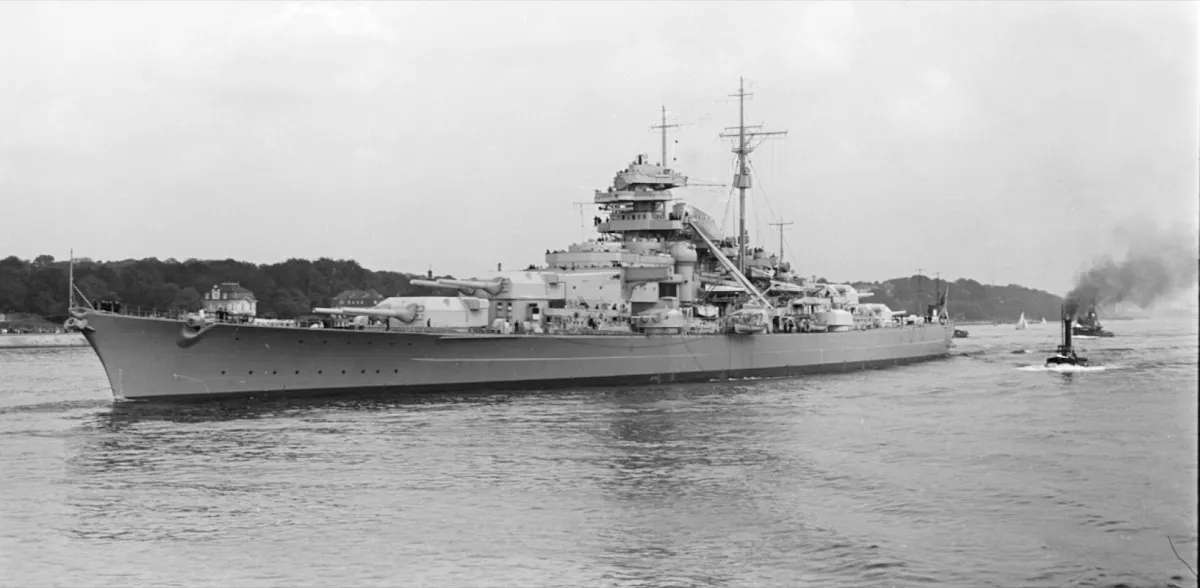
Bismarck's operational career lasted eight days. In that time, she became the most famous warship of the twentieth century. On May 24, 1941, she engaged HMS Hood and HMS Prince of Wales in the Denmark Strait. A shell from Bismarck penetrated Hood's magazine. The explosion broke Hood in half. She sank in three minutes. Of 1,418 crew, three survived. Hood was the pride of the Royal Navy. Churchill's order was immediate and absolute: sink the Bismarck. The Royal Navy sent everything. Battleships, carriers, cruisers, destroyers. Swordfish torpedo bombers — fabric-covered biplanes that looked like they belonged in the previous war — scored the hit that jammed Bismarck's rudder. She could only steam in circles. The next morning, King George V and Rodney pounded her for ninety minutes. Bismarck's crew scuttled her. Of 2,065 men, 114 survived.
Carroll A. Deering
On January 31, 1921, the Carroll A. Deering ran aground on Diamond Shoals off Cape Hatteras, North Carolina, with all sails set. The Coast Guard reached her four days later. The lifeboats were gone. The crew's personal belongings were gone. But dinner was being prepared in the galley, the tables were set, and the ship's cats were still aboard. Eleven men had vanished from a brand-new, well-found schooner in one of the most heavily trafficked shipping lanes on the East Coast. No bodies were ever recovered. No lifeboat was ever found. The investigation pulled in five government agencies, and the deeper they dug, the stranger it got. The ship's logs were missing. The steering gear had been deliberately smashed. Navigation equipment was gone. Two anchors had been dropped, with their chains hanging over the bow in a way that suggested the ship had been anchored and then cut loose. Someone had wrecked the ship's ability to navigate and steer, then left. On January 29, two days before the grounding, a lightship keeper at Cape Lookout reported that a crewman on the Deering had hailed him through a megaphone, saying the ship had lost her anchors. The man on the megaphone was not an officer. That detail haunted investigators. Theories ranged from mutiny to rum-running pirates to Soviet agents. The Deering's first mate, Charles McLellan, had openly clashed with the original captain (who fell ill and was replaced before the final voyage). The replacement captain, W.B. Wormell, was 66 years old and may not have had full control of his crew. At least nine other vessels disappeared in the same area around the same time, leading some to call it an early "Bermuda Triangle" cluster. The FBI, the State Department, and the Department of Commerce all investigated. None of them solved it. The case files were sealed, then lost, then partially recovered decades later. Herbert Hoover, then Secretary of Commerce, personally oversaw the investigation and came away frustrated. Whatever happened aboard the Carroll A. Deering, eleven men took the answer with them.
Container Ship
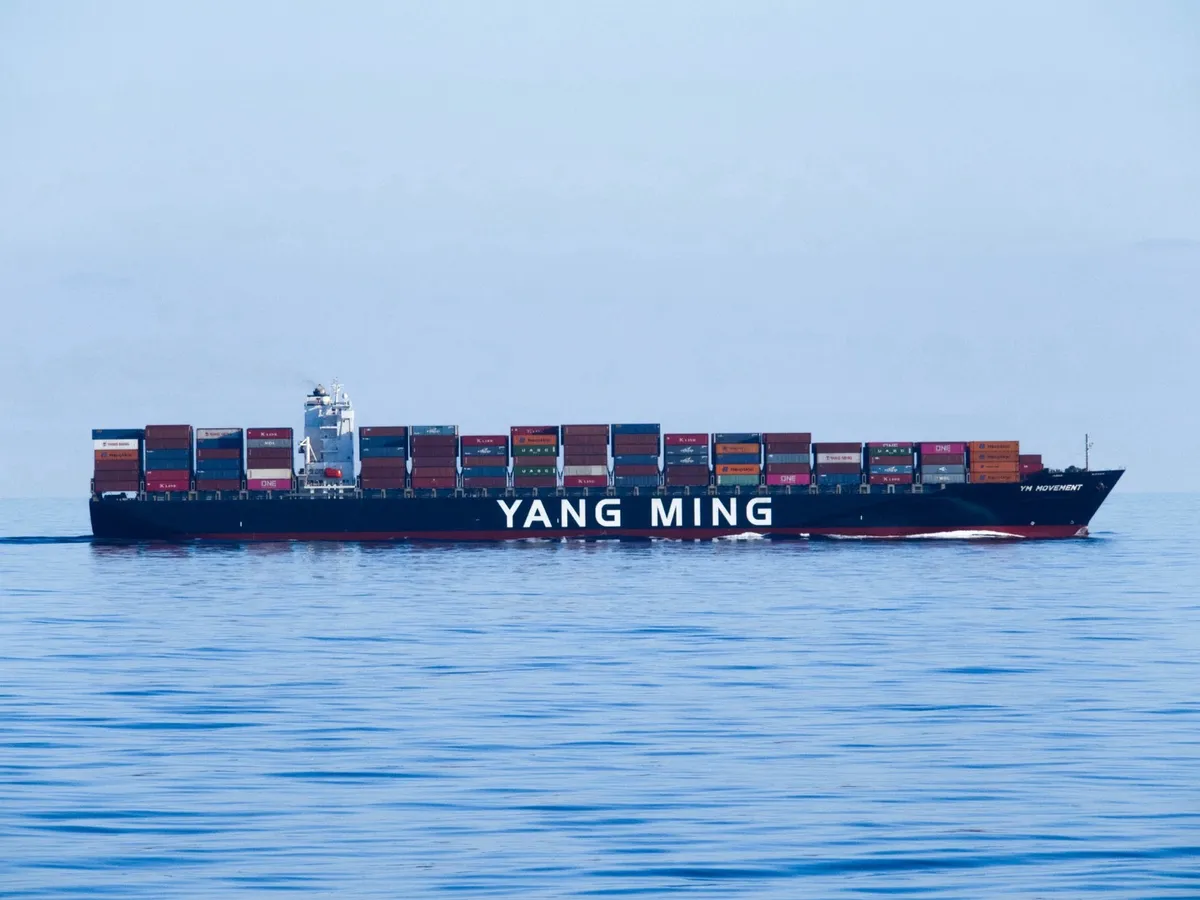
The container ship is the most consequential vessel of the modern era. Ninety percent of everything you own arrived on one. Before Malcom McLean standardized the shipping container in 1956, loading a cargo ship took weeks of manual labor. After containerization, the same job took hours. The economics cascaded: shipping costs dropped 95 percent, global trade exploded, and manufacturing moved to wherever labor was cheapest because transportation was essentially free. The modern container ship carries 24,000 containers on a hull longer than four football fields, operated by a crew of twenty. The disparity between the scale of the machine and the number of people running it is almost absurd.