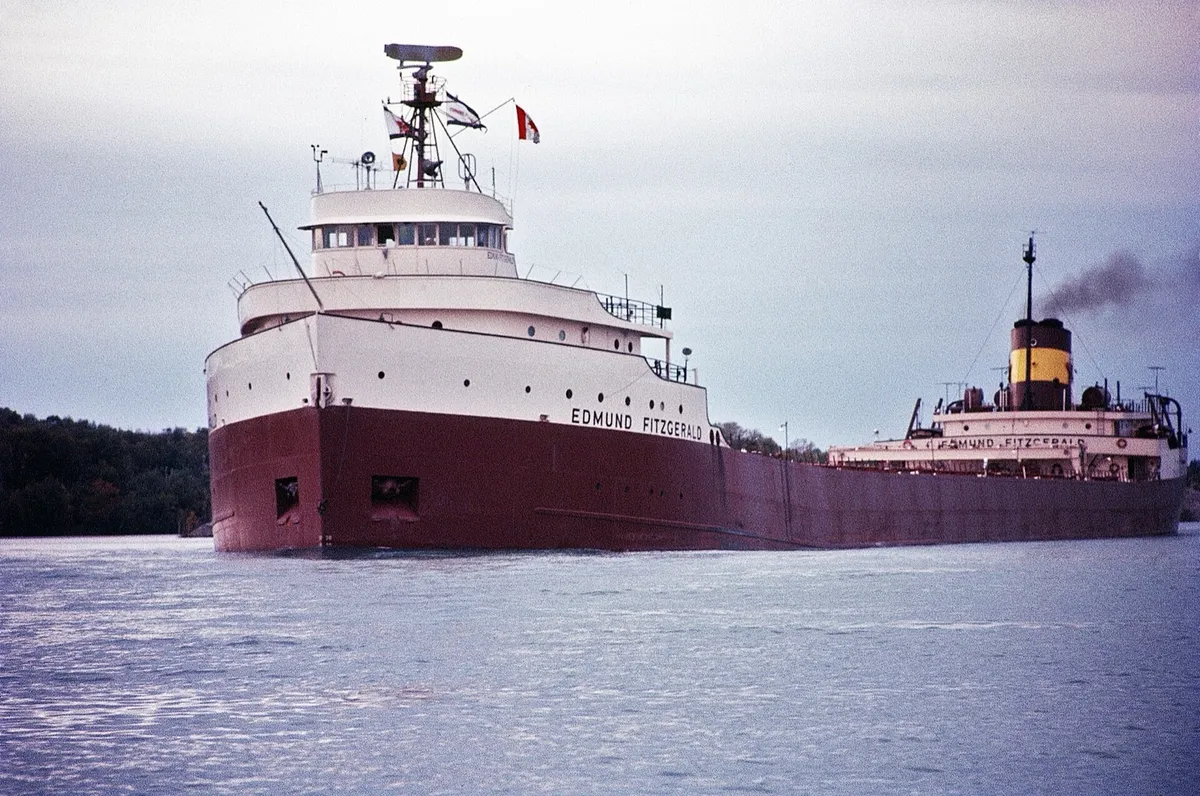
SS Edmund Fitzgerald
Why it matters
When the Edmund Fitzgerald launched in 1958, she was the largest ship on the Great Lakes and a point of pride for the iron ore trade. She spent seventeen years hauling taconite pellets between the mines of Minnesota and the steel mills of the lower lakes. She set cargo records. People watched her pass through the Soo Locks the way they'd watch a parade float. She had a nickname: the Fitz.
On November 10, 1975, she sank in a storm on Lake Superior. All 29 crew members died. There was no distress signal. The last communication was Captain Ernest McSorley telling the Arthur M. Anderson, "We are holding our own." Then she was gone.
The cause is still debated fifty years later, and that debate has become part of the story. The leading theories are structural failure from stress fractures in the hull, flooding through improperly secured hatch covers, shoaling over Six Fathom Shoal that ripped the bottom, or a rogue wave. The Coast Guard blamed the hatch covers. The lake pilots' union blamed structural failure. Nobody knows for certain because the crew isn't here to tell us.
Gordon Lightfoot released "The Wreck of the Edmund Fitzgerald" a year later, and it turned a regional maritime disaster into a permanent piece of American folklore. The song plays in every bar in the Upper Peninsula. It made the Fitzgerald the most famous shipwreck in Great Lakes history, and it ensured that the 29 men who died would never be anonymous statistics.
The wreck also forced real changes. The Coast Guard mandated stricter inspection schedules for Great Lakes freighters, required survival suits for crews, and tightened hatch cover standards. Twenty-nine men died to get those rules written.
What it was like
Working a Great Lakes ore carrier was blue-collar industrial labor on water. The crew lived aboard for the shipping season, roughly April through December, running the same routes between loading docks and steel mills. The Fitzgerald was comfortable by freighter standards. She had private cabins for all crew, a galley that served real meals, and a lounge with a TV. The men knew each other the way factory workers know each other, season after season.
Lake Superior in November is a different animal than Lake Superior in July. The storm that killed the Fitzgerald packed sustained winds of 60 knots with gusts higher. Waves were estimated at 25 to 35 feet. The ship would have been rolling and pitching violently, with green water washing over the deck. Below decks, anything not secured would have been crashing around. The engine room crew would have been fighting to keep the boilers running while the hull flexed around them. There was no warning that the end was coming. One moment the ship was there, the next she was in two pieces on the bottom.
The crew
Captain (Master)
Ernest McSorley had 44 years on the Great Lakes. He knew Superior's moods better than most people know their commute. On November 10 he was running in tandem with the Arthur M. Anderson, reporting his conditions by radio. His last words to the Anderson were calm and professional. Whatever happened to the Fitzgerald happened fast enough that McSorley never got to the radio again.
Wheelsman
Stood at the helm fighting to keep 729 feet of loaded freighter on course in seas that wanted to push her broadside. In a storm like this, the wheelsman works constantly, compensating for every wave. The ship's steering gear would have been under tremendous strain. If the rudder lost effectiveness even briefly in those seas, the ship could have broached.
Engine Room Crew
Three oilers and the chief engineer kept the steam plant running in conditions that would terrify anyone with claustrophobia. The engine room sat at the stern, separated from the pilothouse by 700 feet of cargo hold. If the hull started taking water or breaking apart amidships, the engine room crew would have known something was wrong before the bridge did. They had no way out except up through the stern.
Patina notes
The Fitzgerald broke in two when she sank and hit the bottom at 530 feet. The bow section dove straight down and buried itself in mud. The stern section landed upside down nearby.
Between the two halves is a debris field of twisted steel, personal belongings, and 26,000 tons of iron ore pellets. The cold fresh water of Lake Superior has preserved the wreck remarkably well compared to saltwater wrecks.
There's no marine growth at that depth in freshwater. The hull plates look almost like they did the day she sank, minus the catastrophic structural damage.
The pilothouse is crushed but recognizable. It's a time capsule sealed by 530 feet of the coldest, deepest water in the Great Lakes.
Preservation reality
The wreck is protected under Michigan state law as an underwater preserve, and diving to it is prohibited without a permit (which is effectively never granted for recreational purposes).
The bell was recovered in 1995 by a National Geographic expedition and is displayed at the Great Lakes Shipwreck Museum at Whitefish Point, Michigan. A replica bell with the names of all 29 crew members was placed on the wreck as a replacement.
Every November 10, the museum rings the bell 29 times, once for each man, plus a 30th time for all mariners lost on the Great Lakes. The families of the crew fought hard to keep the wreck undisturbed, and the state of Michigan agreed. She's a grave.
Where to see one
- • Great Lakes Shipwreck Museum, Whitefish Point, Michigan (bell and artifacts)
- • Dossin Great Lakes Museum, Detroit (scale model and exhibit)
Preservation organizations
- • Great Lakes Shipwreck Historical Society
- • SS Edmund Fitzgerald Crew Memorial Committee
Sources
- Fitzgerald's Storm by Joseph MacInnis (2026-03-05)
- NTSB Marine Accident Report - SS Edmund Fitzgerald (2026-03-05)
Related vessels
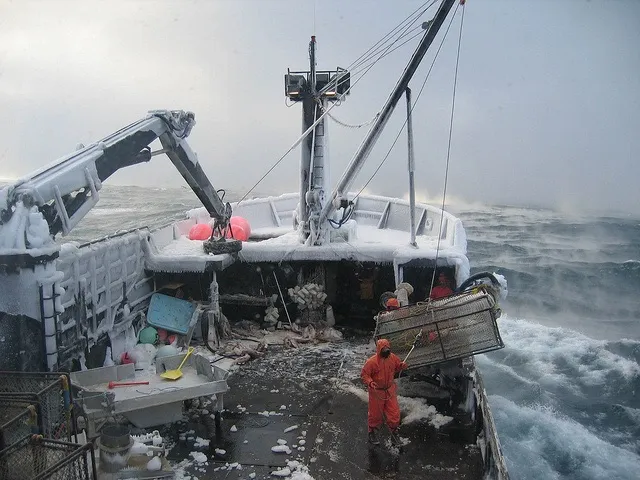
Bering Sea Crab Boat
Before Deadliest Catch premiered on Discovery Channel in 2005, almost nobody outside Alaska knew what Bering Sea crab fishing looked like. Afterward, boats like the Northwestern, Cornelia Marie, and Time Bandit became household names. The show turned a brutal, obscure commercial fishery into reality television. What it got right is that the job is genuinely insane. The Bering Sea king crab and opilio (snow crab) fisheries operate in some of the worst conditions on earth. Winter storms generate 40-foot seas. Wind chill drops to minus 40. Spray freezes on contact with the superstructure, adding tons of topside weight that can capsize a boat if not knocked off. The crews use baseball bats and sledgehammers to break ice off the rails, rigging, and wheelhouse. This is a real thing that happens on a regular basis. The fatality rate for Bering Sea crab fishing has historically been 80 times the national average for workplace deaths. Coast Guard reforms, rationalization of the fishery (switching from a short derby season to individual fishing quotas), and better safety equipment have brought the rate down, but it's still the most dangerous fishery in North America. Between 1990 and 2010, dozens of boats and over a hundred lives were lost. The economics are as extreme as the conditions. Under the old derby system, the entire king crab season was compressed into a few days. Boats raced to catch as much as possible before the season closed. Crews could earn $30,000-$80,000 for a few weeks of work. They could also earn nothing if the catch was poor, or die if the weather turned. The quota system, implemented in 2005, spread the season out and reduced the death rate. It also reduced the gold-rush paydays. Now the money is steadier but lower. The boats still go out in terrible weather because that's where the crab are.
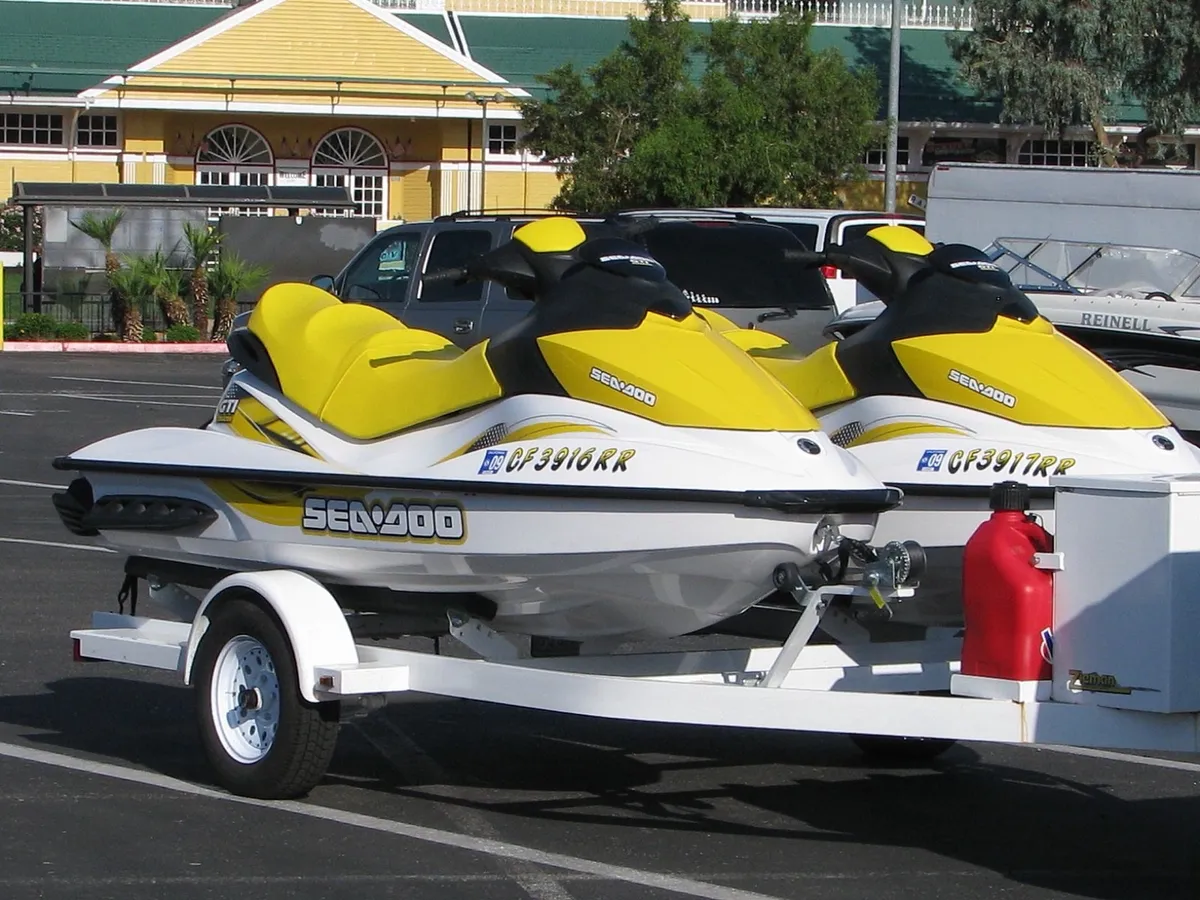
Bombardier Sea-Doo
Sea-Doo has the weirdest origin story in powersports. Bombardier, a Canadian aerospace and train company, decided in 1968 that personal watercraft were the future. They built the Sea-Doo, it flopped, and they shelved it for twenty years. In 1988 they relaunched with modern engineering and a Rotax engine, and within five years they were outselling Kawasaki. A company that builds subway cars and business jets makes one of the most popular toys on the water. That's a sentence nobody predicted. If the WaveRunner is the Accord, the Sea-Doo is the WRX. Bombardier's approach has always been engineering-first. They were first with on-water braking (the iBR system, which uses a reverse gate to slow down). First with a viable fishing PWC. First with closed-loop cooling to keep saltwater out of the engine. They treat PWC like a technology platform rather than a toy, and it shows. The FISH PRO is the most absurd and brilliant product in the PWC market. It's a $20,000 personal watercraft with a Garmin fish finder, a 13.5-gallon cooler, rod holders, and a trolling mode. The idea that someone would go offshore fishing on something the size of a motorcycle seemed insane. Then people started actually catching fish on them, and now there's a whole subculture of PWC anglers. Sea-Doo's Achilles heel has historically been reliability. The Rotax engines are powerful but the electrical systems and supercharger seals on the high-performance models have earned a reputation for expensive repairs. Yamaha owners love pointing this out. Sea-Doo owners don't hear them because they're too far ahead.
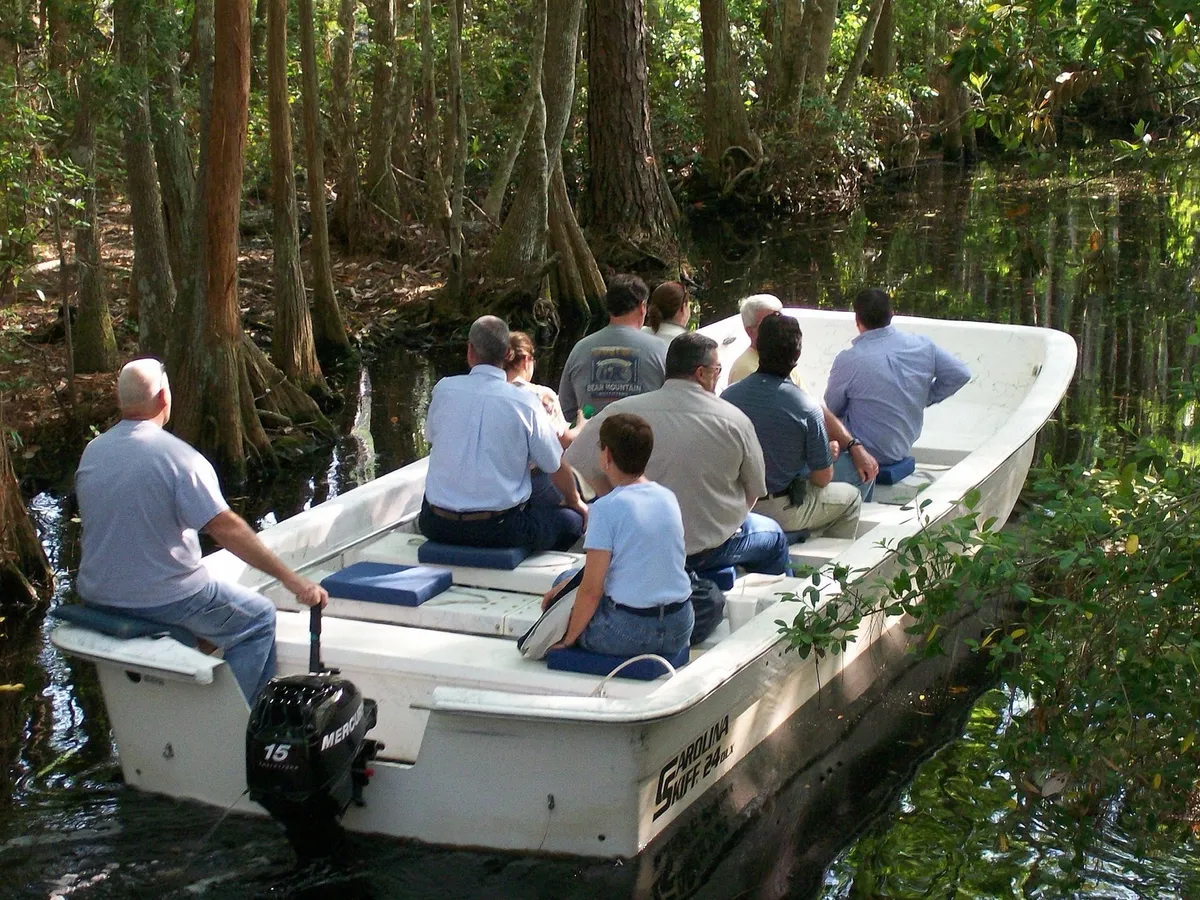
Carolina Skiff
The Carolina Skiff is the most popular boat in America that nobody brags about owning. Founded in 1983 in Wadesboro, North Carolina, the company had one idea: build the cheapest, simplest fiberglass boat possible and sell a ton of them. It worked. Carolina Skiff moves more units than brands costing three times as much. The design philosophy is aggressive simplicity. Flat bottom. No wood anywhere in the hull (wood rots, which is why cheap boats fall apart). One-piece fiberglass layup. Self-bailing cockpit. The boats are sold without engines because the company figured out that letting buyers rig their own outboard kept the sticker price low and the customization high. A bare 17-footer can be had for under $10,000. Rig a used Yamaha on the back and you're fishing for less than a decent used car. People who own Boston Whalers and Grady-Whites look down on Carolina Skiffs. This is documented, quantifiable snobbery. The Carolina Skiff owner's response is universal: they're out fishing right now while the Grady-White is in the shop getting its third trim tab adjusted. The Skiff doesn't ride as well in rough water (flat bottom, remember). It doesn't look as pretty at the dock. It will never be featured in a glossy boat magazine. But it floats in six inches of water, it's nearly impossible to sink, and it costs less than the electronics package on a center console. The Corolla of boats. The Timex of boats. The "it just works" of boats. Carolina Skiff understood something that premium brands never will: most fishing happens in calm water within five miles of the ramp.