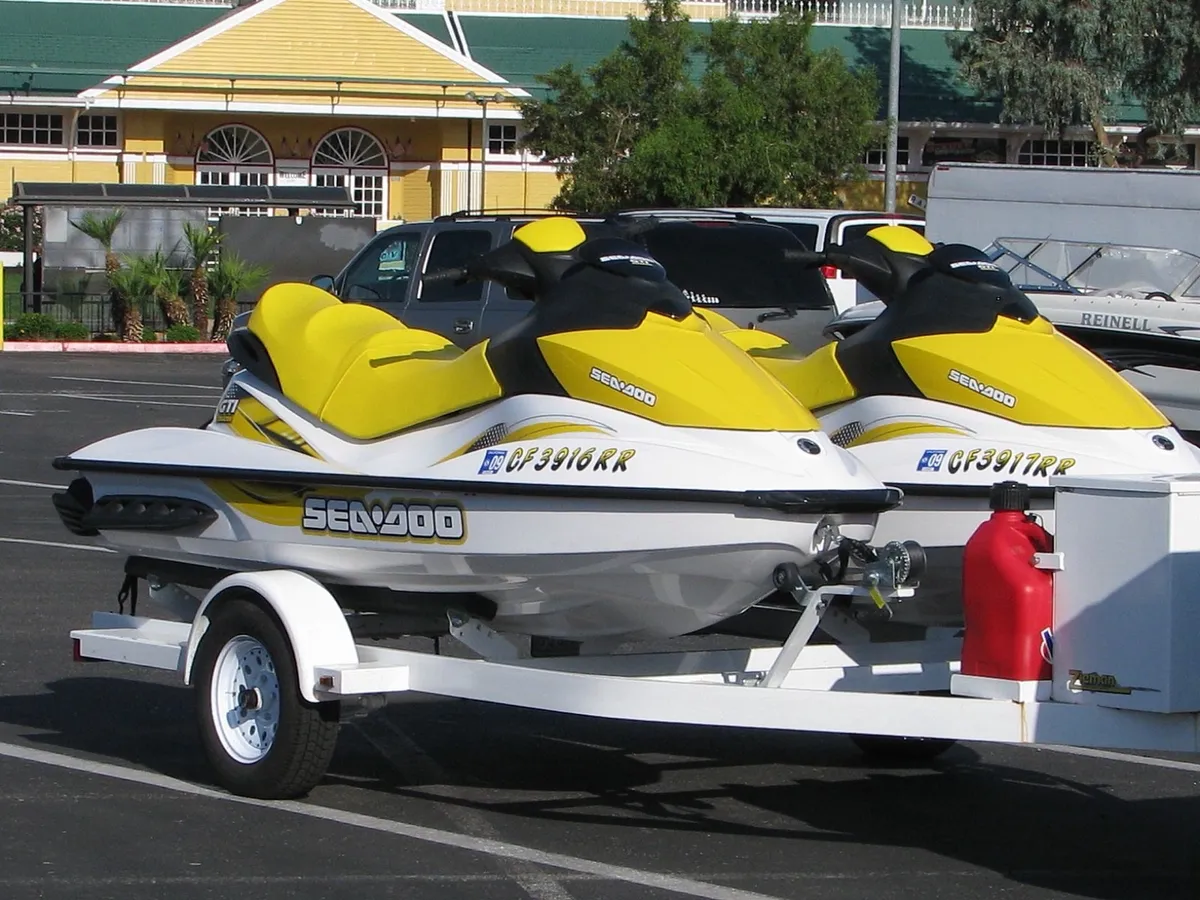
Bombardier Sea-Doo
Why it matters
Sea-Doo has the weirdest origin story in powersports. Bombardier, a Canadian aerospace and train company, decided in 1968 that personal watercraft were the future. They built the Sea-Doo, it flopped, and they shelved it for twenty years. In 1988 they relaunched with modern engineering and a Rotax engine, and within five years they were outselling Kawasaki. A company that builds subway cars and business jets makes one of the most popular toys on the water. That's a sentence nobody predicted.
If the WaveRunner is the Accord, the Sea-Doo is the WRX. Bombardier's approach has always been engineering-first. They were first with on-water braking (the iBR system, which uses a reverse gate to slow down). First with a viable fishing PWC. First with closed-loop cooling to keep saltwater out of the engine. They treat PWC like a technology platform rather than a toy, and it shows.
The FISH PRO is the most absurd and brilliant product in the PWC market. It's a $20,000 personal watercraft with a Garmin fish finder, a 13.5-gallon cooler, rod holders, and a trolling mode. The idea that someone would go offshore fishing on something the size of a motorcycle seemed insane. Then people started actually catching fish on them, and now there's a whole subculture of PWC anglers.
Sea-Doo's Achilles heel has historically been reliability. The Rotax engines are powerful but the electrical systems and supercharger seals on the high-performance models have earned a reputation for expensive repairs. Yamaha owners love pointing this out. Sea-Doo owners don't hear them because they're too far ahead.
What it was like
A Sea-Doo rides differently than a WaveRunner. The hull designs are more aggressive, the throttle response is sharper, and the high-performance models (RXT, GTX) have supercharged engines that pin you back in the seat like a sportbike. The iBR braking system changes everything. On a traditional PWC, you let off the throttle and coast. On a Sea-Doo, you squeeze the brake lever and actually stop. It feels unnatural for the first five minutes and then you can't imagine riding without it.
The supercharged models produce a sound that is part jet turbine, part angry vacuum cleaner. At full throttle on flat water, you're doing 65+ mph with nothing between you and the surface but a fiberglass hull and a prayer. The acceleration from a dead stop is violent in the best way. These are not relaxing machines. They're adrenaline delivery systems with a seat.
The crew
Operator
Handlebar controls with iBR brake on the left grip, throttle on the right. The learning curve is steeper than a WaveRunner because the power delivery is more aggressive. Intelligent throttle control on newer models limits acceleration for beginners. Experienced riders disable it immediately. The FISH PRO operator also manages a Garmin touchscreen while trying not to fall off, which is a multitasking challenge that rivals texting while driving.
Passenger
Passengers on a supercharged Sea-Doo are hostages with a view. The acceleration is violent enough that you either hold on tight or go swimming. The touring models (GTX) have a more civilized setup with a proper backrest and grab rails. The performance models offer passengers nothing but a seat and the operator's jacket to grab.
Patina notes
Sea-Doos age in two ways: cosmetically and mechanically. The hulls and bodywork hold up fine. The engines are where the drama lives. Supercharger seals on the high-performance Rotax engines need replacement every 100-200 hours, and if you miss the interval, you're looking at a $3,000 rebuild.
The non-supercharged models (Spark, GTI) are much more reliable and age like any other fiberglass boat. The plastics and seat vinyl degrade in UV faster than Yamaha's materials. A five-year-old Sea-Doo looks more tired than a five-year-old WaveRunner, even if it runs fine.
Preservation reality
Like WaveRunners, Sea-Doos are consumer products, not heritage items. The original 1968 model is genuinely rare and collectible in a quirky way, but we're talking about a handful of surviving units.
Bombardier Recreational Products (BRP) has corporate archives but no public museum. The real preservation happens in the performance community, where modified Sea-Doos compete in closed-course racing.
Where to see one
- • Any lake with a boat ramp
- • BRP headquarters, Valcourt, Quebec
- • IJSBA World Finals, Lake Havasu City, AZ
Preservation organizations
- • International Jet Sports Boating Association (IJSBA)
- • Personal Watercraft Industry Association (PWIA)
Sources
- BRP Sea-Doo (2026-03-05)
- BRP Corporate History (2026-03-05)
Related vessels
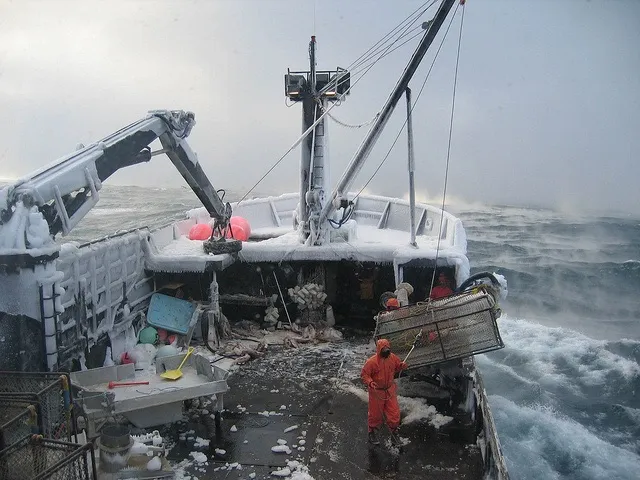
Bering Sea Crab Boat
Before Deadliest Catch premiered on Discovery Channel in 2005, almost nobody outside Alaska knew what Bering Sea crab fishing looked like. Afterward, boats like the Northwestern, Cornelia Marie, and Time Bandit became household names. The show turned a brutal, obscure commercial fishery into reality television. What it got right is that the job is genuinely insane. The Bering Sea king crab and opilio (snow crab) fisheries operate in some of the worst conditions on earth. Winter storms generate 40-foot seas. Wind chill drops to minus 40. Spray freezes on contact with the superstructure, adding tons of topside weight that can capsize a boat if not knocked off. The crews use baseball bats and sledgehammers to break ice off the rails, rigging, and wheelhouse. This is a real thing that happens on a regular basis. The fatality rate for Bering Sea crab fishing has historically been 80 times the national average for workplace deaths. Coast Guard reforms, rationalization of the fishery (switching from a short derby season to individual fishing quotas), and better safety equipment have brought the rate down, but it's still the most dangerous fishery in North America. Between 1990 and 2010, dozens of boats and over a hundred lives were lost. The economics are as extreme as the conditions. Under the old derby system, the entire king crab season was compressed into a few days. Boats raced to catch as much as possible before the season closed. Crews could earn $30,000-$80,000 for a few weeks of work. They could also earn nothing if the catch was poor, or die if the weather turned. The quota system, implemented in 2005, spread the season out and reduced the death rate. It also reduced the gold-rush paydays. Now the money is steadier but lower. The boats still go out in terrible weather because that's where the crab are.
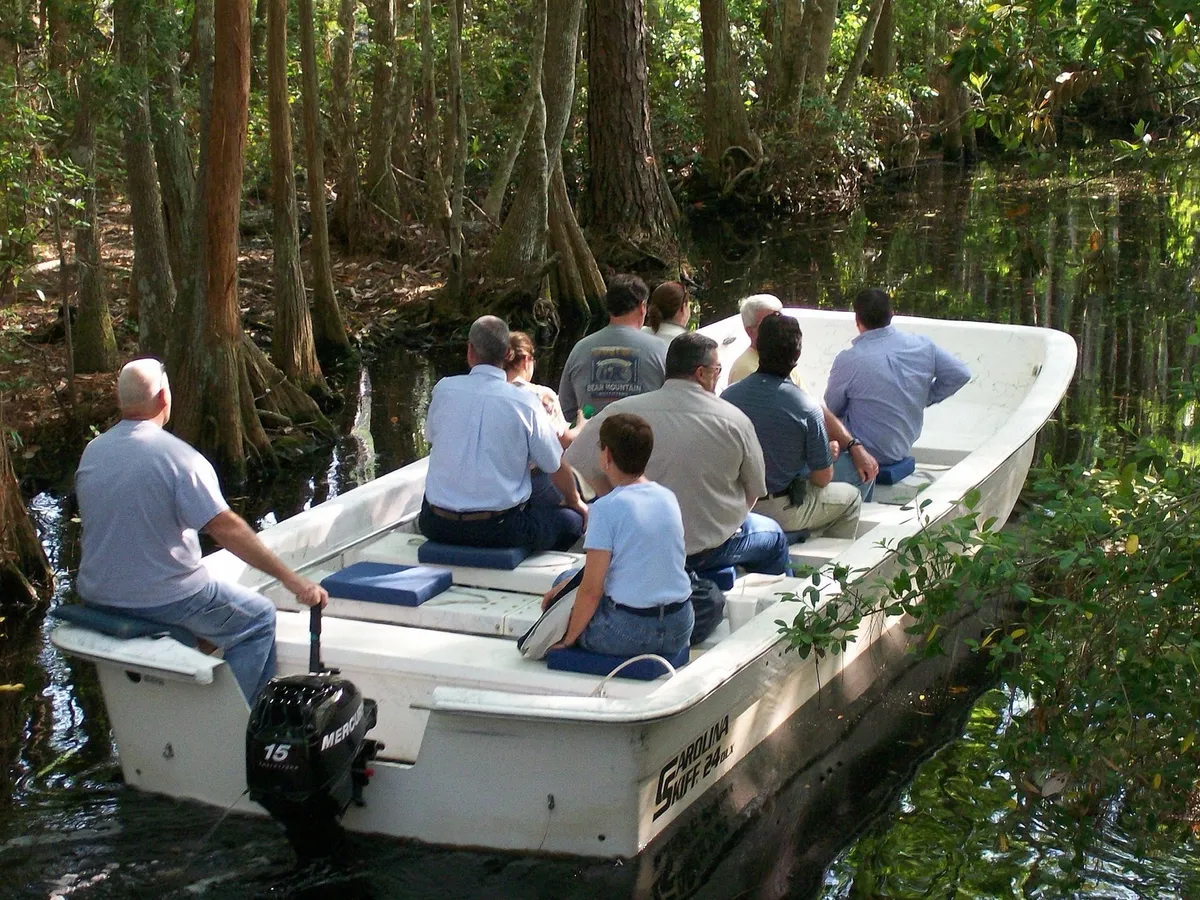
Carolina Skiff
The Carolina Skiff is the most popular boat in America that nobody brags about owning. Founded in 1983 in Wadesboro, North Carolina, the company had one idea: build the cheapest, simplest fiberglass boat possible and sell a ton of them. It worked. Carolina Skiff moves more units than brands costing three times as much. The design philosophy is aggressive simplicity. Flat bottom. No wood anywhere in the hull (wood rots, which is why cheap boats fall apart). One-piece fiberglass layup. Self-bailing cockpit. The boats are sold without engines because the company figured out that letting buyers rig their own outboard kept the sticker price low and the customization high. A bare 17-footer can be had for under $10,000. Rig a used Yamaha on the back and you're fishing for less than a decent used car. People who own Boston Whalers and Grady-Whites look down on Carolina Skiffs. This is documented, quantifiable snobbery. The Carolina Skiff owner's response is universal: they're out fishing right now while the Grady-White is in the shop getting its third trim tab adjusted. The Skiff doesn't ride as well in rough water (flat bottom, remember). It doesn't look as pretty at the dock. It will never be featured in a glossy boat magazine. But it floats in six inches of water, it's nearly impossible to sink, and it costs less than the electronics package on a center console. The Corolla of boats. The Timex of boats. The "it just works" of boats. Carolina Skiff understood something that premium brands never will: most fishing happens in calm water within five miles of the ramp.
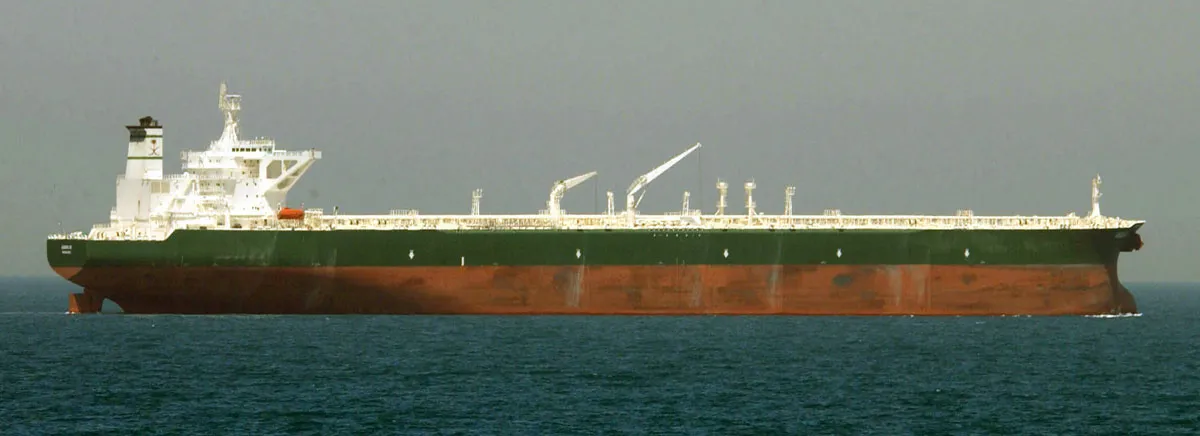
Condoleezza Rice (Altair Voyager)
In 1993, Chevron named a 129,000-ton supertanker after Condoleezza Rice. She was a Chevron board member at the time, and naming tankers after board members and executives was standard practice. Nobody outside the oil industry noticed or cared. Then George W. Bush nominated Rice for National Security Advisor in late 2000, and suddenly the optics caught up. A sitting government official with a supertanker named after her by one of the world's largest oil companies. The revolving door between Big Oil and the federal government, floating around the world's oceans in 900 feet of painted steel. Chevron quietly renamed the ship Altair Voyager in April 2001, before Rice's confirmation, hoping the story would die. It didn't. It became shorthand for everything wrong with the relationship between fossil fuel companies and the people who regulate them. The ship itself is a standard VLCC. Nothing remarkable about the engineering. She carries a million barrels of crude oil across oceans, same as dozens of other tankers in the Chevron fleet. But she's the only tanker most people have heard of by name, and that's entirely because of the politics. The renaming didn't erase anything. It just made the original naming look worse. If there was nothing wrong with it, why change it? The story is a perfect capsule of how corporate power and government power blur at the edges, and how a 900-foot oil tanker became an accidental symbol of that blur. The Condoleezza Rice, whatever she's called now, is still out there hauling crude. She'll sail until the economics don't work, then she'll be beached and broken up in South Asia like every other superannuated tanker. The name on her stern was always the least important thing about her, and simultaneously the only thing that made her matter.