Modern Era
1980-presentContainer ships that carry 90% of world trade, stealth destroyers, autonomous vessels, and the globalized maritime economy that connects everything.
Context
The modern era of naval architecture is defined by scale and efficiency. A single container ship carries more cargo than an entire WWII convoy. Navy ships cost billions and carry crews a fraction the size of their predecessors. The romance is harder to find, but the human stories are still there — skeleton crews running 1,300-foot ships on 90-day rotations, submariners on 6-month patrols, and the invisible infrastructure that keeps the global economy moving.
Defining characteristics
- Containerization
- GPS navigation
- Stealth technology
- Automation
- Global supply chains
Vessels (13)
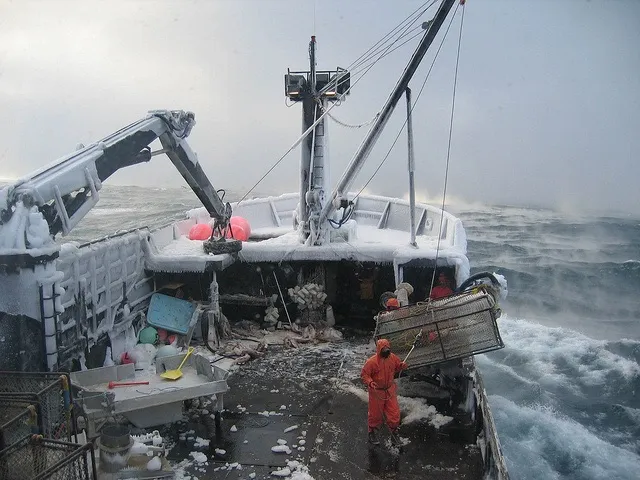
Bering Sea Crab Boat
Before Deadliest Catch premiered on Discovery Channel in 2005, almost nobody outside Alaska knew what Bering Sea crab fishing looked like. Afterward, boats like the Northwestern, Cornelia Marie, and Time Bandit became household names. The show turned a brutal, obscure commercial fishery into reality television. What it got right is that the job is genuinely insane. The Bering Sea king crab and opilio (snow crab) fisheries operate in some of the worst conditions on earth. Winter storms generate 40-foot seas. Wind chill drops to minus 40. Spray freezes on contact with the superstructure, adding tons of topside weight that can capsize a boat if not knocked off. The crews use baseball bats and sledgehammers to break ice off the rails, rigging, and wheelhouse. This is a real thing that happens on a regular basis. The fatality rate for Bering Sea crab fishing has historically been 80 times the national average for workplace deaths. Coast Guard reforms, rationalization of the fishery (switching from a short derby season to individual fishing quotas), and better safety equipment have brought the rate down, but it's still the most dangerous fishery in North America. Between 1990 and 2010, dozens of boats and over a hundred lives were lost. The economics are as extreme as the conditions. Under the old derby system, the entire king crab season was compressed into a few days. Boats raced to catch as much as possible before the season closed. Crews could earn $30,000-$80,000 for a few weeks of work. They could also earn nothing if the catch was poor, or die if the weather turned. The quota system, implemented in 2005, spread the season out and reduced the death rate. It also reduced the gold-rush paydays. Now the money is steadier but lower. The boats still go out in terrible weather because that's where the crab are.
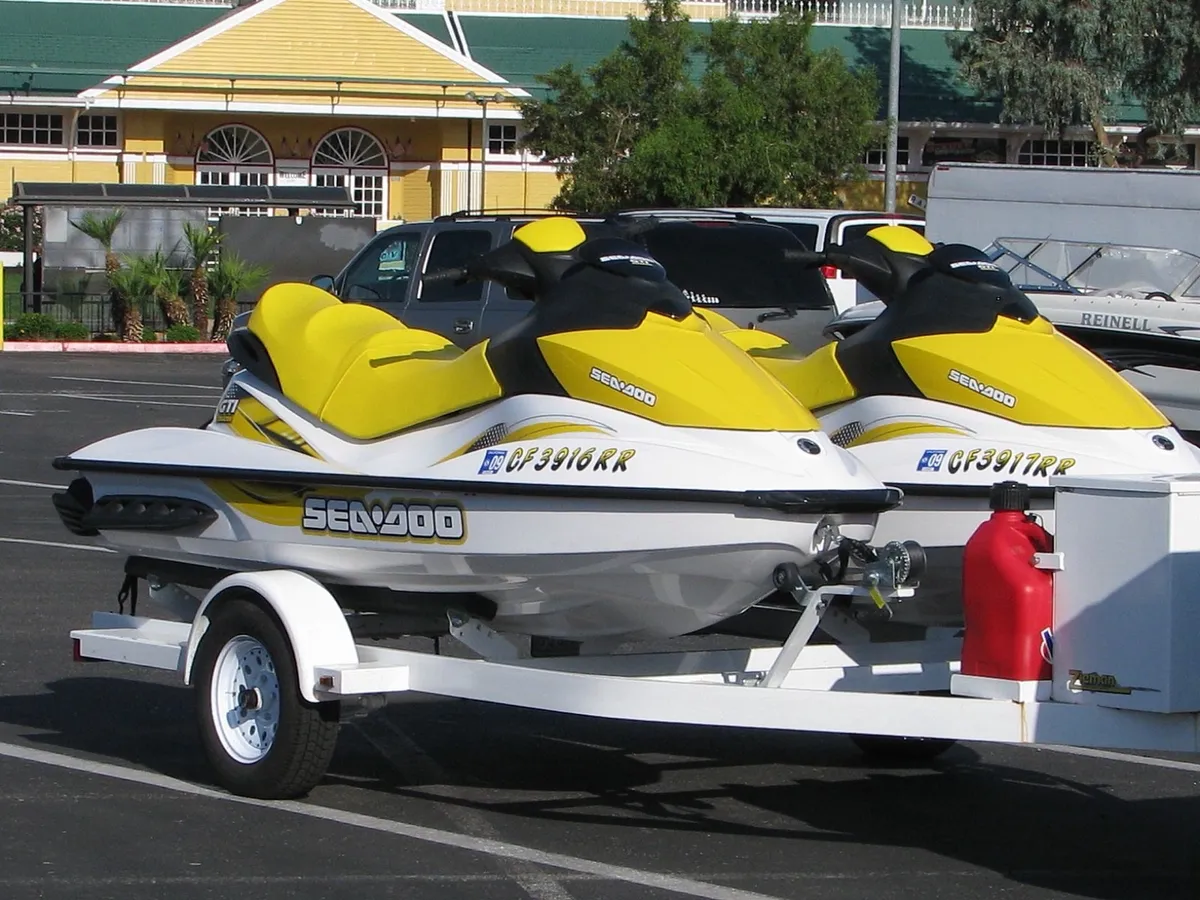
Bombardier Sea-Doo
Sea-Doo has the weirdest origin story in powersports. Bombardier, a Canadian aerospace and train company, decided in 1968 that personal watercraft were the future. They built the Sea-Doo, it flopped, and they shelved it for twenty years. In 1988 they relaunched with modern engineering and a Rotax engine, and within five years they were outselling Kawasaki. A company that builds subway cars and business jets makes one of the most popular toys on the water. That's a sentence nobody predicted. If the WaveRunner is the Accord, the Sea-Doo is the WRX. Bombardier's approach has always been engineering-first. They were first with on-water braking (the iBR system, which uses a reverse gate to slow down). First with a viable fishing PWC. First with closed-loop cooling to keep saltwater out of the engine. They treat PWC like a technology platform rather than a toy, and it shows. The FISH PRO is the most absurd and brilliant product in the PWC market. It's a $20,000 personal watercraft with a Garmin fish finder, a 13.5-gallon cooler, rod holders, and a trolling mode. The idea that someone would go offshore fishing on something the size of a motorcycle seemed insane. Then people started actually catching fish on them, and now there's a whole subculture of PWC anglers. Sea-Doo's Achilles heel has historically been reliability. The Rotax engines are powerful but the electrical systems and supercharger seals on the high-performance models have earned a reputation for expensive repairs. Yamaha owners love pointing this out. Sea-Doo owners don't hear them because they're too far ahead.
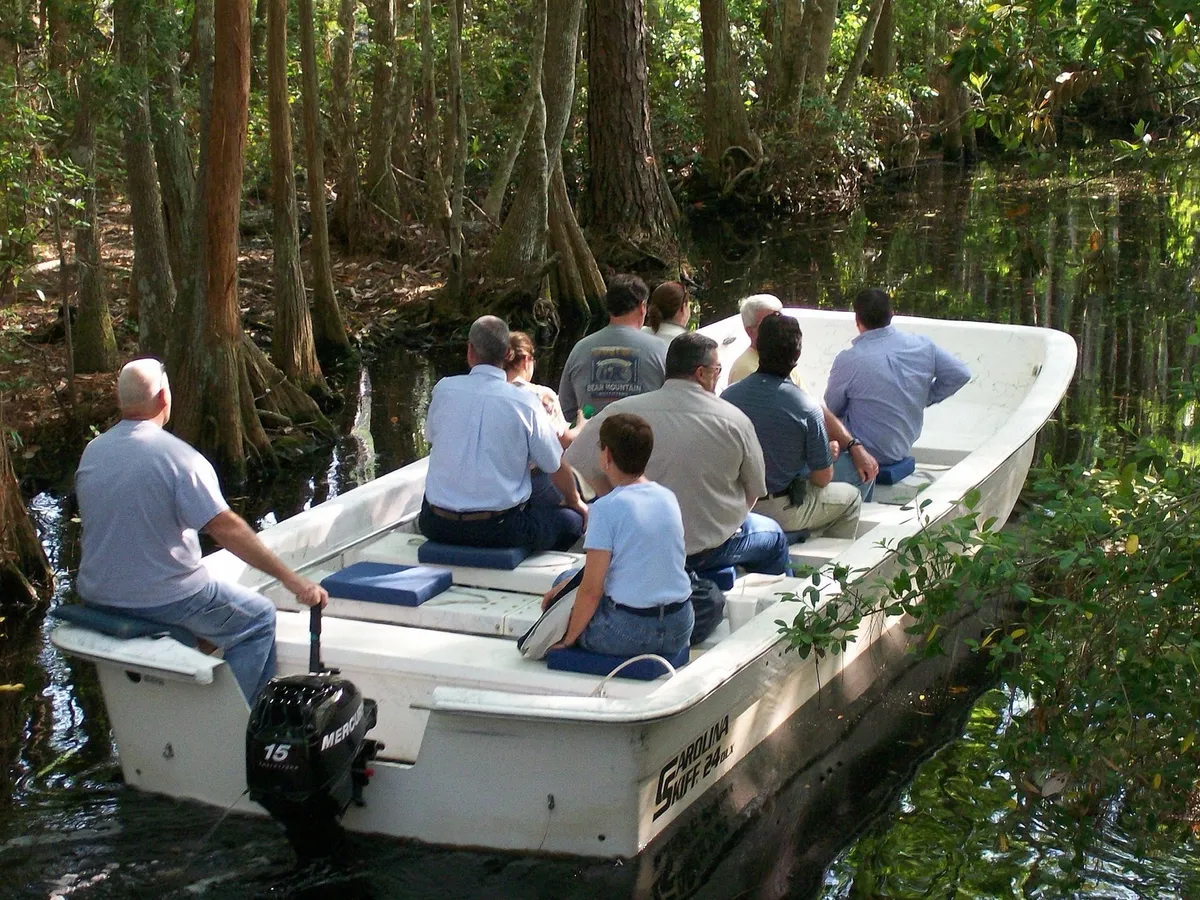
Carolina Skiff
The Carolina Skiff is the most popular boat in America that nobody brags about owning. Founded in 1983 in Wadesboro, North Carolina, the company had one idea: build the cheapest, simplest fiberglass boat possible and sell a ton of them. It worked. Carolina Skiff moves more units than brands costing three times as much. The design philosophy is aggressive simplicity. Flat bottom. No wood anywhere in the hull (wood rots, which is why cheap boats fall apart). One-piece fiberglass layup. Self-bailing cockpit. The boats are sold without engines because the company figured out that letting buyers rig their own outboard kept the sticker price low and the customization high. A bare 17-footer can be had for under $10,000. Rig a used Yamaha on the back and you're fishing for less than a decent used car. People who own Boston Whalers and Grady-Whites look down on Carolina Skiffs. This is documented, quantifiable snobbery. The Carolina Skiff owner's response is universal: they're out fishing right now while the Grady-White is in the shop getting its third trim tab adjusted. The Skiff doesn't ride as well in rough water (flat bottom, remember). It doesn't look as pretty at the dock. It will never be featured in a glossy boat magazine. But it floats in six inches of water, it's nearly impossible to sink, and it costs less than the electronics package on a center console. The Corolla of boats. The Timex of boats. The "it just works" of boats. Carolina Skiff understood something that premium brands never will: most fishing happens in calm water within five miles of the ramp.
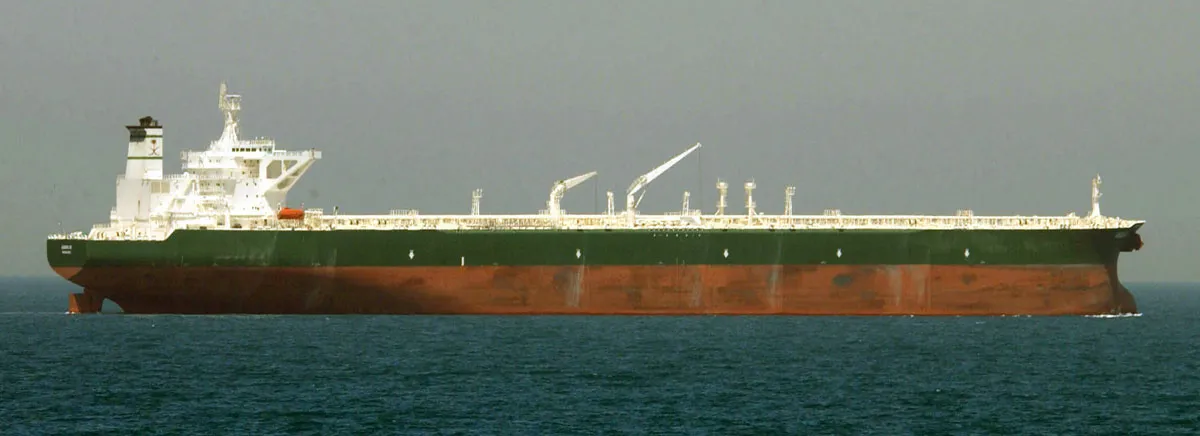
Condoleezza Rice (Altair Voyager)
In 1993, Chevron named a 129,000-ton supertanker after Condoleezza Rice. She was a Chevron board member at the time, and naming tankers after board members and executives was standard practice. Nobody outside the oil industry noticed or cared. Then George W. Bush nominated Rice for National Security Advisor in late 2000, and suddenly the optics caught up. A sitting government official with a supertanker named after her by one of the world's largest oil companies. The revolving door between Big Oil and the federal government, floating around the world's oceans in 900 feet of painted steel. Chevron quietly renamed the ship Altair Voyager in April 2001, before Rice's confirmation, hoping the story would die. It didn't. It became shorthand for everything wrong with the relationship between fossil fuel companies and the people who regulate them. The ship itself is a standard VLCC. Nothing remarkable about the engineering. She carries a million barrels of crude oil across oceans, same as dozens of other tankers in the Chevron fleet. But she's the only tanker most people have heard of by name, and that's entirely because of the politics. The renaming didn't erase anything. It just made the original naming look worse. If there was nothing wrong with it, why change it? The story is a perfect capsule of how corporate power and government power blur at the edges, and how a 900-foot oil tanker became an accidental symbol of that blur. The Condoleezza Rice, whatever she's called now, is still out there hauling crude. She'll sail until the economics don't work, then she'll be beached and broken up in South Asia like every other superannuated tanker. The name on her stern was always the least important thing about her, and simultaneously the only thing that made her matter.
Container Ship
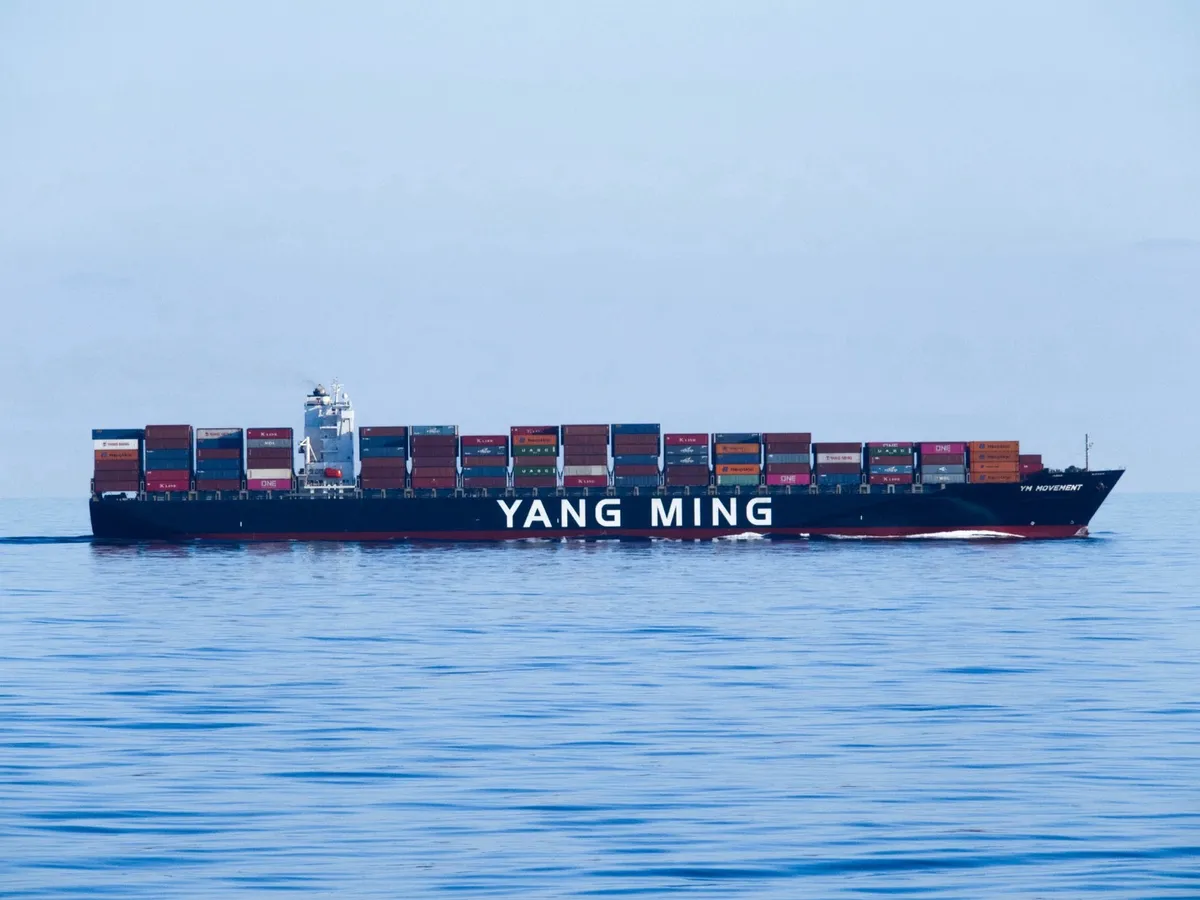
The container ship is the most consequential vessel of the modern era. Ninety percent of everything you own arrived on one. Before Malcom McLean standardized the shipping container in 1956, loading a cargo ship took weeks of manual labor. After containerization, the same job took hours. The economics cascaded: shipping costs dropped 95 percent, global trade exploded, and manufacturing moved to wherever labor was cheapest because transportation was essentially free. The modern container ship carries 24,000 containers on a hull longer than four football fields, operated by a crew of twenty. The disparity between the scale of the machine and the number of people running it is almost absurd.
F/V Andrea Gail
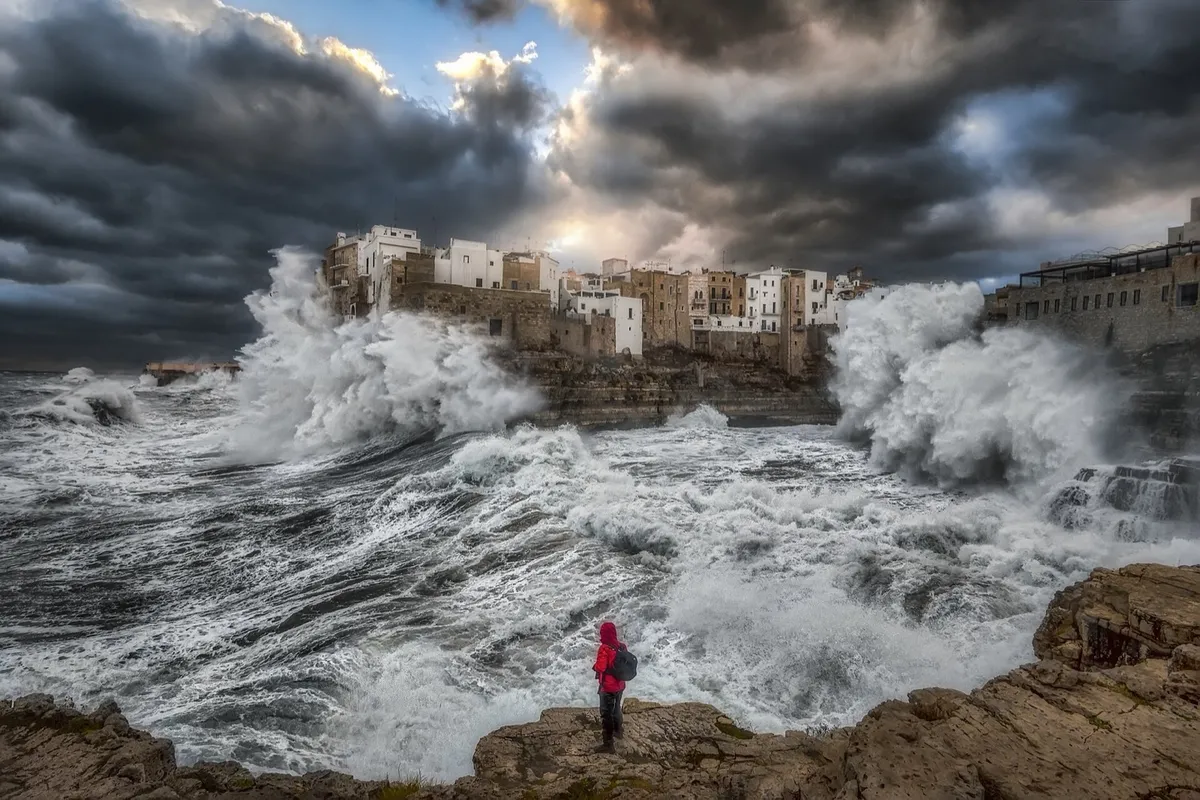
The Andrea Gail is the most famous fishing boat in American history, and she's famous for dying. Built in 1978 in Panama City, Florida, by Robert Brown Inc., she was a steel-hulled commercial swordfishing vessel working out of Gloucester, Massachusetts. On October 28, 1991, she left the Grand Banks heading home with a hold full of swordfish and ran straight into the collision of a nor'easter, Hurricane Grace, and a cold front. The meteorologists later called it the "Perfect Storm." Sebastian Junger wrote the book. Wolfgang Petersen made the movie with George Clooney. The Andrea Gail became shorthand for the sea taking what it wants. Six men died. Billy Tyne, the captain. Bobby Shatford, Dale Murphy, Michael "Bugsy" Moran, David Sullivan, and Alfred Pierre. Their names are on the Gloucester Fishermen's Memorial, along with more than 5,000 other names going back centuries. Gloucester has been burying fishermen since before the country existed. The boat was never found. The ocean is 15,000 feet deep where she likely went down. All that was recovered were some fuel drums, her EPIRB (emergency beacon), and a propane tank. The EPIRB had been manually activated, which means someone on the Andrea Gail knew they were in trouble and hit the button. Then nothing. The Andrea Gail represents something that Junger's book captured and the movie mostly missed. Commercial fishing is the most dangerous job in America. The men who do it aren't daredevils. They're working people trying to make a living. The economics of swordfishing in 1991 were brutal: long trips, uncertain catch, perishable product. Tyne pushed further east to the Flemish Cap because the fishing closer to home wasn't producing. The crew followed because that's what crews do. They trusted the captain and the boat and the forecast. The forecast was wrong.
Jet Boat
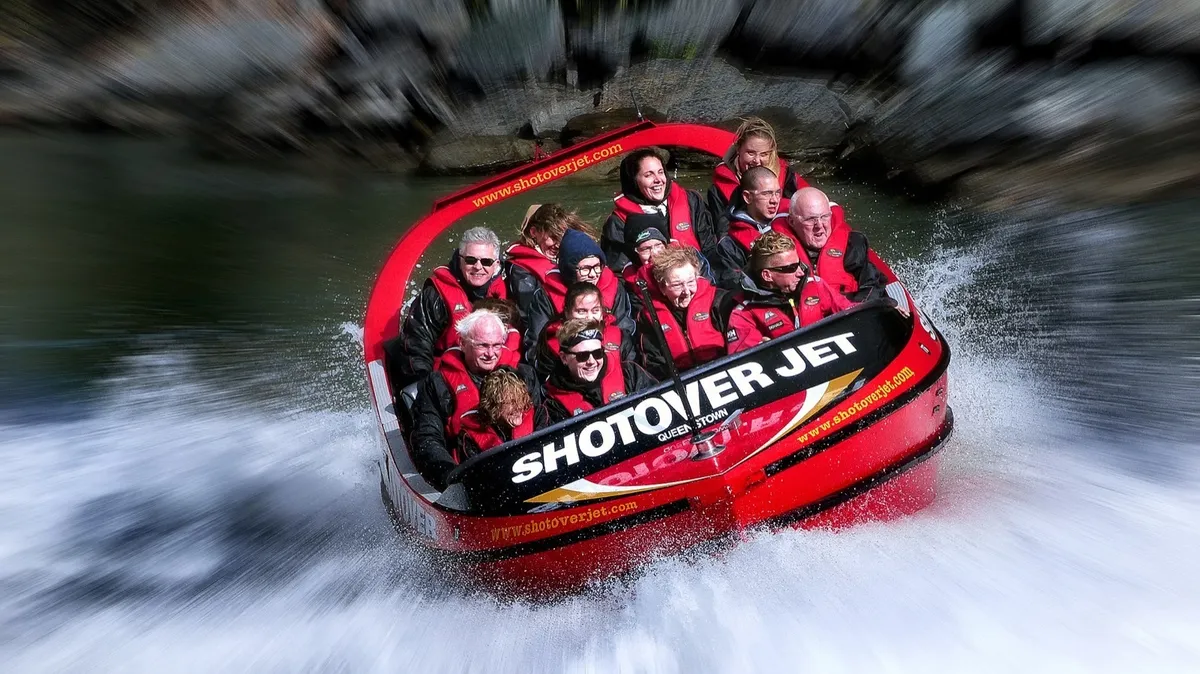
Bill Hamilton had a problem. He lived in Canterbury, New Zealand, surrounded by shallow braided rivers that were impassable by conventional propeller boats. So he invented the jet boat in 1954. The concept is elegant: suck water in through an intake on the hull bottom, accelerate it through an impeller, and blast it out a steerable nozzle at the stern. No propeller hanging below the hull. No outdrive to hit rocks. Just a flat bottom and a water cannon. The jet boat changed what rivers were navigable. Hamilton's first successful run up the Colorado River through the Grand Canyon in 1960 proved the concept to the world. Suddenly every shallow, rocky, fast-moving river was accessible. The New Zealand tourism industry built an empire on jet boat rides through gorges that conventional boats couldn't touch. The military noticed. Special operations forces use jet boats for covert riverine insertion because they can operate in water so shallow it barely qualifies as wet. Search and rescue teams use them in flood conditions where propeller boats would be destroyed by debris. Commercial operators run them on rivers from Queenstown to Idaho. The Shotover Jet in Queenstown, NZ, is the most famous jet boat operation on earth. They blast through narrow canyon walls at 50 mph with inches to spare, doing 360-degree spins with a boatload of screaming tourists. It's been running since 1965 and has carried millions of passengers. That's the jet boat's legacy: it turned impossible water into a playground.
Kawasaki Jet Ski (JS400)
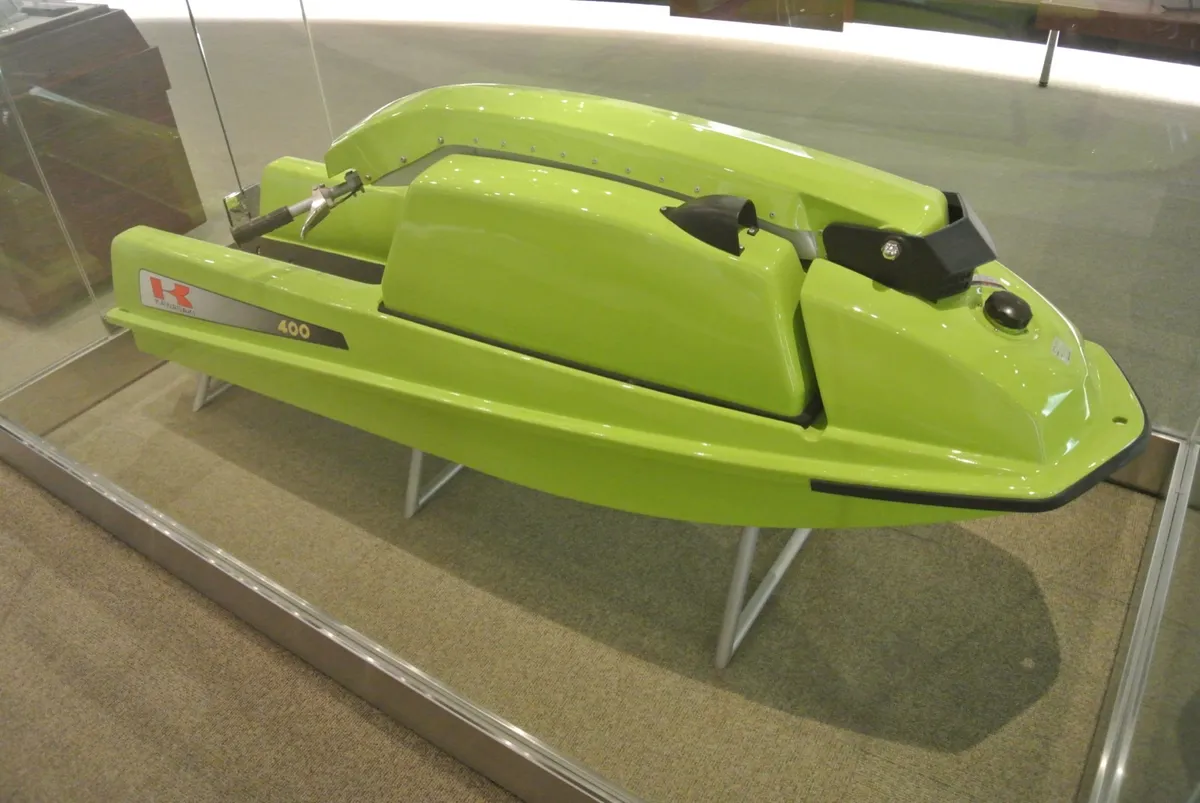
The Jet Ski didn't exist before 1973, and by 1990 every lake in America had one screaming across it. Kawasaki's JS400 was the first commercially successful personal watercraft — a stand-up vessel powered by a motorcycle engine driving a jet pump. The concept came from Clayton Jacobson II, an Australian banker who wanted a powered surfboard. Kawasaki licensed his design and created a product category that generated billions in revenue, ruined the tranquility of every lake and beach, spawned an entire subculture of freestyle riding, and became the go-to villain for everyone who thinks water should be quiet. 'Jet Ski' became the generic name for all personal watercraft the way 'Xerox' became the word for copying. Kawasaki trademarked it and everyone ignored the trademark.
Maersk Triple E-class
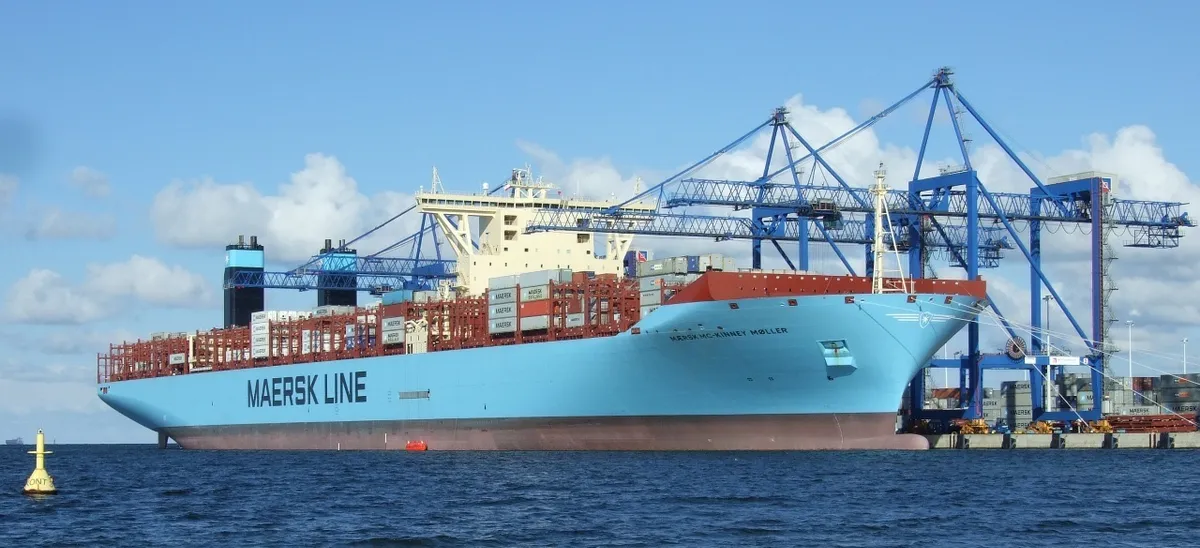
The Triple E-class is the industrial revolution's final form. A quarter-mile of steel carrying $1 billion in cargo, run by 22 people. When the first one, Maersk Mc-Kinney Moller, launched in 2013, she was the largest container ship ever built. The name stands for Economy of scale, Energy efficiency, Environmentally improved. Maersk wasn't being poetic. They were being accurate. These ships rewired global infrastructure just by existing. The channels into the Port of Baltimore had to be dredged deeper. The Bayonne Bridge in New Jersey had to be raised so they could pass underneath. The Francis Scott Key Bridge replacement (after the Dali brought down the original in 2024) had to account for these monsters in its design. When a single ship class forces a country to rebuild its bridges and harbors, that's not a vessel. That's a geological event. If you live near the Chesapeake Bay, you've seen them. They're the ships on the horizon that look wrong because your brain can't reconcile the scale. A quarter-mile long, stacked fourteen containers high on deck, gliding at 23 knots with the grace of something that has no business being graceful. The wake alone is a hazard to small craft. The economics are staggering. One Triple E can carry 18,340 containers. Each container holds roughly $50,000 in goods. Do the math and you get close to a billion dollars of cargo per voyage. The shipping cost per container? About $500 across the Pacific. That's why your TV costs $300 instead of $3,000. That's why global manufacturing works. Twenty ships were built in the class, all at Daewoo's Okpo yard in South Korea. They represent the point where container shipping stopped being about boats and became pure logistics infrastructure that happens to float.
SS Edmund Fitzgerald
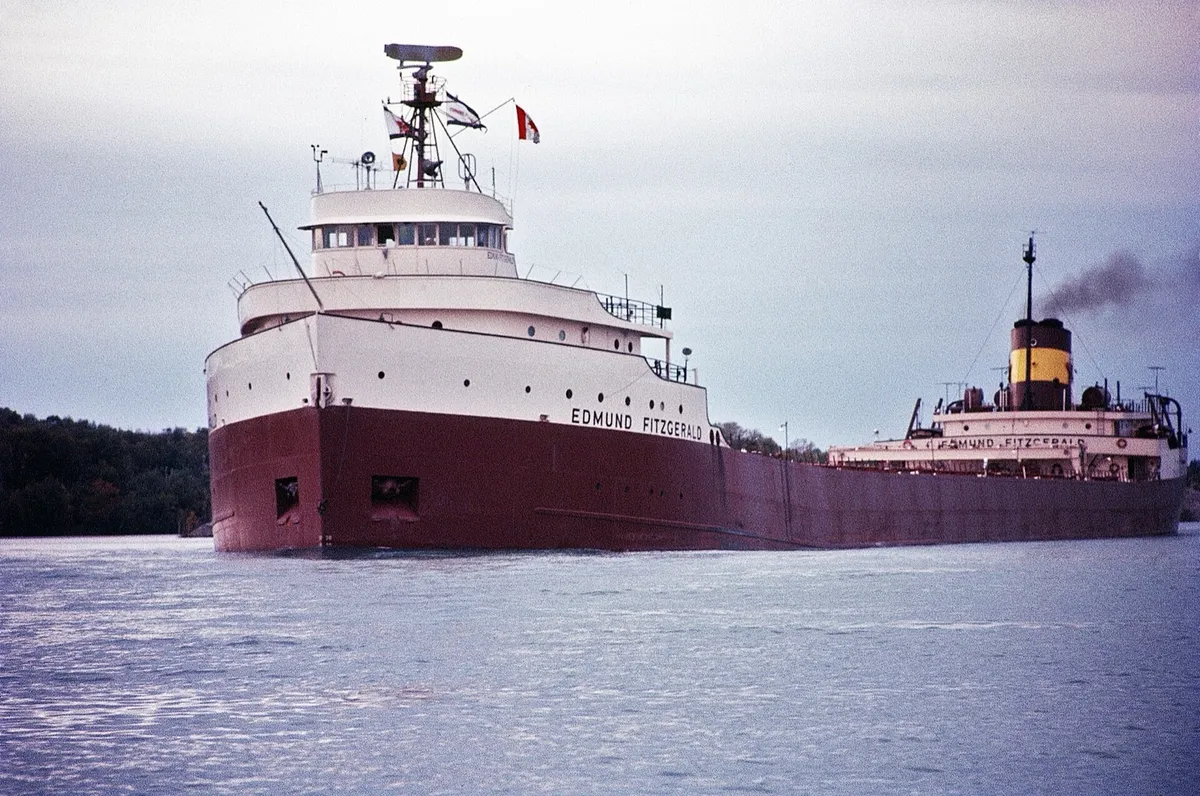
When the Edmund Fitzgerald launched in 1958, she was the largest ship on the Great Lakes and a point of pride for the iron ore trade. She spent seventeen years hauling taconite pellets between the mines of Minnesota and the steel mills of the lower lakes. She set cargo records. People watched her pass through the Soo Locks the way they'd watch a parade float. She had a nickname: the Fitz. On November 10, 1975, she sank in a storm on Lake Superior. All 29 crew members died. There was no distress signal. The last communication was Captain Ernest McSorley telling the Arthur M. Anderson, "We are holding our own." Then she was gone. The cause is still debated fifty years later, and that debate has become part of the story. The leading theories are structural failure from stress fractures in the hull, flooding through improperly secured hatch covers, shoaling over Six Fathom Shoal that ripped the bottom, or a rogue wave. The Coast Guard blamed the hatch covers. The lake pilots' union blamed structural failure. Nobody knows for certain because the crew isn't here to tell us. Gordon Lightfoot released "The Wreck of the Edmund Fitzgerald" a year later, and it turned a regional maritime disaster into a permanent piece of American folklore. The song plays in every bar in the Upper Peninsula. It made the Fitzgerald the most famous shipwreck in Great Lakes history, and it ensured that the 29 men who died would never be anonymous statistics. The wreck also forced real changes. The Coast Guard mandated stricter inspection schedules for Great Lakes freighters, required survival suits for crews, and tightened hatch cover standards. Twenty-nine men died to get those rules written.
USS Cole
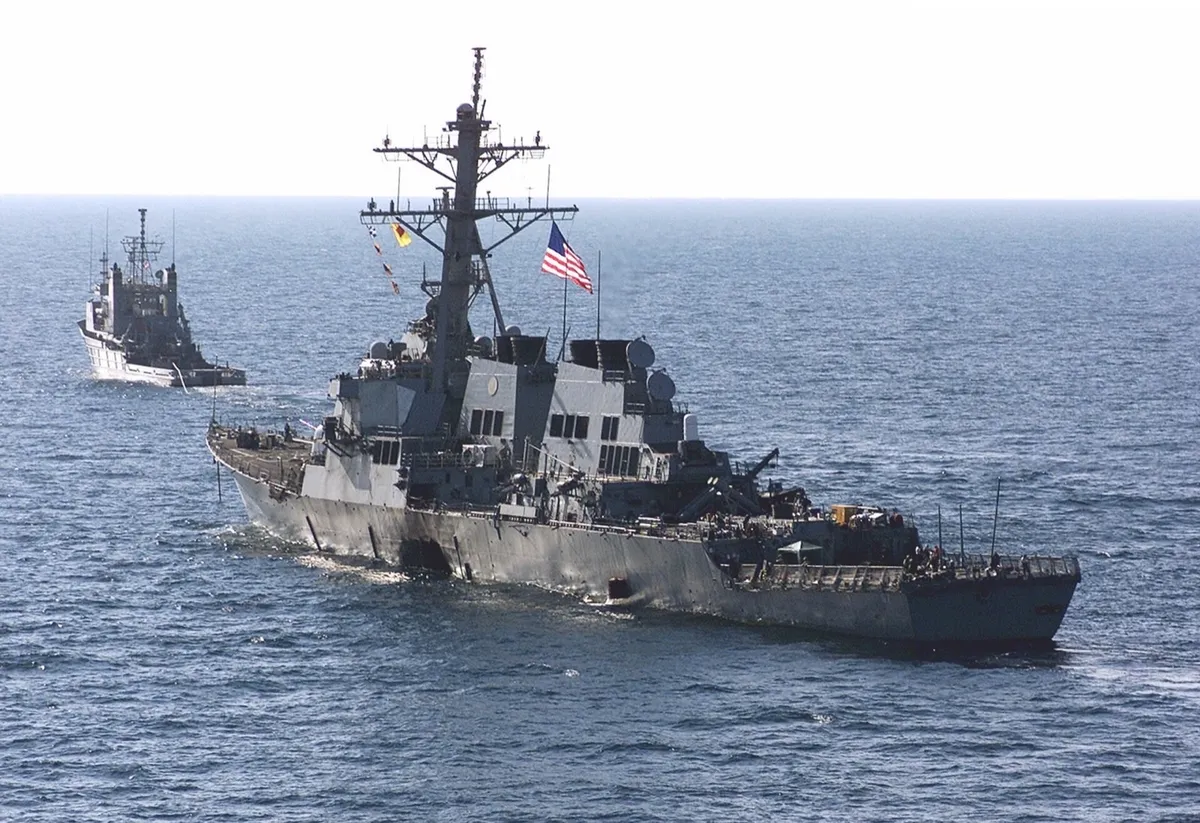
On October 12, 2000, the USS Cole pulled into Aden, Yemen, for a routine refueling stop. A small fiberglass boat piloted by two al-Qaeda operatives pulled alongside and detonated roughly 400 to 700 pounds of shaped explosives against the port side of the hull. The blast tore a hole 40 feet wide and 60 feet high in the destroyer's side. Seventeen sailors were killed. Thirty-seven were injured. Most of the dead were in the galley, eating lunch. The crew's response was extraordinary. The ship was flooding, without power, listing, and on fire. Sailors formed bucket brigades, shored up bulkheads with mattresses and wooden shores, and kept the Cole from sinking through three days of round-the-clock damage control. They saved the ship with training, grit, and improvisation. The Navy later said the crew's performance was one of the finest displays of damage control in the service's history. The Cole bombing was a direct precursor to September 11, 2001. Al-Qaeda planned and executed both. The mastermind of the Cole attack, Abd al-Rahim al-Nashiri, was later captured and held at Guantanamo Bay. Osama bin Laden referenced the Cole attack in recruitment videos. The attack demonstrated that a billion-dollar warship with the most advanced combat system in the world could be crippled by two men in a fishing boat with homemade explosives. It was asymmetric warfare made real. The Navy transported Cole home on the heavy-lift ship MV Blue Marlin, a surreal image of a destroyer riding piggyback across the Atlantic. Ingalls Shipbuilding in Pascagoula repaired her over 14 months. She returned to the fleet in 2002 and has deployed multiple times since. The 17 sailors who died are memorialized on the ship and at Arlington National Cemetery. The Cole changed how the Navy thinks about force protection. Port visits in hostile regions now involve layered security, armed watch teams, and barriers. The days of a warship sitting unprotected in a foreign harbor are over. Seventeen people died for that lesson.
Yamaha WaveRunner
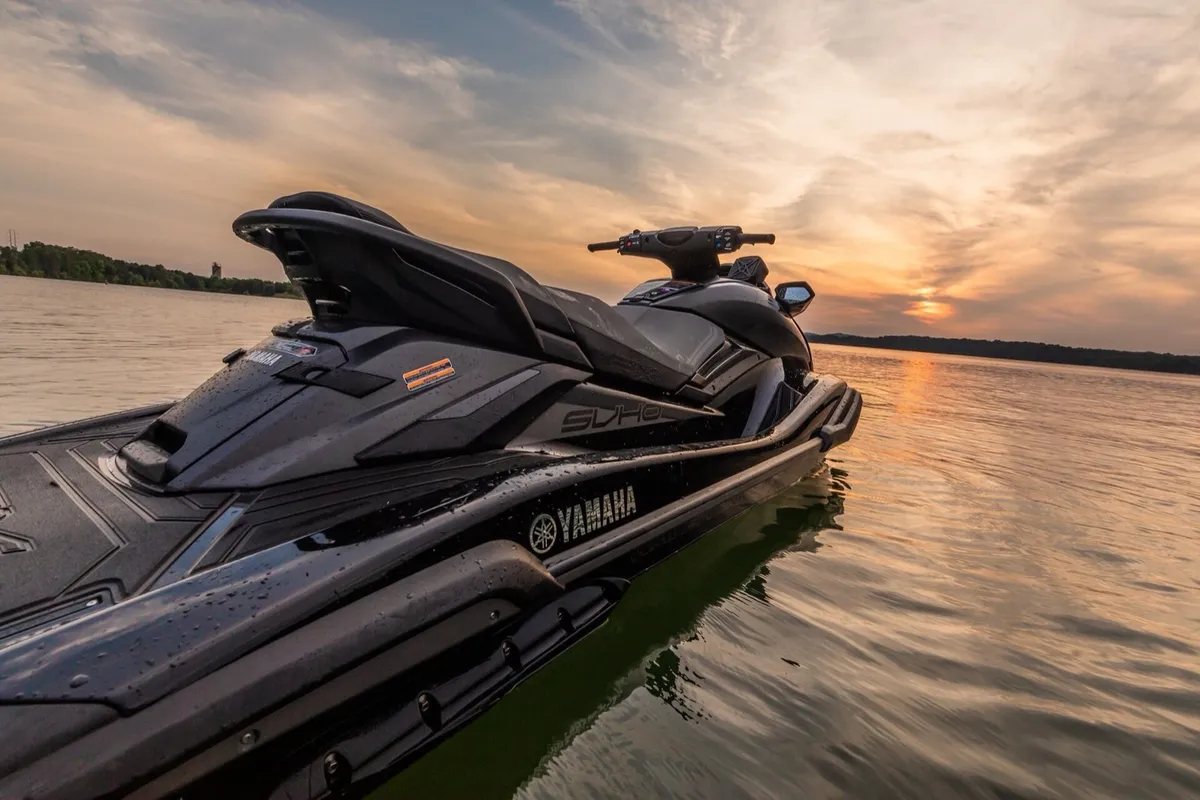
The Jet Ski invented personal watercraft. The WaveRunner made it something normal people would actually buy. When Yamaha launched the WaveRunner 500 in 1986, it was the first PWC designed to be ridden sitting down. Kawasaki's Jet Ski was a stand-up craft that required athletic ability and a tolerance for swimming. Yamaha looked at that and said: what if you could just sit on it like a snowmobile? That single decision turned PWC from a niche sport into a mass-market product. The WaveRunner is the Honda Accord of the water. Reliable, sensible, depreciates predictably. Yamaha doesn't chase headlines the way Sea-Doo does with fish-finding models and 300-horsepower rockets. They build solid machines that start every time and last for years of rental-fleet abuse. That's not exciting. It's also why rental operations at every beach resort in the world are running 90% Yamahas. Yamaha brought over its motorcycle engineering culture, which means the engines are overbuilt and the fit-and-finish is excellent. The four-stroke transition in the early 2000s was cleaner than anyone expected. While Kawasaki and Sea-Doo scrambled, Yamaha had reliable four-strokes ready to go because they'd been building four-stroke motorcycle engines for decades. The WaveRunner doesn't get the cultural credit it deserves. Kawasaki owns the name recognition (everyone calls every PWC a "Jet Ski"). Sea-Doo gets the press for being the performance option. Yamaha just quietly sells more units than both of them in most years.
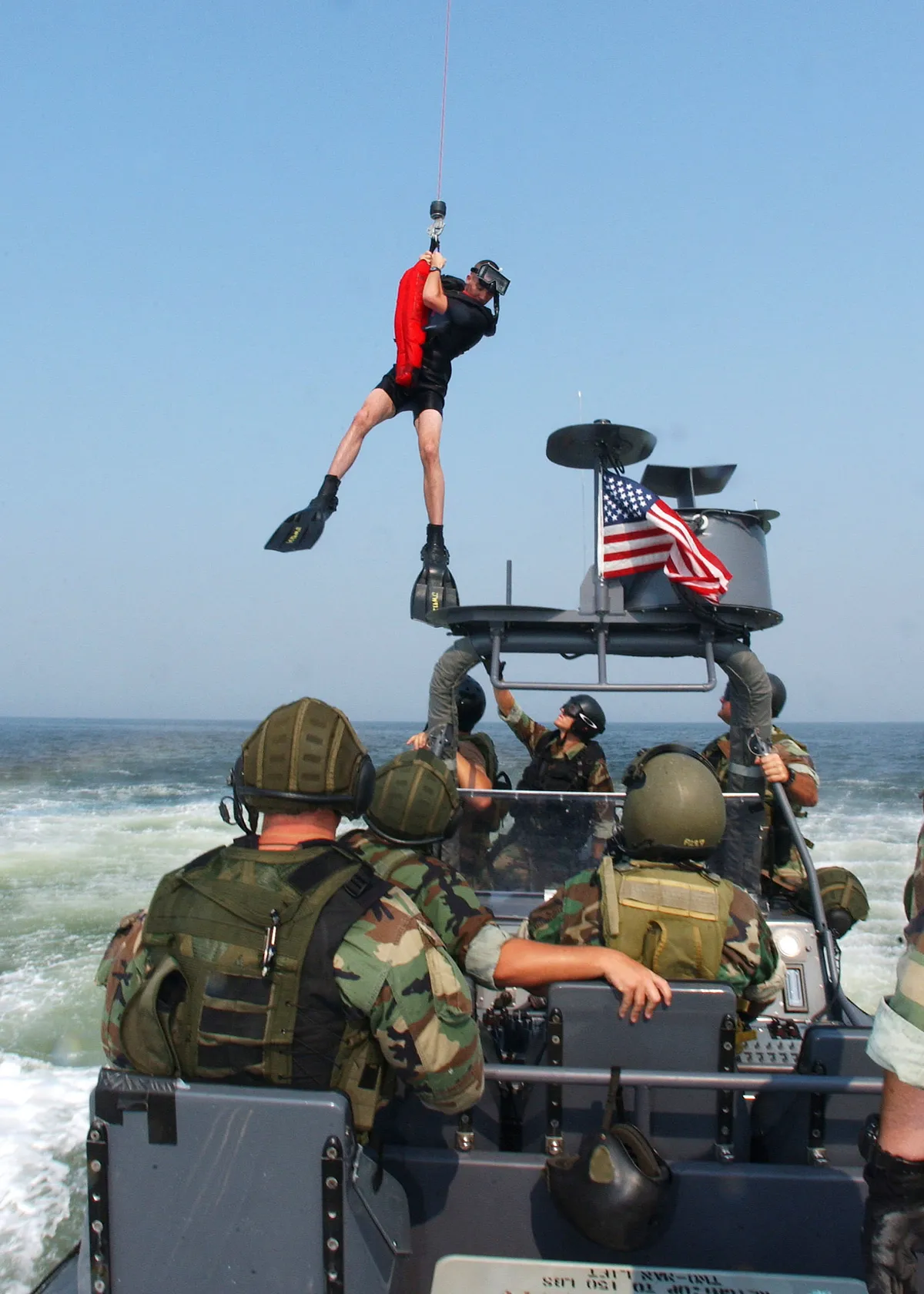
Zodiac Inflatable
The Zodiac solved a problem that had existed since the invention of boats: how do you get a boat somewhere there isn't a boat ramp? You deflate it, pack it in a bag, carry it, inflate it, and go. Pierre Debroutelle founded Zodiac as an airship company in 1896. They pivoted to inflatable boats in the 1930s. Jacques Cousteau used Zodiacs on the Calypso for dive operations. Navy SEALs use them for covert insertions. Marine biologists use them to approach whales. Your uncle uses one to get to his fishing spot. The rigid inflatable boat (RIB) variant — inflatable tubes on a solid hull — became the standard for military, rescue, and professional marine operations worldwide. Zodiac didn't invent the inflatable boat, but they made it a serious vessel instead of a pool toy.