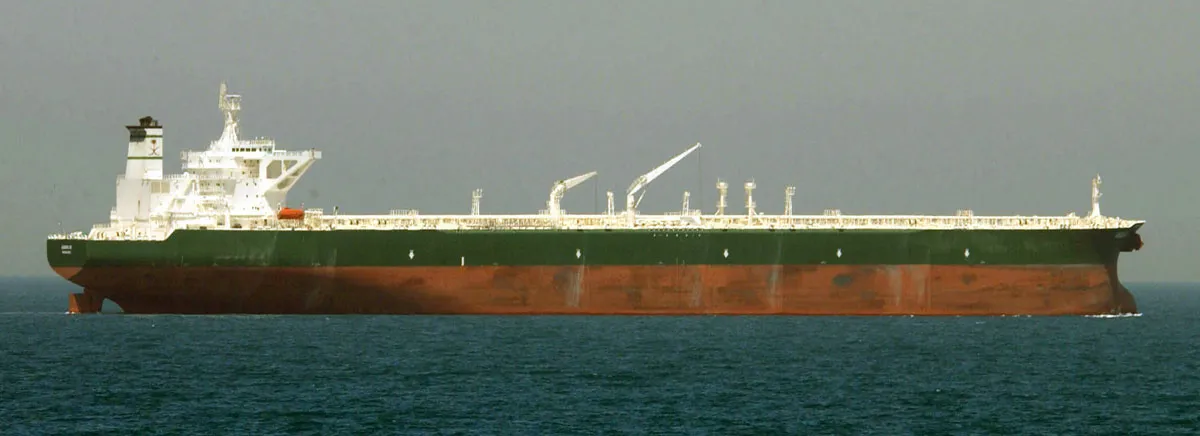
Condoleezza Rice (Altair Voyager)
Why it matters
In 1993, Chevron named a 129,000-ton supertanker after Condoleezza Rice. She was a Chevron board member at the time, and naming tankers after board members and executives was standard practice. Nobody outside the oil industry noticed or cared. Then George W. Bush nominated Rice for National Security Advisor in late 2000, and suddenly the optics caught up.
A sitting government official with a supertanker named after her by one of the world's largest oil companies. The revolving door between Big Oil and the federal government, floating around the world's oceans in 900 feet of painted steel. Chevron quietly renamed the ship Altair Voyager in April 2001, before Rice's confirmation, hoping the story would die. It didn't. It became shorthand for everything wrong with the relationship between fossil fuel companies and the people who regulate them.
The ship itself is a standard VLCC. Nothing remarkable about the engineering. She carries a million barrels of crude oil across oceans, same as dozens of other tankers in the Chevron fleet. But she's the only tanker most people have heard of by name, and that's entirely because of the politics.
The renaming didn't erase anything. It just made the original naming look worse. If there was nothing wrong with it, why change it? The story is a perfect capsule of how corporate power and government power blur at the edges, and how a 900-foot oil tanker became an accidental symbol of that blur.
The Condoleezza Rice, whatever she's called now, is still out there hauling crude. She'll sail until the economics don't work, then she'll be beached and broken up in South Asia like every other superannuated tanker. The name on her stern was always the least important thing about her, and simultaneously the only thing that made her matter.
What it was like
Thirty people on 900 feet of floating oil storage, crossing oceans that can go weeks without showing another ship on the horizon. Supertanker life is defined by monotony punctured by terror. The routine watches, the endless maintenance, the same faces at meals for months. Then a storm, or a cargo transfer, or the moment someone smells something wrong near the tanks. A VLCC carries a million barrels of crude. If the inert gas system fails and a spark finds vapor in the wrong tank, the explosion would be visible from space.
The tank cleaning is where the danger lives. Between cargoes, the massive tanks have to be purged. Crude oil fumes are heavier than air and pool in enclosed spaces. The inert gas system pumps oxygen-depleted exhaust from the boiler into the tanks to keep the atmosphere below the explosive threshold. When it works, it's elegant engineering. When it doesn't, people die. Tank inspections require entering confined spaces that would kill you in minutes without proper ventilation and gas monitoring.
The loneliness is industrial-grade. Thirty people scattered across a ship nearly as long as the Eiffel Tower is tall, in the middle of the Indian Ocean or the South Atlantic, with satellite phone calls rationed and internet barely functional. The accommodations are decent. The food is usually good. But the psychological weight of being responsible for a floating bomb carrying a million barrels of crude, thousands of miles from help, never fully goes away.
The crew
Master (Captain)
Commands a vessel carrying cargo worth $80 million at current oil prices, through waters where piracy is a real concern and weather can turn a VLCC into a cork. Port approaches with a loaded supertanker require tugboat escorts and harbor pilot boarding. The ship takes two miles to stop. Every decision is made knowing that a single mistake puts a million barrels of crude oil into the ocean. The Exxon Valdez carried a quarter of that.
Chief Officer (Cargo)
Manages the loading and discharge of a million barrels of crude through a system of pumps, manifolds, and cargo lines that would fill a textbook. Monitors tank pressures, ullage levels, and trim throughout the voyage. During cargo transfer, the chief officer is the person standing between a clean operation and an environmental catastrophe. The margin for error is measured in inches of freeboard and parts-per-million of hydrocarbon vapor.
Pumpman
The specialist who keeps the cargo pumping systems running. On a VLCC, the main cargo pumps can move thousands of tons of crude per hour. The pumpman lives in the pump room, a space that sits directly above the cargo tanks and is one of the most dangerous places on any ship. Temperature swings, noise, vibration, and the constant presence of petroleum vapors. It's a job that requires absolute attention to detail because a pump failure during discharge can cascade into a spill.
Patina notes
Supertankers age hard. The combination of crude oil, saltwater, and tropical sun attacks every surface simultaneously. The cargo tanks develop pitting and corrosion that requires constant monitoring and periodic steel renewal.
The deck coatings break down under UV exposure and oil residue. The hull paint erodes in patterns that trace the waterline and wave impact zones. After 15 years, a tanker looks like it's been through a war. After 25, it's headed for the breakers.
Preservation reality
No VLCCs are preserved as museum ships. The economics make it impossible. An out-of-service supertanker costs millions per year just to moor safely, and the environmental liability of a hull full of residual hydrocarbons is a nightmare no museum wants.
When tankers die, they go to the ship-breaking beaches of Alang, India or Chittagong, Bangladesh, where they're dismantled by hand in conditions that have been condemned by every international labor organization. The Condoleezza Rice / Altair Voyager will eventually meet the same end.
Where to see one
- • Houston Ship Channel observation points
- • Port of Long Beach, California
- • Strait of Hormuz transit areas (commercial vessel traffic)
Preservation organizations
- • Chevron Shipping Company
- • International Tanker Owners Pollution Federation (ITOPF)
Sources
- Chevron tanker fleet records (2026-03-05)
- Reuters - Chevron renames tanker (2026-03-05)
Related vessels
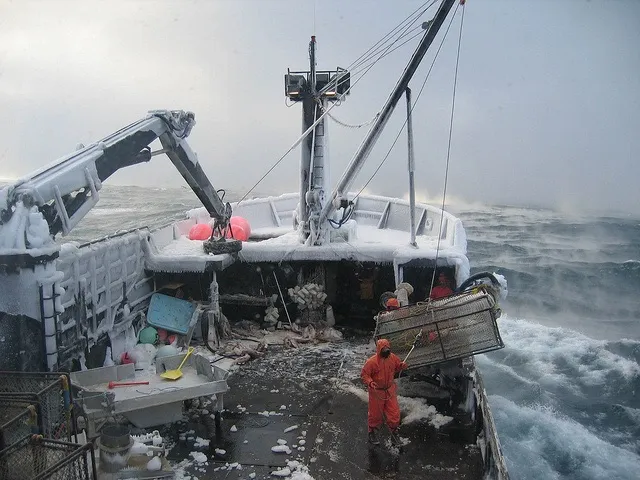
Bering Sea Crab Boat
Before Deadliest Catch premiered on Discovery Channel in 2005, almost nobody outside Alaska knew what Bering Sea crab fishing looked like. Afterward, boats like the Northwestern, Cornelia Marie, and Time Bandit became household names. The show turned a brutal, obscure commercial fishery into reality television. What it got right is that the job is genuinely insane. The Bering Sea king crab and opilio (snow crab) fisheries operate in some of the worst conditions on earth. Winter storms generate 40-foot seas. Wind chill drops to minus 40. Spray freezes on contact with the superstructure, adding tons of topside weight that can capsize a boat if not knocked off. The crews use baseball bats and sledgehammers to break ice off the rails, rigging, and wheelhouse. This is a real thing that happens on a regular basis. The fatality rate for Bering Sea crab fishing has historically been 80 times the national average for workplace deaths. Coast Guard reforms, rationalization of the fishery (switching from a short derby season to individual fishing quotas), and better safety equipment have brought the rate down, but it's still the most dangerous fishery in North America. Between 1990 and 2010, dozens of boats and over a hundred lives were lost. The economics are as extreme as the conditions. Under the old derby system, the entire king crab season was compressed into a few days. Boats raced to catch as much as possible before the season closed. Crews could earn $30,000-$80,000 for a few weeks of work. They could also earn nothing if the catch was poor, or die if the weather turned. The quota system, implemented in 2005, spread the season out and reduced the death rate. It also reduced the gold-rush paydays. Now the money is steadier but lower. The boats still go out in terrible weather because that's where the crab are.
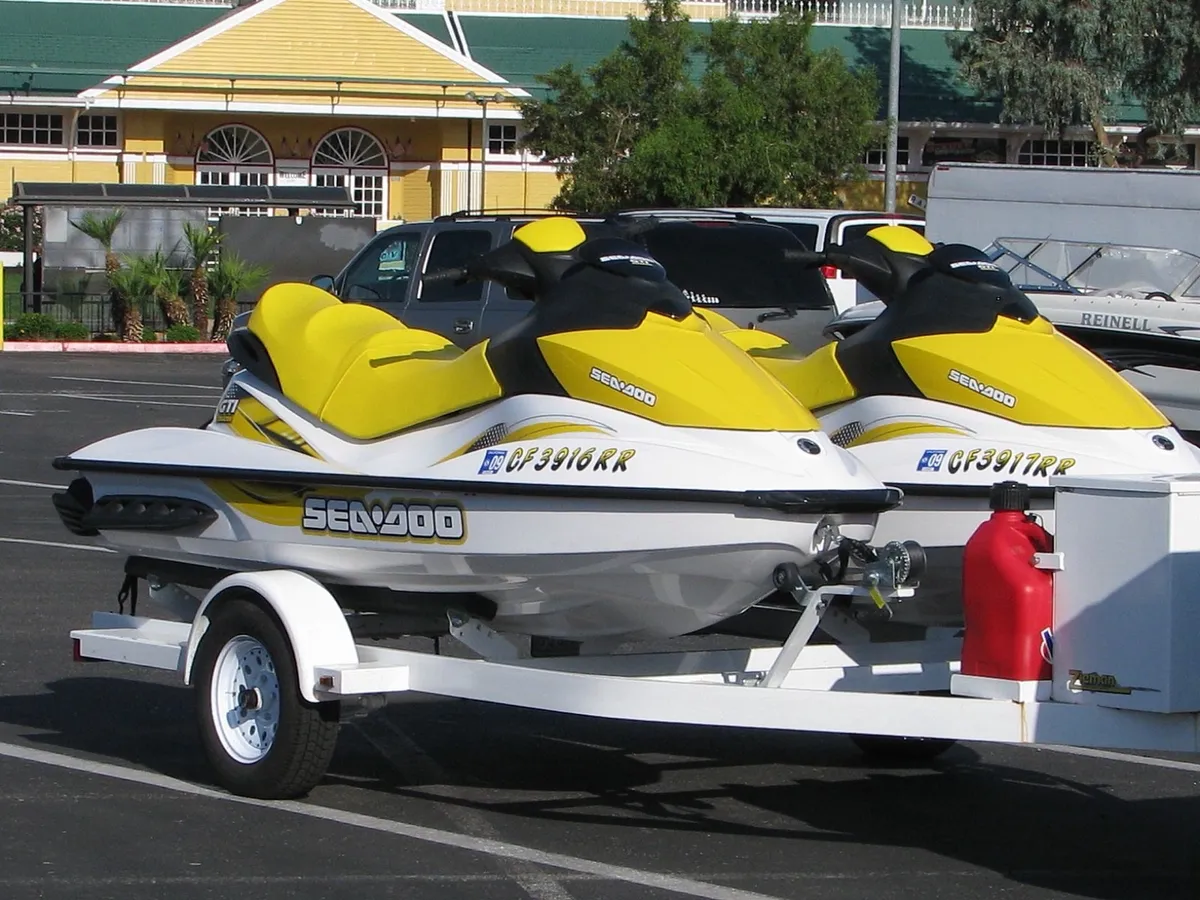
Bombardier Sea-Doo
Sea-Doo has the weirdest origin story in powersports. Bombardier, a Canadian aerospace and train company, decided in 1968 that personal watercraft were the future. They built the Sea-Doo, it flopped, and they shelved it for twenty years. In 1988 they relaunched with modern engineering and a Rotax engine, and within five years they were outselling Kawasaki. A company that builds subway cars and business jets makes one of the most popular toys on the water. That's a sentence nobody predicted. If the WaveRunner is the Accord, the Sea-Doo is the WRX. Bombardier's approach has always been engineering-first. They were first with on-water braking (the iBR system, which uses a reverse gate to slow down). First with a viable fishing PWC. First with closed-loop cooling to keep saltwater out of the engine. They treat PWC like a technology platform rather than a toy, and it shows. The FISH PRO is the most absurd and brilliant product in the PWC market. It's a $20,000 personal watercraft with a Garmin fish finder, a 13.5-gallon cooler, rod holders, and a trolling mode. The idea that someone would go offshore fishing on something the size of a motorcycle seemed insane. Then people started actually catching fish on them, and now there's a whole subculture of PWC anglers. Sea-Doo's Achilles heel has historically been reliability. The Rotax engines are powerful but the electrical systems and supercharger seals on the high-performance models have earned a reputation for expensive repairs. Yamaha owners love pointing this out. Sea-Doo owners don't hear them because they're too far ahead.
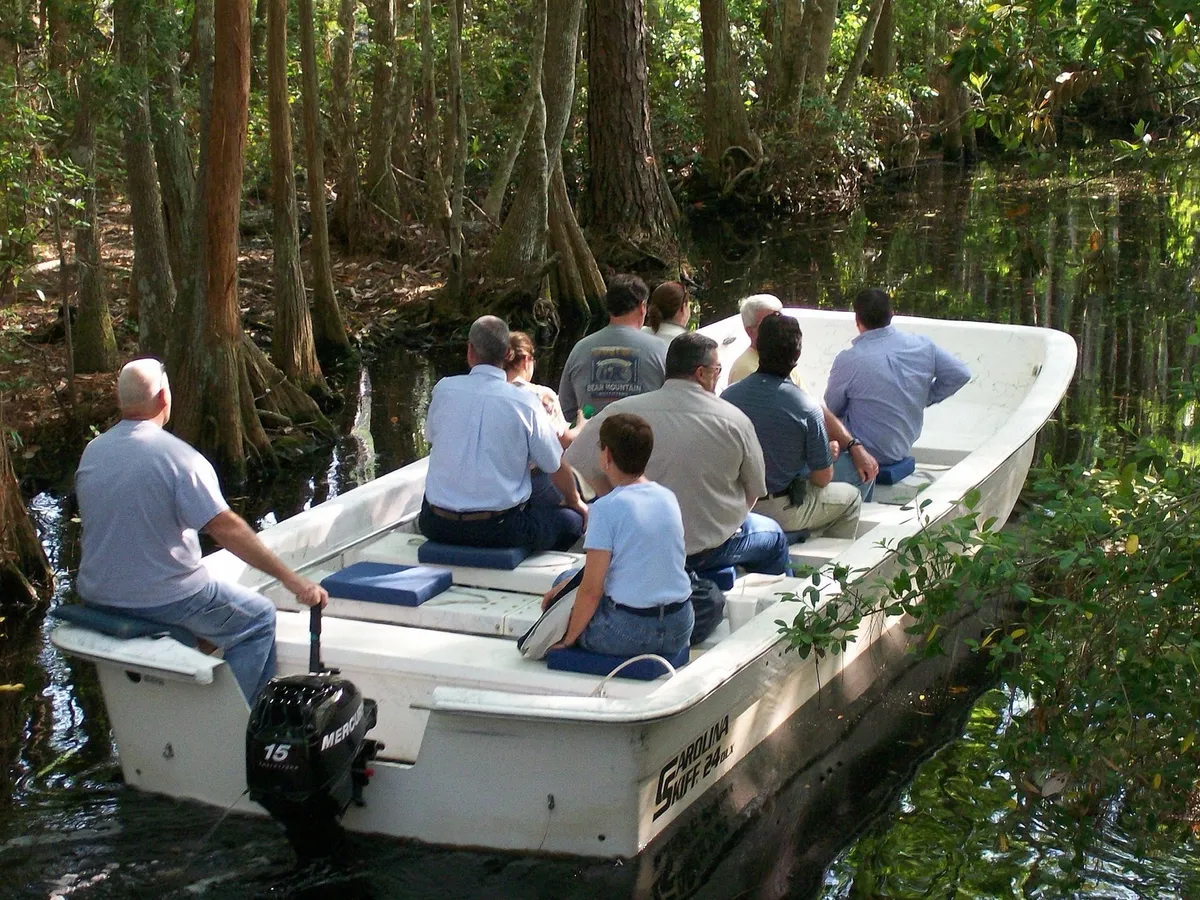
Carolina Skiff
The Carolina Skiff is the most popular boat in America that nobody brags about owning. Founded in 1983 in Wadesboro, North Carolina, the company had one idea: build the cheapest, simplest fiberglass boat possible and sell a ton of them. It worked. Carolina Skiff moves more units than brands costing three times as much. The design philosophy is aggressive simplicity. Flat bottom. No wood anywhere in the hull (wood rots, which is why cheap boats fall apart). One-piece fiberglass layup. Self-bailing cockpit. The boats are sold without engines because the company figured out that letting buyers rig their own outboard kept the sticker price low and the customization high. A bare 17-footer can be had for under $10,000. Rig a used Yamaha on the back and you're fishing for less than a decent used car. People who own Boston Whalers and Grady-Whites look down on Carolina Skiffs. This is documented, quantifiable snobbery. The Carolina Skiff owner's response is universal: they're out fishing right now while the Grady-White is in the shop getting its third trim tab adjusted. The Skiff doesn't ride as well in rough water (flat bottom, remember). It doesn't look as pretty at the dock. It will never be featured in a glossy boat magazine. But it floats in six inches of water, it's nearly impossible to sink, and it costs less than the electronics package on a center console. The Corolla of boats. The Timex of boats. The "it just works" of boats. Carolina Skiff understood something that premium brands never will: most fishing happens in calm water within five miles of the ramp.