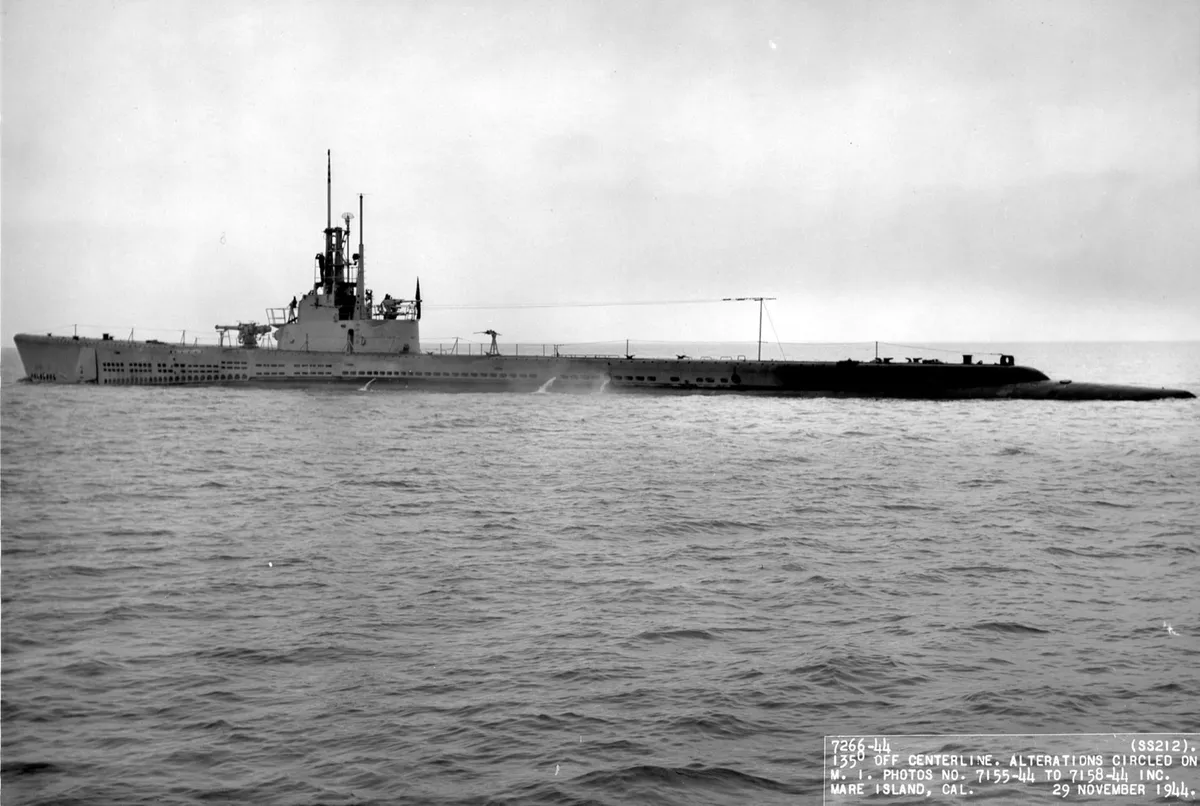
Gato-class Submarine
Why it matters
The Gato class fought the submarine war that strangled Japan. American submarines comprised less than 2% of the Navy's personnel and sank over 55% of Japan's merchant tonnage.
The cost was staggering. 52 US submarines were lost during the war. 3,505 submariners killed. That's a 22% casualty rate, the highest of any branch of the US military in any war.
One in five men who went on patrol in a fleet submarine did not come home. The Gato class bore the brunt of this campaign, running long patrols from Pearl Harbor and Australia into Japanese-controlled waters, operating alone, with no rescue if things went wrong.
What it was like
You live inside a steel cylinder 311 feet long and 27 feet across with 84 other men. The air is a permanent cocktail of diesel exhaust, cooking grease, battery acid, sweat, and human waste.
There is no ventilation worth mentioning when submerged. The boat has two modes: on the surface, where you can run the diesels and charge batteries and breathe actual air, and submerged, where you run on battery power and the air slowly goes bad.
When the CO2 builds up, you get headaches first, then confusion, then you stop functioning. Depth charging is the thing that haunts every submariner who survived it.
You're at 200 feet. You can hear the destroyer's propellers overhead, a grinding, rhythmic thrum that gets louder as it approaches. Then the charges start detonating.
The hull rings like a bell. Light bulbs explode. Cork insulation rains down from the overhead. Gauges crack. Pipes rupture and spray water into the compartment.
The hull flexes visibly. You can see it move. Every man aboard knows the test depth is 300 feet. Below that, the hull implodes. You don't drown. The water pressure crushes you before you have time to inhale.
During a sustained depth charge attack, the boat goes silent. No talking. No movement. The sound gear operator listens to the destroyer turning, setting up for another run.
The air gets worse. The temperature rises. And you wait. If the batteries die before the destroyer gives up, you have to surface into the destroyer's guns.
If the hull cracks, everyone dies in seconds. There is no escape from a submarine.
The crew
Torpedo Room Gang
The forward torpedo room doubled as crew quarters. Men slept in bunks wedged between six torpedo tubes and the reloads racked on the deck. Loading a torpedo was a manual operation involving a 3,000-pound weapon on greased skids, pushed by hand into the tube in a space too small to stand up straight. During combat, the torpedo room crew loaded, set depth and speed on each torpedo, flooded the tubes, and fired on the captain's command. If a torpedo ran hot in the tube, it could detonate and kill everyone in the forward compartment.
Diesel Engine Watch
The engine room was the loudest space on the boat. Four massive diesel engines driving generators at full power, in a compartment where the temperature routinely exceeded 120 degrees. The machinist mates who stood watch here communicated by hand signals because you couldn't hear a shout at arm's length. Diesel exhaust was supposed to go overboard through the mufflers, but enough leaked to give everyone a permanent headache. When the boat submerged, the diesels shut down and the engine room went eerily silent. The electric motors in the maneuvering room took over, and the engine room crew shifted to maintenance and damage control.
Sound Operator
The man with the headphones who told the captain where the enemy was. Sonar in a WWII submarine was primitive: passive listening only, no active pinging during an attack. The sound operator differentiated between merchant ship propellers, warship propellers, and torpedo wakes by ear. He could hear depth charges being dropped before they detonated. During an attack, the entire boat's survival depended on his ability to track the target and report bearing changes. During depth charging, he was the crew's only connection to what was happening above, calling out the destroyer's bearing and whether it was closing or opening. Every man aboard listened to his reports and measured their survival by his tone of voice.
Patina notes
Very few Gato-class boats survive, and none are in their wartime condition. Submarines corrode aggressively. The combination of salt water, battery acid, and diesel creates an environment that eats steel from the inside out.
Surviving museum boats have been extensively rebuilt, but the interior spaces retain their claustrophobic authenticity. Walking through a Gato-class submarine and realizing 85 men lived in this space for two-month patrols is the most effective history lesson you'll ever get.
Preservation reality
USS Drum (SS-228) in Mobile, Alabama and USS Cod (SS-224) in Cleveland are among the surviving Gato-class boats open to the public. USS Cod is notable for being one of the most authentic WWII submarine restorations anywhere.
Maintaining a submarine as a museum is brutal. The hull sits in water that wants to destroy it. The ballast tanks corrode. The pressure hull weeps at every penetration. These organizations operate on shoestring budgets and volunteer labor, and every year the maintenance bill grows while the steel gets thinner.
Where to see one
- • USS Drum (SS-228), USS Alabama Battleship Memorial Park, Mobile
- • USS Cod (SS-224), Cleveland, Ohio
- • USS Silversides (SS-236), Muskegon, Michigan
Preservation organizations
- • United States Submarine Veterans Inc.
- • USS Cod Submarine Memorial
- • USS Silversides Submarine Museum
Sources
- Naval History and Heritage Command (2026-03-05)
- On Eternal Patrol — Lost Submarines of WWII (2026-03-05)
Related vessels
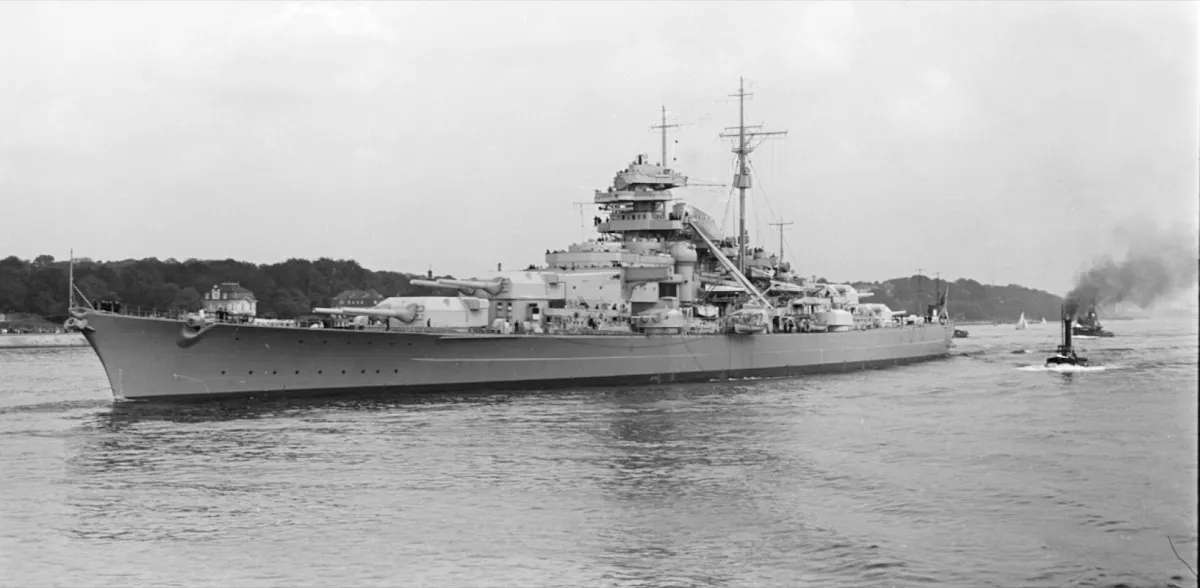
Bismarck
Bismarck's operational career lasted eight days. In that time, she became the most famous warship of the twentieth century. On May 24, 1941, she engaged HMS Hood and HMS Prince of Wales in the Denmark Strait. A shell from Bismarck penetrated Hood's magazine. The explosion broke Hood in half. She sank in three minutes. Of 1,418 crew, three survived. Hood was the pride of the Royal Navy. Churchill's order was immediate and absolute: sink the Bismarck. The Royal Navy sent everything. Battleships, carriers, cruisers, destroyers. Swordfish torpedo bombers — fabric-covered biplanes that looked like they belonged in the previous war — scored the hit that jammed Bismarck's rudder. She could only steam in circles. The next morning, King George V and Rodney pounded her for ninety minutes. Bismarck's crew scuttled her. Of 2,065 men, 114 survived.
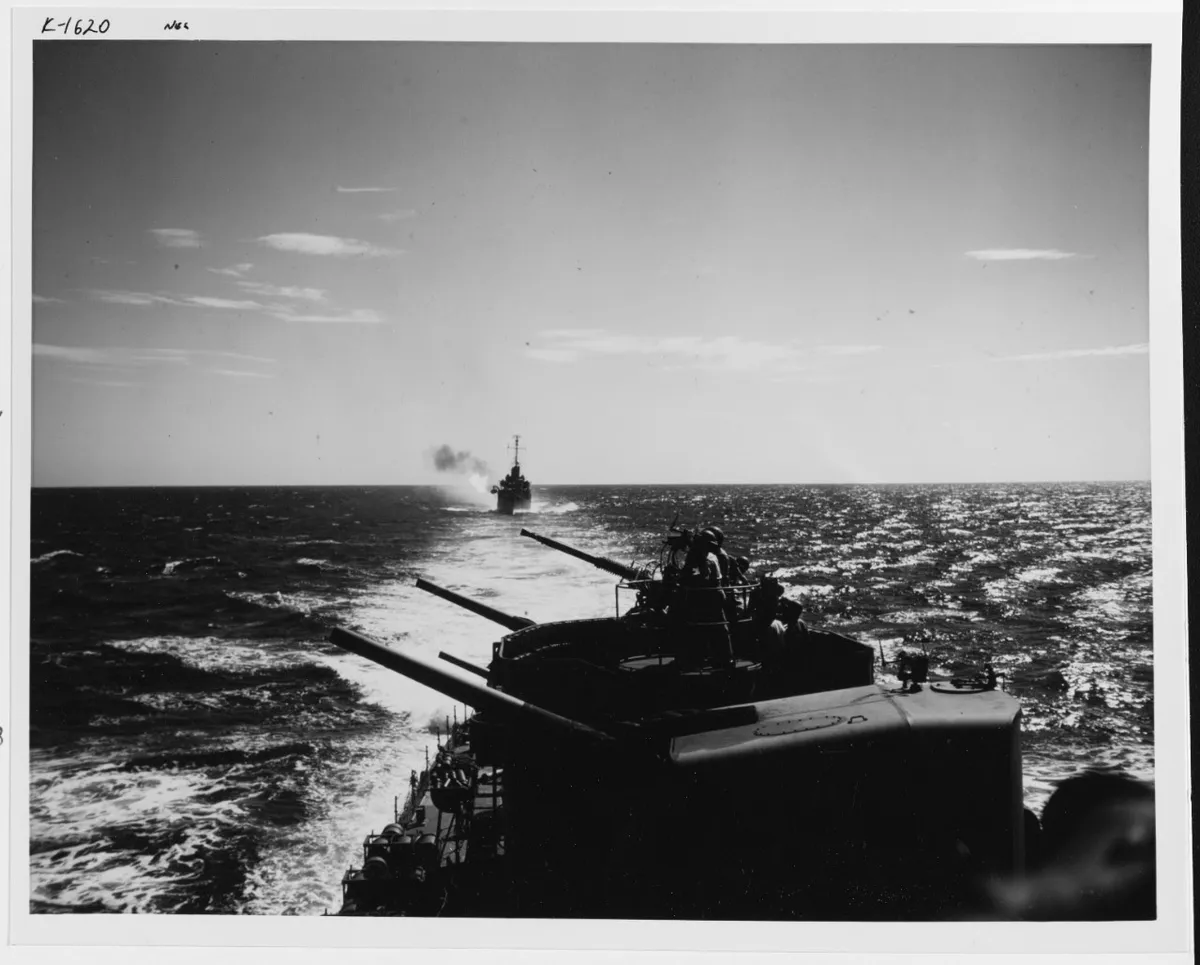
Fletcher-class Destroyer
The Fletcher class was the destroyer that won the Pacific. 175 built, more than any other destroyer class in history, and they did everything. Convoy escort in the Atlantic. Shore bombardment at Normandy. Surface actions in the Solomons. Radar picket duty at Okinawa, where they were positioned as sacrificial early-warning stations against kamikaze attacks. Nineteen Fletchers were lost during the war. They weren't glamorous. They were the ships that showed up everywhere, did the ugly work, and took casualties doing it.
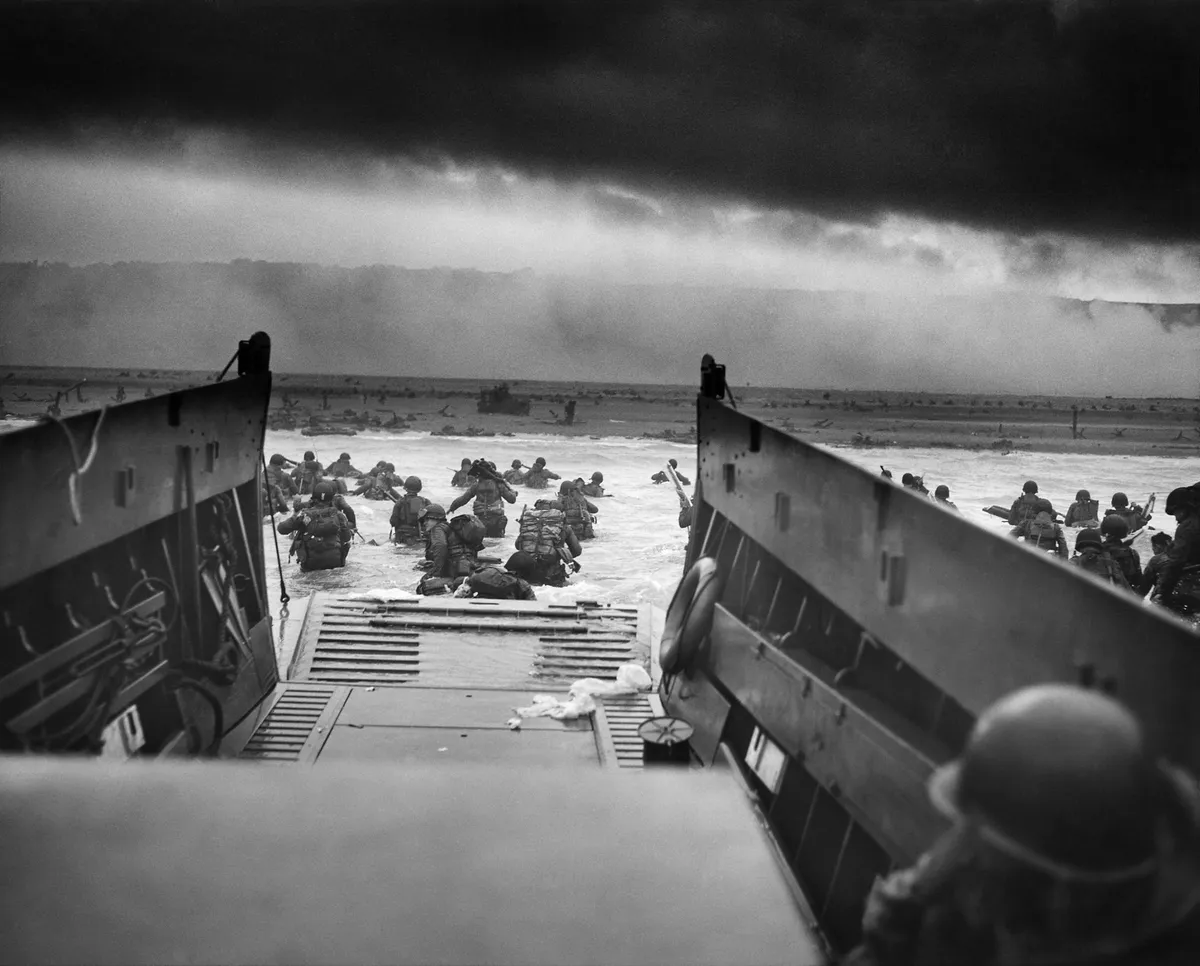
Higgins Boat (LCVP)
Eisenhower said Andrew Higgins was 'the man who won the war for us.' The LCVP — Landing Craft, Vehicle, Personnel — was the boat that put soldiers on the beach. At Normandy, Iwo Jima, Okinawa, North Africa, Sicily. The bow ramp was Higgins' innovation, borrowed from boats he'd seen in the Louisiana bayou. When that ramp dropped, you were looking at the beach, and the beach was looking at you. 23,398 were built. Without them, no amphibious invasion was possible.