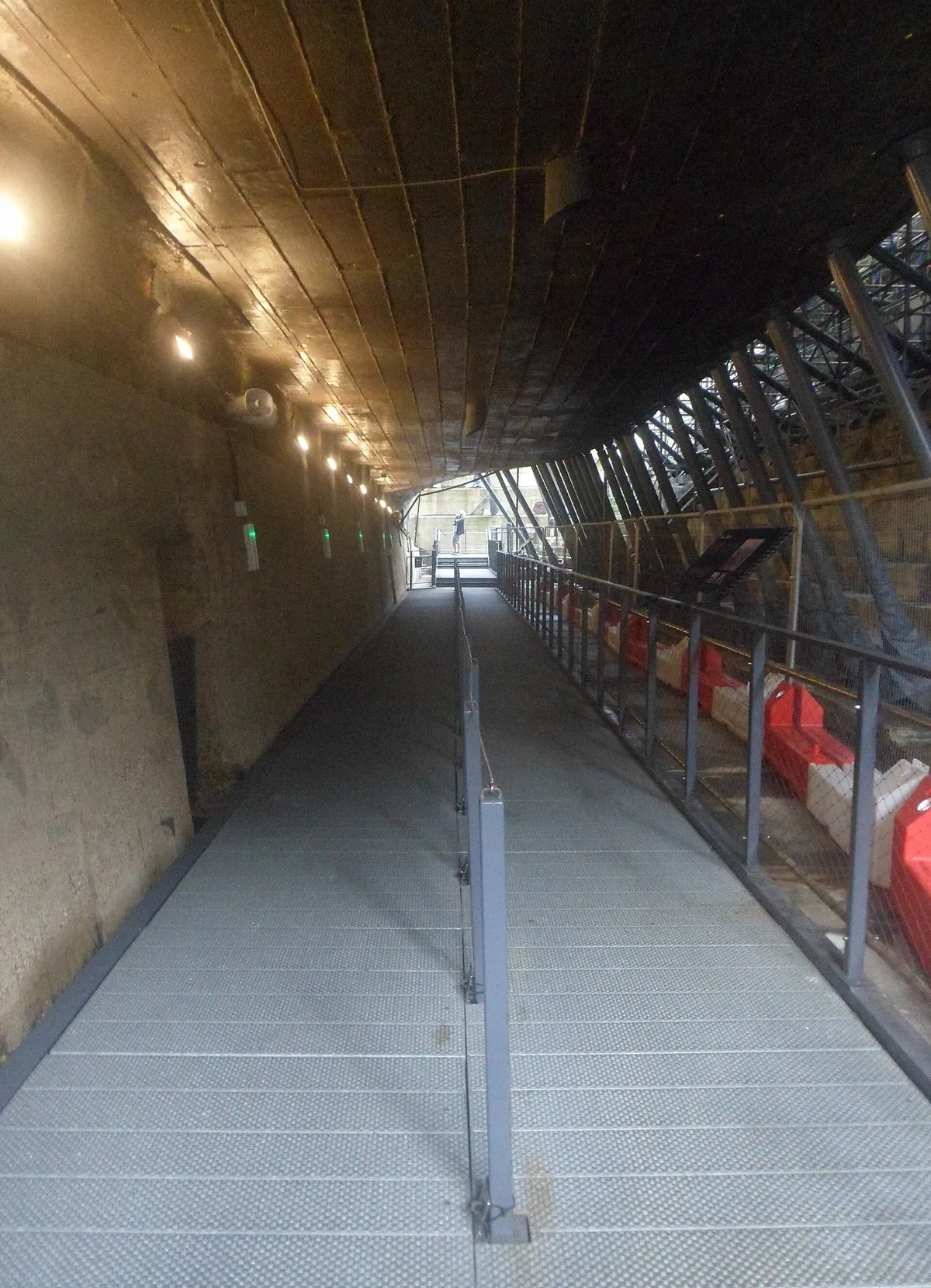
HMS Victory
HMS Victory is the ship where Horatio Nelson died. She's also the oldest commissioned warship in the world, still on the books of the Royal Navy after 260 years. But Nelson's death is the thing. It's always been the thing.
At Trafalgar on October 21, 1805, Nelson led the British fleet in two columns directly at the combined French and Spanish line. This was deliberate insanity. Sailing straight at an enemy line meant the lead ships would take raking fire for 40 minutes before they could fire back. Victory was the lead ship of the windward column. She absorbed broadside after broadside before crashing through the enemy line between Bucentaure and Redoutable.
Nelson stood on Victory's quarterdeck in full dress uniform with his medals and decorations clearly visible. His officers begged him to change or cover the insignia. He refused. At 1:15 p.m., a musket ball fired from the fighting top of Redoutable hit Nelson in the left shoulder, passed through his lung, and lodged in his spine. He was carried below to the orlop deck where the surgeon, William Beatty, told him there was nothing to be done. Nelson died at 4:30 p.m. His last confirmed words were "Thank God I have done my duty."
Britain won Trafalgar. The combined fleet lost 22 ships. The Royal Navy lost none. Nelson's tactical genius and personal courage broke Napoleon's naval power permanently. Britain would rule the seas for the next century. The cost was one admiral, beloved by his sailors and his nation, bleeding out on the planking of his own ship while the guns roared overhead.
Victory herself took 12 years to build. Six thousand trees, mostly English oak, went into her construction. She was launched in 1765, didn't commission until 1778, and served in the American Revolutionary War, the French Revolutionary Wars, and the Napoleonic Wars before Trafalgar. She's been in dry dock at Portsmouth since 1922.
1765-present · warship