Cold War
1945-1991Nuclear submarines, carrier battle groups, and the silent war beneath the ocean. Two superpowers stared at each other across fleets that could end the world.
Context
The Cold War Navy existed to do two things: project American power globally, and find Soviet submarines before they could launch nuclear missiles. The nuclear submarine changed everything. USS Nautilus proved that a submarine could operate indefinitely without surfacing. Ballistic missile submarines became the ultimate deterrent — invisible, invulnerable, and carrying enough firepower to destroy a civilization.
Defining characteristics
- Nuclear propulsion
- Ballistic missile submarines
- Carrier battle groups
- Anti-submarine warfare
- Forward deployment
Vessels (3)
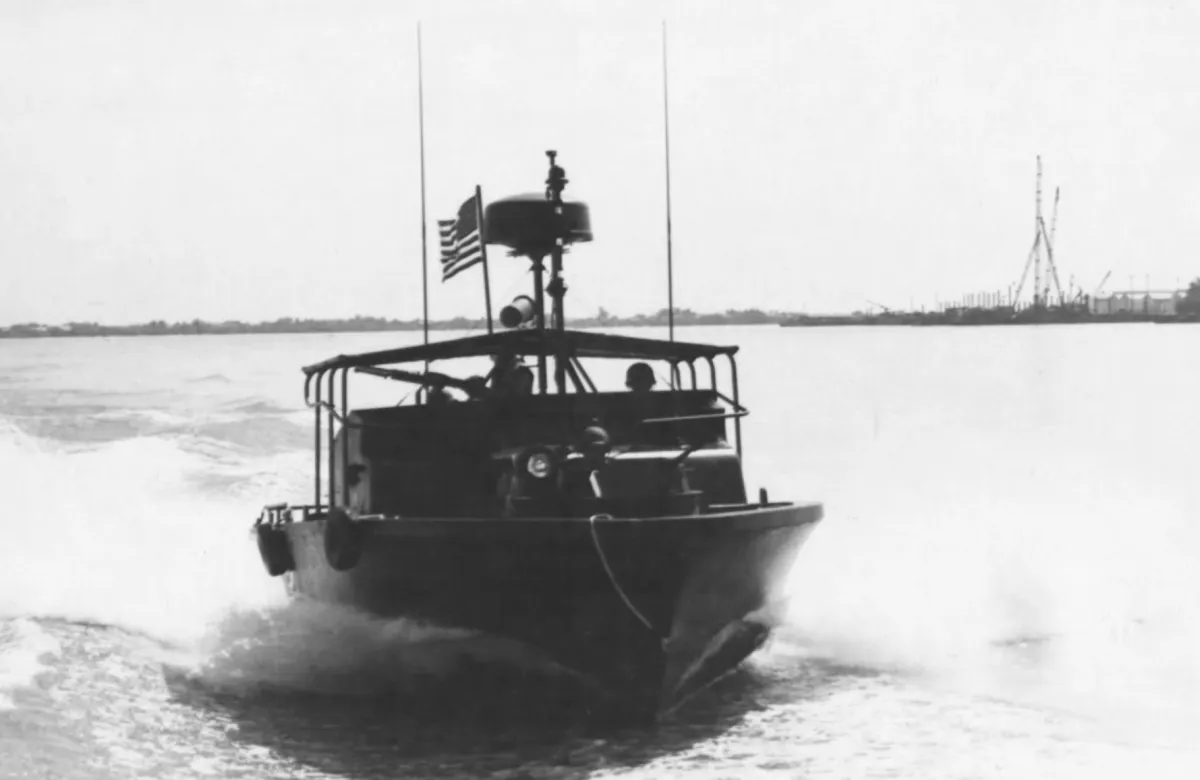
PBR Mark II (Patrol Boat, River)
The PBR Mark II was the Navy's answer to a problem nobody wanted: how do you project naval power up a river in the jungle? The Mekong Delta was a labyrinth of narrow waterways, mangrove swamps, and villages that could be friendly at dawn and hostile by noon. The Navy needed something fast, shallow-draft, and tough enough to absorb ambush fire and keep running. Hundreds of PBRs operated in Vietnam between 1966 and 1975 as part of Operation Game Warden and the Mobile Riverine Force. Four-man crews ran patrols that were part law enforcement, part combat mission. They stopped and searched sampans, interdicted supply routes, and drew fire from both banks of rivers too narrow to turn around in. Then Francis Ford Coppola put a PBR crew at the center of Apocalypse Now, and the boat became the most recognizable small military vessel in film history. The journey upriver to find Colonel Kurtz is a journey into madness, and the PBR is the last piece of institutional sanity the crew has. When the boat stops, civilization stops. The real PBR deserves its reputation independently of Hollywood. It was a fiberglass hull in a war zone, crewed by young men doing the most dangerous small-boat duty in Navy history.
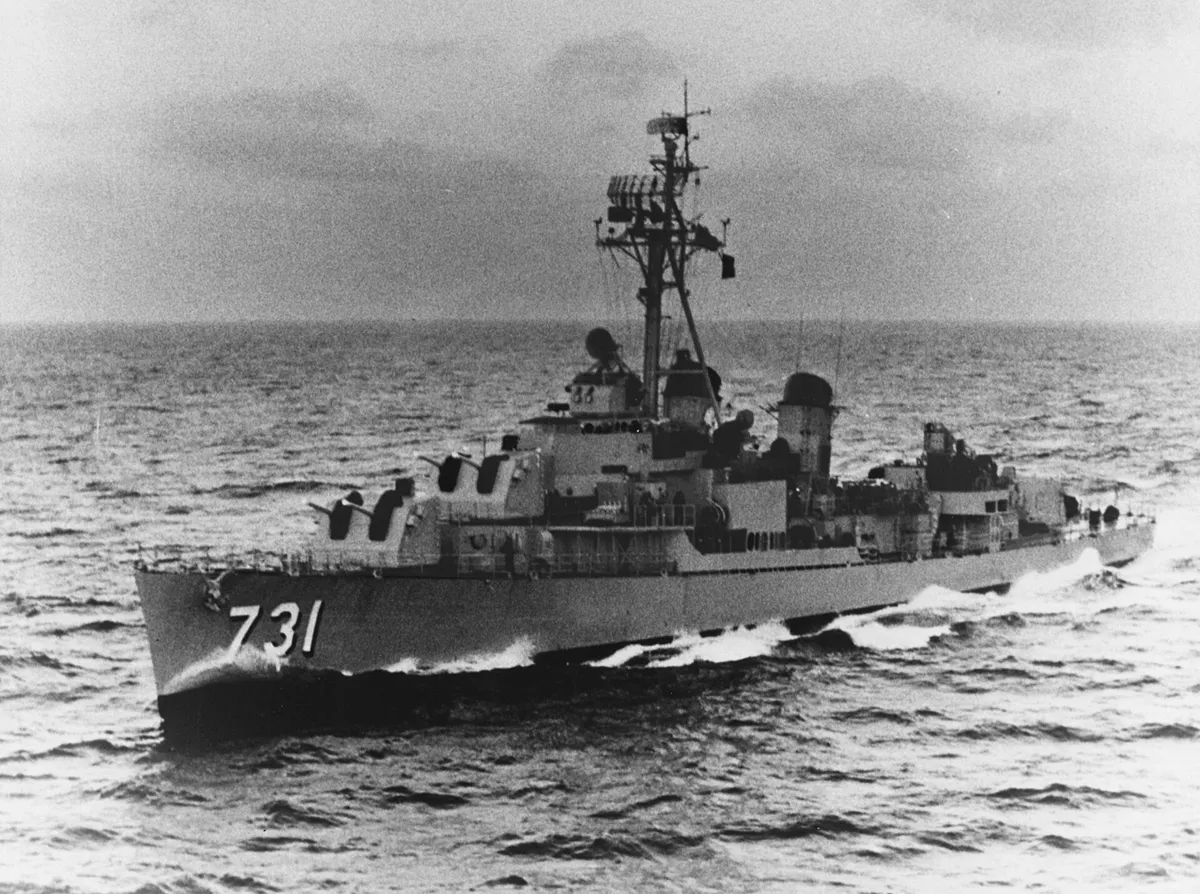
USS Maddox
The USS Maddox is probably responsible for more American deaths than any other destroyer in history, and she never fired a shot that caused them. On August 2, 1964, three North Vietnamese torpedo boats attacked Maddox in the Gulf of Tonkin. That part actually happened. Maddox returned fire, took one bullet hole in her superstructure, and the torpedo boats got chewed up by aircraft from the carrier Ticonderoga. A minor skirmish by any standard. Two days later, on August 4, Maddox and the destroyer Turner Joy reported a second attack. Radar contacts. Sonar contacts. Both ships fired into the darkness for hours. The problem is that the second attack almost certainly never happened. The radar and sonar returns were ghosts caused by weather, sea conditions, and jumpy operators. Captain Herrick of the Maddox sent a message within hours expressing doubt about the whole thing. It didn't matter. President Johnson went to Congress with both incidents and got the Gulf of Tonkin Resolution, which gave him authority to escalate military operations in Vietnam without a formal declaration of war. Congress voted 416-0 in the House and 88-2 in the Senate. The two senators who voted no were Wayne Morse and Ernest Gruening, and they were right. 58,220 Americans died in Vietnam. Somewhere north of two million Vietnamese died. The war tore the country apart for a decade. And it was launched on the back of an attack that a destroyer captain doubted before the gun barrels cooled. Robert McNamara admitted decades later that the August 4 attack didn't happen. The NSA declassified documents in 2005 confirming that intelligence had been deliberately skewed to support the narrative. The Maddox herself had an unremarkable career otherwise. She served in three wars, did her job, and was scrapped in 1972. The ship is gone. What she started isn't.
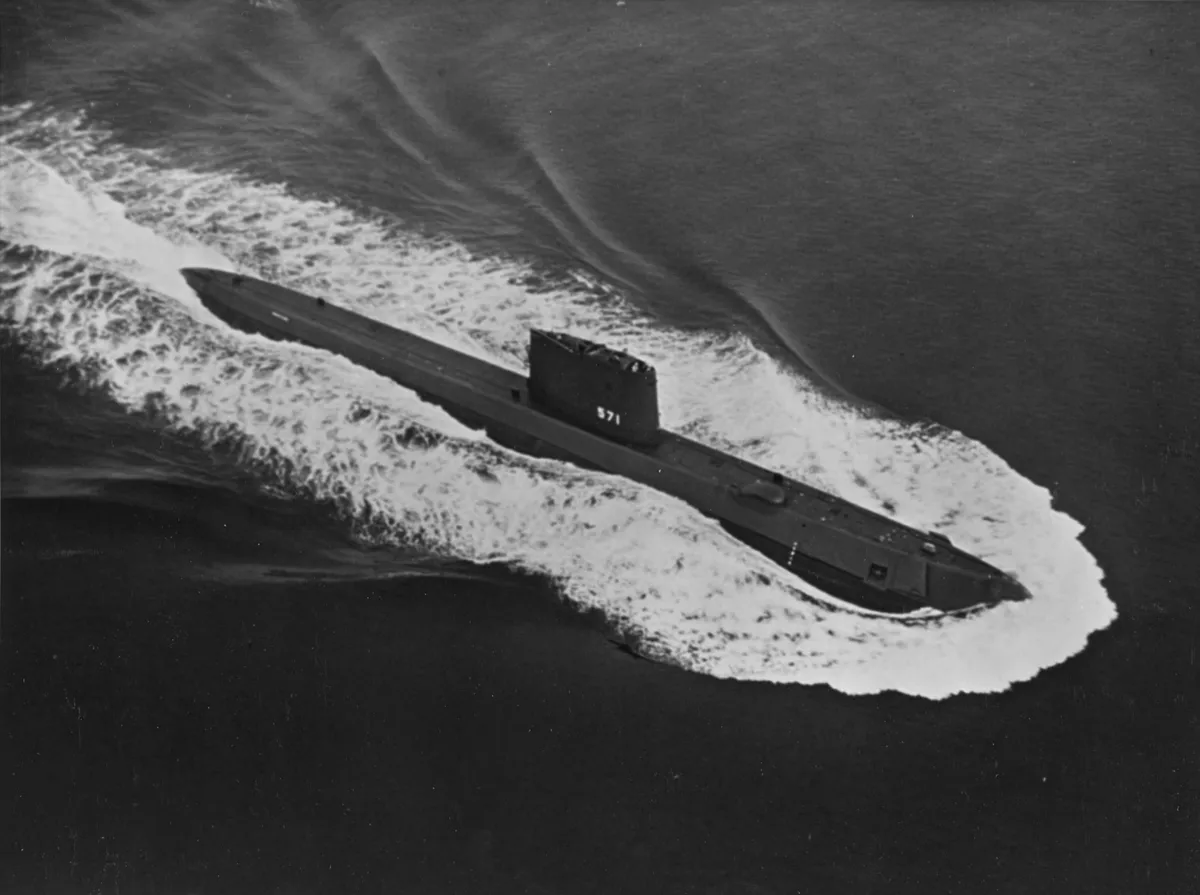
USS Nautilus (SSN-571)
USS Nautilus made every submarine that came before her obsolete in an afternoon. On January 17, 1955, her commanding officer signaled "Underway on nuclear power," and the entire calculus of submarine warfare changed. Before Nautilus, a submarine was a surface vessel that could hide underwater temporarily. Battery life measured in hours. Speed submerged was a fraction of surface speed. Nautilus could stay submerged indefinitely, at high speed, limited only by the crew's food supply and psychological endurance. On August 3, 1958, she became the first vessel to reach the geographic North Pole, transiting beneath the Arctic ice cap. The message: "Nautilus 90 North." Everything the nuclear submarine fleet became, every ballistic missile submarine sitting on patrol right now ensuring nuclear deterrence, started with this boat.