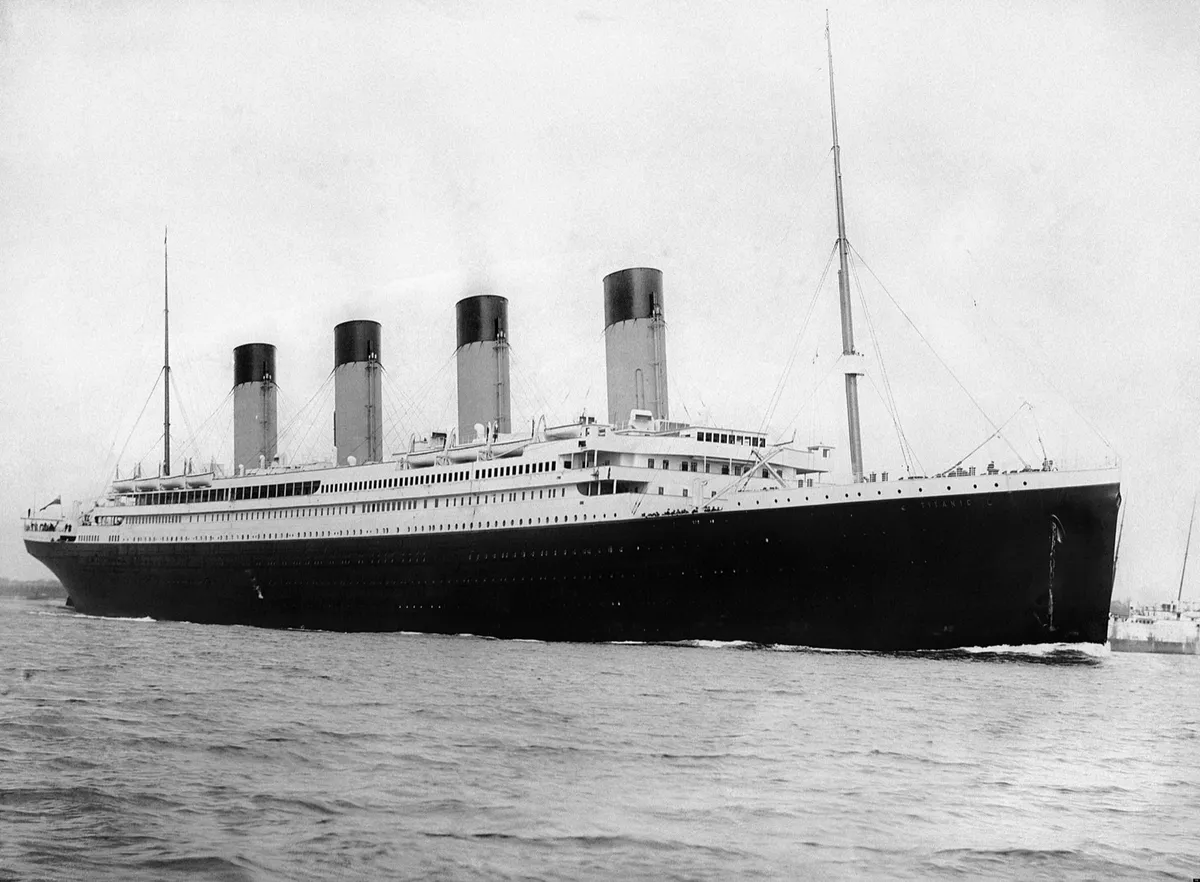
RMS Titanic
Why it matters
The Titanic story has been told so many times it's become wallpaper. Strip away the romance and you're left with something uglier: a ship built to showcase wealth, operated with criminal negligence, and sunk in a way that killed people along class lines.
She hit an iceberg at 11:40 PM on April 14, 1912, about 370 miles south of Newfoundland. The berg opened a 300-foot gash along the starboard side, flooding five forward compartments. Thomas Andrews, the ship's designer, calculated she had maybe two hours. He was off by about 40 minutes.
The lifeboats launched half-empty. Not because people refused to board them, but because the crew was poorly trained and the officers on the port side interpreted "women and children first" as "women and children only." Lifeboat 1 left with 12 people. It could hold 40. Meanwhile, third-class passengers found gates locked between decks. Some were held back by crew. The survival rate in first class was 62%. In third class it was 25%.
1,517 people died. Most of them didn't drown. The North Atlantic was 28 degrees Fahrenheit that night. People in life jackets floated alive for ten to fifteen minutes before cardiac arrest from hypothermia. The sounds carried for almost an hour. The survivors in the lifeboats listened.
The disaster did accomplish something. The International Convention for the Safety of Life at Sea followed in 1914, mandating lifeboat capacity for every person aboard and 24-hour radio watches. It took 1,517 deaths to establish what should have been obvious.
What it was like
Below the grand staircase and the first-class dining room, Titanic was a coal-fired industrial plant. The 176 firemen worked in six boiler rooms feeding 29 boilers, shoveling roughly 600 tons of coal per day in four-hour shifts. Temperatures near the boilers exceeded 120 degrees. The men worked shirtless, black with coal dust, in a space lit by bare bulbs and filled with the roar of forced draft.
When the iceberg hit, Boiler Room 6 flooded first. Fireman Frederick Barrett watched the sea pour through the hull plating two feet above the floor. He and his crew escaped through a closing watertight door with seconds to spare. The engineers stayed at their posts keeping the lights on and the pumps running until the very end. None of the engineering officers survived.
On deck, the cold was the thing. Survivors describe the night as dead calm, no wind, stars sharp as glass. The ship's list grew so gradually that people convinced themselves it was nothing. Stewards served drinks. The band played ragtime, then hymns. When the bow went under, the stern rose until the ship was nearly vertical. People clung to railings and each other. Then the lights went out.
The crew
Fireman/Stoker
Shoveled coal into boilers in shifts of four hours on, eight off. Each man moved roughly 5 tons per shift in heat exceeding 120°F. When the flooding started, firemen in Boiler Rooms 5 and 6 were the first crew to see water coming through the hull.
Wireless Operator
Jack Phillips and Harold Bride operated the Marconi set. Phillips sent distress calls for nearly two hours straight. He was last seen still transmitting with water rising around his feet. Phillips died of hypothermia. Bride survived.
Stewardess
The 23 female crew members were stewardesses assigned to first and second class. Violet Jessop helped load lifeboats while the ship sank, was handed a baby as she climbed into Lifeboat 16, and survived. She later survived the sinking of HMHS Britannic in 1916.
Patina notes
Titanic sits in two pieces at 12,500 feet on the floor of the North Atlantic, about 370 miles south-southeast of Newfoundland. The bow section is relatively intact.
The stern is a debris field. When Ballard found her in 1985, the hull was already covered in rusticles, iron-eating bacterial colonies that look like rust-colored stalactites.
These organisms are consuming an estimated 400 pounds of iron per day. The hull plates are thinning. The mast has collapsed. Multiple salvage expeditions and submersible visits have accelerated deterioration through physical contact and prop wash.
Current estimates suggest the wreck will be unrecognizable by mid-century. The stern section may collapse into itself within the next decade.
Preservation reality
You can't preserve Titanic. She's two and a half miles down in near-freezing water being eaten alive by bacteria. RMS Titanic Inc. holds salvage rights and has recovered about 5,500 artifacts from the debris field, including a 17-ton section of hull plating now displayed at the Luxor Hotel in Las Vegas.
The Titanic Belfast museum in Northern Ireland opened in 2012 on the site of the Harland and Wolff shipyard where she was built. It's the best single destination for understanding the ship.
The National Maritime Museum in Greenwich and the Maritime Museum of the Atlantic in Halifax also hold significant collections. The 2023 Titan submersible implosion killed five people attempting to visit the wreck, which effectively ended tourist submersible visits.
Where to see one
- • Titanic Belfast, Belfast, Northern Ireland
- • Titanic: The Artifact Exhibition, Luxor Hotel, Las Vegas
- • Maritime Museum of the Atlantic, Halifax, Nova Scotia
Preservation organizations
- • RMS Titanic Inc.
- • Titanic Historical Society
- • Titanic Belfast
Sources
- Encyclopedia Titanica (2026-03-05)
- British Wreck Commissioner's Inquiry (1912) (2026-03-05)
- NOAA Ocean Exploration - Titanic (2026-03-05)
Related vessels
Carroll A. Deering
On January 31, 1921, the Carroll A. Deering ran aground on Diamond Shoals off Cape Hatteras, North Carolina, with all sails set. The Coast Guard reached her four days later. The lifeboats were gone. The crew's personal belongings were gone. But dinner was being prepared in the galley, the tables were set, and the ship's cats were still aboard. Eleven men had vanished from a brand-new, well-found schooner in one of the most heavily trafficked shipping lanes on the East Coast. No bodies were ever recovered. No lifeboat was ever found. The investigation pulled in five government agencies, and the deeper they dug, the stranger it got. The ship's logs were missing. The steering gear had been deliberately smashed. Navigation equipment was gone. Two anchors had been dropped, with their chains hanging over the bow in a way that suggested the ship had been anchored and then cut loose. Someone had wrecked the ship's ability to navigate and steer, then left. On January 29, two days before the grounding, a lightship keeper at Cape Lookout reported that a crewman on the Deering had hailed him through a megaphone, saying the ship had lost her anchors. The man on the megaphone was not an officer. That detail haunted investigators. Theories ranged from mutiny to rum-running pirates to Soviet agents. The Deering's first mate, Charles McLellan, had openly clashed with the original captain (who fell ill and was replaced before the final voyage). The replacement captain, W.B. Wormell, was 66 years old and may not have had full control of his crew. At least nine other vessels disappeared in the same area around the same time, leading some to call it an early "Bermuda Triangle" cluster. The FBI, the State Department, and the Department of Commerce all investigated. None of them solved it. The case files were sealed, then lost, then partially recovered decades later. Herbert Hoover, then Secretary of Commerce, personally oversaw the investigation and came away frustrated. Whatever happened aboard the Carroll A. Deering, eleven men took the answer with them.
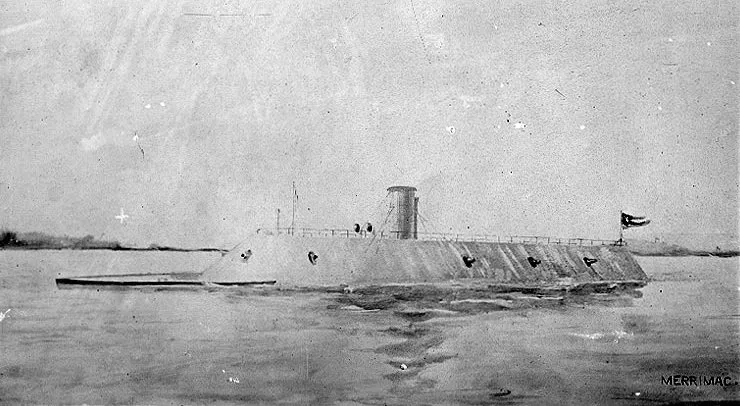
CSS Virginia
The CSS Virginia was born from desperation and scrap metal. When Union forces abandoned the Norfolk Navy Yard in April 1861, they burned the steam frigate USS Merrimack to the waterline and sank her. The Confederacy raised the hull, found the engines salvageable (barely), and built an armored casemate on top. Four inches of iron plate bolted over 24 inches of oak and pine, sloped at 36 degrees to deflect shot. She looked like a barn roof floating on a raft. She was the most dangerous warship in the Western Hemisphere. On March 8, 1862, Virginia steamed into Hampton Roads and attacked the Union blockading squadron. She rammed and sank the USS Cumberland, a 24-gun sloop that went down with 121 of her crew still fighting. Her guns couldn't hurt Virginia. The frigate USS Congress surrendered after Virginia's shells set her ablaze. Another 120 men died. The wooden warships USS Minnesota, USS Roanoke, and USS St. Lawrence all ran aground trying to escape. If Virginia had returned the next morning unopposed, she could have broken the Union blockade. But Monitor was waiting. The four-hour engagement the next day proved that the age of wooden warships was finished. Virginia landed dozens of hits on Monitor without breaking through. Monitor's Dahlgrens cracked Virginia's armor in places but couldn't penetrate. Virginia tried to ram but Monitor was too nimble. It was the first battle between ironclad warships, and it ended with both sides claiming victory and neither ship sunk. Virginia fought in the area for two more months but never left the Roads. Her 21-foot draft meant she could only navigate deep channels, and her engines, already condemned before the war started, could barely push her at walking speed. When Union forces advanced on Norfolk in May 1862, the crew tried to lighten her enough to escape upriver. They couldn't. On May 11, her crew set her afire and she exploded when the flames reached the magazine. Nothing of the ship survived.
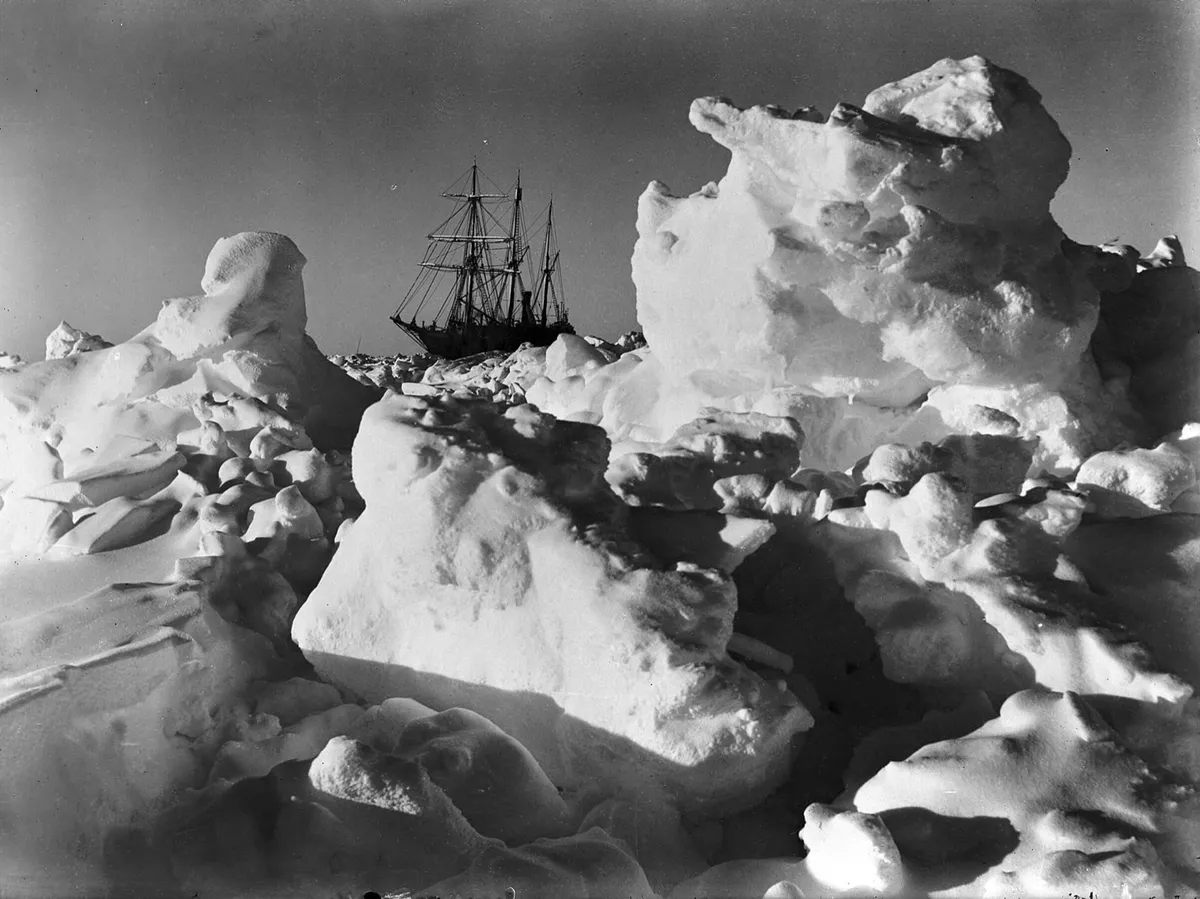
Endurance
Endurance never reached Antarctica. That's the first thing to understand. Shackleton's Imperial Trans-Antarctic Expedition was supposed to cross the continent from the Weddell Sea to the Ross Sea, roughly 1,800 miles over the pole. They didn't make it to shore. Endurance entered the Weddell Sea pack ice in December 1914 and became trapped on January 19, 1915. For ten months the crew lived aboard while the ice slowly crushed the ship around them. Frank Hurley's photographs show the hull buckling, the deck timbers splintering, the masts leaning at impossible angles. On October 27, 1915, Shackleton ordered the crew onto the ice. Endurance sank on November 21. What followed is the greatest survival story in the history of exploration. Twenty-eight men camped on drifting ice floes for five months, eating seals and penguins, watching the floe they lived on crack and shrink. When the ice broke up in April 1916, they launched three salvaged lifeboats and sailed through open Antarctic seas to Elephant Island, a desolate rock at the tip of the Antarctic Peninsula. It was the first time they'd stood on solid ground in 497 days. Shackleton then took five men in the 22-foot James Caird and sailed 800 miles across the Southern Ocean to South Georgia Island. The Drake Passage is the most violent stretch of open water on earth. The boat was open. They navigated by dead reckoning and occasional sun sights through storm clouds. They made landfall on the wrong side of the island and Shackleton, Worsley, and Crean then crossed South Georgia's unmapped mountain range on foot to reach the whaling station at Stromness. Not a single man died. All 28 survived. The Trans-Antarctic Expedition was a complete failure by its stated objective and an absolute triumph of leadership. Shackleton brought everybody home. The wreck was found in March 2022 by the Endurance22 expedition at a depth of 10,000 feet in the Weddell Sea. The ship is upright, intact, with the name "ENDURANCE" still clearly visible on the stern. The cold, low-oxygen water preserved her like no one expected.