Spanish Colonial Yards
The shipyards of Palos de la Frontera, Moguer, and the Basque coast built the caravels and carracks that opened the Atlantic. Columbus's three ships came from this tradition. Santa María was likely built in Galicia or the Basque region. Niña and Pinta were from the Palos/Moguer area, owned by local seafaring families like the Pinzóns and Niños who had been building and sailing coastal vessels for generations. These were not royal shipyards or large commercial operations. They were small, family-run yards building vessels for Atlantic fishing and coastal trade. The caravel design they perfected, adapted from Portuguese innovation, was the technological breakthrough that made oceanic exploration possible. Small, shallow-drafted, and able to sail closer to the wind than any square-rigger, the caravel gave Spain and Portugal a generation's head start on the rest of Europe. The Andalusian and Basque yards continued building ships through the great age of Spanish exploration, producing the vessels that reached the Americas, rounded Cape Horn, and crossed the Pacific. But none of these yards survived as named institutions. They were absorbed into the larger story of Spanish maritime expansion.
Heritage
The builders who shaped these hulls worked without written plans, building from models and tradition passed through families of shipwrights. No names survive for most of them. The Pinzón family of Palos, who provided two of Columbus's three captains and likely owned Pinta, represents the kind of seafaring dynasty that populated these coastal towns: people who built ships, sailed ships, and passed both skills to their children. These anonymous yards produced the vessels for the most consequential voyage in recorded history. The men who built Santa María, Niña, and Pinta were constructing routine merchant and fishing vessels. They had no idea they were building ships that would reshape the world's political geography, demographics, and ecology permanently.
Vessels (3)
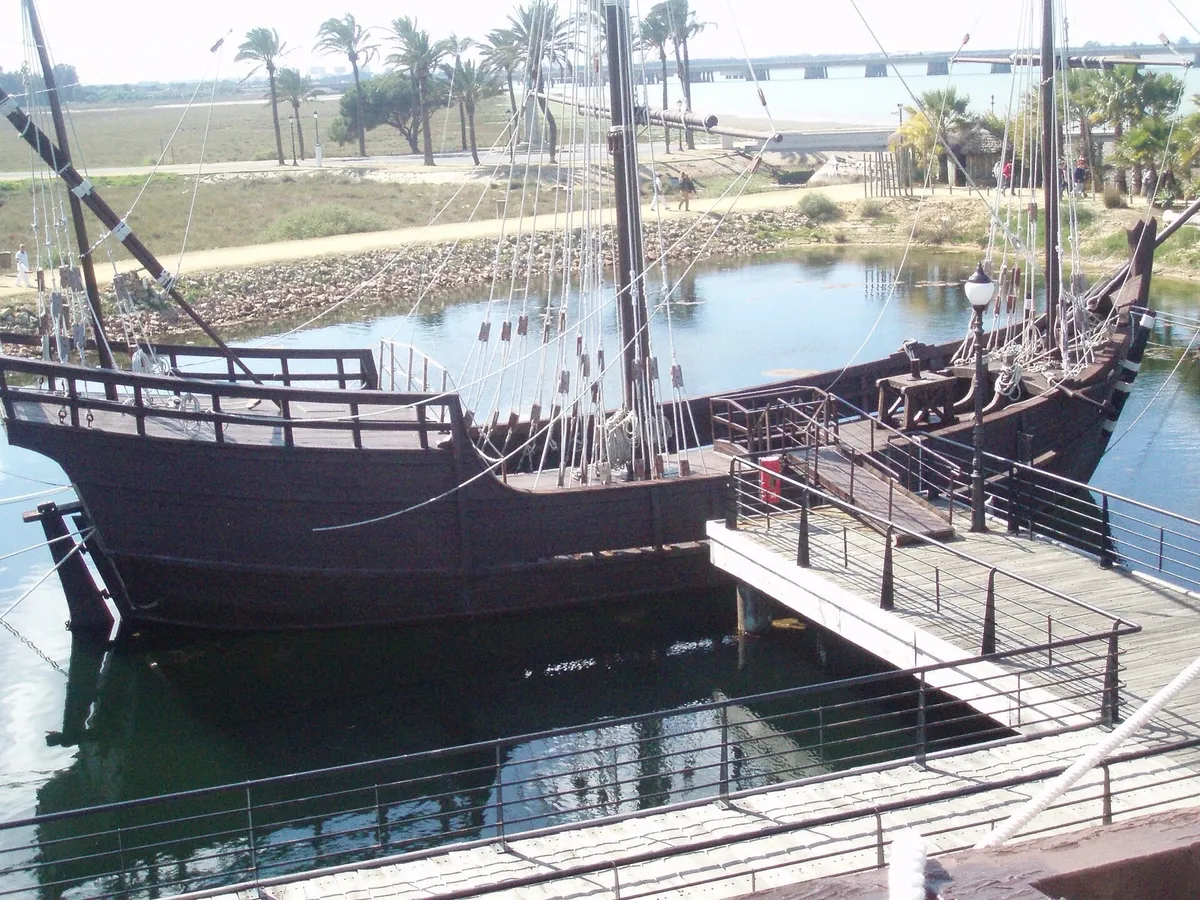
Niña
Niña was the workhorse of Columbus's expeditions and the ship he actually trusted with his life. Her real name was Santa Clara. 'Niña' was a nickname, probably after her owner Juan Niño. Columbus sailed her on the first and second voyages and she made at least five Atlantic crossings total, more than any other vessel of the 15th century. When Santa María ran aground on Christmas Day 1492, Columbus transferred to Niña for the return voyage. She carried him home. During the crossing back, they hit a storm so severe that Columbus wrote out an account of his discoveries on parchment, sealed it in a wax-coated barrel, and threw it overboard in case the ship went down. The ship didn't go down. Niña was that kind of vessel. She was a caravel, a Portuguese-developed design that was the technological marvel of the age. Small, shallow-drafted, and maneuverable, caravels could sail closer to the wind than any square-rigged ship. Columbus had her re-rigged from lateen to square sails in the Canary Islands before the Atlantic crossing, giving her the best of both worlds: square sails for running before the trade winds, with the option to go back to lateen for coastal work. Niña survived at least two Caribbean hurricanes after the first voyage. She was still sailing in 1501, possibly later. For a 50-foot wooden vessel built in the 1480s to still be operational after 15 years of hard Atlantic service is extraordinary. Most ships of her size and era lasted 10 years.
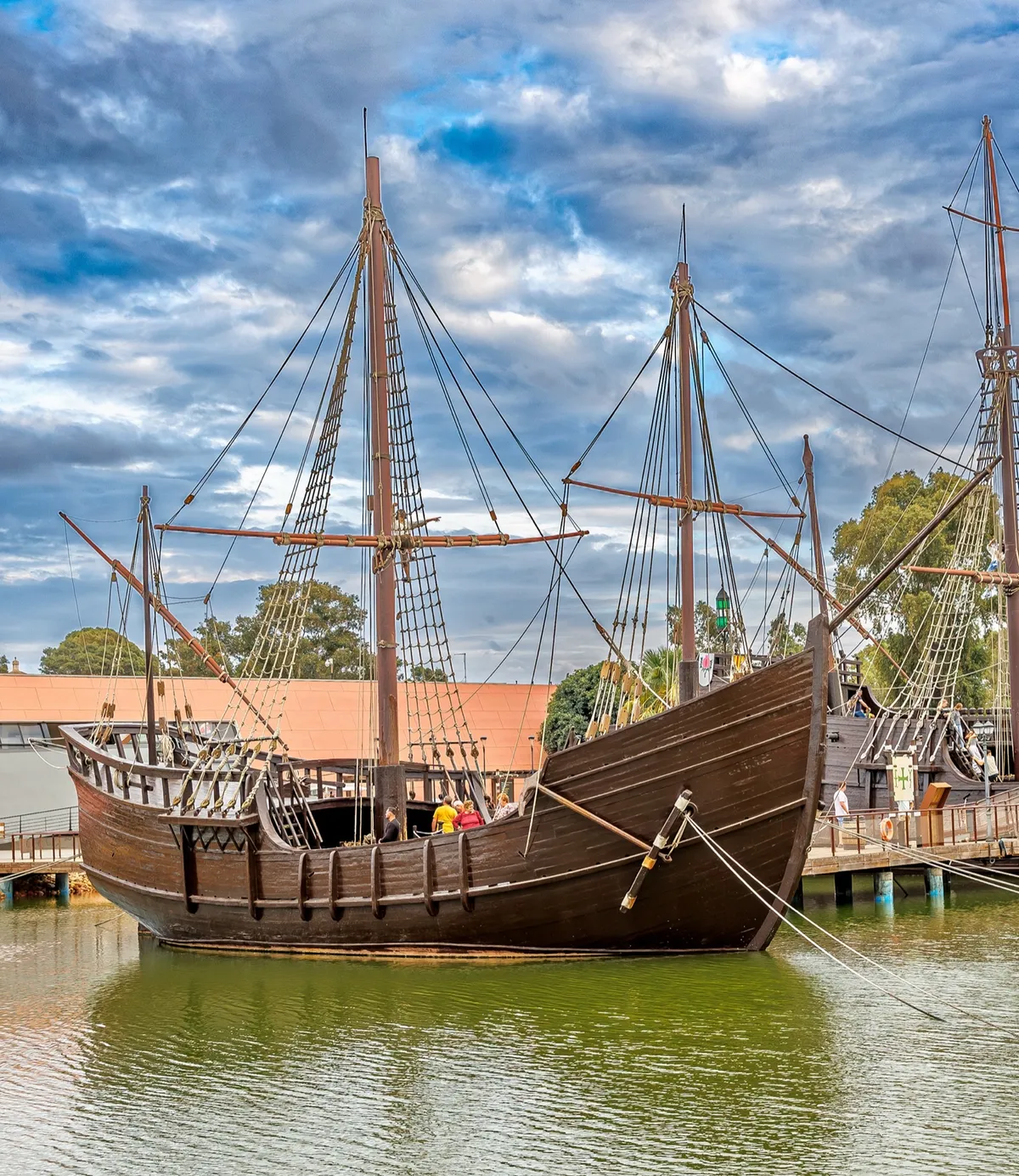
Pinta
Pinta was the first European ship to sight the Americas. At 2 a.m. on October 12, 1492, her lookout Rodrigo de Triana spotted a white cliff in the moonlight and fired a lombard to signal the fleet. Thirty-three days of open ocean sailing were over. Land. Columbus later claimed he'd seen a light the evening before, which conveniently entitled him to the lifetime pension the Spanish crown had promised to the first man to sight land. Rodrigo de Triana never received a cent. He reportedly converted to Islam and moved to North Africa. The first man to see the New World died in obscurity, cheated by his own admiral. Pinta's captain was Martín Alonso Pinzón, the most experienced sailor on the expedition and a man who did not enjoy taking orders from Columbus. Pinzón went rogue at least twice. In late November 1492, he sailed Pinta away from the fleet without permission, heading for a large island (probably Great Inagua) where he'd heard there was gold. He was gone for six weeks. Columbus was furious. Pinzón rejoined the fleet in January, offered a weak excuse, and the two men barely spoke for the remainder of the voyage. On the return crossing, another storm separated the ships. Pinta reached Bayona, Spain before Niña reached Lisbon. Pinzón sent a message to Ferdinand and Isabella requesting an audience to report the discoveries himself. The monarchs refused and told him to wait for Columbus. Pinzón was already sick. He died within weeks of reaching Spain, probably from syphilis contracted in the Caribbean. The Pinzón family spent the next 20 years in court, suing the Columbus estate for credit and compensation.
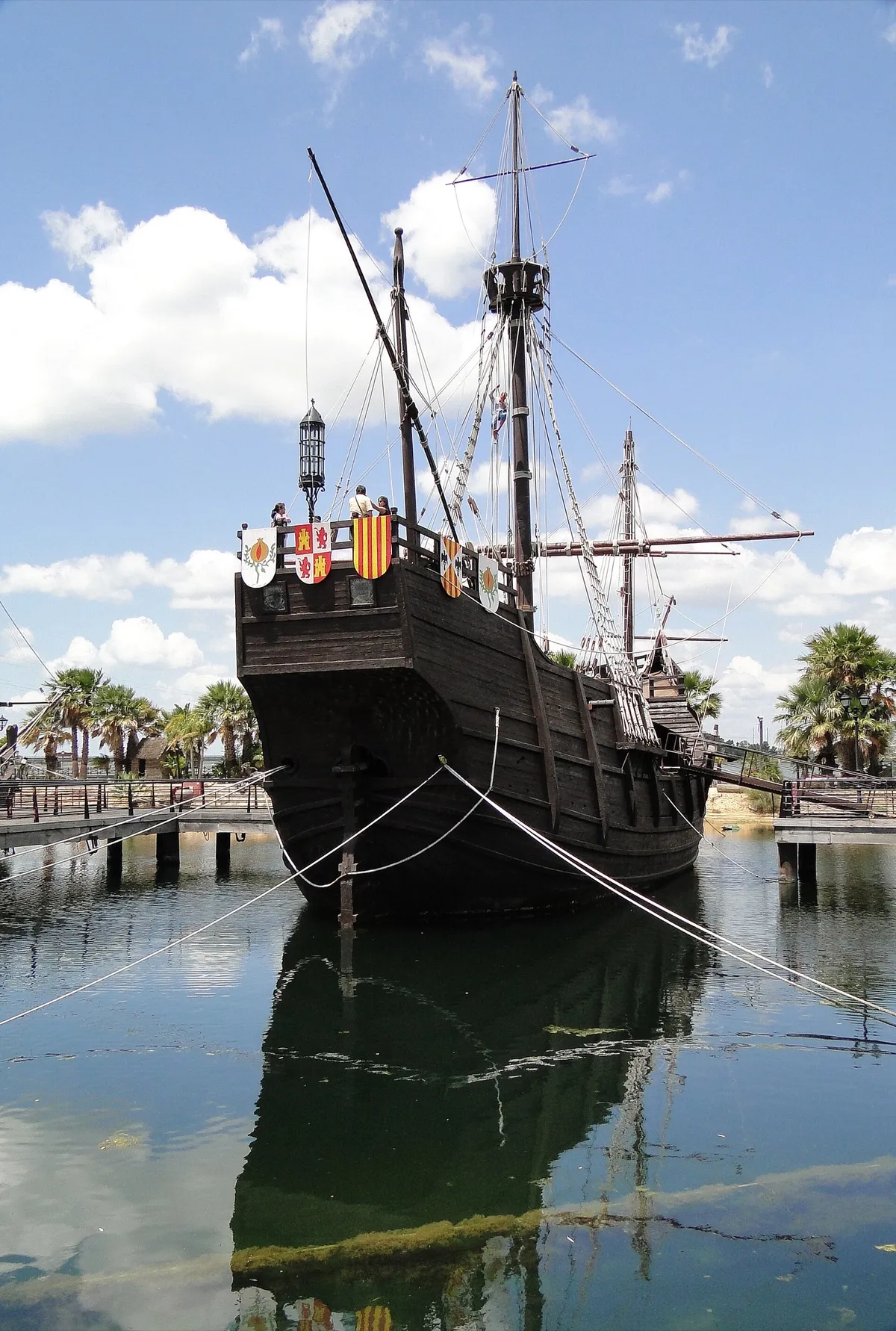
Santa María
Santa María was the flagship of the most consequential naval expedition in history. Columbus sailed her across the Atlantic in 1492 and she never came back. She ran aground on a coral reef off the north coast of Hispaniola on Christmas Day while a cabin boy was at the tiller. Columbus was asleep. The captain was asleep. The watch officer had handed the helm to a kid, which Columbus had expressly forbidden. The ship couldn't be freed. Columbus ordered her stripped. The crew salvaged timber, nails, fittings, and stores, and built a fortified settlement on shore called La Navidad. Thirty-nine men volunteered to stay. When Columbus returned on his second voyage in November 1493, the settlement was burned to the ground and every man was dead. The Taíno had killed them, reportedly in retaliation for the Spaniards' violence and abduction of women. Columbus despised the Santa María. He considered her too slow, too heavy, and too deep-drafted for coastal exploration. She was a nao, a cargo vessel built to haul goods in bulk, not to thread through uncharted shoals. Columbus called her "la capitana" when being formal and complained about her in his log constantly. His real love was the Niña. The loss of Santa María on a reef validated every objection he'd ever raised about her. The ship's historical importance is enormous and brutal. She carried the first sustained European contact with the Americas. Everything that followed, the colonization, the slave trade, the decimation of indigenous populations, the creation of the modern Atlantic world, traces a line back to this sluggish, unloved cargo ship and the 40 men who sailed her into the unknown.