Old Town Canoe
Why it matters
Old Town Canoe Company started in 1898 in Old Town, Maine, a few miles from the Penobscot reservation on Indian Island. The connection is not coincidental. The company's earliest designs were directly adapted from Penobscot birch bark canoe patterns, built by craftsmen who learned from Penobscot builders. This origin story is simultaneously the company's heritage and its most complicated legacy.
The wood-and-canvas construction method was a genuine innovation. Traditional all-wood canoes were heavy. Birch bark canoes were fragile and required constant maintenance. Old Town's method used cedar ribs and planking covered with a stretched canvas skin, sealed with filler. The result was lighter than all-wood, tougher than bark, and could be mass-produced. By 1910, Old Town was the largest canoe manufacturer in the world, shipping boats by rail to every corner of the country.
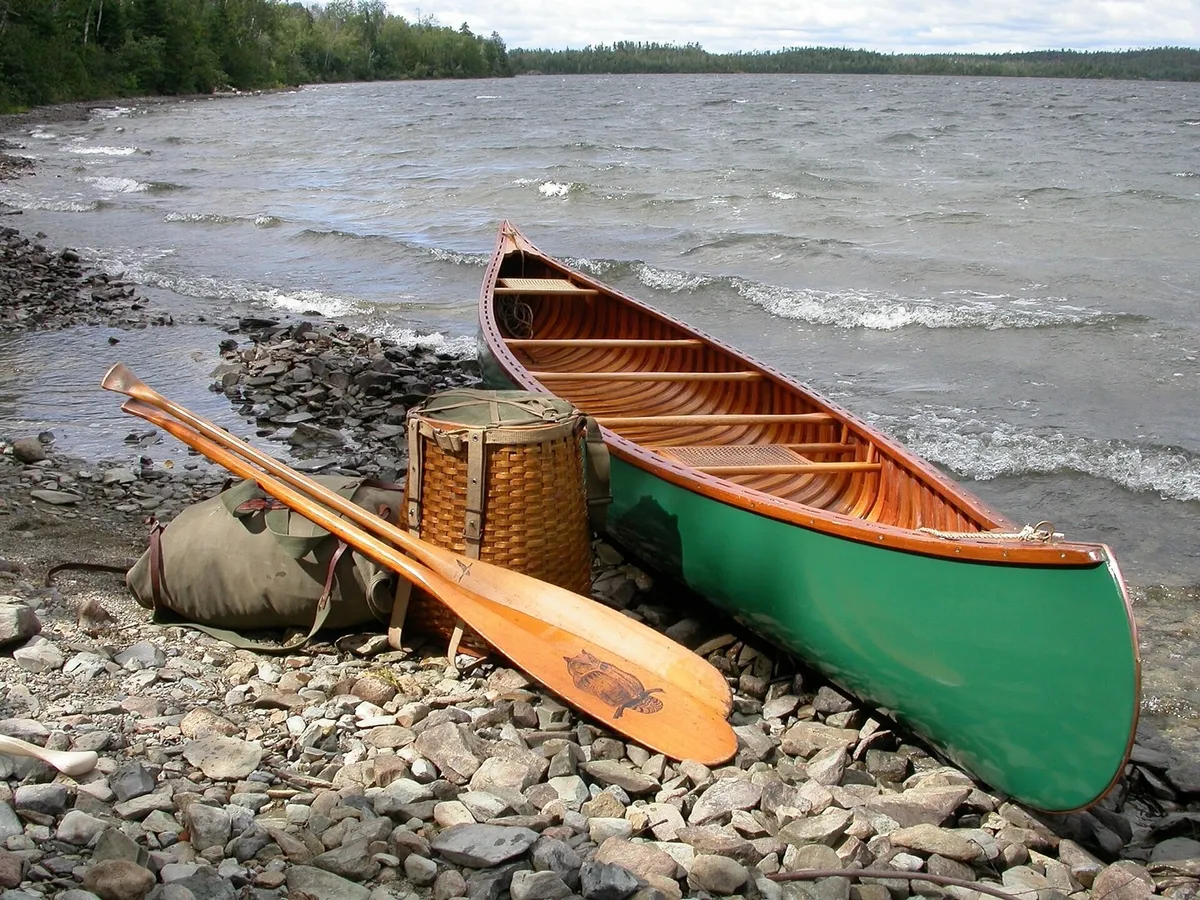
The green paint became an identity. Old Town canoes were green the way John Deere tractors were green. You saw one on a lake and you knew what it was. The company catalogs from the early 1900s are beautiful artifacts themselves, showing dozens of models for hunting, fishing, guiding, and recreation.
Old Town still exists, now owned by Johnson Outdoors, making polyethylene and composite canoes for the modern market. But the vintage wood-and-canvas boats are the real story. They're collected, restored, and paddled by people who understand that a hundred-year-old canoe can still do exactly what it was built to do.
What it was like
Paddling a wood-and-canvas Old Town is a different experience from paddling a modern plastic canoe. The hull flexes. You can feel the water through the thin cedar planking. The boat is alive in a way that rotomolded polyethylene never is. Every ripple translates through the hull to your knees. The sound is quiet. Drip of water off the paddle blade, creak of the ribs, maybe a thump as the hull touches a submerged log. No engine noise, no vibration, nothing between you and the lake except an inch of cedar and canvas.
The classic tandem position is bow paddler in front, stern paddler in back doing the steering. The stern paddler uses a J-stroke to keep the canoe tracking straight. On flat water, a good team can cover three to four miles an hour without hurrying. In a headwind, you earn every yard. The hand-caned seats are comfortable for about two hours and then your back starts reminding you that wooden boats don't have lumbar support.
The crew
Stern Paddler
The captain. Controls direction with J-strokes, draw strokes, and pry strokes. Sets the pace. Makes the calls on which channel to take, where to land, when to portage. In a wood-and-canvas canoe, the stern paddler also worries about every rock, because a puncture in the canvas means a wet, cold repair job with duct tape and prayers until you can get back to shore.
Bow Paddler
The engine room. Paddles on the opposite side from the stern, provides power, and calls out rocks and obstacles. In whitewater, the bow paddler does the bracing and the draw strokes that keep the canoe from wrapping around a boulder. In flatwater, the bow paddler zones out and enjoys the view while the stern paddler does all the work.
Patina notes
A wood-and-canvas canoe ages beautifully if stored properly and tragically if neglected. The canvas cracks and peels after decades of UV exposure. The filler (a linseed oil and silica compound) dries out and flakes.
The cedar planking can rot where water sits. But here's the thing: every component is repairable. You can strip the canvas, replace planks, steam new ribs, re-canvas, fill, and paint.
A complete restoration takes 80-120 hours and results in a boat that's functionally identical to new. Some canoes have been re-canvassed three or four times over a century.
The hull underneath is still the original cedar. There are Old Town canoes from the 1910s still being paddled today.
Preservation reality
The vintage wood-and-canvas canoe community is small but devoted. The Wooden Canoe Heritage Association runs an annual assembly that draws hundreds of restored boats.
Old Town's factory in Maine maintains a build record archive going back to 1900, with serial numbers, original buyer names, and model specifications for nearly every canoe they built.
If you have an old Old Town, you can write to the factory and they'll tell you when it was built, what model it is, and who bought it. The Penobscot Marine Museum in Searsport, Maine, has an excellent collection. So does the Adirondack Museum (now Adirondack Experience) in Blue Mountain Lake, New York.
Where to see one
- • Every lake in New England
- • Penobscot Marine Museum, Searsport, Maine
- • Adirondack Experience, Blue Mountain Lake, New York
- • Wooden Canoe Heritage Association annual assembly
Preservation organizations
- • Wooden Canoe Heritage Association (WCHA)
- • Old Town Canoe Company (Johnson Outdoors)
Sources
- Old Town Canoe Company (2026-03-05)
- Wooden Canoe Heritage Association (2026-03-05)
Related vessels
African Queen
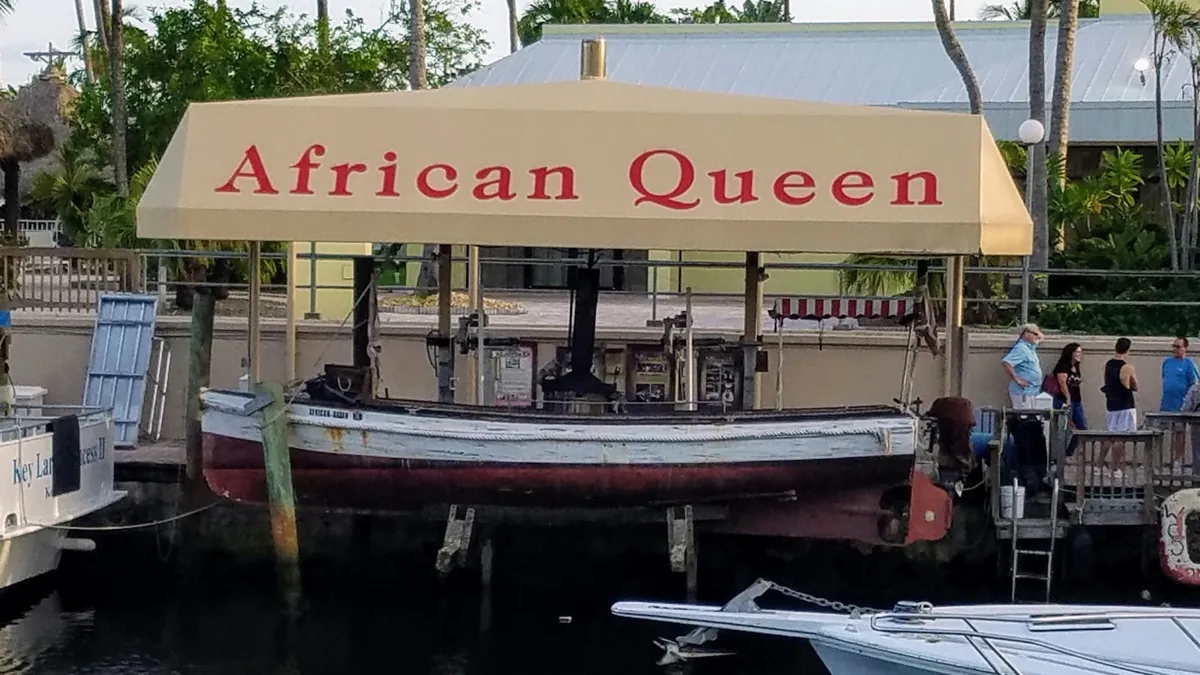
The African Queen is a 30-foot steam launch built in 1912 by a British shipyard for the British East Africa Company. She spent decades hauling cargo and passengers on Lake Albert and the Victoria Nile in Uganda. Then John Huston needed a boat for his 1951 film. The African Queen became one of the most recognizable vessels in cinema — Humphrey Bogart won his only Academy Award pulling leeches off his legs on its deck. Katherine Hepburn poured his gin overboard. The boat survived the film, decades of neglect, and multiple restorations. She's currently in Key Largo, Florida, operating as a tourist excursion boat. You can ride on the same vessel that Bogart steered through the papyrus.
Chesapeake Bay Crab Boat
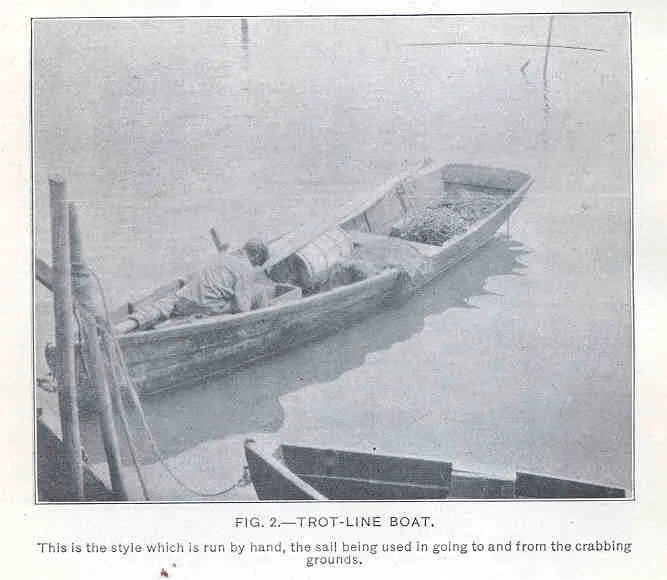
This is not the same boat as the Chesapeake deadrise entry on this site. The deadrise is a hull design. This is the specific working configuration: the boat rigged for crabbing, run by watermen who've been doing this since before anyone was keeping records. Chesapeake Bay blue crab is a $200+ million annual industry in Maryland alone. Every bushel of that crab comes off a boat like this. The boats run trotlines (a baited line laid along the bottom, pulled slowly while the crabber scoops crabs with a net as they surface) or haul crab pots (wire traps baited with chicken necks, fish heads, or commercial bait). The method depends on the waterman, the location, and the regulations. The boats reflect the economics of crabbing. Crab prices fluctuate wildly. A bushel of number ones might bring $200 one week and $120 the next. Fuel costs are fixed. Bait costs are fixed. So the boats are cheap to buy, cheap to run, and rigged for efficiency. Nothing decorative. Everything has a purpose. The culling board stretches across the beam so the crabber can sort the catch: legal males in one basket, too-small in another, females back in the water (in most seasons). The bushel baskets stack in the stern. The season runs roughly April to November. The watermen who run these boats wake up at 3 AM, six days a week, for eight months. They do it because it's what their fathers did and their grandfathers did, and because the Bay is the only office that matters.
Chesapeake Deadrise
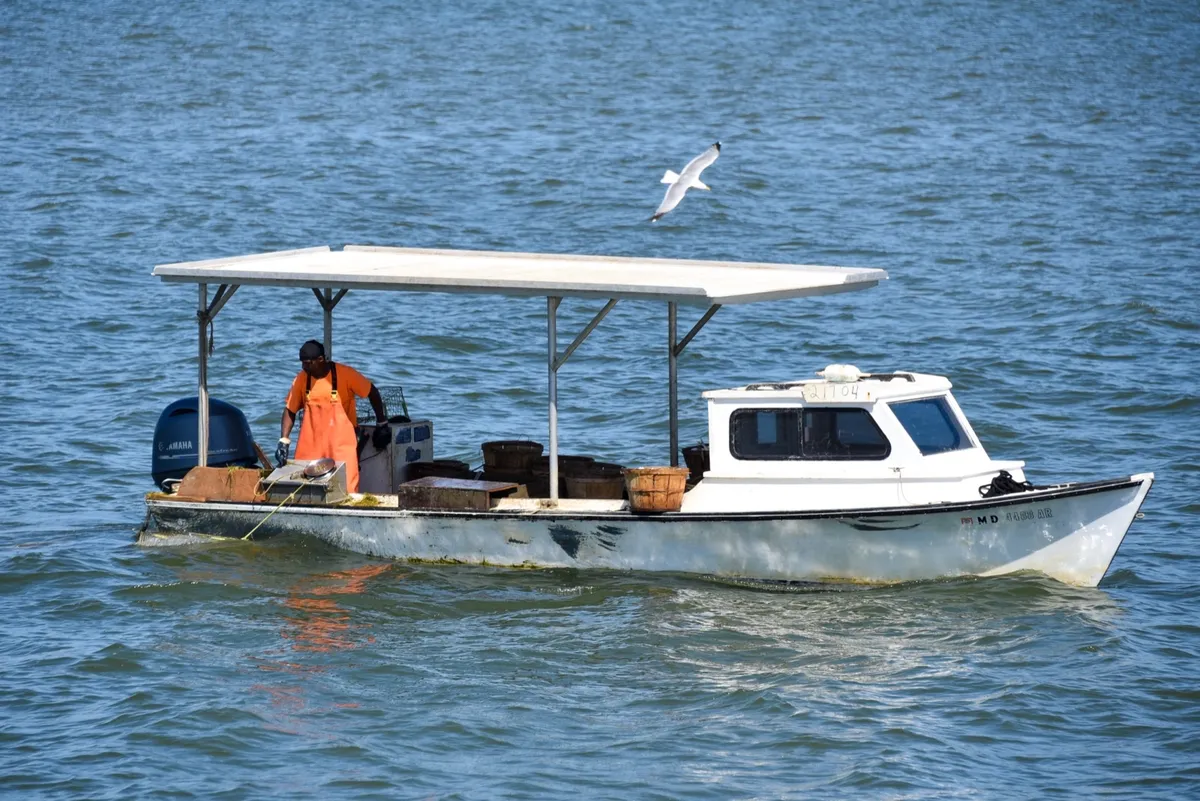
The Chesapeake deadrise is the working truck of the Chesapeake Bay. Every waterman has one. The hull design — a V-bottom that is sharp at the bow for cutting through chop and flattens toward the stern for stability while working — was developed specifically for the Bay's short, steep chop. The name 'deadrise' refers to the angle of the hull bottom: higher deadrise means sharper V, better rough-water ride. These boats crab, fish, oyster, and do everything else that keeps watermen working. They're built by hand in small boatyards on the Eastern Shore, many by builders whose families have been at it for generations.