Woolwich Dockyard

England Est. 1512 Closed 1869

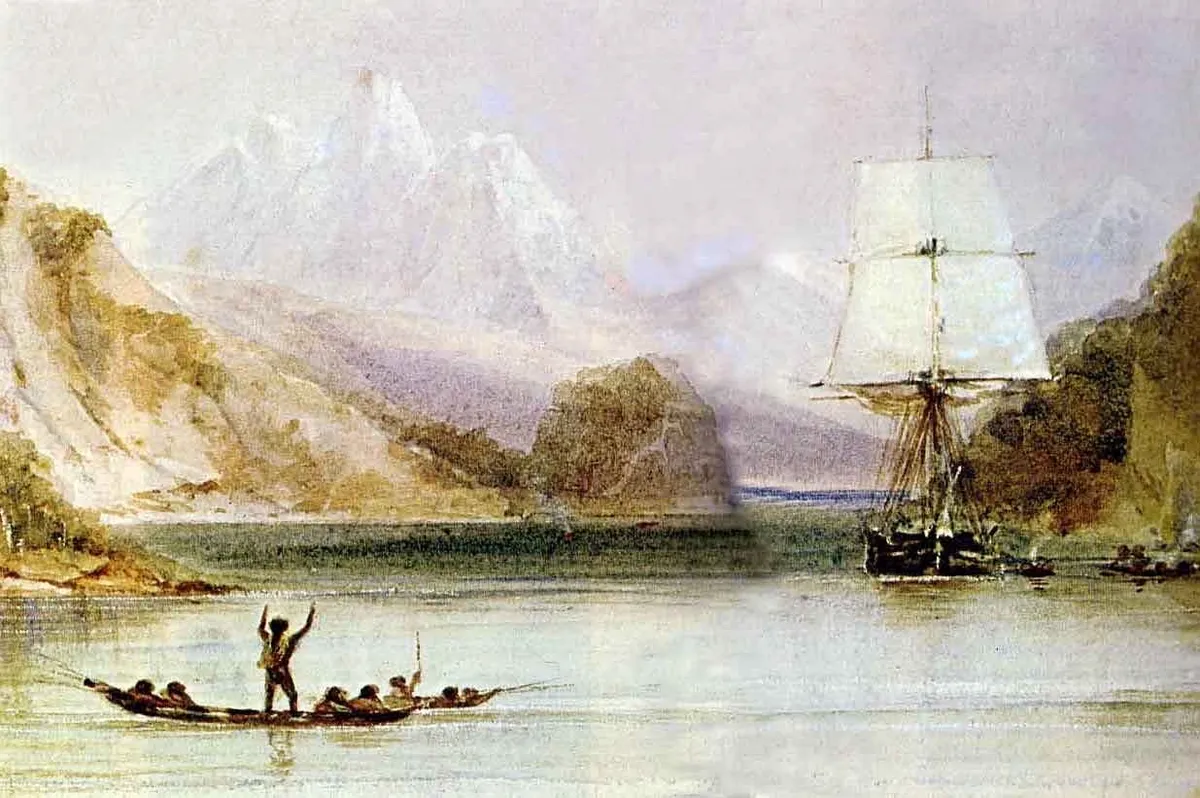
Woolwich Dockyard was established by Henry VIII in 1512, making it one of the oldest purpose-built naval dockyards in England. Located on the south bank of the Thames in southeast London, the yard built warships for the Tudor, Stuart, and Hanoverian fleets across more than three centuries. Henry Grace a Dieu, the great Tudor warship, was built here in 1512. The yard's most scientifically significant product was HMS Beagle, a Cherokee-class 10-gun brig-sloop launched in 1820. Beagle's first voyage was a hydrographic survey. Her second, from 1831 to 1836 with Charles Darwin aboard as naturalist, produced the observations that led to the theory of evolution by natural selection. The ship herself was unremarkable by naval standards: a small, sturdy survey vessel of a class that the Royal Navy built by the dozen. Her significance was entirely in where she went and who she carried. Woolwich Dockyard closed in 1869 as the Royal Navy consolidated its construction at larger facilities. The site passed through various military and industrial uses before redevelopment.

Heritage

Woolwich represents the deep institutional roots of English naval power. The dockyard predates the Spanish Armada, the English Civil War, and the entire age of British imperial expansion. Ships built on this stretch of the Thames fought in every major naval engagement from the 16th century onward. The Beagle connection gives Woolwich a unique place in intellectual history. No other shipyard can claim to have built a vessel whose voyage fundamentally changed humanity's understanding of its own origins. The shipwrights who laid Beagle's keel in 1820 were building a routine naval vessel. They had no idea they were building a vehicle for the most consequential scientific journey ever undertaken.
Vessels (1)

HMS Beagle

HMS Beagle

HMS Beagle was a perfectly ordinary warship that happened to carry the right person to the right places at the right time. She was one of over 100 Cherokee-class brig-sloops built by the Royal Navy. Nothing special about the hull, the rig, or the design. What made her extraordinary was that in 1831, a 22-year-old theology graduate named Charles Darwin talked his way aboard as the captain's gentleman companion and unpaid naturalist, and what he saw during the next five years rewrote the story of life on earth. The Beagle made three voyages. The first (1826-1830) was a survey mission to South America under Captain Pringle Stokes, who shot himself in the head in a fit of despair at the conditions in Tierra del Fuego. Robert FitzRoy took command and brought the ship home. The second voyage (1831-1836) is the famous one. FitzRoy wanted a gentleman companion to keep him company and keep him sane. He'd seen what isolation did to Stokes and knew he carried the same risk. Darwin got the job partly because FitzRoy liked the shape of his nose. Phrenology was taken seriously in 1831. Darwin spent five years collecting specimens, making observations, and being violently seasick. He was miserable at sea and ecstatic on land. The Galápagos Islands got most of the credit, but it was the full range of observations across South America, the Pacific, and beyond that built the case for evolution by natural selection. On the Origin of Species wouldn't be published until 1859, twenty-three years after the voyage ended. The ideas needed that long to mature, and Darwin needed that long to gather his nerve. FitzRoy's story is the darker thread. He was a brilliant navigator and a deeply religious man who came to believe that Darwin's work contradicted Scripture. He spent years trying to reconcile what the voyage had revealed with his faith. He couldn't. He became Chief of the new Meteorological Department, invented weather forecasting, was mocked by the press for inaccurate predictions, and cut his throat with a razor in 1865. The man who made Darwin's voyage possible was destroyed in part by what that voyage produced. The Beagle herself was retired from naval service in 1845 and transferred to the Coastguard. She was moored in the Essex marshes as Watch Vessel 7, had her masts removed, and was used as a floating customs station to catch smugglers. By 1870, she was sold for scrap. The ship that changed biology was buried in river mud.

1820-1870 · exploration