Queen Anne's Revenge
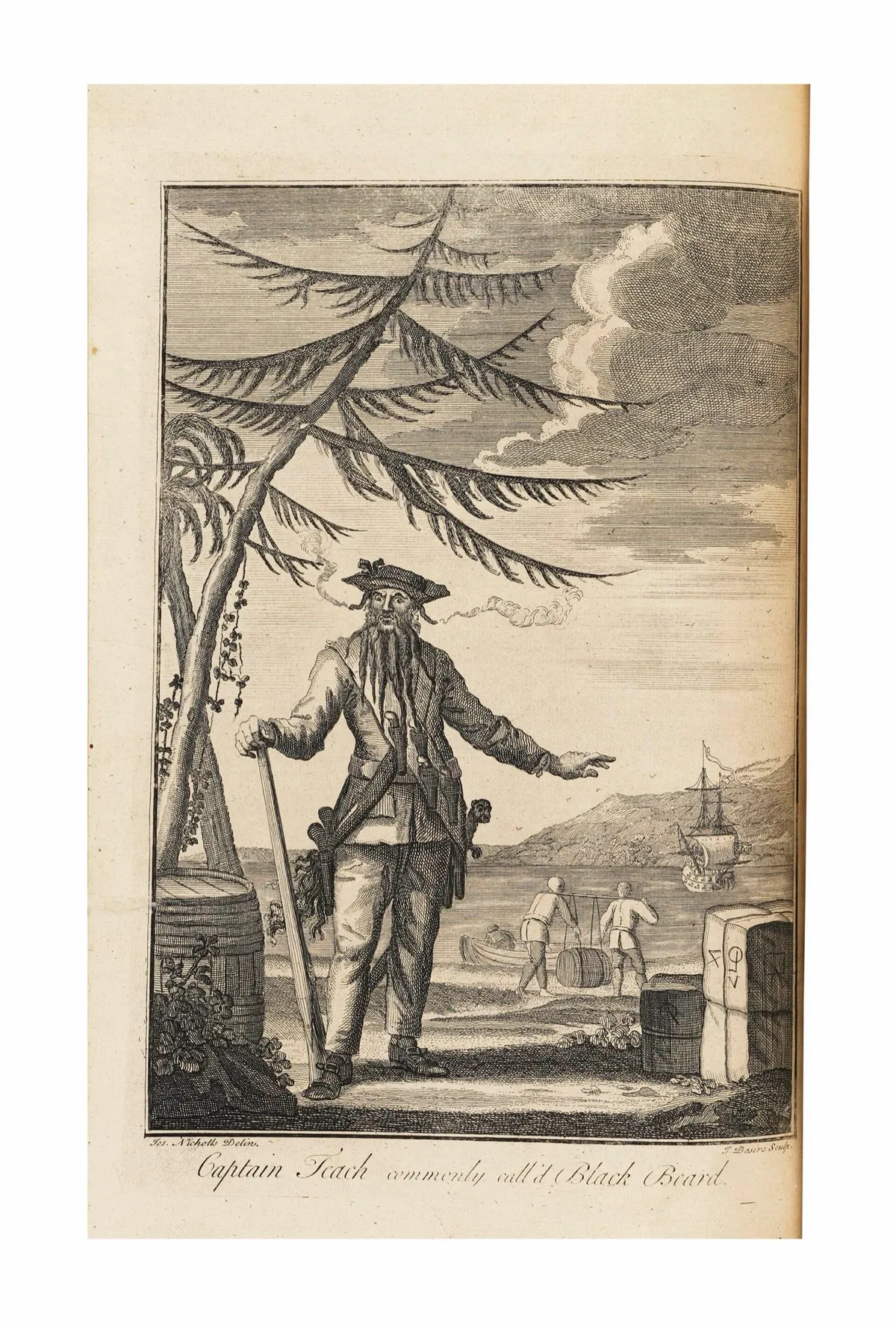
Queen Anne's Revenge started life as La Concorde, a French slave ship working the triangle trade between Nantes, West Africa, and the Caribbean. Edward Teach, who the world would remember as Blackbeard, captured her near Martinique in November 1717. He renamed her, stuffed her with cannons, and turned a vessel built to transport human misery into a floating fortress of a different kind.
For about six months, she was the most feared ship in the Atlantic. Blackbeard used her to blockade the port of Charleston, South Carolina in May 1718. He held the entire city hostage for a week, capturing ships in the harbor and demanding a chest of medicine as ransom. Charleston paid. The blockade worked not because of superior firepower but because of reputation. Nobody wanted to find out if the stories were true.
Then Blackbeard did something nobody expected. He ran Queen Anne's Revenge aground at Beaufort Inlet, North Carolina, in June 1718. The official story was an accident. The real story, most historians believe, was deliberate. Blackbeard marooned most of his crew on a sandbar, took the loot and his closest allies, and sailed off in a smaller sloop. It was a heist within a heist.
Blackbeard didn't last long after that. Lt. Robert Maynard of the Royal Navy found him anchored at Ocracoke Inlet on November 22, 1718. The fight was vicious. Blackbeard took five musket balls and twenty sword cuts before he finally dropped. They cut off his head and hung it from the bowsprit.
The ship matters because it connects the slave trade, piracy, and colonial politics in ways that are uncomfortable and honest. La Concorde carried enslaved Africans. Queen Anne's Revenge carried pirates, many of whom were formerly enslaved or pressed sailors who chose piracy over legitimate service. The line between legal and illegal cruelty was thinner than anyone wanted to admit.
1710-1718 · pirate-vessel