Norfolk Navy Yard

United States Est. 1767

Norfolk Naval Shipyard is the oldest naval shipyard in the United States, established in 1767 as Gosport Shipyard on the south bank of the Elizabeth River in what is now Portsmouth, Virginia. The yard's most dramatic chapter began in April 1861, when retreating Union forces burned the facility and scuttled the steam frigate USS Merrimack to keep her from Confederate hands. The Confederates raised the charred hulk, cut her down to the waterline, and built an ironclad casemate on the remains. CSS Virginia was not a new ship. She was a desperate improvisation built from a wreck, and she nearly broke the Union blockade. The yard changed hands twice during the Civil War. After Union recapture in May 1862, it returned to federal service and has operated continuously since. Through two world wars, the Cold War, and into the present, Norfolk Naval Shipyard has built, repaired, overhauled, and decommissioned warships of every type. The yard's primary mission today is nuclear submarine and aircraft carrier maintenance. The physical site has been in continuous use for over 250 years, making it one of the oldest industrial operations in the Americas.

Heritage

Norfolk Naval Shipyard's significance goes beyond any single vessel. The yard is a living institution that has served the U.S. Navy through every conflict since the Revolution. Its workforce carries a tradition of naval construction and repair that predates the country itself. The CSS Virginia chapter is the one that gets the most attention, and rightly so. The idea of raising a burned ship and turning it into an ironclad that could challenge an entire fleet was audacious even by wartime standards. But the yard's real legacy is continuity: 250 years of keeping the Navy's ships operational, through wars, budget cuts, and technological revolutions that made last decade's cutting-edge vessel this decade's museum piece.
Vessels (1)

CSS Virginia

CSS Virginia

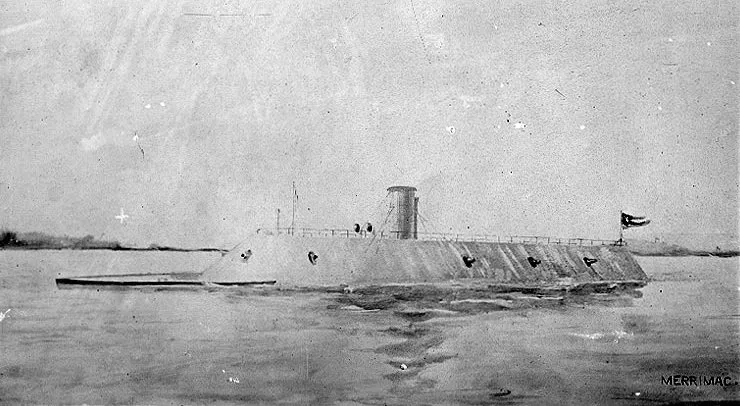
The CSS Virginia was born from desperation and scrap metal. When Union forces abandoned the Norfolk Navy Yard in April 1861, they burned the steam frigate USS Merrimack to the waterline and sank her. The Confederacy raised the hull, found the engines salvageable (barely), and built an armored casemate on top. Four inches of iron plate bolted over 24 inches of oak and pine, sloped at 36 degrees to deflect shot. She looked like a barn roof floating on a raft. She was the most dangerous warship in the Western Hemisphere. On March 8, 1862, Virginia steamed into Hampton Roads and attacked the Union blockading squadron. She rammed and sank the USS Cumberland, a 24-gun sloop that went down with 121 of her crew still fighting. Her guns couldn't hurt Virginia. The frigate USS Congress surrendered after Virginia's shells set her ablaze. Another 120 men died. The wooden warships USS Minnesota, USS Roanoke, and USS St. Lawrence all ran aground trying to escape. If Virginia had returned the next morning unopposed, she could have broken the Union blockade. But Monitor was waiting. The four-hour engagement the next day proved that the age of wooden warships was finished. Virginia landed dozens of hits on Monitor without breaking through. Monitor's Dahlgrens cracked Virginia's armor in places but couldn't penetrate. Virginia tried to ram but Monitor was too nimble. It was the first battle between ironclad warships, and it ended with both sides claiming victory and neither ship sunk. Virginia fought in the area for two more months but never left the Roads. Her 21-foot draft meant she could only navigate deep channels, and her engines, already condemned before the war started, could barely push her at walking speed. When Union forces advanced on Norfolk in May 1862, the crew tried to lighten her enough to escape upriver. They couldn't. On May 11, her crew set her afire and she exploded when the flames reached the magazine. Nothing of the ship survived.

1862 · ironclad